Cell Membrane Function Explained: Transport, Signalling and Protection
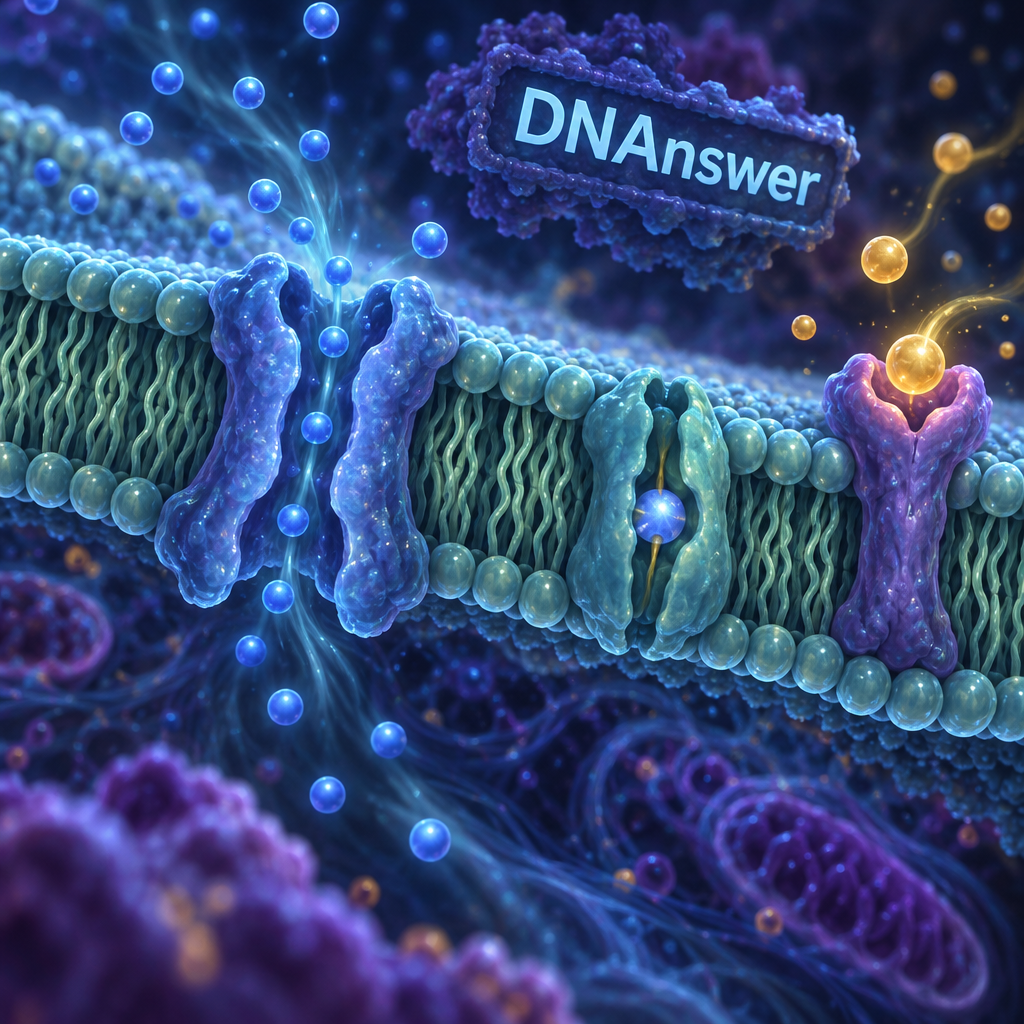
Your cell membrane is not a wall, and it does not guard the door like a bouncer. Oxygen walks straight through it without asking. The membrane is a thin, fluid sheet of fats and proteins that controls what enters and leaves, relays signals from hormones, and keeps the cell's inside stable. Here are five myths that hide how it really works.
Key Takeaways
- The membrane is fluid, not rigid. Its parts drift and remodel constantly.
- Oxygen and carbon dioxide slip through without help or energy.
- Passive transport costs nothing; pumps burn ATP, the cell's energy currency.
- Receptors turn outside signals into inside action, often by changing transport.
- Plants, fungi and bacteria have a cell wall outside the membrane.
Myth 1: The Membrane Is a Rigid Wall
Picture a brick wall around a castle. That is how many textbooks draw the membrane, as a fixed line. It is easy to see why: under a microscope, a membrane looks like a thin, steady edge.
The truth is closer to a soap bubble that never stops moving. The membrane is a double layer of phospholipids, which are fat molecules with a water-loving head and two water-fearing tails. The heads face the watery outside and inside. The tails hide in the middle. This arrangement forms by itself, because the tails avoid water.
The fluid mosaic model
Scientists call this picture the fluid mosaic model. "Fluid" means the lipids slide past each other, much like cooking oil. "Mosaic" means proteins are scattered through the layer like tiles. In a living cell at body temperature (98.6°F), a single phospholipid can swap places with its neighbors millions of times a second.
That movement matters. A rigid sheet would crack, and it could not pinch off bubbles or stretch when a cell grows. Cholesterol tucked between the lipids acts as a buffer: it stops the membrane from getting too runny when it is warm and too stiff when it is cold.
Anchors keep the movement useful
Free floating has limits. Inside the cell, a web of protein fibers called the cytoskeleton gives the cell its shape. Some membrane proteins hook onto it, like tent pegs. Outside, other proteins grip neighboring cells. So the membrane moves freely in places and stays pinned in others.
What to do with this: stop picturing a wall. Picture a crowd on a dance floor, some people moving, some holding a post.
Myth 2: The Membrane Blocks Everything Except What It Lets In
The gatekeeper idea is popular because it is partly right. The membrane is selectively permeable, meaning it lets some things through and holds others back. A bouncer image makes that easy to remember.
But the bouncer never checks some guests. Small molecules with no electric charge, called nonpolar molecules, dissolve in the fatty middle of the bilayer and drift across. Oxygen, carbon dioxide and many fat-soluble molecules do this. Your lungs depend on it: oxygen crosses the thin membranes of the air sacs (alveoli) and moves into your blood without any helper protein.
Charged particles and large molecules have the opposite problem. Ions such as sodium and potassium cannot cross the oily middle at all. Glucose is too big and too water-loving. These need protein help, which the next myth covers.
Water sits in between. A little slips through the lipids directly. Most of it uses protein tunnels called aquaporins (water channels), which let water cross quickly.
So the membrane is less a bouncer and more a security system with different rules for different guests. Size, charge and fat solubility decide who gets through. That is why some drugs work: a fat-soluble molecule crosses the membrane easily, while a charged one needs a transporter.
Myth 3: Moving Things Across the Membrane Always Costs Energy
If the membrane is a guarded border, you might guess that every crossing takes work. People also hear "pump" and "active" so often that energy feels like the default.
It is not. Most traffic is free, because of the concentration gradient. That is the difference in how crowded a substance is on two sides of a membrane. Particles drift from crowded to sparse areas on their own, the way the smell of coffee spreads through a room. No one pushes them.
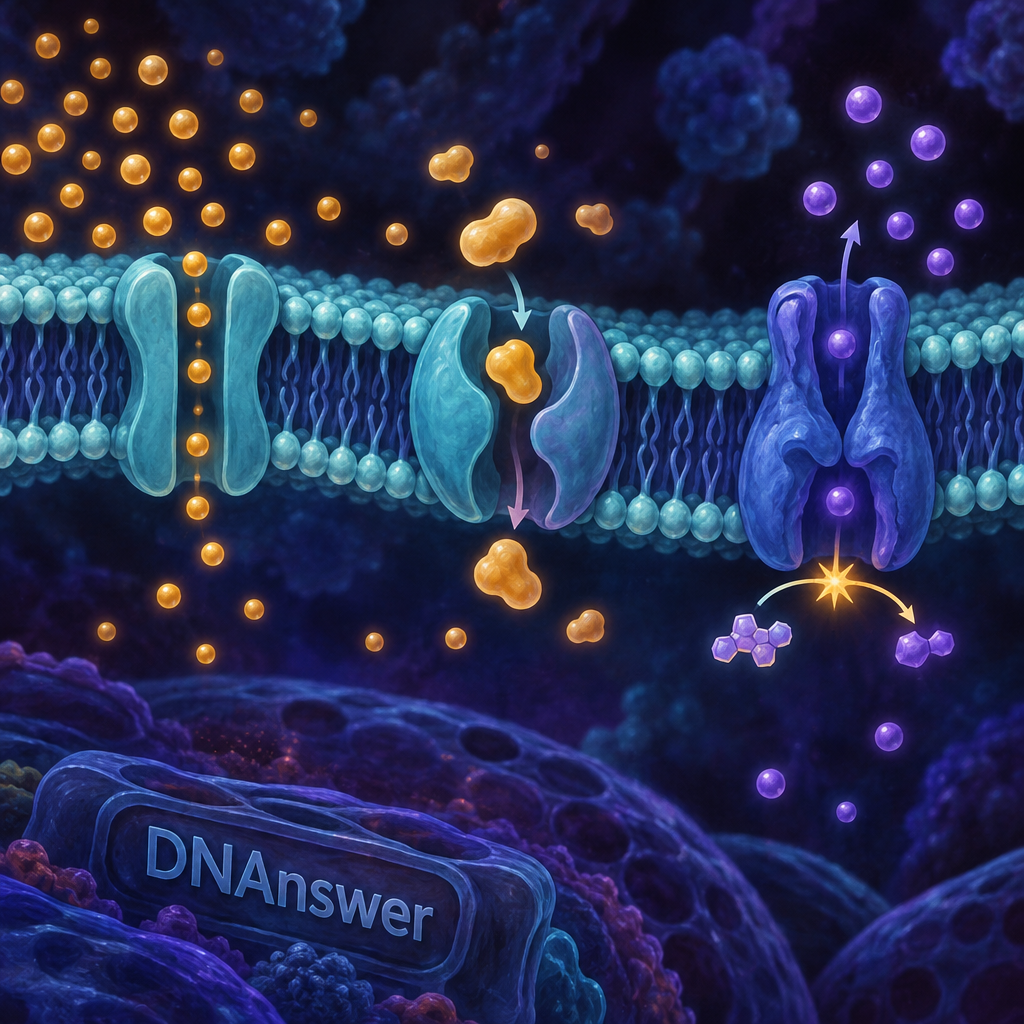
Pushing uphill is the part that costs energy. Cells pay for it with ATP, a small molecule that works like a rechargeable battery. Below, we compare the two approaches and then the specific routes.
Passive versus active in plain terms
Passive transport moves substances down the gradient, from crowded to sparse, with no energy. Active transport moves them up the gradient, from sparse to crowded, and needs ATP. Think of a ball rolling downhill versus a ball carried uphill.
The best-known pump is the sodium-potassium pump. It throws out three sodium ions and pulls in two potassium ions with each cycle, using one ATP. Your neurons spend a large share of their energy on this pump alone, because it sets up the electrical charge they use to fire.
The routes, one by one
There are four main ways to cross, and a fifth pair for bulk cargo. Here is how they compare:
- Simple diffusion: small nonpolar molecules, such as oxygen, pass straight through the lipids. No energy.
- Facilitated diffusion: channel or carrier proteins help specific molecules move down the gradient. No energy.
- Osmosis: water moves across the membrane toward the side with more dissolved particles. No energy.
- Active transport: carrier proteins use ATP to move substances up the gradient. Energy needed.
- Endocytosis and exocytosis: the membrane wraps cargo in a bubble (a vesicle) to bring it in or send it out. Energy needed.
Osmosis explains a classic kitchen result. Salt a slice of cucumber and it turns limp, because water leaves the cells toward the saltier outside.
Do this when you study: ask two questions for each example. Which way is the gradient? Does the cell pay ATP? The answers sort nearly every case.
Myth 4: Channels and Carriers Are the Same Thing
Both are proteins that span the membrane, and both help things cross. Textbooks often group them as "transport proteins," so the mix-up is natural.
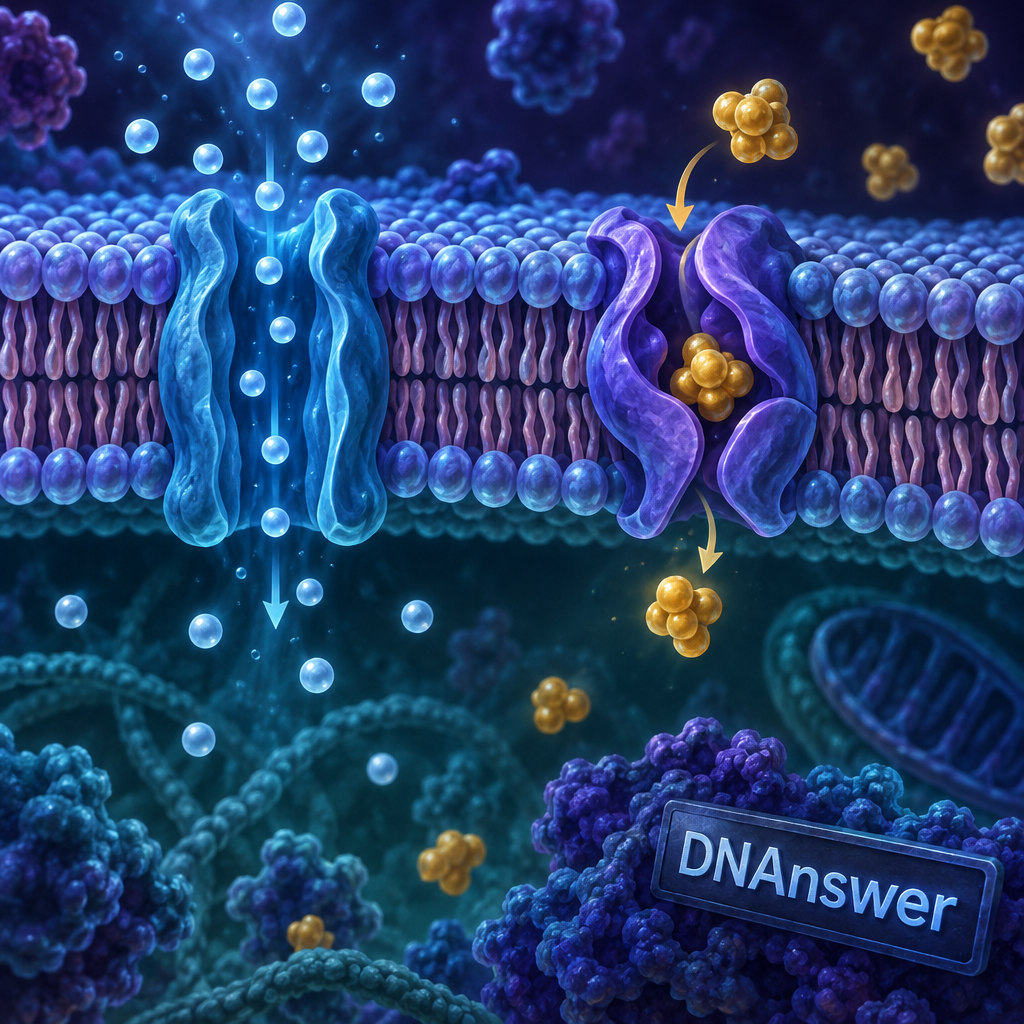
Their behavior differs. A channel protein forms a tunnel. When it is open, the right ion or water molecule flows through, fast, always down the gradient. Some channels are gated, which means they open only when something triggers them, such as a chemical or a change in voltage. Aquaporins and potassium channels are examples.
A carrier protein works more like a revolving door with a single seat. It grabs one molecule on one side, changes shape, and releases it on the other side. That takes longer, so carriers move fewer molecules per second than channels. But carriers can work uphill when ATP or another gradient powers them.
Glucose shows both ideas. Glucose transporters in your muscle and fat cells are carriers that let sugar in without energy. In your intestine, a different carrier pulls glucose in alongside sodium, using the sodium gradient as the power source. That is how you absorb sugar from a meal even when your gut has little left.
Takeaway: a tunnel is for speed, a carrier is for control. When you read about a transporter, check whether it opens a path or shuttles a cargo.
Myth 5: Transport and Signaling Are Separate Jobs
Most guides list the membrane's jobs one after another, as if the cell had a transport department and a messaging department. The lists are tidy, and that is where the idea comes from.
In a real cell, the two jobs are tangled together. Signaling starts when a chemical messenger, such as a hormone or a neurotransmitter (a chemical that passes messages between nerve cells), lands on a receptor protein on the outside of the membrane. The receptor fits its messenger like a key fits a lock. It changes shape and starts a chain of reactions inside the cell, called signal transduction, which is just the conversion of an outside message into inside action.
When a signal opens a gate
Some receptors are channels. When a neurotransmitter such as acetylcholine binds to one on a muscle cell, the channel opens, sodium rushes in, and the muscle fires. Signal and transport are one event.
Insulin shows the reverse link. After a meal, insulin binds its receptor on muscle and fat cells. The receptor triggers a chain that sends glucose transporters to the surface. More carriers means more sugar taken up. People with type 2 diabetes have cells that respond poorly to this signal, so sugar stays in the blood.
When transport shapes the signal
It also runs the other way. The cell uses pumps to build gradients, and signals use those gradients as fuel. A nerve impulse is a wave of channels opening along the membrane and letting ions flow down gradients the sodium-potassium pump set up earlier.
Cell membrane transport and signal transduction are fundamental processes that govern how molecules are exchanged and how cells communicate with their surroundings.
That sentence, from a review in cell biology, sums up why the two cannot be split. Use this when you learn the topic: whenever you meet a receptor, ask what it changes about transport, and whenever you meet a pump, ask what signal it supports.
Myth 6: The Cell Membrane and the Cell Wall Are the Same
Plant cells look boxy under a microscope, and a boxy outline looks like a wall around a cell. Textbook diagrams often label the outer line with both terms, which adds to the confusion.
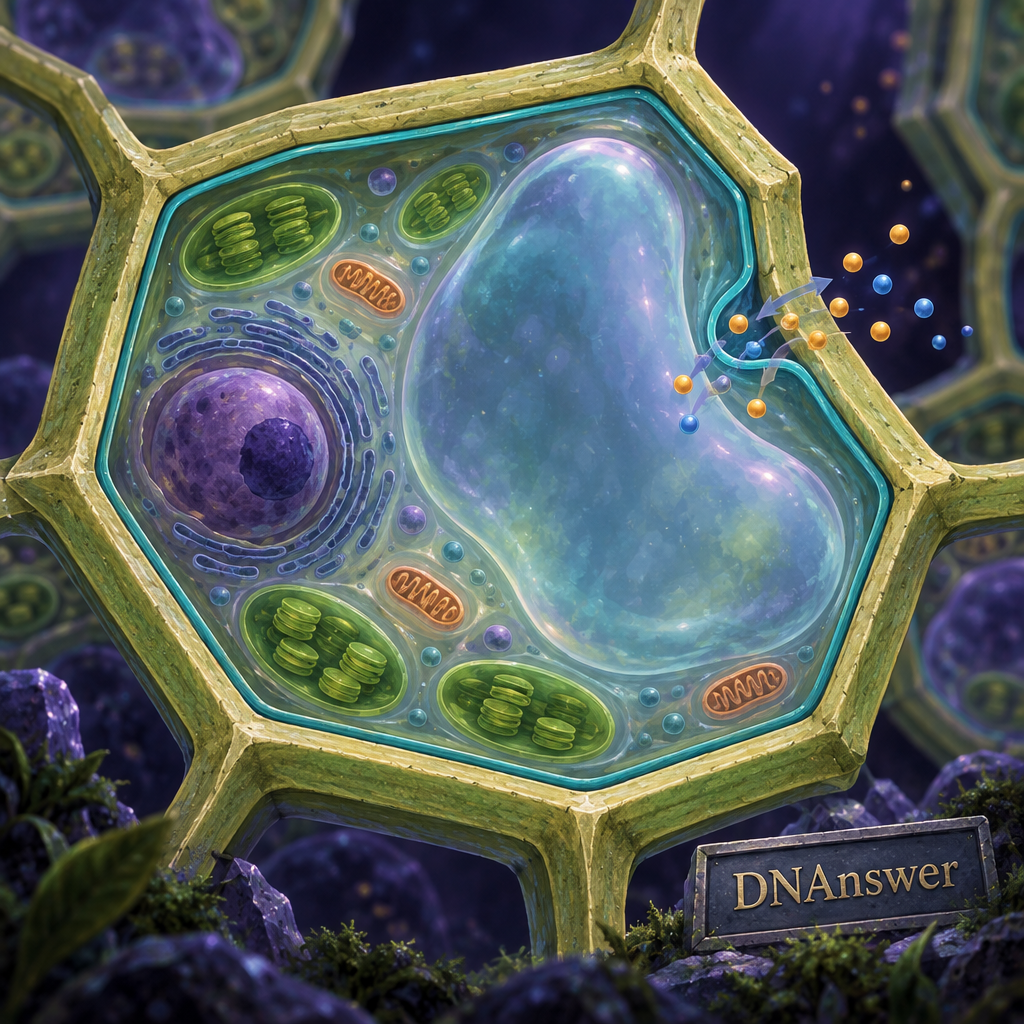
They are different structures. Every cell has a membrane. Plants, fungi and bacteria also build a cell wall outside it. In plants, the wall is made mostly of cellulose, the same material in paper and cotton. It is tough and fairly open, so water and small molecules pass through it easily. It gives the cell shape and stops it from bursting when water floods in.
Animal cells, including yours, have no wall. Your cells rely on the membrane and the cytoskeleton beneath it for shape. That is why your cells can be soft, stretchy and mobile, like a white blood cell squeezing out of a blood vessel to chase bacteria.
The membrane also does something the wall cannot: it selects. The wall only holds shape. The membrane sorts what crosses and carries the receptors.
The membrane as an ID card
Another job often gets skipped. Short sugar chains stick out from membrane proteins and fats on the outer surface. Together they form glycoproteins (proteins with sugar chains attached). Your immune cells read these tags to decide whether a cell belongs in your body. ABO blood types come from such tags: type A, B, AB and O differ in the sugars on red blood cells, which is why a transfusion must match.
So when a diagram shows two lines around a plant cell, read the outer one as the wall and the inner one as the membrane. The inner one does the thinking.
What the Corrected Picture Means for Protection
The membrane protects the cell, but not by being a shield. It protects by keeping conditions steady, which scientists call homeostasis.
Inside a cell, sodium stays low, potassium stays high, and the pH stays near neutral. Outside, those numbers differ. The membrane and its pumps keep that difference, even when your blood chemistry shifts after a salty meal or a hard workout. If the pumps stop, the gradients fade, water floods in, and the cell swells. This is one reason lack of oxygen damages tissue so fast: with no oxygen, cells make less ATP, the pumps slow, and the balance collapses.
Protection also means recognition. The ID tags on the surface let immune cells leave your own cells alone and attack invaders. And the cytoskeleton anchors give the cell strength under pressure.
Put it all together and the old "gatekeeper" label feels thin. A better image is a busy harbor: ships (vesicles) come and go, some cargo drifts through the open water, cranes (pumps) lift heavy loads, and radios (receptors) carry orders in and out. If you want to test yourself on these ideas, DNAnswer has free molecular biology quizzes where you can practice membrane questions and track your progress.
Conclusion
Next time you see "the membrane controls what enters and leaves," add three words: and tells the cell. Treat every transport question as a gradient question, and every signal question as a "what does this change?" question. Use the two-step check from earlier: which way is the gradient, and does the cell pay ATP? That habit will sort most exam problems and most news stories about drugs, diabetes and nerves.
Frequently Asked Questions
What are the main functions of the cell membrane in simple terms?
The cell membrane controls what moves in and out, receives messages from hormones and neurotransmitters, and protects the cell by keeping its inside stable. It also gives the cell shape, with help from the cytoskeleton, and carries ID tags.
What are the four types of membrane transport?
The four common types are simple diffusion, facilitated diffusion, osmosis and active transport. The first three need no energy. Active transport uses ATP. Bulk movement by vesicles, called endocytosis and exocytosis, is often counted as an extra pair.
What is the difference between active and passive transport?
Passive transport moves substances down their concentration gradient, from crowded to sparse, and needs no energy. Active transport moves them up the gradient and needs ATP, usually through a pump such as the sodium-potassium pump.
What is the cell membrane also known as?
The cell membrane is also called the plasma membrane. Some texts use "plasmalemma," mainly for plant and fungal cells. All three names describe the same thin double layer of lipids and proteins around the cell's contents.