What Is Molecular Biology? A Clear Explanation
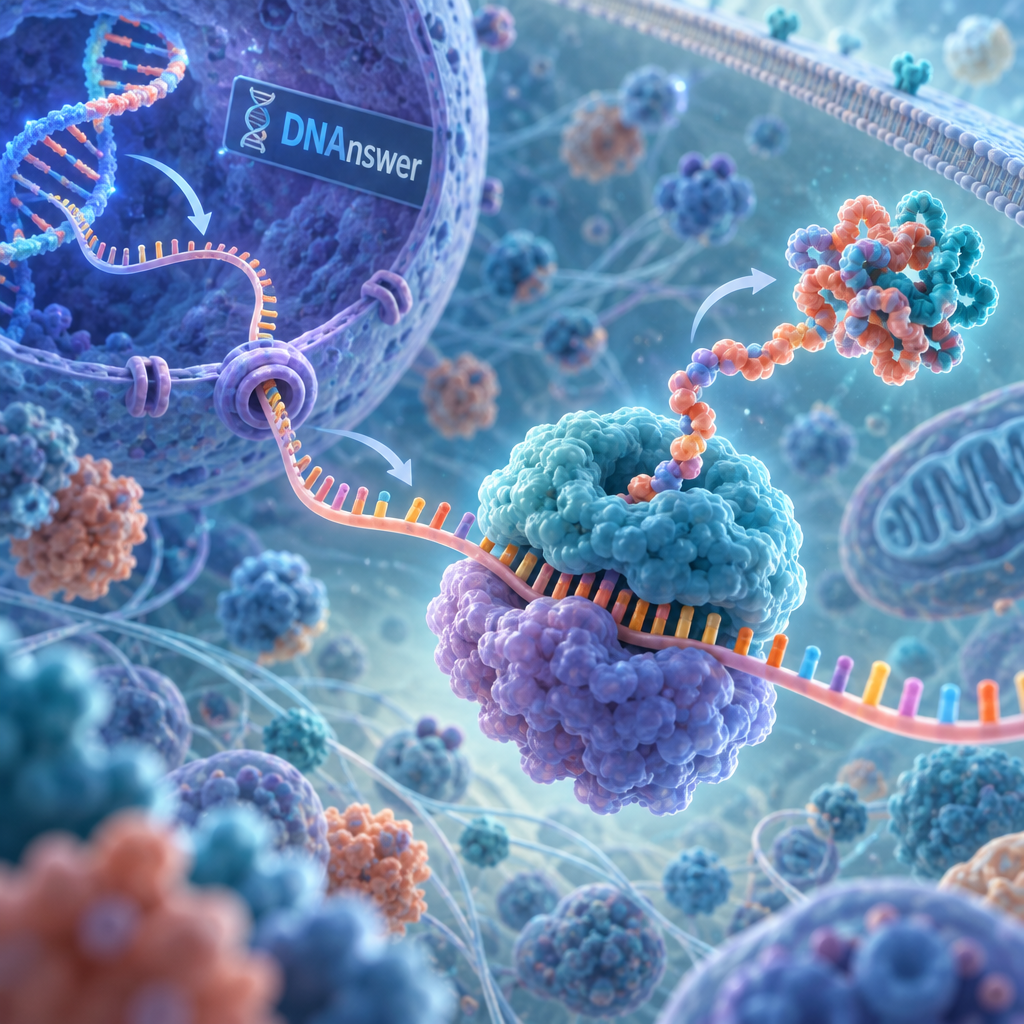
Is molecular biology just genetics with extra jargon? No. Genetics is one piece of it. So what is molecular biology, really? It's the study of how DNA, RNA, and proteins physically interact inside a cell to make decisions — what to build, when to build it, and when to stop.
Most people who've heard the term picture a lab coat, a pipette, and a sentence they can't parse. That picture is wrong, and believing it costs you something real: you end up tuning out news about CRISPR, mRNA vaccines, and gene therapy because you assume it's not for you. It is.
Key Takeaways
- Molecular biology studies molecules (DNA, RNA, proteins), not just genes
- Genetics and molecular biology overlap but aren't the same field
- The central dogma (DNA → RNA → protein) has real, documented exceptions
- Biochemistry studies chemical reactions broadly; molecular biology focuses on genetic machinery
- No lab or degree required to grasp the core logic — it's decision-making, not memorization
- Techniques like PCR and CRISPR are tools for reading or editing this system, not the field itself
Why These Mix-Ups Actually Cost You Something
Mixing up molecular biology with genetics, or assuming it's all DNA, isn't just a semantic slip. It changes how you read every headline about gene editing, vaccines, and disease research for the rest of your life.
Think about the last time a news anchor said "scientists found the gene for X." That phrasing assumes genetics and molecular biology are interchangeable, and that DNA alone explains the outcome. Neither is true. A gene is a sequence of DNA; whether that gene actually does anything depends on RNA, proteins, and a dozen molecular switches most news segments never mention.
Get this wrong and you either overtrust simple explanations ("it's genetic, so it's fixed") or dismiss real breakthroughs as too complicated to follow. Both reactions are avoidable.
The mRNA vaccines developed during the COVID-19 pandemic are a good stress test. If you thought molecular biology only meant "DNA stuff," the idea of an RNA-based vaccine probably sounded exotic or even suspicious. If you understood that RNA is a normal, everyday messenger molecule your cells use constantly, the vaccine made immediate sense: it just handed your cells a temporary set of instructions.
That's the real cost of these myths — not embarrassment, but comprehension debt. You stop being able to evaluate the science stories that affect your health decisions, your kids' school curriculum, and your understanding of your own biology.
The five myths below are ranked by how often people believe them and how much confusion each one causes. We'll steelman each one first, because every myth here comes from a real, reasonable observation — it just stops one step too early.
Myth 1: Molecular Biology and Genetics Are the Same Field
They're related, but they're not the same. Genetics is the study of heredity — how traits pass from parent to offspring through genes. Molecular biology is the study of the molecules that carry out those instructions, including RNA and proteins that genetics alone doesn't explain.
It's an easy myth to fall into. Genetics gets more press coverage — ancestry kits, paternity tests, inherited disease risk — so it became the public face of "gene science" in general. When people hear "molecular," they mentally file it under "genetics, but harder."
Where the Confusion Comes From
Gregor Mendel worked out the basic rules of inheritance in the 1860s using pea plants, decades before anyone knew what a gene was physically made of. Genetics as a discipline existed before molecular biology did. So when molecular biology emerged in the mid-20th century, it got treated as genetics' technical subfield rather than its own discipline with a different central question.
What Each Field Actually Asks
Genetics asks: which trait came from which parent, and how does it move through a population? Molecular biology asks: what physically happens inside a cell to turn a DNA sequence into a working protein? A geneticist might track how eye color moves through three generations. A molecular biologist wants to know which enzyme reads the eye-color gene, which RNA molecule carries its message, and what protein actually deposits the pigment.
You can do genetics without ever looking at a molecule directly — Mendel never saw a DNA strand. You cannot do molecular biology without looking at molecules, because that's the entire subject.
If you want a working rule: genetics is about patterns of inheritance, molecular biology is about mechanisms inside the cell. Next time a headline says "genetic breakthrough," ask whether it's actually describing a molecular mechanism — usually, it is, and the word "genetic" is doing the shrinking.
Myth 2: Molecular Biology Only Means Studying DNA
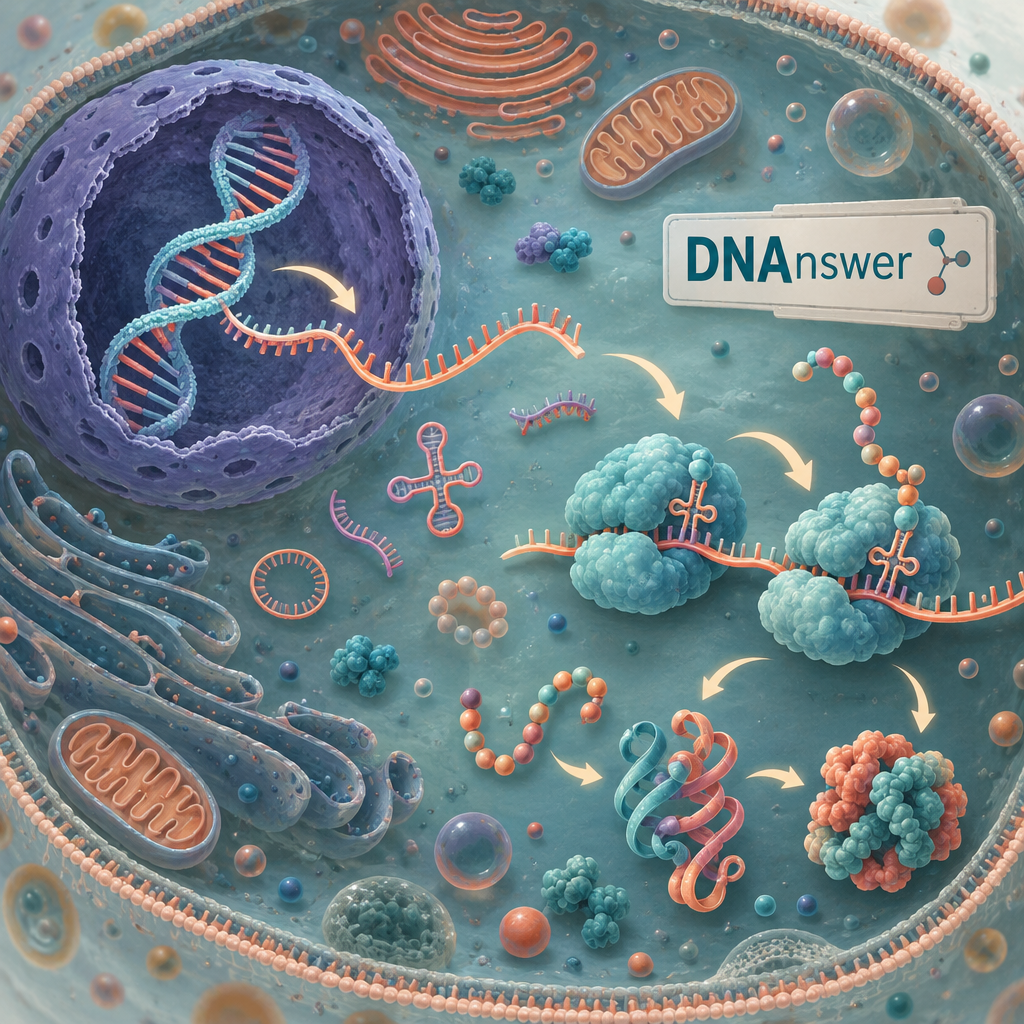
This is the most common misconception, and it comes from a real place: DNA gets almost all the media attention. But DNA is just the archive. Molecular biology studies DNA, RNA, and proteins together, because none of them does anything meaningful alone.
DNA doesn't build anything by itself. It's a storage molecule — a long sequence of four chemical letters (A, T, C, G) that sits mostly inert in the cell nucleus until something reads it. That "something" is RNA and protein machinery, and ignoring them is like saying a cookbook cooks dinner.
Here's a rough map of what actually falls under the field's radar:
- DNA — the archive. A double-stranded molecule storing instructions as a sequence of bases.
- RNA — the messenger and sometimes the worker. Messenger RNA (mRNA) carries copied instructions out of the nucleus; other RNA types actually help build proteins or regulate genes directly.
- Proteins — the machinery. Enzymes, structural proteins, and signaling molecules that do almost every physical job in your body, from digesting food to firing neurons.
- Enzymes — a special class of proteins that speed up chemical reactions, including the ones that copy DNA and read RNA.
- Gene expression controls — the on/off switches (called promoters and transcription factors) that decide which genes actually get used in a given cell.
A skin cell and a neuron have the exact same DNA. What makes them different is which genes get expressed — turned into RNA and then protein — and that decision-making layer is squarely molecular biology's territory, not genetics'.
Merriam-Webster defines molecular biology as "a branch of biology dealing with the ultrastructure, functions, and chemical properties of the macromolecules important to biological processes."
Notice that definition doesn't mention DNA exclusively — it says "macromolecules," plural, on purpose.
Myth 3: You Need a Lab and an Advanced Degree to Get This
You don't. The core logic of molecular biology is decision-making rules your cells run constantly, and you already recognize parts of it from everyday genetics news.
This myth persists because the field's public face is lab equipment: centrifuges, pipettes, fluorescent gels. Those tools matter for research, but they're not the concept itself, any more than a calculator is what makes arithmetic true.
The Logic You Already Know
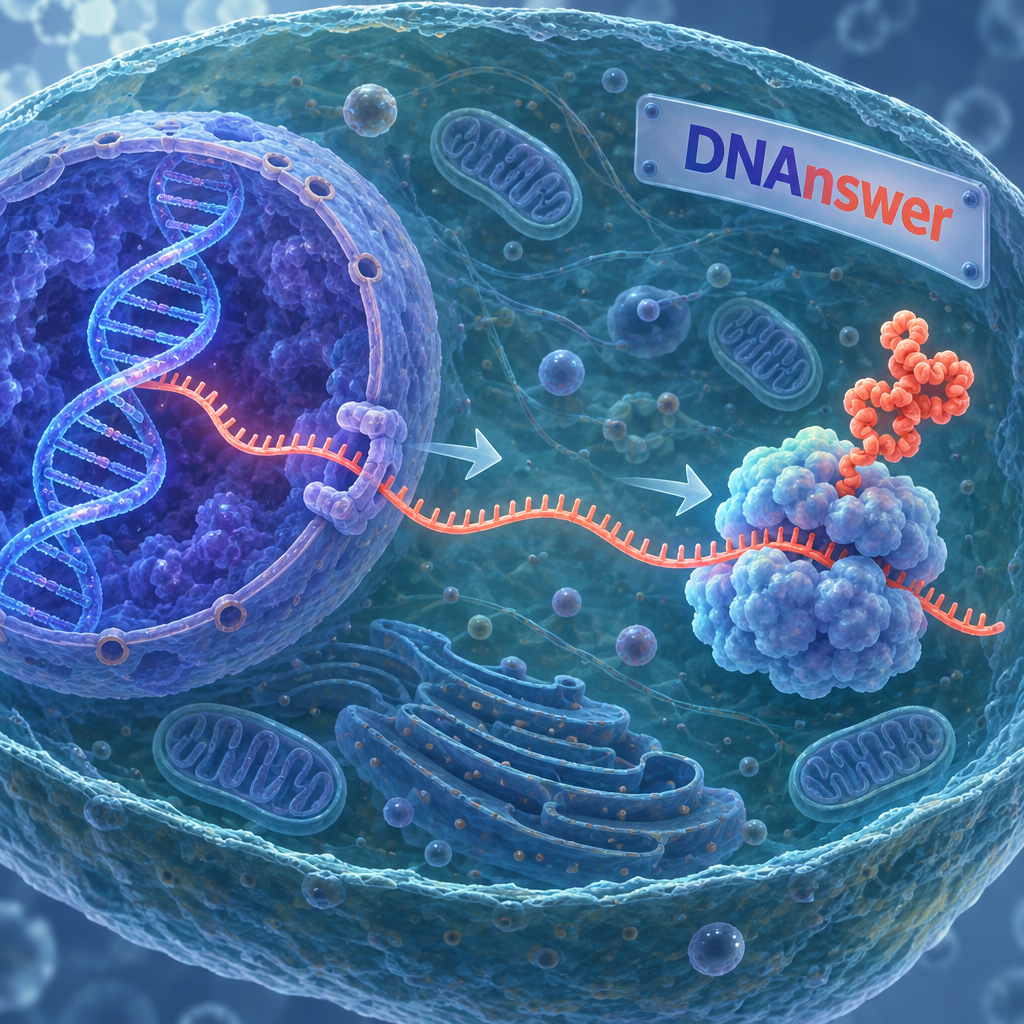
Every time you've heard that a virus "hijacks" your cells to make copies of itself, you were hearing molecular biology. Viruses work by inserting their own genetic instructions into your cells' existing DNA-reading, RNA-making, protein-building machinery. That machinery doesn't check who wrote the instructions — it just executes them. That single fact explains both how infections spread and how mRNA vaccines work: both use the same cellular machinery, just for different purposes.
A Concrete Everyday Example
Think about lactose intolerance. Babies produce an enzyme called lactase that breaks down milk sugar. In most humans worldwide, the gene for lactase gets switched off after early childhood — a normal, programmed change in gene expression, not damage or disease. Some populations, particularly those with a long history of dairy farming, carry a mutation that keeps the gene switched on for life. That's molecular biology explaining something you've probably experienced directly at a dinner table, no lab coat required.
If you want to test how much of this logic you already grasp, running through a short quiz — something like the ones on DNAnswer's app — tends to surface how many of these mechanisms you can already reason through once someone names them for you.
Myth 4: Molecular Biology and Biochemistry Are the Same Thing
Close, but not quite. Biochemistry studies the chemical reactions of life in general — metabolism, digestion, how enzymes speed up reactions. Molecular biology narrows in specifically on the genetic machinery: DNA, RNA, and how they get converted into proteins.
The overlap is real, which is exactly why the confusion is reasonable. Both fields study enzymes. Both care about protein structure. Many university departments even merge the two into a single "biochemistry and molecular biology" major, which reinforces the idea that they're indistinguishable.
Where the Line Actually Sits
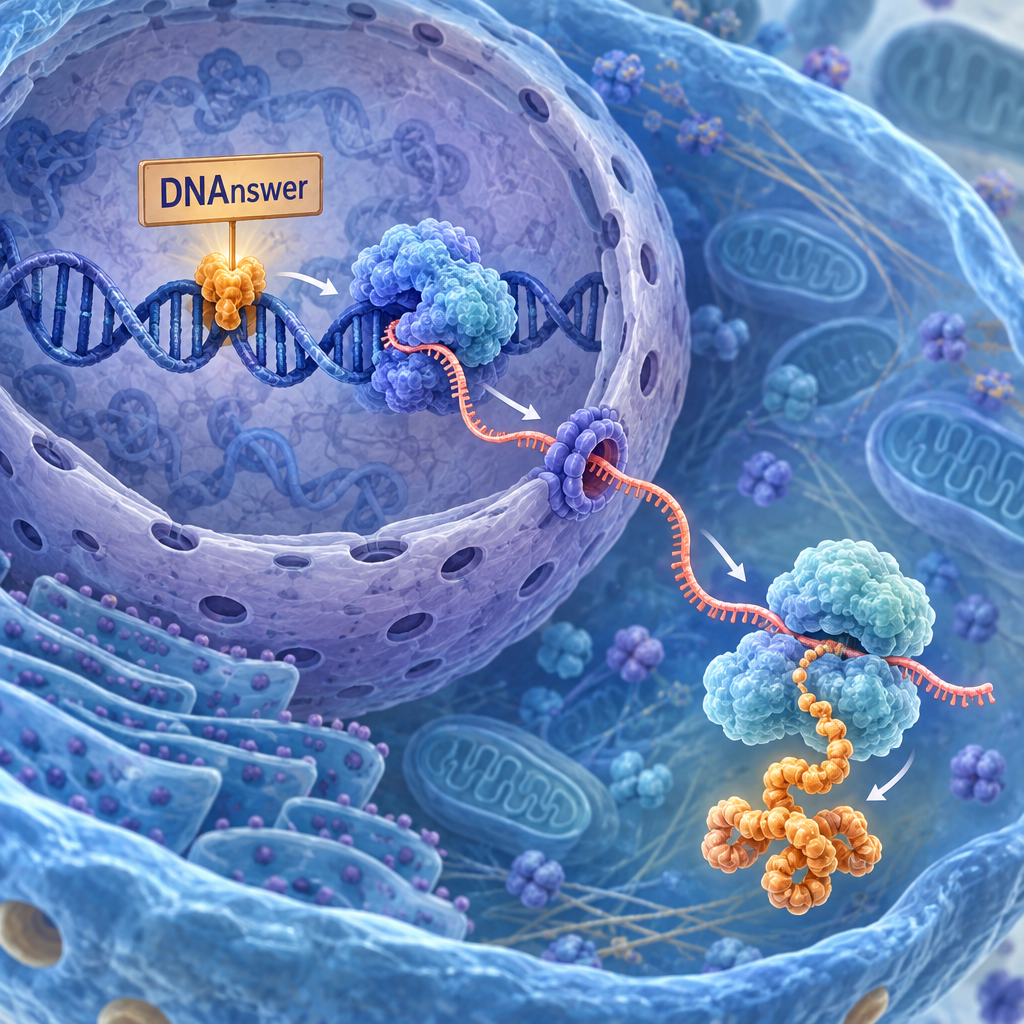
Biochemistry would ask how your liver breaks down alcohol, tracking the chemical reaction step by step. Molecular biology would ask why your liver cells — and not your skin cells — are the ones that express the enzyme responsible for that reaction in the first place. One studies the reaction; the other studies the switch that decided the reaction gets to happen there at all.
Why the Distinction Matters in Practice
If you're reading about a new drug that blocks a specific enzyme, that's largely biochemistry. If you're reading about gene therapy, CRISPR-based editing, or mRNA technology, that's molecular biology, because those approaches work by changing what genetic information gets read or expressed, not by directly altering a chemical reaction. Confusing the two makes both harder to follow, because you end up expecting DNA-editing tools to work like drugs, or expecting drugs to permanently rewrite your genome. Neither assumption holds up, and the mix-up usually traces back to treating these fields as one.
Myth 5: The Central Dogma Is a Strict, No-Exceptions Rule
It's a strong pattern, not an iron law. The central dogma says information flows DNA → RNA → protein, and that's true most of the time — but real, documented exceptions exist, and they matter.
The central dogma was named by molecular biologist Francis Crick in 1958, and for a huge share of biology, it holds up perfectly: your cells copy DNA into RNA (a process called transcription), then convert that RNA into protein (called translation). That one-directional flow explains most of what happens inside a cell every second of your life.
But some viruses break the pattern entirely. Retroviruses, including HIV, carry RNA as their genetic material and use an enzyme called reverse transcriptase to convert that RNA back into DNA inside a host cell — running the arrow backward. That's not a fringe detail; reverse transcriptase is also the enzyme that makes modern PCR (polymerase chain reaction) testing for RNA viruses possible, including many COVID-19 tests.
There's a second wrinkle worth knowing: not all RNA becomes protein. Some RNA molecules do their job without ever being translated — they regulate other genes, help build ribosomes, or edit other RNA molecules directly. Believing the dogma has zero exceptions makes viral evolution, some cancers, and RNA-based drugs look like they're breaking the rules of biology, when they're actually just using a documented, well-understood side channel that molecular biologists have studied for decades.
Conclusion
Stop treating "molecular biology" as a wall of jargon. It's the operating logic behind every gene-editing headline, every vaccine debate, and every "why do I react to this food" question you've ever had. Next time a science story uses the words DNA, RNA, or protein, ask which one is actually doing the work — that single habit will make you a sharper reader of biology news than most people who never took the class.
Frequently Asked Questions
What is molecular biology in simple terms?
It's the study of how DNA, RNA, and proteins interact inside cells to control what a cell does and when. Think of it as the cell's internal instruction-reading and construction system, not just its filing cabinet of genes.
Is molecular biology harder than genetics?
Not harder, just more mechanical. Genetics tracks inheritance patterns across generations; molecular biology tracks the physical steps — transcription, translation, enzyme activity — that make those patterns happen at the cellular level.
Do I need to know chemistry to understand molecular biology?
Basic chemistry helps, but it isn't required to grasp the core ideas. Understanding that DNA stores instructions, RNA carries them, and proteins execute them gets you most of the way without a chemistry background.
Why do scientists still call it the "central dogma" if there are exceptions?
The name stuck from 1958, when Francis Crick coined it, and the pattern still describes most gene activity accurately. Exceptions like retroviruses reversing RNA back into DNA are well documented, not a disproof of the general rule.