Prokaryotic Cell in Biology: Structure and Function
Bacteria outnumber every other life form on Earth, yet most people still describe their cells as "primitive." A prokaryotic cell in biology is just a cell with no nucleus — no membrane sealing off its DNA. That single fact gets twisted into a lot of wrong ideas about what these cells can and can't do.
Some of those ideas cost you real understanding: thinking bacteria are all germs, thinking a cell without a nucleus has no organization at all, or thinking "simple" means "inferior." None of that holds up once you look at how these cells actually work.
Key Takeaways
- Prokaryotic cells lack a nucleus but still organize their DNA tightly in a region called the nucleoid
- Most bacteria and archaea are harmless or beneficial — only a small fraction cause disease
- "Simple" structure means faster reproduction, not evolutionary failure
- Plasmids, pili, and flagella give prokaryotes tools eukaryotic cells don't have
- Archaea and bacteria are separate domains of life, not the same thing
- Binary fission lets some bacteria double their population every 20 minutes
Myth: Prokaryotic Cells Have No Internal Organization
Walk through any introductory biology class and you'll hear it: prokaryotic cells are "just a bag of cytoplasm." No nucleus, no organelles, no structure — basically a water balloon with some DNA floating inside. It's an easy picture to hold onto, especially next to a diagram of a eukaryotic cell packed with labeled compartments.
The kernel of truth here is real. Prokaryotic cells genuinely don't have a nucleus — a membrane-bound compartment that holds DNA — and they don't have mitochondria, chloroplasts, or the other membrane-wrapped organelles you'd find in a plant or animal cell. In that narrow sense, yes, they're less compartmentalized.
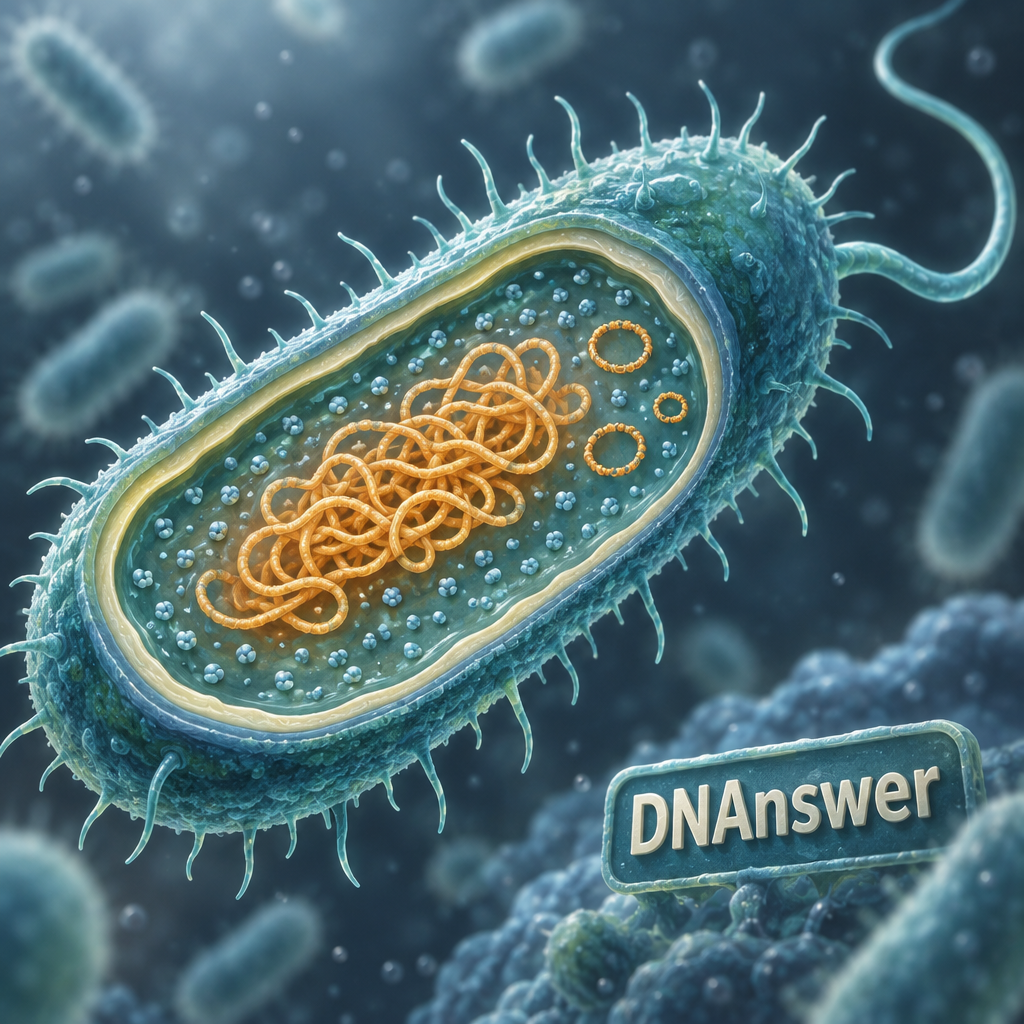
But "no nucleus" doesn't mean "no organization." Every prokaryotic cell concentrates its DNA into a defined region called the nucleoid — not enclosed by a membrane, but tightly coiled and anchored to specific proteins that control where it sits in the cell. The DNA isn't drifting around loose; it's supercoiled, folded, and actively managed by proteins that resemble the structural scaffolding eukaryotic cells use for their own chromosomes.
The Nucleoid Isn't the Only Organized Region
Many bacteria also carry plasmids — small, circular pieces of DNA separate from the main chromosome. Plasmids often carry genes for things like antibiotic resistance or the ability to digest an unusual nutrient source, and bacteria can swap them with each other through a process called conjugation. That's organized genetic real estate, not chaos.
Some bacteria even build internal protein compartments, called microcompartments, that concentrate specific enzymes the way a tiny organelle would. Carboxysomes, found in cyanobacteria, concentrate carbon dioxide and the enzymes needed to fix it into sugar. That's functional compartmentalization without a membrane.
What to Take From This
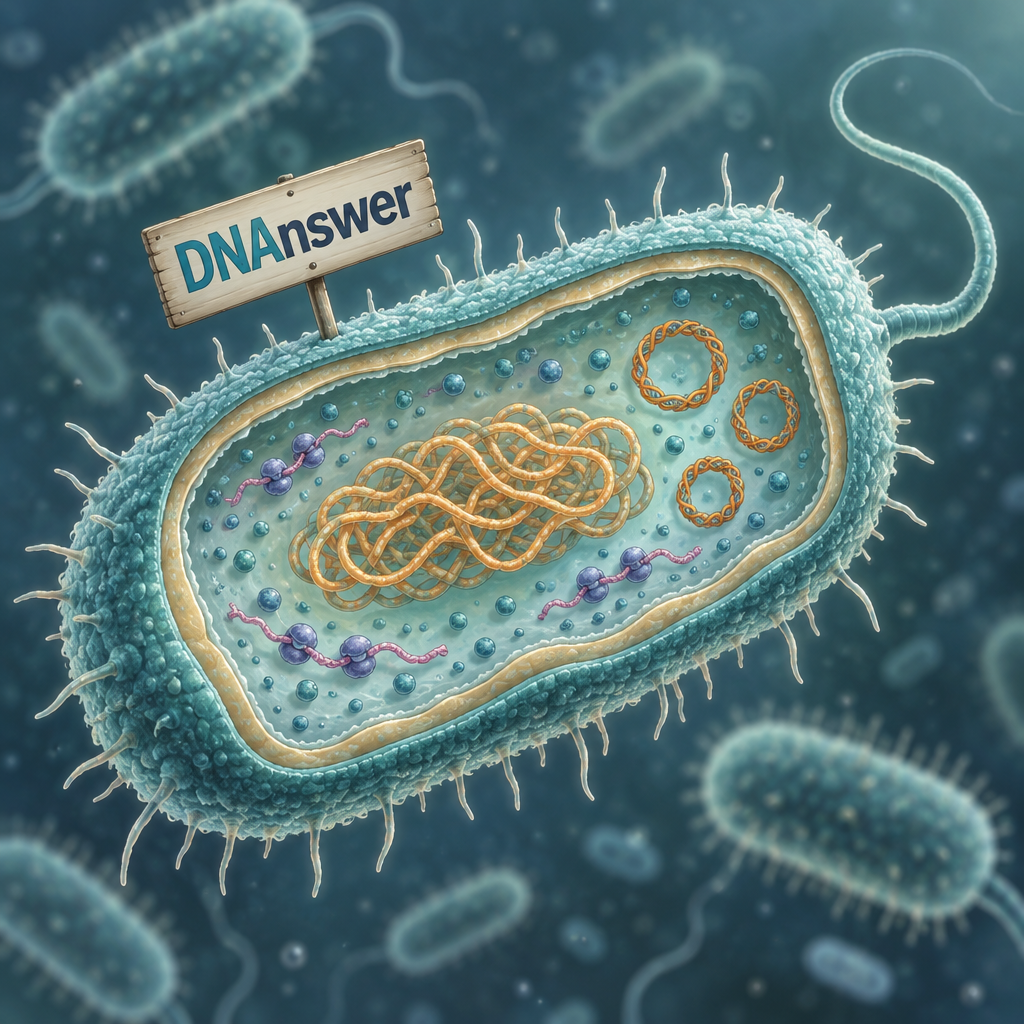
Picture the cytoplasm as a lab bench, not a junk drawer. Ribosomes cluster where protein synthesis happens, the nucleoid sits at a defined cell location, and plasmids float independently but aren't random passengers. The next time someone calls a bacterial cell "unorganized," ask them where the nucleoid is — they'll usually realize the organization is just built differently, not missing.
Myth: All Prokaryotes Are Harmful Bacteria
Say the word "bacteria" to most people and they picture a hospital superbug or a stomach bug ruining a vacation. It's an understandable jump — the bacteria that make headlines are the ones that make you sick. But that mental shortcut erases the vast majority of what prokaryotic life actually does.
Here's the honest origin of the myth: antibiotics, hand sanitizer ads, and food safety warnings have spent decades training you to associate "bacteria" with "threat." Pathogens like Salmonella and E. coli O157:H7 are real and dangerous, and that fear is medically justified. But it's a tiny sliver of the picture.
Out of the estimated hundreds of trillions of bacterial cells in your gut microbiome, only a small number of species cause disease. Most are either neutral or directly helpful. Lactobacillus species ferment the milk in yogurt and help regulate your gut's pH. Bifidobacterium strains help break down fiber your own enzymes can't touch. Soil bacteria like Rhizobium fix nitrogen for legume crops, which is why farmers rotate in soybeans instead of dumping synthetic fertilizer every season.
Archaea Rarely Get Mentioned at All
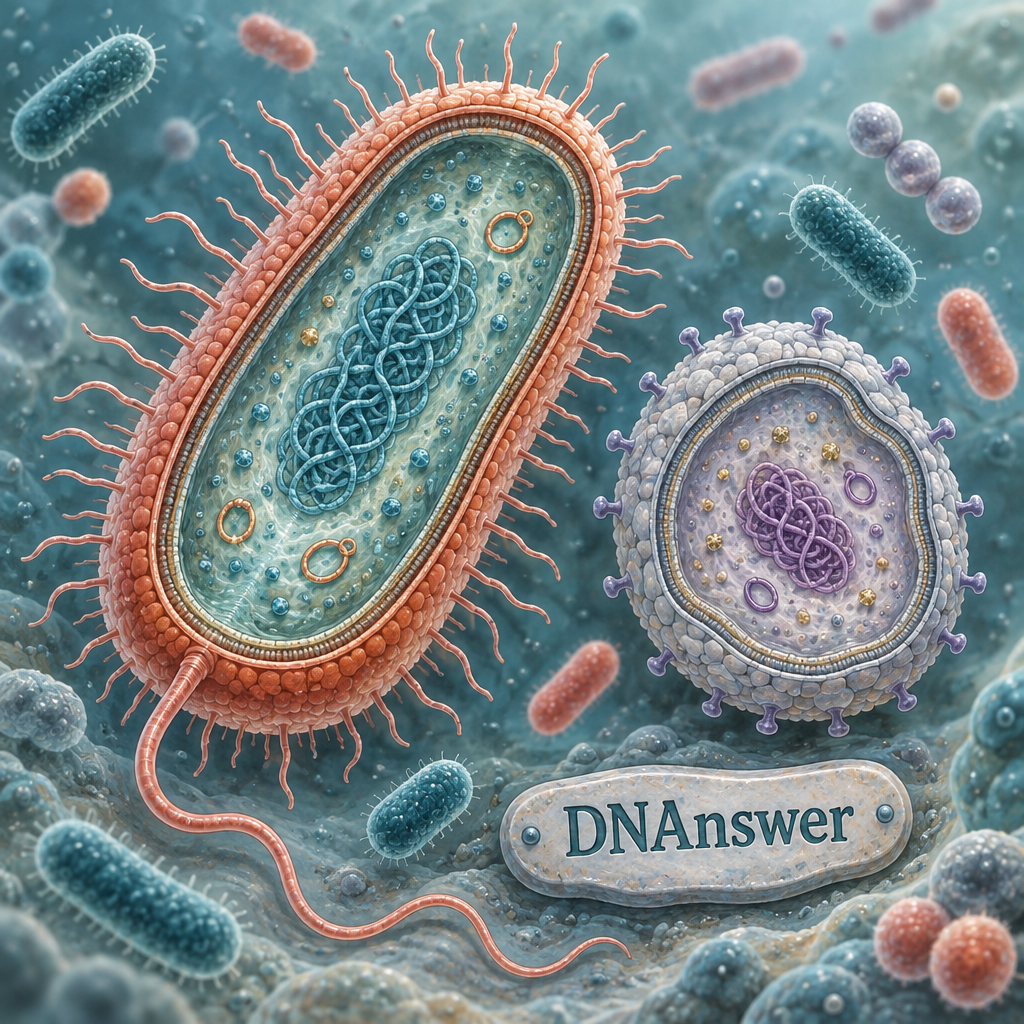
The myth doesn't even account for the second domain of prokaryotic life. Archaea are a separate domain from bacteria — they share the "no nucleus" feature but differ in their membrane chemistry and genetics in ways significant enough that microbiologist Carl Woese split them into their own domain back in 1977. Archaea thrive in salt flats, deep-sea vents at 200 degrees Fahrenheit, and your own gut, where species like Methanobrevibacter smithii produce methane as a byproduct of digestion.
"There are three domains of life: Bacteria, Archaea, and Eucarya." — Carl Woese, who proposed the three-domain classification system in 1990 based on genetic sequencing of ribosomal RNA.
None of the well-known archaea cause human disease. Not one confirmed archaeal pathogen has been documented in humans, which makes the "all prokaryotes are germs" framing even harder to defend once you know archaea exist at all.
A Practical Reframe
Treat "prokaryote" the way you'd treat "mammal" — a category that includes both a wolf and a golden retriever. Some bacteria and archaea cause harm, most don't, and a good number actively keep you alive. If you want to sort out which species in your gut or environment matter, start by asking what that species does, not what domain it belongs to.
Myth: "Simple" Means Evolutionarily Inferior or Unfinished
This is the myth with the most reach, because it's baked into how biology gets taught. Textbooks often show a timeline: prokaryotes first, eukaryotes later, implying bacteria are an early draft that evolution eventually "improved into" something better.
The honest kernel of truth: prokaryotic cells are structurally smaller and less compartmentalized than eukaryotic cells, and they did appear earlier in the fossil record — roughly 3.5 billion years ago, versus about 1.5 to 2 billion years ago for the first eukaryotes. Earlier doesn't mean worse, but it's easy to read it that way.
Here's what the evidence actually shows: E. coli can divide through binary fission — a prokaryotic cell splitting into two identical daughter cells — every 20 minutes under ideal lab conditions. A human cell, by comparison, takes roughly 24 hours to divide. That speed isn't a limitation of "simple" structure; it's a direct result of it. Fewer internal compartments mean less to replicate, less to coordinate, and faster generation times.
Minimalism as a Design Choice
Bacteria have colonized nearly every environment on the planet, including some eukaryotic cells can't survive in. Deinococcus radiodurans can survive radiation doses thousands of times higher than what would kill a human, by rapidly repairing its own shattered DNA. Thermophilic archaea live in hot springs at temperatures that would denature most eukaryotic proteins on contact.
Prokaryotic cells have had roughly 3.5 billion years to refine their design, and they're still the most numerically dominant life form on Earth. If "primitive" meant "failing," you wouldn't find prokaryotes in nearly every square inch of soil, ocean, and human body on the planet. Their small size and lack of internal membranes aren't a missing feature — they're an evolutionary bet that paid off repeatedly, favoring speed and adaptability over complexity.
What Changes When You Drop the Myth
Once you stop measuring prokaryotes against a eukaryotic "ideal," you start noticing why their structure matches their strategy. A cell that needs to divide fast, mutate often, and swap useful genes through plasmids doesn't benefit from a nucleus slowing things down. Complexity isn't a universal upgrade; it's a trade-off, and prokaryotes picked the other side of that trade-off on purpose.
Myth: No Nucleus Means No DNA Organization
This one overlaps with the first myth but deserves its own unpacking, because it specifically confuses two separate ideas: having a nucleus and organizing your DNA. People hear "prokaryotes have no nucleus" and assume that means their DNA is loose and unmanaged, just floating free in the cytoplasm.
It's a reasonable mix-up. A nucleus is the structure most people learn to associate with "where the DNA lives," so removing it seems to imply the DNA has nowhere organized to be. In a eukaryotic cell, the nuclear membrane does help protect and organize chromosomal DNA, so the intuition isn't baseless.
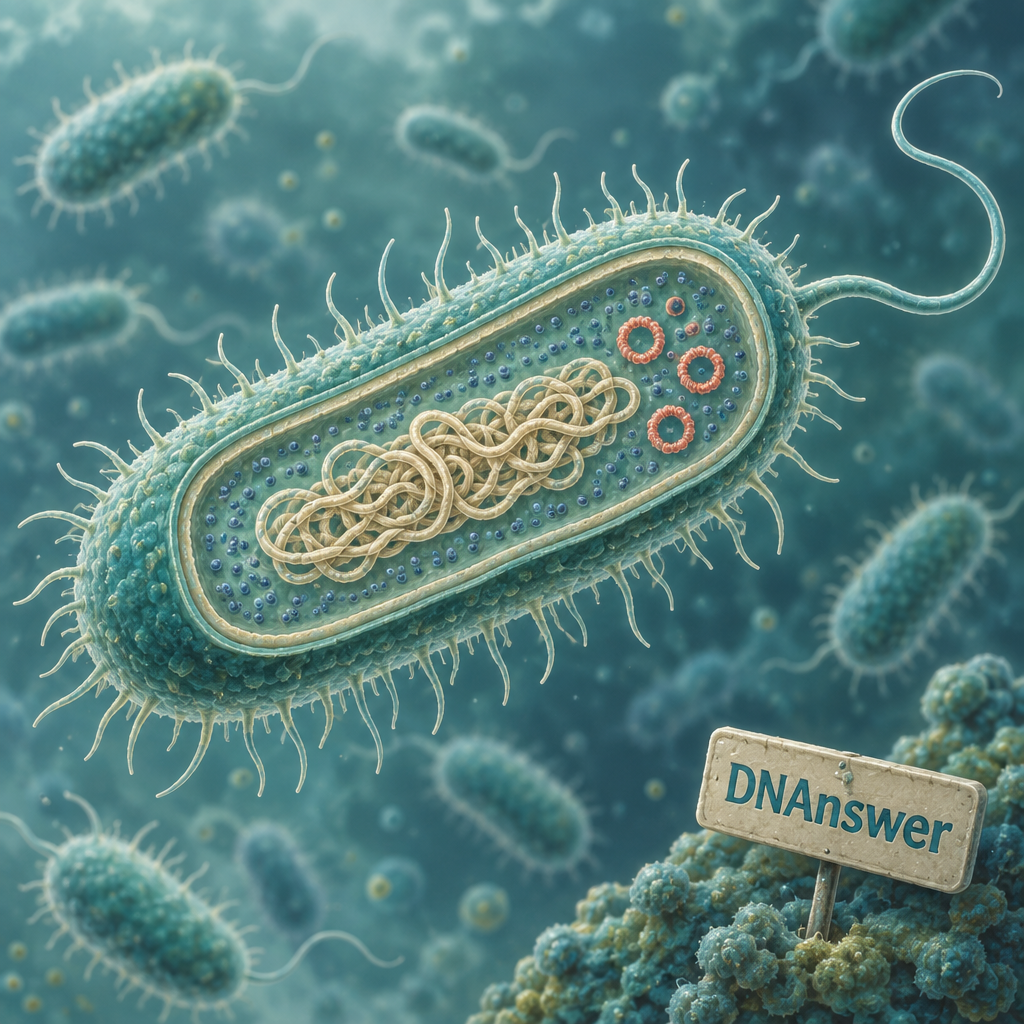
What actually happens: prokaryotic DNA is a single circular chromosome (in most species), supercoiled tightly with the help of proteins like HU and IHF, which work similarly to the histone proteins that package DNA in eukaryotic cells. This coiling isn't optional tidiness — it compacts DNA that would otherwise be about 1,000 times longer than the cell itself into a manageable nucleoid region.
Where the DNA Actually Sits
The nucleoid isn't static, either. During binary fission, the chromosome replicates and the two copies get actively pulled to opposite ends of the cell before division, using proteins analogous to the spindle fibers eukaryotic cells use during mitosis. That's targeted, mechanical organization — not drift.
Plasmids add a second layer most people never learn about. A single bacterial cell can carry multiple plasmids, each replicating somewhat independently of the main chromosome, each potentially carrying distinct genes. Some plasmids exist in dozens of copies per cell; others stick to just one or two. That's a managed genetic inventory, not loose DNA soup.
The Practical Difference
If you're trying to visualize a prokaryotic cell accurately, picture a cell with one neatly coiled main chromosome anchored near its center, plus a scattering of smaller circular plasmids elsewhere in the cytoplasm — not a cell with DNA strands tangled randomly throughout. That distinction matters if you're trying to understand how antibiotic resistance spreads: it spreads largely because plasmids move between bacteria, carrying resistance genes along with them.
The Working Parts: What a Prokaryotic Cell Actually Contains
Instead of defining a prokaryotic cell by what it lacks, it helps to list what it has. Every structure below earns its place through a specific function, and most students memorize the list without ever learning why each piece matters.
- Plasma membrane — the outer boundary that controls what enters and exits the cell, built from a phospholipid bilayer studded with proteins that act as gatekeepers for nutrients and waste.
- Cell wall — a rigid layer outside the membrane, made of peptidoglycan in bacteria, that keeps the cell from bursting under internal pressure and gives it its shape. Archaea build their walls from different materials, like pseudopeptidoglycan, which is part of why antibiotics targeting bacterial walls don't work on archaea.
- Cytoplasm — the gel-like interior where metabolism, protein synthesis, and chemical reactions happen, holding the nucleoid, ribosomes, and plasmids in suspension.
- Ribosomes — the molecular machines that read messenger RNA and build proteins; prokaryotic ribosomes are smaller (70S) than eukaryotic ones (80S), a size difference antibiotics like erythromycin exploit to kill bacteria without harming your own cells.
- Capsule — a sticky outer layer some species secrete beyond the cell wall, helping the cell resist drying out and, in pathogens like Streptococcus pneumoniae, helping it dodge immune detection.
- Flagella — whip-like tails that rotate like tiny propellers, letting the cell swim toward nutrients or away from toxins.
- Pili — shorter, hair-like projections used for attaching to surfaces or to other cells, including the specialized sex pilus some bacteria use to transfer plasmid DNA during conjugation.
Why the List Matters More Than the Diagram
Each structure solves a problem a free-living single cell actually faces: staying intact, moving toward food, resisting drying out, and trading useful genes with neighbors. None of that happens by accident, and none of it reads as "unfinished" once you see the engineering behind it.
Prokaryotic vs. Eukaryotic: A Fair Comparison, Not a Ranking
People default to comparing prokaryotic and eukaryotic cells as if one is the rough draft and the other the final product. A more honest comparison treats them as two different strategies, each suited to different problems.
Size and Speed
A typical prokaryotic cell measures about 1 to 10 micrometers (a micrometer is one-millionth of a meter) across, while a typical eukaryotic cell runs 10 to 100 micrometers — often ten times larger. That smaller size gives prokaryotes a bigger surface-area-to-volume ratio, meaning nutrients diffuse in and waste diffuses out faster, which is part of why they can divide so quickly.
Genetic Strategy
Eukaryotic cells store DNA in multiple linear chromosomes, protected inside a nuclear membrane, with elaborate repair and checkpoint systems before division. Prokaryotic cells skip most of that machinery, running a leaner system that replicates faster but tolerates more mutation. That higher mutation tolerance is exactly why bacteria adapt to new antibiotics faster than most lab-developed drugs can keep up with.
Where This Actually Matters to You
This isn't just a classroom distinction. It explains, for instance, why antibiotics can target bacterial ribosomes or cell walls without harming your own eukaryotic cells — the structures are different enough for a drug to be selective. If you've ever wondered how bacteria develop antibiotic resistance within a patient's hospital stay while your own cells don't mutate nearly that fast, the gap in replication speed and mutation tolerance is the answer. Testing that kind of comparative knowledge is the sort of thing you'll find turned into a quiz question on an app like dnanswer.app, where cell structure comparisons get framed as short, checkable challenges rather than a wall of textbook text.
Conclusion
Once you drop the "simple means lesser" framing, prokaryotic cells stop looking like unfinished eukaryotes and start looking like what they are: a different, highly refined survival strategy. Next time you read "bacteria" in a headline, ask which species, and whether it's one of the rare harmful ones or one of the many that aren't.
Frequently Asked Questions
Is a prokaryotic cell less complex than a eukaryotic cell?
It has fewer membrane-bound compartments, but complexity isn't the same as capability. Prokaryotic cells still organize DNA, run metabolism, move, and reproduce — just without a nucleus or organelles managing those jobs separately.
Do all prokaryotic cells have a cell wall?
Nearly all bacteria and archaea have one, but the materials differ: bacterial walls use peptidoglycan, while archaeal walls use different compounds like pseudopeptidoglycan or glycoproteins. A few bacterial species, like Mycoplasma, lack a wall entirely.
What's the actual difference between bacteria and archaea?
Both lack a nucleus, but they differ in membrane chemistry, cell wall materials, and genetics significant enough to place them in separate domains of life. Archaea often live in extreme environments, though many also live in ordinary soil, water, and your gut.
How fast can a prokaryotic cell reproduce?
Under ideal lab conditions, E. coli divides through binary fission roughly every 20 minutes. Most prokaryotes in real environments divide much slower, limited by available nutrients, temperature, and competition from neighboring microbes.