Mutualism in Biology: How Gut Microbes and Other Partners Help Each Other
Does mutualism mean both partners always win? No. Mutualism is a relationship between two species in which each gets a net benefit, and "net" is the catch. Your gut bacteria ferment fiber you can't digest, and in return they get food and a stable home. Bees and flowers, and corals and algae, run similar trades. But the benefits are uneven, and they shift with conditions.
Key Takeaways
- Mutualism means net benefit for both species, not equal or guaranteed gains.
- Symbiosis is the broad category; mutualism is one type inside it.
- Only a core of gut microbes are proven partners.
- Partners cheat, and mutualisms can slide toward parasitism.
- Many mutualisms are optional; partners can survive apart.
Myth 1: "Mutualism Means Everybody Wins, Equally, Every Time"
Picture a farmers' market stall. You hand over $4, you get a loaf of bread. Both sides come out ahead, but nobody claims the trade is perfectly fair, and it falls apart if the price changes. Mutualism works the same way.
Why people believe it
Nature documentaries love tidy stories: the clownfish and the anemone, the bee and the flower. Textbooks often describe mutualism as a "+/+" interaction (both partners gain), and that shorthand is accurate as far as it goes. A clean, harmonious picture is also easier to remember.
What the evidence shows
The proper definition is a net benefit for each species, meaning gains outweigh costs. Each partner pays something. A plant gives sugar to feed its root fungi. A flower makes nectar, which costs energy, to attract a pollinator. If the cost climbs above the payoff, the deal stops being worth it.
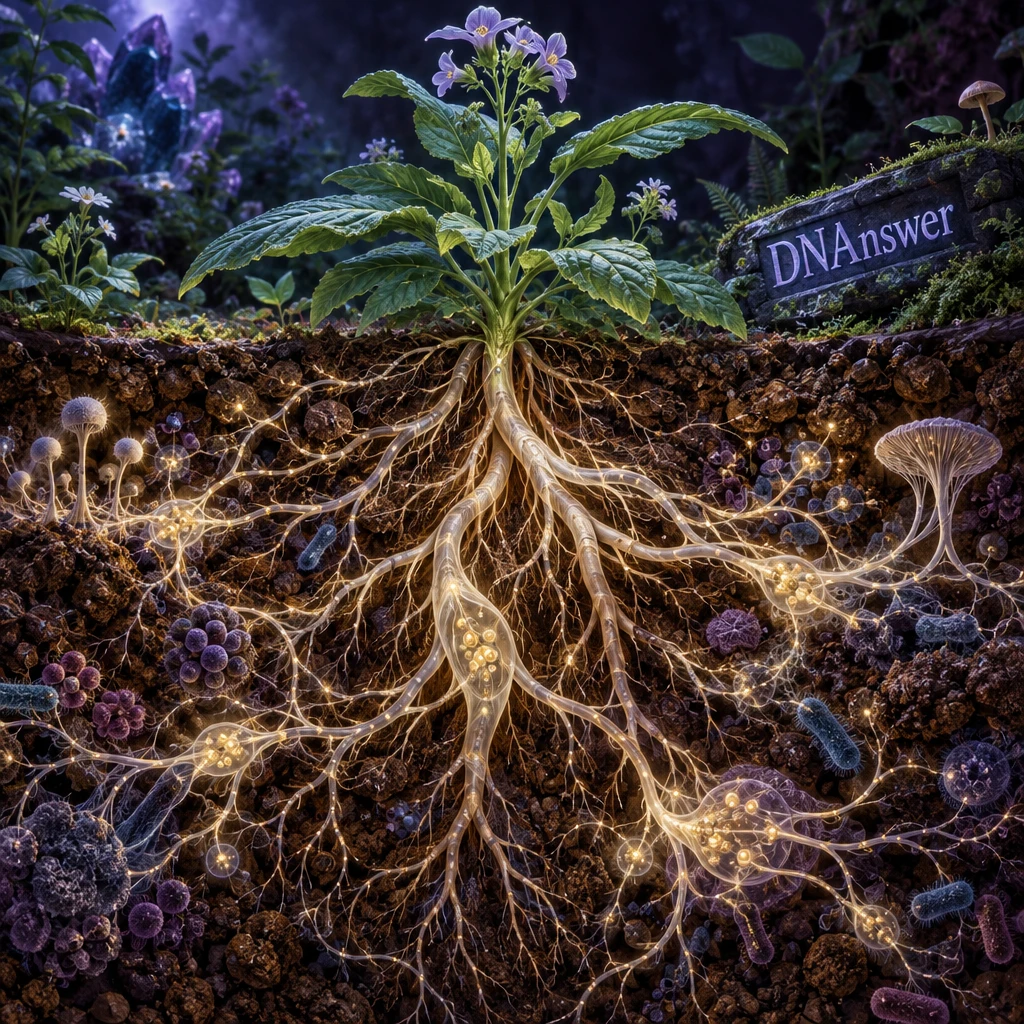
Context moves that line. Mycorrhizal fungi (fungi that live on and inside plant roots) are a good case. The plant hands the fungus carbohydrates and receives mostly phosphate, plus some nitrogen compounds. Scientists describe this as a "biological barter." When soil is already rich in phosphate, the plant gains less from the trade, and the fungus can start to look more like a drain than a helper.
Mutualism can even evolve from parasitism. Two species that began with one-sided benefits can drift toward a fair exchange over time. The reverse can happen too.
What to do with this: when you hear "win-win" about a biological partnership, ask what each side pays and what changes the price.
Myth 2: "Symbiosis and Mutualism Mean the Same Thing"
Symbiosis means two species living in close contact over a long stretch of their lives. That's it. It says nothing about whether the contact is good for either one.
Mutualism is one kind of symbiosis. The others include commensalism (one species benefits, the other is unaffected) and parasitism (one benefits, the other is harmed). Some sources also list amensalism, where one species is harmed and the other is untouched.
Why the words got mixed up
Biologists themselves used the terms interchangeably for decades. Pierre-Joseph van Beneden coined "mutualism" in 1876 in his book Animal Parasites and Messmates, meaning "mutual aid among species." Meanwhile, "symbiosis" often appeared in popular writing as a warm word for partnership. The confusion stuck.
There is a further wrinkle. Not every mutualism is symbiotic. A bee visits a flower for minutes, then leaves. That's mutualism without long-term physical contact, so it isn't symbiosis in the strict sense.
The three main types side by side
Think of a barnacle on a whale's skin. The barnacle gets a ride and food-rich water. The whale mostly doesn't notice. That's commensalism. A tapeworm in a dog's intestine takes nutrients and harms the dog. That's parasitism. The dog's gut bacteria that ferment fiber and get a warm home in return? Mutualism.
The same species pair can move between categories. A gut bacterium that behaves well in your colon can cause infection if it escapes into your bloodstream. Its address changed, so the relationship did.
Use the words precisely: say "symbiosis" for the close-contact category, and "mutualism" only when both sides gain.
Myth 3: "Every Microbe in Your Gut Is a Helpful Partner"
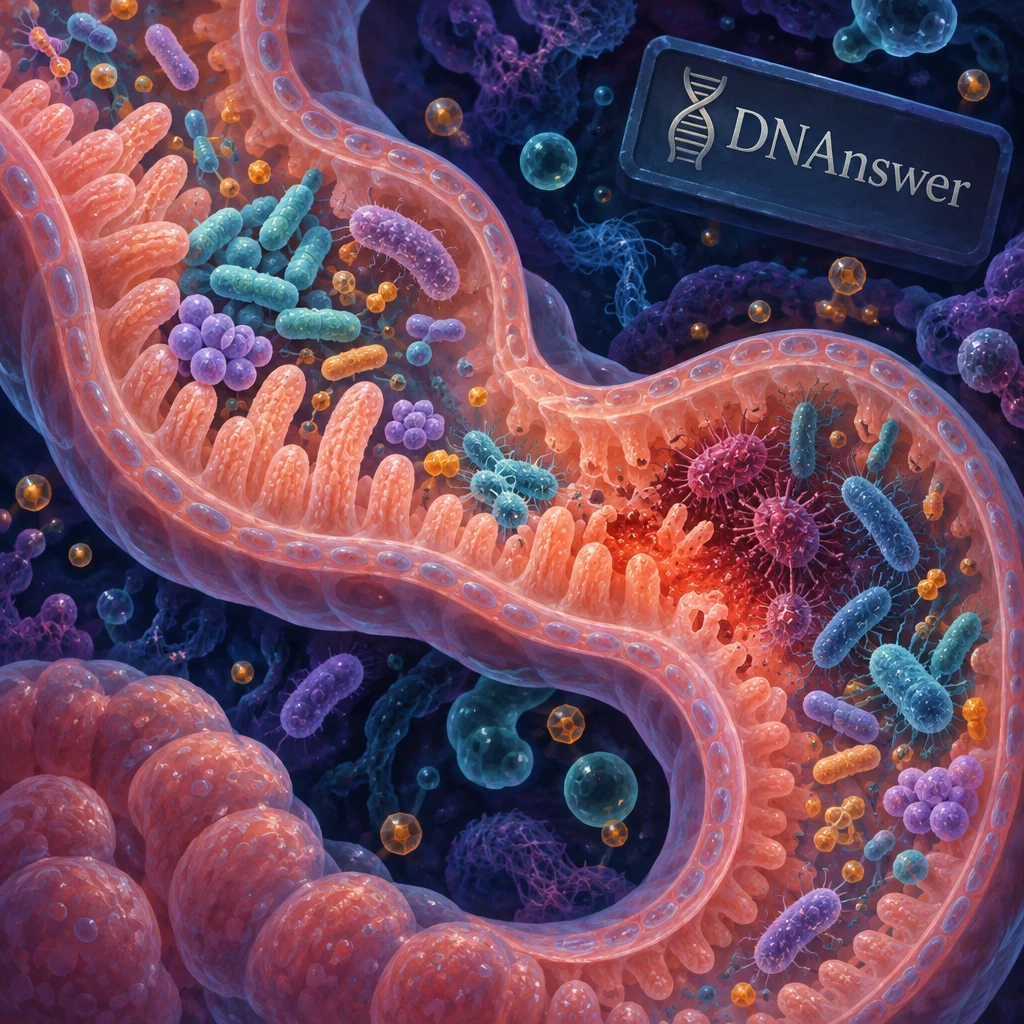
Good bacteria is a catchy phrase, and it sells a lot of yogurt. The reality is messier. Your gut holds trillions of microbes: bacteria, fungi, viruses and archaea (single-celled organisms that look like bacteria but belong to a separate branch of life). Not all of them are partners.
The kernel of truth
A healthy gut is mostly mutualistic. You supply a warm, food-rich home. The microbes break down food, make some vitamins and help block pathogens (disease-causing microbes). Groups like Lactobacillus and Bifidobacterium are well-known examples of helpful residents.
Where the simple version breaks
Some gut microbes are commensals, taking a free meal without helping or harming you. Others are neutral until something changes. A few cause trouble when antibiotics, illness or a poor diet shift the balance. That imbalance is called dysbiosis.
A study of a healthy Mediterranean group followed infants, adults and older adults for more than two years. It found a core of mutualistic symbionts that persisted across life, alongside other microbes that behaved more independently. The picture is a stable core plus a shifting crowd, not a uniformly friendly community.
Mapping which microbes are partners is also hard. Most evidence comes from correlation, meaning a microbe shows up more often in healthy people. That doesn't prove it causes the health.
What to do: treat probiotic marketing with caution. A label saying "good bacteria" doesn't tell you which species are in the product, whether they survive your stomach acid, or whether they settle in your gut.
How the Gut Deal Actually Works
Here is the trade at the molecular level. You can't digest most dietary fiber because your body lacks the enzymes to cut those carbohydrate chains. Your gut bacteria have them.
Fermentation and short-chain fatty acids
Bacteria in your colon ferment fiber, which means they break it down without oxygen. The leftovers are short-chain fatty acids, small fat molecules such as acetate, propionate and butyrate. You absorb them and use them. Butyrate is a major fuel for the cells lining your colon.
So the bacteria get a meal. You get fuel and a healthier gut lining.
The signals that hold the deal together
The partnership isn't only about food. Microbes release metabolites (small molecules produced by chemical reactions) that talk to your immune system, helping it tell friend from foe. Your body, in turn, adjusts the mucus layer that lines the gut and sends out immune molecules that shape which microbes can settle in.
Think of it as a negotiation with ongoing paperwork. Your gut sets the rules. The microbes respond with chemical messages. If either side stops following the terms, the trade gets rocky.
Bacteria in your gut help break down certain complex carbohydrates and dietary fibers that you can't break down on your own. — Cleveland Clinic
What shifts the deal
Diet changes it fast. Eat very little fiber and the fiber-fermenting bacteria go hungry, while microbes that feed on the mucus layer can gain ground. Antibiotics shift it too, wiping out partners along with pathogens. This is why a fiber-rich diet (beans, oats, vegetables) is a practical way to feed the partners you already have.
Myth 4: "Mutualism Is Kindness, and Partners Plan It"
No microbe decides to help you. No flower loves a bee. Mutualism emerges because each partner's own self-interest happens to line up with the other's. Natural selection favors individuals that get a better return from the trade.
Why the myth feels right
Words like "partner," "cooperate" and "soulmate" slip into descriptions of mutualism because they make the story easy to tell. They also hide the mechanism: nobody is being generous.
Cheating shows the self-interest
If mutualism were kindness, nobody would cheat. But cheaters are common.
- Some orchids imitate flowers that offer nectar, attract pollinators and give nothing back.
- Some insects bite a hole in the base of a flower to steal nectar without touching the pollen.
- Some mycorrhizal fungi take plant sugar while delivering less phosphate than they could.
- Some root bacteria on legumes fix little nitrogen yet still receive carbohydrates.
Hosts fight back. Plants can limit sugar to poor-performing partners, a kind of sanctioning. This enforcement is part of what keeps mutualism stable over evolutionary time. Without it, cheats would spread and the partnership would collapse.
The practical lesson: when a mutualism looks "perfect," look for the enforcement. Stable partnerships usually have a mechanism that punishes cheating.
Myth 5: "All Mutualisms Are Lifelong, Can't-Live-Apart Bonds"
Lichens look like one organism, and in some cases the partners really can't live alone. That's the image people carry: two species locked together forever. Many mutualisms are looser.
Obligate vs. facultative
In obligate mutualism, at least one partner can't survive without the other. In facultative mutualism, both can live alone, and the partnership is a bonus when conditions are favorable.
Corals and the algae called zooxanthellae are close to obligate for many reef-building corals. The algae live inside coral tissue and supply sugars from photosynthesis, which is how reef corals get much of their food. Heat stress can make corals expel the algae, which is the cause of coral bleaching. A bleached coral isn't dead yet, but it is starving.
Honeybees and wildflowers are more facultative. A bee can visit hundreds of plant species, and most flowers have more than one pollinator. Lose one partner and the other has backups.
Your gut sits in the middle
Humans can survive without any particular bacterial species, so individual gut partners are facultative. Yet we depend on the community as a whole, so the whole set behaves a bit like an obligate partner. Research on animals raised with no gut microbes (called germ-free animals) shows they have underdeveloped immune systems and need more food to keep their weight.
Other Partnerships Worth Knowing
If you want five examples to remember, these cover the main patterns. Each shows a different kind of trade.
- Gut bacteria and humans: fiber fermentation for food and shelter.
- Bees and flowering plants: nectar for pollen transport.
- Corals and algae: sugar for a protected, sunny home.
- Mycorrhizal fungi and plants: phosphate for carbohydrates. About 80% of land plant species rely on these fungi.
- Rhizobia and legumes: fixed nitrogen for energy-rich sugars.
Defensive mutualism
In defensive mutualism, one partner gets food or shelter and pays by protecting the other from predators, parasites or other threats. The classic case is ants living on acacia trees: the tree provides hollow thorns and food, and the ants attack browsing animals. Your gut offers a version too, since resident microbes crowd out pathogens competing for the same space and food.
Seed dispersal
Plants also pay animals with fruit to carry seeds away. Estimates for tropical rainforest plants that depend on animals for seed dispersal range from at least 70% to 93.5%. Remove the birds and monkeys and that forest loses its ability to renew itself.
How to Test a Claim About "Good" Microbes
When you read a headline about a helpful microbe, run it through four questions. Is the evidence from humans or only mice? Does it show cause, or only a link? Which species or strain was tested? And what conditions (diet, age, medication) did the study cover?
Microbiome science is young, and many results hold only under specific conditions. That doesn't make the field weak. It makes it a negotiation, and the terms are still being mapped.
If you'd like to test what you've learned, DNAnswer has free quizzes on molecular biology that cover microbes and symbiosis, and you can track your progress on the web app.
Conclusion
Next time you hear "good bacteria," ask what the trade is: what does the microbe get, what do you get, and what could change the price? Feed your gut partners with fiber from whole foods rather than relying on a label. And when someone calls a partnership perfect, look for the cheating it has to prevent.
Frequently Asked Questions
What is the mutualism between gut bacteria and humans?
Gut bacteria ferment fiber you can't digest and release short-chain fatty acids that fuel your colon cells. In return, you give them food and a stable, warm home. The microbes also help train your immune system.
Is mutualism always beneficial to both partners?
No. Mutualism means each partner gets a net benefit, not a guaranteed or equal one. Costs, soil, diet or temperature can change the balance, and partners can cheat.
How is mutualism different from commensalism?
In mutualism, both species gain. In commensalism, one gains and the other is unaffected. A barnacle riding on a whale is a standard example of commensalism.
Is the whole gut microbiome mutualistic?
No. Evidence points to a core of mutualists plus many commensal or context-dependent microbes. Some turn harmful when diet, antibiotics or illness upset the balance.