Evolutionary Biology: How Species Change Over Time
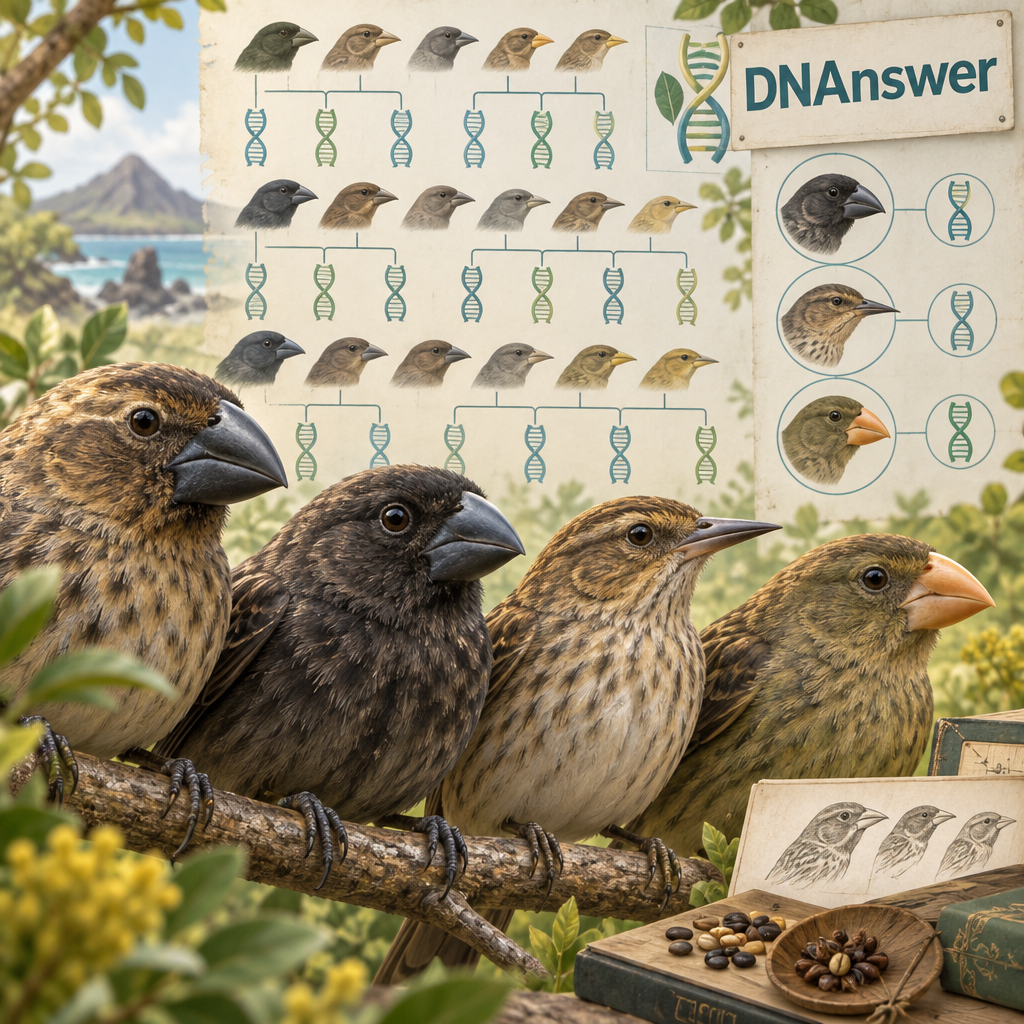
Nobody's arm gets longer because they spent a lifetime reaching for high shelves — that's not evolutionary biology, that's just muscle memory. Yet a huge number of people, including plenty who took biology in high school, still think evolution works like a video game character leveling up during a single life. It doesn't. Evolutionary biology studies how populations change across generations, driven by shifts in DNA that get passed down, not by anything an individual does or wants during their own lifetime.
That mix-up isn't harmless. It shapes how people think about vaccines, antibiotic resistance, and even conversations about human origins at Thanksgiving dinner. Getting the mechanism right changes what you believe is possible — and what you can verify with your own eyes, using nothing more than a DNA comparison tool and some curiosity.
Key Takeaways
- Evolution changes populations over generations, never a single organism's own body
- "Survival of the fittest" means reproductive success, not physical strength
- Evolution has no built-in direction toward "better" or more complex life
- A scientific theory is a tested explanation, not a guess
- Humans and chimpanzees share a common ancestor — neither evolved from the other
- You can check DNA similarity claims yourself using public genome databases
Myth: You Personally Evolve During Your Lifetime
You don't evolve. Your population does, over many generations, and only because DNA changes get passed to offspring. If you build muscle at the gym or catch a suntan, none of that rewrites the DNA in your sperm or egg cells, so it never reaches your kids.
This myth is understandable. Growing up feels like transformation — you get taller, stronger, your skin changes with the seasons. It's easy to slide from "I changed" to "I evolved" because both words describe change over time. The kernel of truth is that individuals do change, biologically, through development and environment. That process even has its own name: phenotypic plasticity, meaning an organism's traits shifting in response to its surroundings without any change to its underlying genetic code.
Evolutionary biology draws a hard line between that kind of change and actual evolution. Evolution requires a shift in the frequency of gene variants across an entire population, generation after generation. A weightlifter's muscles don't evolve. A population of bacteria exposed to an antibiotic does evolve, because the individuals lacking resistance genes die off and the survivors — who happened to carry a mutation, a random change in their DNA sequence — pass that resistance on. Nobody in that bacterial colony changed their own DNA on purpose. The ones with the right mutation simply survived and reproduced more.
You can see this play out in real time with things like MRSA (methicillin-resistant Staphylococcus aureus), a strain of bacteria that became resistant to certain antibiotics over repeated exposure across many bacterial generations, not within one bacterium's lifespan. The generation is the unit that evolves. The individual is just a temporary carrier of genes.
So next time someone says "I've evolved past that," know it's a metaphor, not biology. What actually happened is learning, or habit change, or aging — all real, all human, none of it evolution in the scientific sense.
Myth: Evolution Always Builds "Better" or More Complex Life
Evolution has no goal, no ladder, and no finish line labeled "better." It only rewards whatever traits let an organism survive and reproduce in its specific environment, and sometimes that means getting simpler, not more complex.
The idea that evolution climbs toward perfection is baked into pop culture. Cartoons show a straight line from fish to lizard to monkey to human, each step "improved." Real evolutionary trees look nothing like that — they branch endlessly, with no single "top."
Where the Ladder Idea Comes From
Part of the confusion traces back to old, pre-Darwinian ideas like the Great Chain of Being, a medieval framework ranking life from "lowest" to "highest," with humans near the top. Darwin's actual model, laid out in On the Origin of Species (1859), replaced that ladder with a branching tree, where every living species is equally "successful" at existing right now.
What Complexity Actually Tracks
Complexity increases sometimes, because complex structures occasionally solve survival problems well. But plenty of lineages get simpler over time and thrive anyway. Tapeworms lost their digestive systems entirely, since they absorb nutrients straight from their host's gut. Cave-dwelling fish lose eyes because eyes cost energy to build and maintain, and in total darkness, they're useless. Losing them isn't devolution — it's the same selection pressure working in the opposite direction.
Bacteria have been "simple" single cells for roughly 3.5 billion years and are, by sheer biomass and population, probably the most successful life form on Earth. No biologist ranks them below humans on some evolutionary scoreboard — there isn't one. If your environment doesn't reward complexity, evolution won't build it, no matter how much time passes.
Myth: "Survival of the Fittest" Means the Strongest Wins
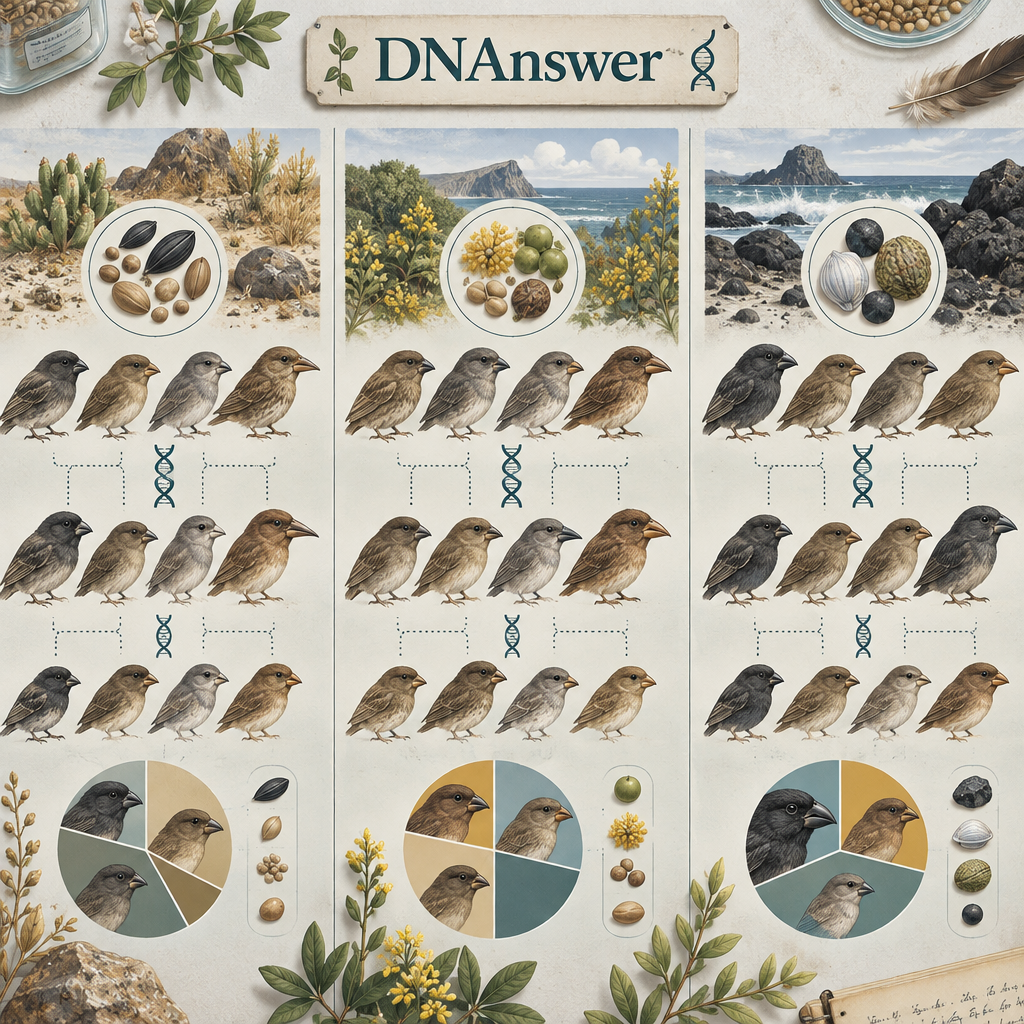
"Fittest" in evolutionary biology has nothing to do with muscle, speed, or dominance fights. It means whoever leaves behind the most surviving offspring, full stop. A frail, unimpressive organism that successfully mates hundreds of times outcompetes a strong one that mates once — evolutionarily, the frail one wins.
The phrase itself wasn't even Darwin's invention. Philosopher Herbert Spencer coined "survival of the fittest" in 1864, borrowing Darwin's ideas but framing them in language that fit Spencer's own social theories about competition among people. Darwin later used the phrase too, but the term picked up a "might makes right" flavor almost immediately, and it never fully shook that reputation.
What "Fitness" Actually Measures
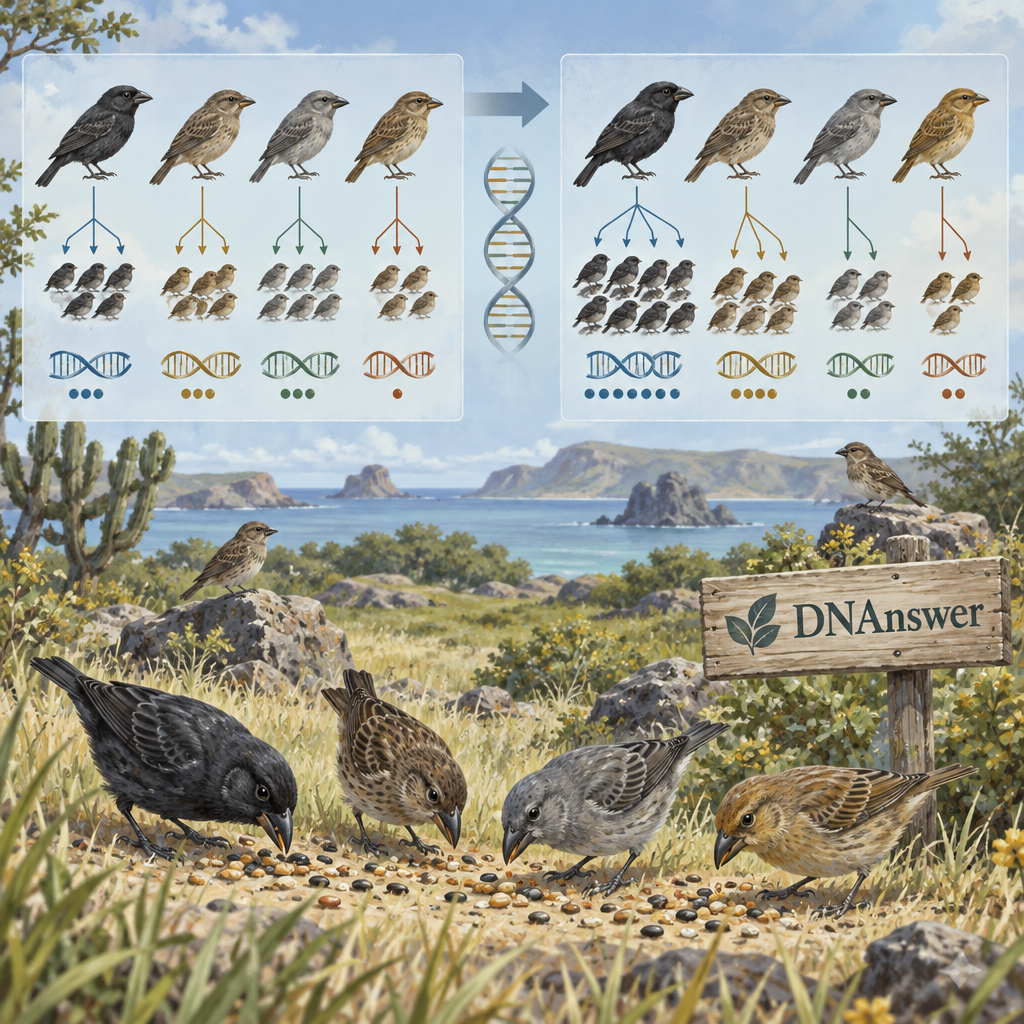
Biologists define fitness as reproductive success relative to others in the population — essentially, whose genes show up in the next generation, and how many times. A peacock's giant tail doesn't make him stronger or faster; it can actually slow him down and attract predators. It persists because peahens prefer it, so tail-having males reproduce more.
Cooperation Counts Too
Cooperation, camouflage, disease resistance, and even a knack for hiding from predators all raise fitness just as much as brute strength does — sometimes more. Male elephant seals fight brutally for mating access, and here strength genuinely matters. But among many songbirds, the "fittest" male is the one who sings the most complex song or builds the sturdiest nest. Selection pressure — the environmental force determining who reproduces and who doesn't — targets whatever trait matters most in that specific context, and strength is just one option among many.
Myth: Evolution Is "Just a Theory," So It's Unproven
In casual conversation, "theory" means a hunch. In science, a theory is a thoroughly tested explanation backed by repeated, independent evidence — the same word category as germ theory or the theory of gravity. Calling evolution "just a theory" confuses two completely different meanings of the same word.
This confusion has a real origin: English is genuinely ambiguous here, and nobody explains the difference in most school curricula. A "theory" in everyday speech is a guess you haven't checked. A scientific theory has already survived attempts to disprove it, repeatedly, across independent lines of evidence.
Evolutionary biology has that kind of support from multiple, unrelated directions. Fossil evidence shows a clear sequence of transitional forms, like the whale ancestor Pakicetus, a land mammal with whale-like ear bones dated to roughly 50 million years ago. Direct observation confirms it too — biologists have watched finch beak sizes shift measurably within a few generations on the Galápagos Islands in response to drought conditions. And DNA comparison studies, the most checkable evidence of all, show predictable patterns of shared genetic sequences that only make sense if species share ancestry.
"Nothing in biology makes sense except in the light of evolution." — Theodosius Dobzhansky, 1973
That's not a slogan. Dobzhansky, a geneticist, was pointing out that evolutionary theory doesn't just describe the past — it makes testable predictions about genetics, disease, and agriculture that keep checking out. Every year, geneticists compare millions of DNA sequences across species, and the patterns they find keep matching what evolutionary theory predicts. A theory that keeps surviving decades of attempts to break it isn't a guess — it's the most reliable kind of scientific claim there is.
Myth: Humans Evolved From Modern Apes
Humans didn't evolve from chimpanzees, gorillas, or any ape alive today. Humans and chimpanzees share a common ancestor — a now-extinct species that existed roughly 6 to 8 million years ago, and both modern lineages evolved separately from that shared starting point.
Picture a family tree instead of a straight line. You didn't evolve from your cousin, even though you share a grandparent. Humans and chimps are evolutionary cousins in exactly that sense: related, but neither one is the "parent" of the other. Chimps have been evolving down their own branch for millions of years too, adapting to their own environment the whole time.
The DNA Backs This Up Directly
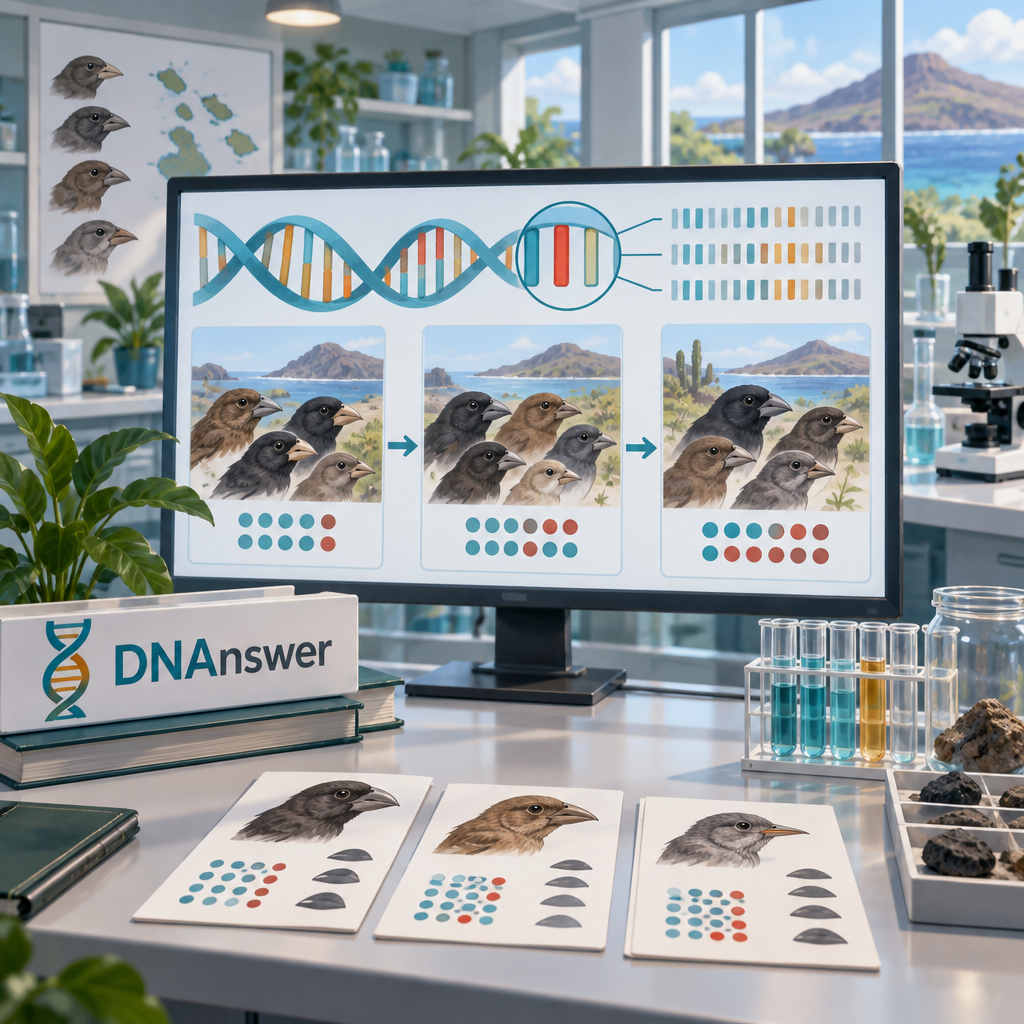
Humans and chimpanzees share around 98-99% of their DNA sequence, depending on which regions of the genome researchers compare — a figure that comes from direct genome sequencing comparisons published by researchers including those at the National Human Genome Research Institute. That overlap isn't a coincidence; it's the fingerprint of shared ancestry, the same reason siblings share more DNA with each other than with random strangers.
Why the "From Apes" Version Persists
Old textbook illustrations showing a chimp-like creature walking upright into a modern human didn't help. Neither did casual language — people say "we came from monkeys" because it's shorter than "we share a common ancestor with monkeys and apes," even though the second phrase is the accurate one. Fossils like Australopithecus afarensis (the species that includes the famous "Lucy" skeleton, dated to about 3.2 million years ago) sit on the human branch of the tree, not the chimp branch — they're an extinct ancestor of humans specifically, not a modern ape mid-transformation.
How You Can Check the DNA Evidence Yourself
You don't need a lab or a biology degree to verify any of this. Public genome databases let anyone compare DNA sequences across species directly, and the patterns line up with evolutionary predictions every single time.
The clearest place to start is a gene most living things share in some form: cytochrome c, a protein involved in cell energy production. Compare the human version to a chimpanzee's, and they're nearly identical. Compare human to yeast, and the differences grow — but the gene still works, because the core function stayed useful across an enormous evolutionary distance.
Here's a simple way to explore this on your own:
- Search a public tool like the NCBI's BLAST database (blast.ncbi.nlm.nih.gov), which is free and open to anyone.
- Pick a well-studied gene sequence — cytochrome c or hemoglobin work well for beginners.
- Compare the human version against a chimpanzee, a mouse, and a fish.
- Watch the similarity percentage drop as the species get more evolutionarily distant from humans.
- Cross-check that pattern against a phylogenetic tree, a branching diagram showing estimated relationships between species based on shared traits and DNA.
That pattern — closer relatives sharing more DNA, distant relatives sharing less — is called a nested hierarchy, and it's one of the strongest, most checkable signatures of common ancestry in all of biology. It shows up the same way whether you're comparing full genomes or single genes, and it would look completely random if species had appeared independently instead of branching from shared ancestors.
If you like this kind of hands-on comparison, DNAnswer's companion app has a quiz mode built around exactly this idea — matching real DNA sequence snippets to the species they came from, which makes the abstract idea of shared ancestry into something you can actually click through and see for yourself. It's a low-stakes way to build the same instinct professional biologists rely on: trust the sequence data over the illustration in the textbook.
Conclusion
Once you stop picturing evolution as personal improvement or an upward ladder, a lot of confusing headlines start making sense — why antibiotic resistance spreads, why "theory" doesn't mean "guess," why your DNA looks like a cousin's more than a stranger's. Next time a claim about evolution shows up in your feed, check the sequence data yourself before deciding what to believe.
Frequently Asked Questions
Can evolution happen quickly, or does it always take millions of years?
It can happen fast. Bacteria can develop antibiotic resistance within days, and Galápagos finch beak sizes shifted measurably within a handful of generations during a single drought. Speed depends on generation length and selection pressure strength, not a fixed evolutionary clock.
What's the difference between microevolution and macroevolution?
Microevolution is small genetic shifts within a population, like a shift in beak size. Macroevolution is the accumulation of those small shifts over enough time to produce new species — the same mechanism, just measured over a longer timescale.
Does genetic drift matter as much as natural selection?
Yes, especially in small populations. Genetic drift is random change in gene frequency unrelated to survival advantage — pure chance in who happens to reproduce. In small populations, drift can shift a population's DNA just as much as selection does.
If humans and chimps share 98-99% of their DNA, why do we look so different?
Small sequence differences can have outsized effects, especially in genes controlling development timing and brain growth. A tiny fraction of the genome, when it affects the right regulatory genes, produces large physical and cognitive differences between closely related species.