Diversity of Genes: Why Genetic Variation Keeps Species Alive
Is a species with low genetic variety doomed, and does a species with lots of it have nothing to worry about? Neither is true. The diversity of genes in a species is the number of different versions of each gene (called alleles) its members carry. When disease, heat, or a new predator arrives, some individuals usually carry versions that help them survive and breed. Low diversity leaves fewer options. But the story is more complicated than a single score.
Key Takeaways
- Genetic diversity means gene versions within one species, not the count of species.
- Mutation creates new alleles; recombination shuffles them into new combinations.
- Individuals don't rewrite their genes to adapt. Selection works on existing variation.
- Effective population size matters more than headcount.
- Koala genomes show direction of change can matter more than today's diversity score.
- Low diversity raises risk, but it doesn't guarantee extinction.
Myth 1: Genetic Diversity Is the Same Thing as Biodiversity
A rainforest with 500 tree species sounds like the peak of diversity. Yet each of those species could be nearly clones of a few survivors. Species counts and gene counts are different measurements.
Most people mix them up for an understandable reason. Both get lumped under the word "biodiversity," and both tend to shrink when habitats shrink. So it feels like one idea.
Three Levels, Not One
Biologists split variety into three layers. Species diversity is how many different species live in an area. Ecosystem diversity is how many different habitats exist, such as wetlands, deserts, and forests. Genetic diversity is the variation inside a single species.
A single species can have lots of genetic diversity or very little. Humans, for example, are one species, yet we carry millions of DNA differences between individuals. Cheetahs are also one species, and they are far more uniform than you'd expect from their range.
Why the Difference Changes What You Protect
If you count species and stop there, you can miss a slow collapse. A species can still appear on a checklist while its gene pool thins out. Researchers call this the hidden layer of extinction: the species is "there," but its ability to adapt is draining away.
So when you read that an area "protected 40 species," ask a second question. How large and well connected are the populations of each one? That is where genetic health lives.
Myth 2: A Big Population Means a Healthy Gene Pool
Picture 10,000 animals in a park. That sounds safe. But what if only 300 of them actually breed?
People believe in headcounts because they are easy to see and easy to count. A crowded herd looks healthy. The gene pool is invisible.
Effective Population Size, Explained
Biologists use a number called effective population size, written Ne. It measures how many individuals contribute genes to the next generation, adjusted for things like uneven sex ratios and a few dominant breeders. It is usually much smaller than the head count.
Imagine a herd where one male fathers most of the calves. Even with hundreds of animals, the next generation descends from a tiny set of genes. The herd behaves genetically like a much smaller group.
A long-used rule of thumb says isolated groups with an Ne above about 500 are relatively safe from losing variation by chance. Below about 50, inbreeding becomes a short-term danger. These are rough guides, not laws, but they show why raw counts mislead.
What to Do With This
When you see a conservation story that celebrates a population number, look for the breeding number. If the article doesn't mention it, the headline may overstate the safety.
Myth 3: Individuals Change Their Genes to Adapt
Here is a surprising one: no animal ever adapts to a new threat by deciding to change its DNA. Populations adapt. Individuals don't.
The belief has an honest root. Everyday language says a giraffe "grew" a long neck to reach leaves. And bodies do change within a lifetime. A person who trains at altitude makes more red blood cells. That's a real response, but it isn't a change in inherited genes.
Where New Variants Come From
New alleles start as mutations, small copying errors or changes in the DNA code. They happen at random, not in response to need. Most do nothing. Some hurt. A few help.
Then recombination takes over. When eggs and sperm form, the parents' gene versions get shuffled into new combinations. That is why siblings differ from each other.
Selection Does the Sorting
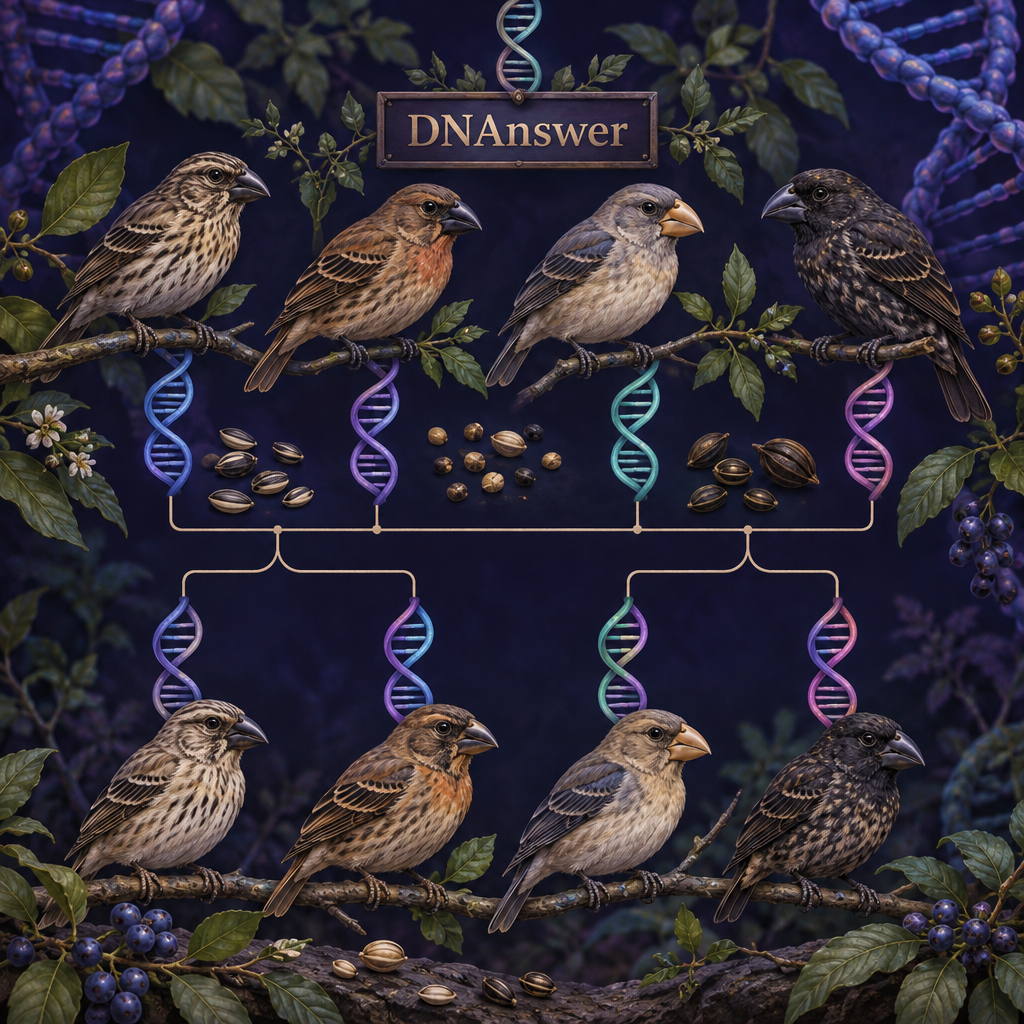
Now add natural selection, the process where individuals with helpful traits leave more offspring. Suppose a fungus sweeps through a bat colony. Bats with a variant that helps resist it survive and have pups. Within a few generations, that variant is common. No bat "chose" it. It was already in the population.
Genetic variation is the raw material of evolution. Without it, selection has nothing to sort.
The practical lesson is blunt. If the useful allele isn't in the population before the threat arrives, it likely won't appear in time. Diversity is insurance you buy in advance.
Myth 4: Low Diversity Guarantees Extinction
Cheetahs, musk oxen, and island foxes all carry strikingly little genetic variation, and all are still here. So some people conclude that diversity doesn't matter much.
That argument has real force. These species show that low diversity can persist for a long time. It deserves a fair hearing.
Why Some Species Get By
There are several reasons. A species may have lost its most harmful mutations during a long period at small size, a process sometimes called purging. Its environment may also have stayed stable, so it never faced a test that its narrow gene pool couldn't handle. And some survivors are simply lucky.
Why It Is Still a Gamble
Researchers who study wild populations, including Chris Funk at Colorado State University and Marty Kardos at NOAA, argue that these cases are outliers. Their 2021 paper in the Proceedings of the National Academy of Sciences makes the case that the safest strategy is to protect genome-wide variation. Small, inbred populations have a thinner buffer against change.
Think of it like a toolbox. A mechanic with three tools can fix many problems for years. Then one day the car has a problem that needs a fourth tool.
The takeaway: treat low diversity as a risk factor, not a verdict. It makes a species fragile, but it doesn't write the ending.
Myth 5: More Diversity Always Means Safer
If low diversity isn't doom, is high diversity a guarantee? Not quite. This is where recent genome work gets interesting.
People believe it because "more options" sounds obviously better, and often it is. Large, connected populations usually hold many variants. But the type of variation and the direction of change matter too.
The Koala Surprise
In a study published in Science in March 2026, researchers sequenced 418 whole koala genomes. This effort began after the 2019-20 Black Summer bushfires in Australia. Northern populations, which have higher genetic diversity, tended to carry more harmful mutations and were shrinking in effective population size.
Meanwhile, Victorian koalas, long considered genetically compromised because they descend from a severe bottleneck, showed the opposite pattern. Their numbers are growing. Through recombination and new mutations, they are shedding harmful variants and gaining new combinations.
A bottleneck is a sharp drop in population size. It strips out variety, and for decades biologists treated its signature as a permanent sentence.
Snapshot Versus Trend
Dr. Andrew Weeks of Cesar Australia put the lesson this way: for decades, genetic diversity was treated as a simple scorecard of extinction risk, but evolution is dynamic. A population that is expanding, stable, or declining tells you more than one frozen number.
Here is what to check when you judge a species' genetic health:
- How much variation does it hold today?
- Is the population growing, steady, or shrinking?
- What is the effective population size?
- How many harmful mutations does it carry?
- Are populations connected, or cut off from each other?
- How has diversity changed across past samples?
One number never answers all six.
Real Cases: How Diversity Disappears
Losing variation doesn't need a dramatic event. Often it happens quietly while a population shrinks and its pieces drift apart.
The Numbers So Far
When researchers compared old and modern samples from the same populations across 91 species, they found genetic diversity had dropped by about 6% on average. On islands, where groups are small and cut off, the average loss was 28%. Species that had already gone extinct couldn't be included, so the true loss is likely higher.
A larger study combined three decades of research on 628 species from 141 countries. It found losses worldwide, clearest in birds and mammals. Plants, insects, and fish held steady on average over the periods studied, though losses can take time to show.
Why Loss Lags Behind Decline
Genes don't vanish the day a forest is cleared. A population shrinks first, and the gene pool drains over generations. One study that translated habitat and population trends for more than 4,600 species into genetic terms predicts average losses of 6% to 45% over decades to centuries, even if declines stopped today.
Rebuilding is slow. It can take hundreds of generations, which means thousands of years for a long-lived tree or mammal.
Drift and Inbreeding
Two forces do the damage. Genetic drift is random change in allele frequencies, and it hits small populations hardest. A rare allele can disappear just because its carriers happened not to breed.
Inbreeding depression is the drop in survival and fertility when close relatives mate. Both parents pass on the same harmful version of a gene, and the offspring suffer for it.
There is good news. Restoring habitat connections and moving individuals between populations were linked to diversity holding steady or even rising.
Disease, Food, and People: Where Variation Pays Off
Why should you care about any of this beyond wildlife? Because your dinner depends on it.
Disease Resistance
A pathogen usually targets a specific molecular feature. If every individual shares the same feature, the pathogen can hit them all. In a varied population, some individuals carry a different version and survive. Those survivors rebuild the population with resistance built in.
Salmon managers face a version of this tradeoff. They can select fish for disease resistance, but doing so may shrink overall diversity, which is what helps populations adapt to a changing climate.
Crops and Food Security
Farms often plant one variety across huge areas because it yields well. That is efficient until a blight arrives. The Irish potato famine of the 1840s is the classic example: Ireland relied on a few closely related potato types, and a single pathogen wiped out much of the crop. Seed banks, which store thousands of varieties, exist to keep options available for breeders.
How Much Do Humans Have?
Humans are surprisingly uniform. Any two people differ at roughly 0.1% of their DNA, about one letter in a thousand. That is low for a species with 8 billion members, and it reflects our small ancestral population. Most of the variation we do have exists within any given region, not between continents. Even so, those small differences shape traits like how we respond to medicines and some diseases.
How Scientists Measure It and What You Can Do
Measuring genetic diversity used to mean comparing a handful of DNA markers. Now researchers sequence entire genomes quickly and cheaply, which lets them count variants across thousands of locations.
Common measures include the number of alleles in a population, how often individuals carry two different versions of a gene (called heterozygosity), and effective population size. Comparing old museum specimens with modern samples shows change over time, which is how the 91-species figure above came about.
You can't sequence a koala at home, but you can act on what you now know:
- Question headlines that celebrate population counts alone.
- Support habitat corridors, which are strips of land that let separate groups meet and breed.
- Choose varied crops where you can, such as heirloom tomatoes at a farmers market.
- Look for the word "trend" when you read genetic studies.
If you want to test what you've picked up, DNAnswer has free genetics and evolution quizzes where you can earn XP and climb the leaderboard.
Conclusion
Next time you see a genetic diversity claim, ask three questions. How many individuals actually breed? Is the population growing or shrinking? And what kind of variation does it hold? A species with a small, shrinking, isolated gene pool deserves concern. A species with a modest pool that is recovering may be better off than its score suggests.
Frequently Asked Questions
Why is genetic variation important for the survival of a species?
Variation gives a population options. When conditions change, some individuals are likely to carry alleles that help them survive and reproduce. Without that variety, a single disease or heat wave can hit everyone the same way.
What is the difference between genetic diversity and species diversity?
Genetic diversity is variation inside one species. Species diversity is how many different species live in a place. A region can be rich in species while each one has a thin, fragile gene pool.
Can a species survive with very low genetic diversity?
Yes, for a while. Cheetahs, musk oxen, and island foxes persist with little variation. But they are riskier, because they have fewer options if a new disease or climate shift arrives.
Does more genetic diversity always mean a species is safe?
No. Koala research showed that some high-diversity populations carry more harmful mutations and are shrinking, while bottlenecked populations that are growing are shedding those mutations. Trend and effective population size matter alongside the total.