Animal Hybridization: How Different Species Produce Hybrids
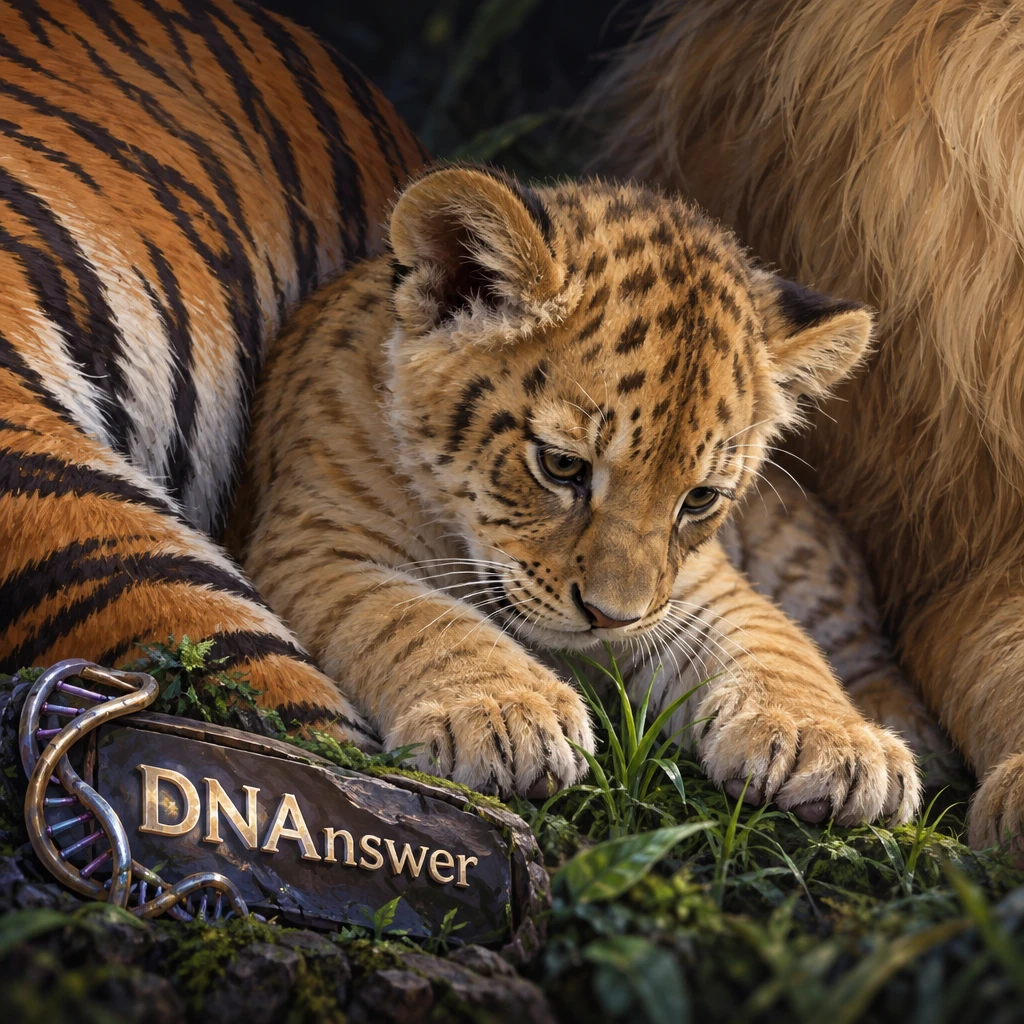
Can a lion and a tiger really have cubs, and can those cubs have cubs of their own? Yes to the first, and sometimes to the second. Animal hybridization happens when two closely related species mate and the egg is fertilized, so the offspring carry genes from both parents.
It works only when chromosomes and reproductive biology line up well enough. Many hybrids, like mules, are sterile. Some are fertile. Rarely, hybrids even start new species. Most of what you believe about this probably has a kernel of truth and a few big gaps.
Key Takeaways
- Mating is not the hurdle. Surviving embryos and fertile adults are.
- Chromosome mismatches stop sterile hybrids like mules from making working sperm or eggs.
- Many hybrids are fertile, including Savannah cats and bison-cattle crosses.
- Hybrids are not a 50/50 blend. Gene switches and imprinting steer traits.
- Hybridization happens in the wild and occasionally creates new species.
- Crossing dog breeds is not hybridization. Gene editing is not either.
Myth 1: "If Two Animals Can Mate, They Can Make Babies"
The belief is easy to understand. Animals that mate in zoos or on farms sometimes produce offspring, so it seems like mating is the whole game. Your barnyard intuition says: if the parts fit, the biology works.
It does not. Mating is only the first of several gates, and most crosses fail at a later one.
Gates Before the Egg Forms
Biologists call these prezygotic barriers (barriers that act before a fertilized egg, or zygote, exists). Species may breed in different seasons, use different courtship signals, or simply differ in body size. Even when mating happens, sperm may fail to reach or enter the egg. Proteins on the egg's surface act like a lock, and sperm from a distant species carries the wrong key.
Gates After Fertilization
Then come postzygotic barriers, which act after the egg is fertilized. The embryo may stop developing early. Water buffalo and domestic cattle show this clearly: in lab experiments, the embryos fail around the 8-cell stage, so no calf is ever born.
The reason is molecular. An embryo needs thousands of genes to switch on in the right order. Two distant species have drifted apart in those instructions. The mismatch can stall the whole program.
What to do with this: when you see a headline about a strange cross, ask how far along the offspring got. A live birth is a long way past a mating.
Myth 2: "All Hybrids Are Sterile"
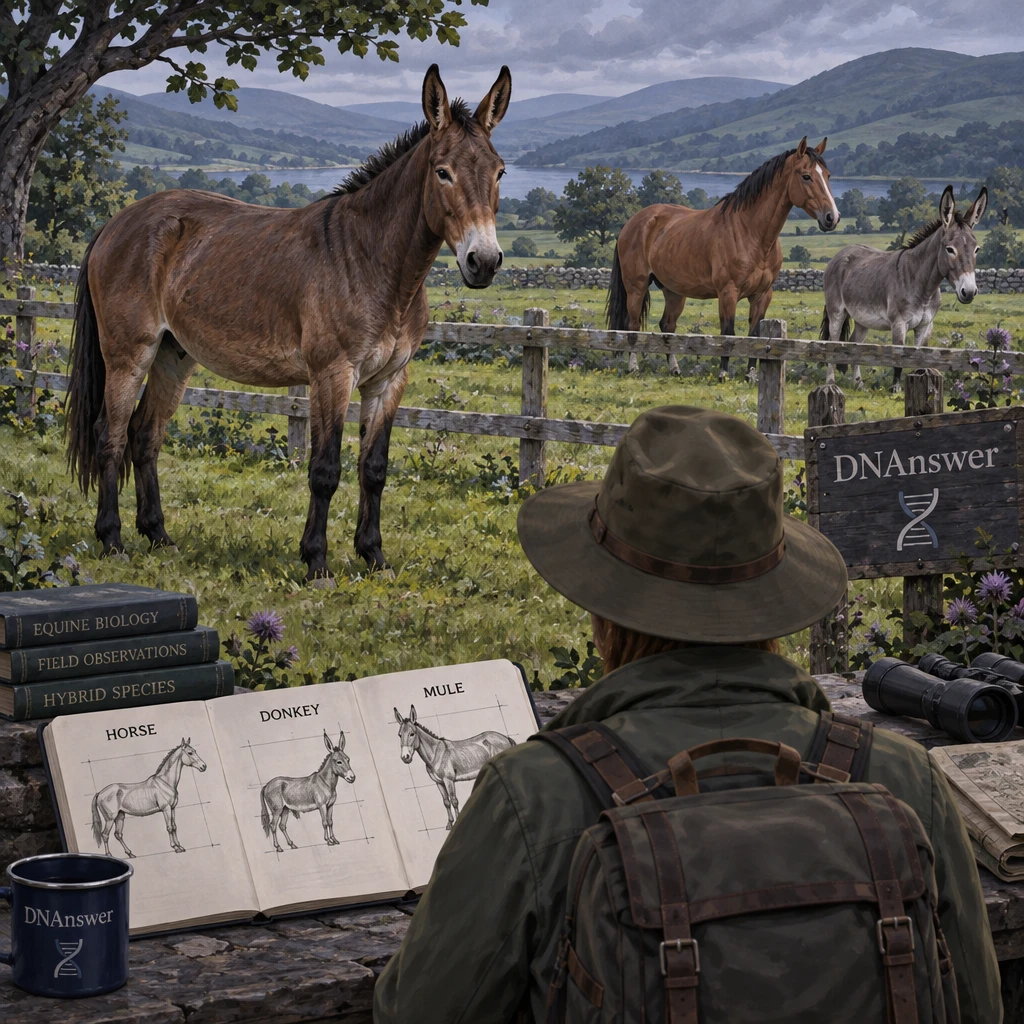
The mule. It is the example everyone knows, and it is a good one. Cross a horse with a donkey and you get a mule (mare × male donkey) or a hinny (female donkey × stallion). Both are almost always sterile. So people reasonably conclude that hybrids are dead ends.
The truth is messier. Sterility is common, but it is not a rule.
Why Mules Struggle
Horses have 64 chromosomes, the long strands that carry DNA. Donkeys have 62. A mule gets one set from each parent and ends up with 63. That odd number is the problem.
To make eggs or sperm, a cell runs meiosis, a special division that halves the chromosome count. During meiosis, each chromosome has to pair with its matching partner before the cell splits. In a mule, the horse and donkey chromosomes do not match well, so pairing fails and the cell cannot produce balanced eggs or sperm.
Not even that is absolute. Very rarely, a female mule has given birth, about 60 documented times in roughly 500 years. Male mules are always sterile.
Fertile Hybrids Are Common
Cats are the champions here. The Savannah cat comes from a domestic cat crossed with the African serval, and the Bengal comes from a domestic cat crossed with the Asian leopard cat. Both breeds are fertile and sold as pets. Wolfdogs and coywolves (wolf × coyote) breed too, because the parents are so close genetically.
Bovines work as well. A domestic bull crossed with a female American bison produces beefalo, and the females are fertile. The cama, a camel-llama cross, probably is too, since both parents have the same chromosome number. Because a male camel dwarfs a female llama, breeders make camas by artificial insemination.
What to do with this: treat "hybrid" and "sterile" as separate questions. Check the parents' chromosome numbers and the sex of the offspring.
Myth 3: "Male and Female Hybrids Are Equally Affected"
This one is less widely believed, because few people think about it at all. But it hides one of biology's most reliable patterns.
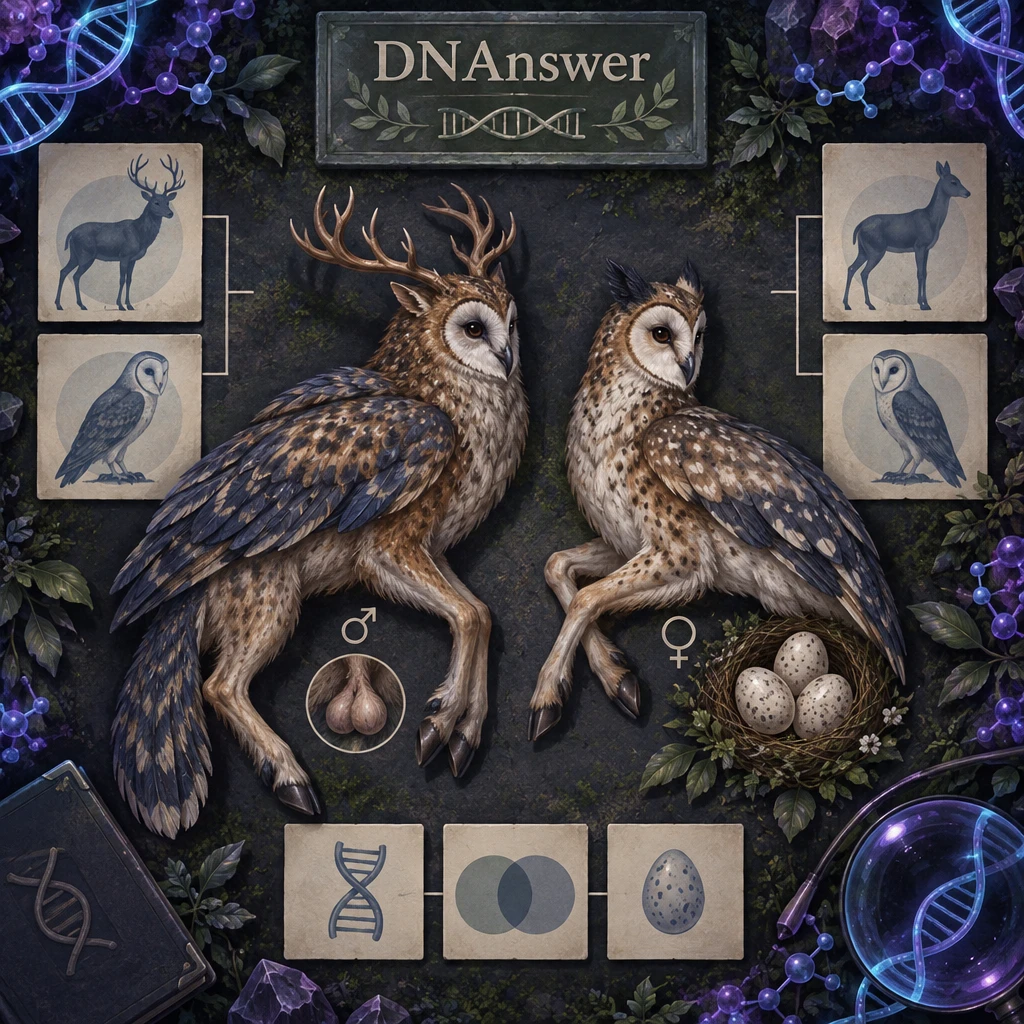
Look at the pattern in the cats and cattle above. Female ligers and tigons have bred healthy offspring with lions and tigers. Male ligers are sterile. In bull × bison cow crosses, hybrid females are fertile and males mostly are not. Mule males are always sterile, while a handful of females have given birth.
Biologists call this Haldane's rule: when one sex of hybrid offspring is missing, rare or sterile, it is usually the sex with two different sex chromosomes. In mammals, that is the male (XY). In birds and butterflies, it is the female (ZW).
Haldane's rule: if a cross between two species produces offspring of only one sex, or sterile offspring of one sex, that sex is usually the heterogametic one, meaning the sex with two different sex chromosomes.
Why does this happen? Biologists have several explanations, and they likely work together. One is that the sex with mismatched chromosomes cannot cover for hidden incompatible genes. Another is that sperm production is a delicate, fast-moving process that breaks more easily than egg production.
Nobody has one tidy answer, and it is fair to say so. But the pattern holds across hundreds of crosses.
What to do with this: when you read about a hybrid's fertility, look for the sex. "Sterile" often means "sterile males."
Myth 4: "Hybrids Are a 50/50 Blend of Their Parents"
You would expect it. Half the genes come from each parent, so the animal should look and act halfway between them. Early breeders thought of heredity as mixing paint.
DNA works more like a control panel than a paint bucket.
Gene Switches Are Not Averaged
A hybrid does inherit half its DNA from each parent. But traits depend on which genes switch on, when, and how strongly. Those switches come from both parents, and they sometimes clash or amplify each other. A hybrid can be bigger than both parents, smaller than both, or look like one parent with a quirk from the other.
Mules show it. Scientists have described them as more capable than horses and donkeys in cognitive tests, which no simple average would predict.
Imprinting and the Liger
Some genes carry a chemical tag that depends on which parent supplied them. This is genomic imprinting: the cell silences the mother's copy or the father's copy of certain genes. Many imprinted genes control growth.
A liger has a lion father and a tiger mother. Lion fathers push growth genes toward bigger bodies, while tiger mothers carry the tags that normally keep a lid on that. In a liger, the lid does not match the push, and the cubs grow far past either parent. The reverse cross, a tigon (tiger father, lion mother), tends to produce smaller animals. Researchers still debate the details, but imprinting is the leading explanation.
Ligers can be much larger than either parent. Tigons usually are not.
What to do with this: drop the "half lion, half tiger" picture. Think instead of two rulebooks that clash and sometimes overshoot.
Myth 5: "Hybrids Are Freak Zoo Creations"
Zoos and breeders made ligers famous. Photos of ligers do not appear in nature documentaries, so people assume hybrids are human experiments with no natural role.
Here is the correction. Lions and tigers do not overlap in the wild today, so ligers happen only in captivity. Many other hybrids form on their own.
Hybrids in the Wild
Coywolves (wolf × coyote) appear across the eastern United States. Polar bears and grizzlies, once separated by habitat, now meet as warming reshapes the Arctic and Alaska ranges. Their hybrids are called pizzly or grolar bears. Spotting one is rare, but DNA tests have confirmed them.
Hybrids and Evolution
Genomes show introgression, which means genes passing from one species into another through hybrids that breed back into a parent population. Many animal species carry traces of DNA from relatives. Humans do too: most people outside Africa carry small amounts of Neanderthal DNA.
Genetically, a hybrid animal is the result of interbreeding between divergent lineages, says Erica Larson, an evolutionary biologist at the University of Denver.
Some of these borrowed genes helped. Hybridization can act as a shortcut, passing on a ready-made trait like disease resistance instead of waiting for a mutation.
What to do with this: when you hear about a wild hybrid, ask what changed in the habitat. Climate, farming and fragmented forests push species into contact.
Myth 6: "A Hybrid Can Never Become a New Species"
The logic seems airtight. A new species needs a population that breeds with itself. Hybrids are sterile or weak, so they cannot found one.
Usually that is right. Occasionally it is not.
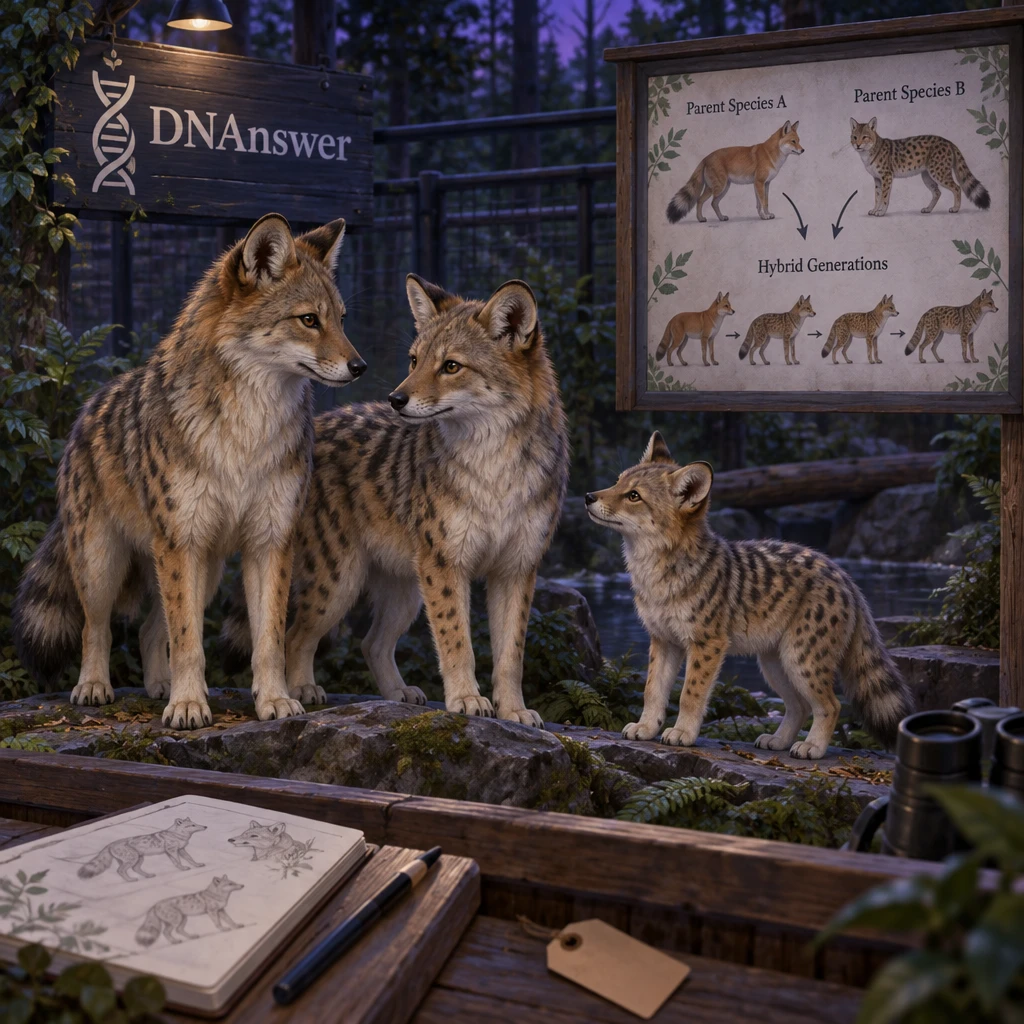
Hybrid speciation happens when hybrids become reproductively isolated from both parent species and form a lineage of their own. It is well documented in plants, where doubling the chromosome count can instantly restore fertility. It is rarer in animals, but researchers have found cases in fish, insects and some birds.
Humans also create fertile lines on purpose. Breeders of Bengal and Savannah cats cross a wild cat with a domestic one, then repeatedly breed the offspring back with domestic cats or with each other. Over generations, the wild share of the genome shrinks. The first-generation cats look wild, but a modern Bengal carries much less leopard cat DNA.
This is called backcrossing, and it is the standard way to build a fertile hybrid line. It creates a breed, not a species, because Bengals can still breed with other domestic cats.
Hybridization also has a downside. Two fit parents can produce hybrid breakdown, where offspring are healthy at first but later generations decline. The opposite is hybrid vigor, where first-generation offspring outperform their parents in growth or disease resistance.
What to do with this: call a new hybrid breed a breed. Reserve "new species" for lineages that stay separate on their own.
Myth 7: "Crossing Dog Breeds Is Hybridization, and So Is Genetic Engineering"
People use the word loosely, and that is understandable. A labradoodle is a cross, and "cross" sounds like "hybrid." Gene-edited animals also mix DNA.
These are three different things:
- Breed crossing: two varieties within one species, such as a Labrador and a poodle. Both are the same species, so no species barrier is involved.
- Hybridization: two different species, such as a horse and a donkey. Species barriers matter here.
- Genetic engineering: a lab edits or inserts specific genes. No mating is needed.
The difference is practical. Breed crosses almost always work and produce fertile pups. Species crosses face the gates described above. Engineering skips mating altogether.
So can humans breed with other animals? No. Humans and other living species are too far apart genetically, and the barriers act at every stage. Folk stories about human hybrids have no basis in biology.
If you want to test what you now know about chromosomes and meiosis, DNAnswer has free molecular biology quizzes that track your progress.
Conclusion
Next time you see a "hybrid" headline, run a quick check. Which two species? How many chromosomes does each have? Which sex was affected? Was it bred by people or found in the wild?
Those four questions tell you more than the photo does. Choose skepticism for dramatic claims of crosses between distant animals, and curiosity for the quiet ones in forests and fields, where hybridization shapes evolution.
Frequently Asked Questions
How are hybrids produced in animals?
Two closely related species mate or are artificially inseminated, and a sperm fertilizes an egg. The embryo must then develop normally. Many crosses fail at the sperm stage or early in development, so only a small share of tries produces live offspring.
Are hybrid animals always sterile?
No. Mules are almost always sterile, but cats such as the Savannah and Bengal are fertile, as are coywolves and female beefalo. Fertility depends on chromosome compatibility and on which sex the hybrid is.
Why do ligers grow so large?
Genomic imprinting is the leading explanation. A lion father's growth genes push for size, while a tiger mother's matching controls normally limit growth. In ligers, that balance breaks, so they can outgrow both parents.
Can a hybrid become a new species?
Rarely, yes. Hybrid speciation happens when hybrids become reproductively isolated from both parents. It is common in plants and uncommon in animals. Hybrid cat breeds like the Bengal are breeds, not species.