Embryonic Stem Cells: Why They Can Become Any Cell Type
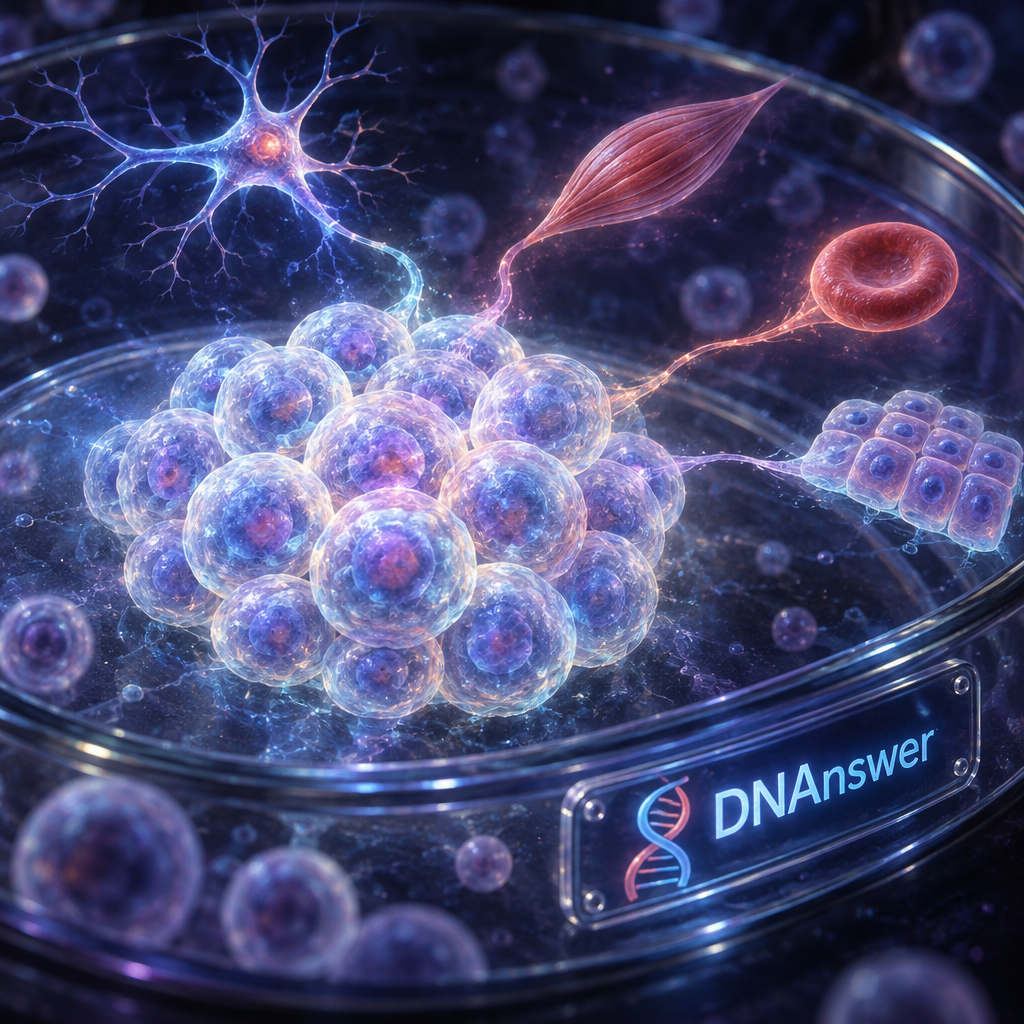
Can a cell that becomes "anything" really not build a placenta? That is the catch. Embryonic stem cells are pluripotent (able to become nearly every cell type in an adult body, including nerve, muscle and blood cells), but they cannot form a whole organism on their own.
They reach their final identity when signals from their surroundings switch specific genes on and off. This article sorts the common beliefs from the evidence, so you know what these cells do and what they don't.
Key Takeaways
- Embryonic stem cells are pluripotent, not totipotent: no placenta, no whole organism.
- Genes and outside signals narrow a cell's options step by step.
- They don't differentiate on their own; the lab must steer them.
- Embryonic, adult and induced pluripotent stem cells differ in range and source.
- Most therapies are still in trials, not routine care.
Myth 1: "They Can Become Anything, Including a Whole Organism"
Start with the claim that costs people the most understanding. If a cell can become "any" cell, surely it can become a baby, or at least a placenta. It can't.
Why the belief makes sense
The headline version is not wrong. Embryonic stem cells come from the inner cell mass, a clump of cells inside the blastocyst, which is the hollow ball of roughly 100 or so cells an embryo forms in its first week. That clump goes on to build the entire body. So "any cell in the body" is a fair summary.
What "any" leaves out
The word that matters is body. A developing embryo also needs tissues that are not part of the baby: the placenta and the yolk sac. Scientists call these extraembryonic tissues (tissues outside the embryo proper). Embryonic stem cells have already committed away from making them.
Only the earliest cells can make those tissues. The fertilized egg (the zygote) and its first few daughter cells are totipotent, meaning each can build a full organism plus the placenta. After a few divisions, the outer cells of the blastocyst lock into the placenta path. The inner clump keeps only the body path.
In practice, if you dropped embryonic stem cells into a uterus, you would not get a pregnancy. They lack the placenta half of the instructions.
Totipotent, Pluripotent, Multipotent: The Three Levels of Potential
Think of potential as a set of doors that close over time. The terms sound similar, so here is the comparison in plain prose.
Totipotent cells keep every door open. They can become any body cell and the placenta. They exist only in the first days after fertilization.
Pluripotent cells have lost the placenta door. They can still become nearly every cell in the adult body. Embryonic stem cells sit here, along with lab-made induced pluripotent stem cells (iPSCs), which we cover below.
Multipotent cells have far fewer doors. They make several related cell types, usually within one tissue. A blood stem cell in your bone marrow can produce red cells, white cells and platelets, but it will never make a neuron.
A fourth word, unipotent, describes cells that make only one type. Skin-layer stem cells that replace only their own kind are an example in spirit.
Pluripotent cells can become any cell in the body but cannot form a complete organism; totipotent cells can also form placental tissue.
That one-line distinction is the whole difference. It also shows that "potential" is not a single switch. It is a ladder, and each step down removes options.
Myth 2: "Stem Cells Know What to Become on Their Own"
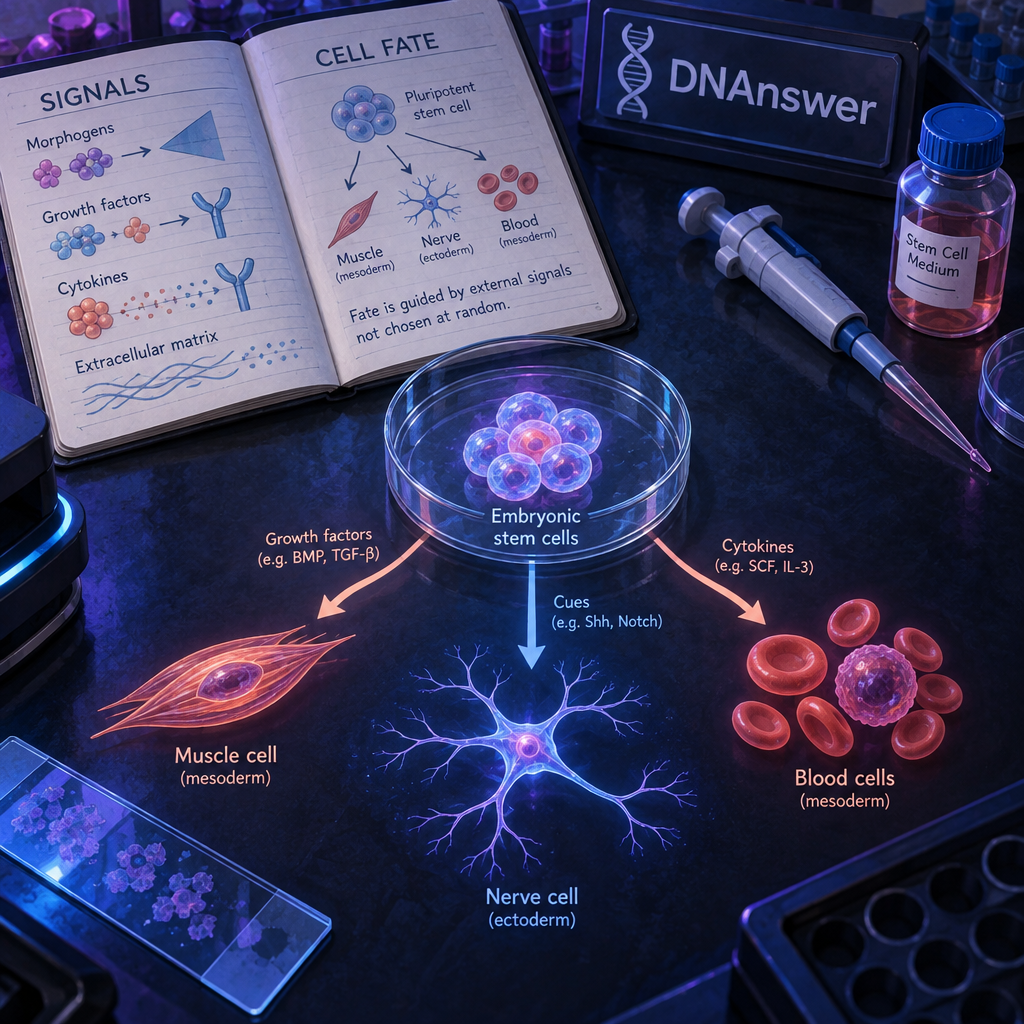
Picture a pluripotent cell in a dish. It seems like it should just turn into whatever it wants. Many people assume it does, because in a developing embryo the process looks automatic. It is not.
Gene regulation does the narrowing
Every cell in your body carries the same DNA, about 20,000 protein-coding genes. A neuron and a muscle cell differ because they use different genes. Gene regulation (the system that turns genes on and off) decides which.
Inside a pluripotent cell, a small set of proteins keeps the cell open-ended. Three well-known ones are Oct4, Sox2 and Nanog. They are transcription factors, proteins that attach to DNA and switch genes on. As long as they stay active, the cell holds its options.
When their levels drop and other transcription factors rise, genes for one path switch on and genes for others shut down. The cell commits. That is differentiation: a cell becoming more specialized.
Signals from outside steer the process
Cells don't decide in isolation. They respond to growth factors (signaling proteins in their fluid environment), to contact with neighboring cells, and to the extracellular matrix, the mesh of proteins and sugars that surrounds cells. The matrix even sends physical cues, such as how stiff it feels.
Left alone in a dish, human embryonic stem cells tend to drift into a messy mix of cell types. Researchers who want a specific result have to apply the right factors in the right order, at the right time. Reviews of controlled differentiation stress that the timing and place of these signals decide how uniform the result is.
What to take from it
When you read that scientists "made heart cells from stem cells," picture a recipe with steps, not a switch. That recipe is the real achievement.
How a Stem Cell Becomes a Neuron: A Step-by-Step Picture
Differentiation is easier to grasp as a sequence. Here is a simplified path for a lab-grown nerve cell.
- Hold the cells open. Scientists grow embryonic stem cells with factors that keep Oct4, Sox2 and Nanog active. The cells multiply without specializing.
- Remove the "stay open" signals. Cells start to leave the pluripotent state.
- Push toward a broad layer. Signals nudge cells into the ectoderm, one of three early layers of an embryo. Ectoderm gives rise to the nervous system and skin. The other two layers are mesoderm (muscle, bone, blood) and endoderm (gut, lungs, liver).
- Narrow to a neural fate. More signals tell cells to become neural progenitors, cells that are already committed to the nervous system.
- Refine the type. Different signals produce different neurons, such as the dopamine-making kind.
- Mature the cells. Cells need time, and often the right surface or environment, to behave like adult neurons.
Each step closes doors. By step four, the cell can no longer easily become a liver cell. Real protocols run for weeks and still produce some unwanted cells along the way.
Myth 3: "A Stem Cell Is a Stem Cell"
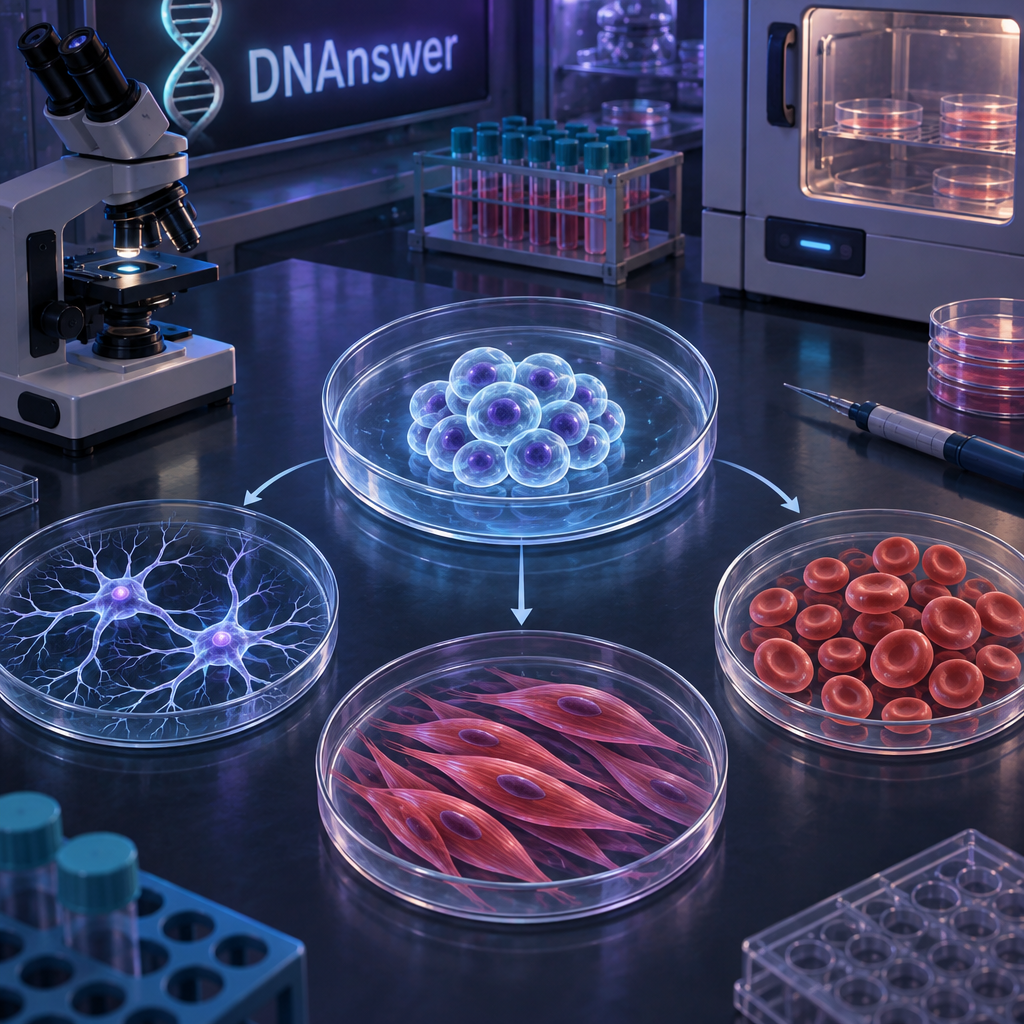
If you only know the phrase "stem cell," you may lump together very different things. News stories do this constantly, and it leads to bad decisions, including paying for unproven treatments.
Three main kinds
Every stem cell shares two traits: it can self-renew (make copies of itself) and it can differentiate. Beyond that, they vary a lot.
Embryonic stem cells come from the blastocyst's inner cell mass. They are pluripotent and can multiply in the lab for years. A few dozen cells from one embryo can grow into millions within about six months.
Adult stem cells (also called tissue-specific or somatic stem cells) live in organs like bone marrow, skin and the gut lining. They are multipotent. They replace cells in their own tissue, such as your blood or the lining of your intestine, and they are scarce and hard to isolate.
Induced pluripotent stem cells are made, not found. In 2006, Shinya Yamanaka's team in Japan showed that adding a small set of genes to mouse skin cells could reset them to a pluripotent state. Human versions followed in 2007. Yamanaka shared the 2012 Nobel Prize in Physiology or Medicine for the work.
Why the difference matters
Embryonic cells have the widest range, but they come from embryos, which raises ethical objections. Adult stem cells avoid that issue but have a narrow range. iPSCs offer wide range without using an embryo, and they can come from a patient's own skin or blood.
They are not perfect copies of embryonic cells, though. Reprogramming can leave small differences in how genes are switched, and the process takes time and money. The practical rule: ask which type a claim involves before you believe it.
Myth 4: "Stem Cell Therapies Already Treat Most Diseases"
Clinics advertise stem cells for knees, skin, even autism. The belief that stem cell medicine is routine has a real basis, which is why it spreads.
The real, proven treatment
Blood stem cell transplants, usually from bone marrow, have treated leukemia and some other blood disorders for decades. Those are adult stem cells, and they are standard care. That track record makes people assume the same applies to everything else.
Where embryonic-derived therapy actually stands
Pluripotent-derived treatments are mostly in trials. A good example is Parkinson's disease, where neurons that make dopamine (a chemical messenger for movement) die off. The STEM-PD Phase I/II trial tests a frozen, ready-made product of dopamine-producing progenitor cells derived from human pluripotent stem cells.
On July 9, 2026, the International Society for Stem Cell Research announced 12-month findings from the trial at its annual meeting. Researchers are still following participants for long-term safety and for whether the grafts keep working. Future work will look at how long transplanted cells last, who benefits most, and how to reduce the need for drugs that suppress the immune system.
That last point is a real obstacle. A transplant from a donor line can be rejected, so patients may need immune-suppressing drugs. Teams are testing patient-matched grafts and engineered cells that avoid immune detection.
What to do with this
Be skeptical of any clinic selling pluripotent stem cell treatments outside a registered trial. You can check studies at ClinicalTrials.gov, the U.S. government's trial registry. The FDA regulates stem cell products in the United States, and most are not approved for the uses clinics advertise.
Why Lab-Grown Cells Are Still Hard to Control
Even when the recipe works, the cells don't always behave. Most lab differentiation happens on flat plastic plates, which doesn't match the three-dimensional environment inside a body. Results are often uneven: a dish meant to hold neurons also holds other cell types.
Two risks follow. First, leftover undifferentiated cells can form teratomas, benign tumors containing a jumble of tissues, which is how researchers test whether cells are truly pluripotent. Second, lab-made cells often stay immature, closer to fetal cells than adult ones, so they may not work like the real thing.
Researchers are working on better scaffolds and more precise timing of signals. They are also testing 3D cultures that mimic tissue more closely.
What Researchers Use Embryonic Stem Cells For
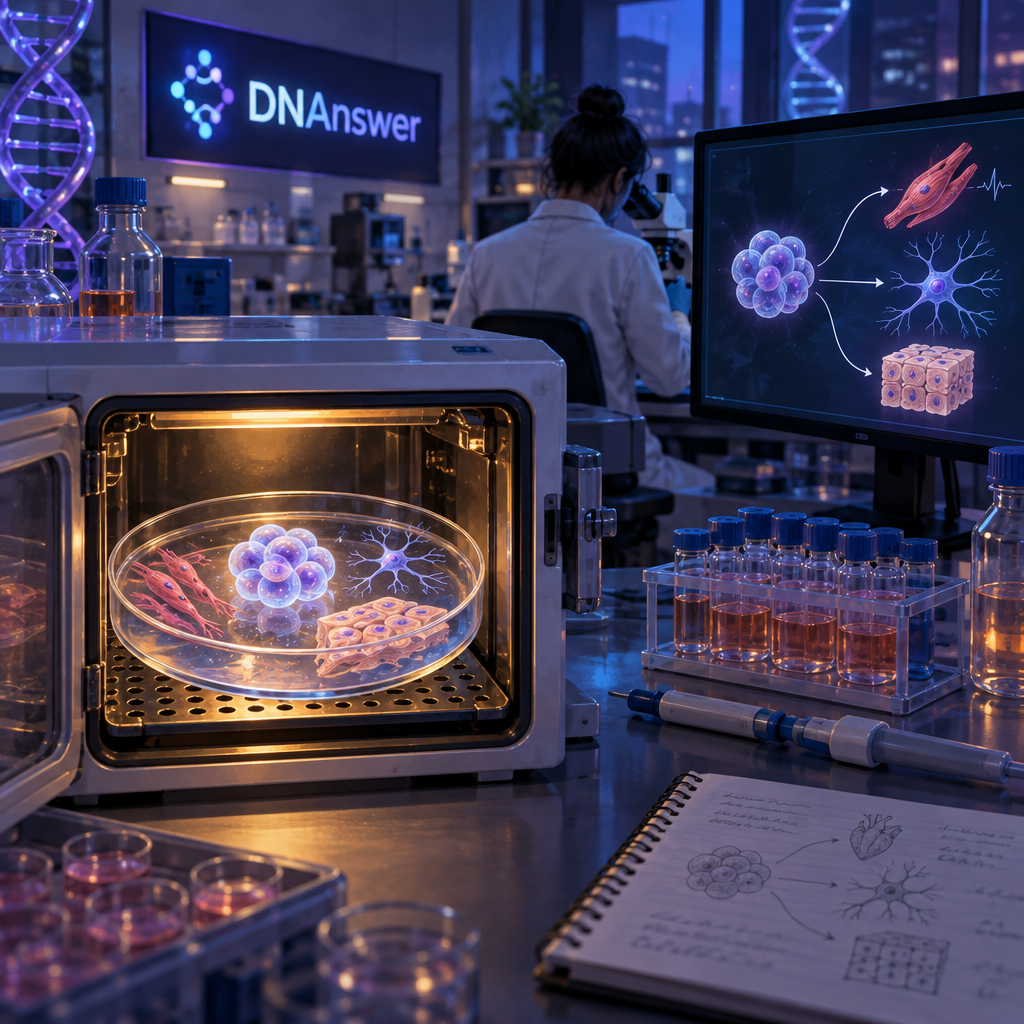
Because these cells multiply without limit and can become many types, they are useful well beyond therapy.
- Disease modeling: scientists grow affected cell types in a dish to watch how a disease starts.
- Drug testing: companies screen compounds on human cells for effectiveness and toxicity before trials.
- Developmental biology: the cells show how an embryo builds tissues.
- Cell therapy development: they supply starting material for trials like STEM-PD.
If you're curious how much of this you've absorbed, DNAnswer has free molecular biology quizzes that cover stem cell basics.
Why the Ethics Debate Persists
Getting a human embryonic stem cell line means taking cells from a blastocyst, which ends that embryo's development. Those embryos typically come from fertility clinics, left over from IVF and donated with consent. Many people object that an embryo deserves protection; others weigh that against the potential to treat disease.
U.S. policy has shifted with administrations. Federal funding rules for human embryonic stem cell research changed in 2001, 2009 and later. Privately funded work has generally been allowed.
iPSCs eased part of the debate because they skip the embryo. They have not ended it. Researchers still use embryonic lines as the comparison standard to judge whether iPSCs are as good.
Conclusion
The corrected picture changes how you read headlines. "Any cell" means a narrow, steered path, not a free choice. Check which stem cell type a story involves, and whether it describes a lab result, a trial or approved care. For treatment claims, search ClinicalTrials.gov first. If a clinic charges thousands of dollars for something with no trial listing, walk away.
Frequently Asked Questions
Can embryonic stem cells become any type of cell?
They can become nearly every cell type in the adult body, including nerve, muscle and blood cells. They cannot form the placenta or a complete organism, because they have already lost that potential.
What is the difference between totipotent and pluripotent cells?
Totipotent cells can become every body cell plus the placenta and can build a full organism. Pluripotent cells can become nearly every body cell but not placental tissue. Totipotent cells exist only in the first days after fertilization.
Where are embryonic stem cells found?
They are found in the inner cell mass of a blastocyst, an embryo a few days after fertilization. For research, they typically come from donated IVF embryos and then grow as cell lines in the lab.
Why can't we use embryonic stem cells more widely?
Obtaining them ends an embryo's development, which raises ethical objections and regulatory limits. Scientific hurdles also remain: immune rejection, uneven differentiation and leftover cells that can form tumors. Most uses are still research or early trials.