Prion Disease: How a Misfolded Protein Becomes Infectious
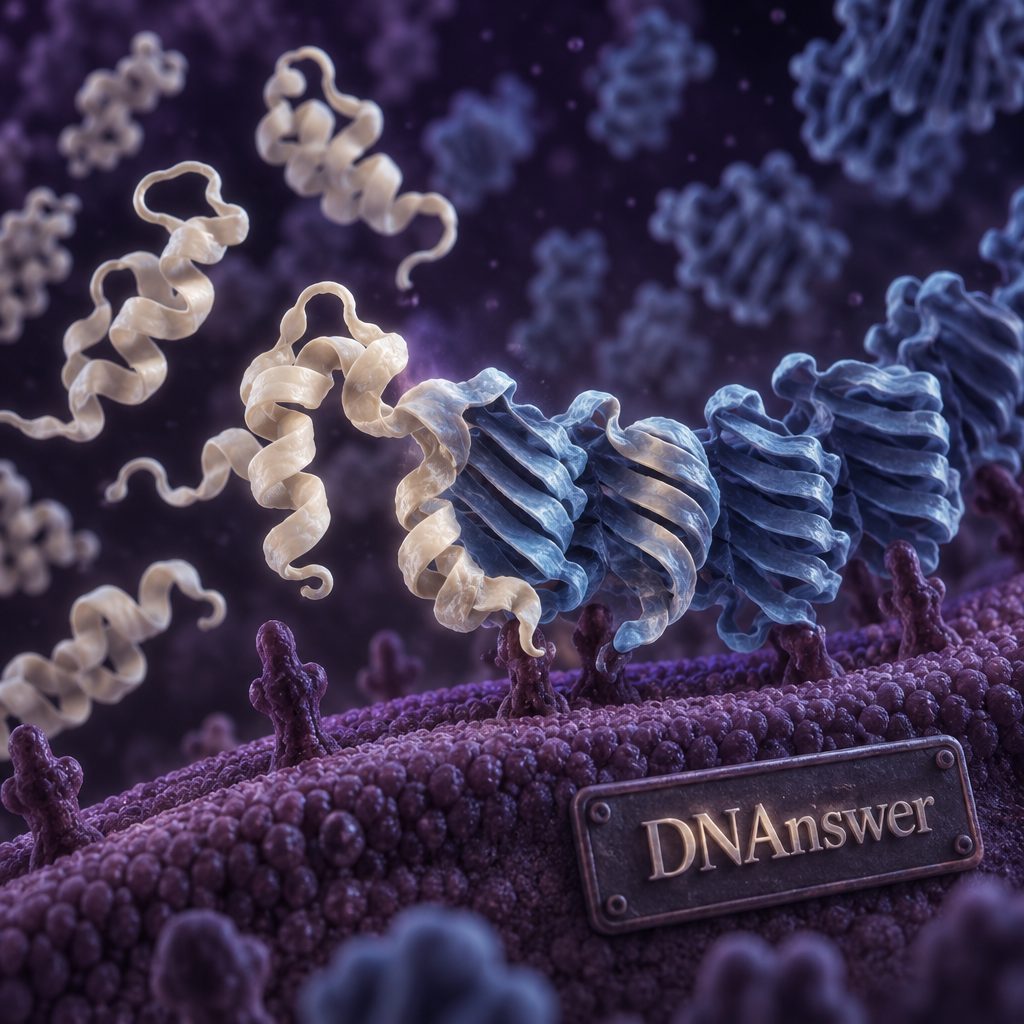
Can a protein with no DNA, no RNA and no life of its own spread a disease? Yes. A prion is a normal brain protein, called PrPC, that refolds into a harmful shape called PrPSc. That bad shape binds healthy copies and pushes them to refold the same way. The chain reaction builds clumps that kill neurons.
That is why prion disease counts as infectious. It does not mean it spreads like a cold, and most cases never involve meat at all.
Key Takeaways
- Prions are protein only: no DNA, no RNA, not alive.
- Shape alone spreads: misfolded protein forces healthy copies to refold.
- Most human cases are sporadic or inherited, not from beef.
- Cooking and standard autoclaving do not destroy prions.
- Transmissible is not contagious: casual contact does not spread it.
- Trials now test drugs that lower prion protein production.
Myth 1: Prion Disease Comes From Eating Infected Meat
Picture a headline from the 1990s: cattle staggering, beef bans, panic. It is fair that you link prions to burgers. Mad cow disease was real, and it did pass to people through food.
But the beef link covers a small slice of human cases. The most common form, Creutzfeldt-Jakob disease (CJD), is a fatal brain disorder that usually strikes people between ages 50 and 75. It appears spontaneously in about 1 in a million people each year. About 10% of cases come from inherited mutations in the PRNP gene, the gene that holds the recipe for the prion protein.
Where Mad Cow Disease Fits
Mad cow disease, formally bovine spongiform encephalopathy (BSE), is a prion disease in cattle. When people ate contaminated beef products, some developed variant CJD (vCJD), a form that tends to hit younger patients. The BSE epidemic in the United Kingdom drove that wave of cases.
The route was dietary, and it was real. It was also the exception, not the rule, among human prion disease.
The Four Ways Prion Disease Starts
Prion disease arises in three broad ways, and the acquired group has two common routes:
- Sporadic: the protein misfolds by chance, usually in later life, with no outside cause.
- Genetic: a PRNP mutation makes misfolding far more likely, and it runs in families.
- Acquired through food: eating tissue from an infected animal, as with vCJD.
- Acquired through medicine: contaminated surgical instruments or tissue grafts, called iatrogenic spread (caused by medical treatment).
What should you do with this? Stop treating "prion" and "beef" as synonyms. If a relative has CJD, ask a neurologist whether genetic testing makes sense, because the cause is far more likely to be inside the body than on the plate.
Myth 2: Prions Are Just Weird Viruses or Bacteria
Prions behave like germs. They spread between hosts, they hide for years, and they come in distinct strains. So calling them a strange virus is a reasonable guess.
It is wrong, and the difference is the whole story. Even the simplest virus carries genetic material, DNA or RNA, that holds instructions for making copies. A prion carries none. It is a protein, folded the wrong way.
A prion is a misfolded protein that induces folding problems in normal variants of the same protein, leading to cell death.
That definition, which matches how the scientific literature describes prions, hides a strange idea. The "information" being passed on is a three-dimensional shape, not a genetic code.
Why Scientists Doubted It
Stanley Prusiner coined the word prion in 1982 and argued that purified protein could transmit spongiform disease. Skeptics pushed back hard. The central dogma of biology says information flows from DNA to RNA to protein, and a self-copying protein breaks that pattern.
Skeptics also pointed to prion strains, which differ in incubation time and in which brain regions they damage. Strains looked like proof of hidden genes. Evidence has since leaned the other way: one protein can fold into several stable shapes, and each shape can pass itself on.
The Test Tube Evidence
In 2005, scientists at the University of Texas made infectious prion protein in a test tube and injected it into healthy brains. Spongiform disease followed. Lab methods can also build prions from purified ingredients with no prior infectious material, which shows replication does not need genetic information.
Practically, this means antibiotics and antivirals do nothing against prions. Those drugs target bacterial machinery or viral genes. Prions have neither.
The Misfolding Chain Reaction, Step by Step
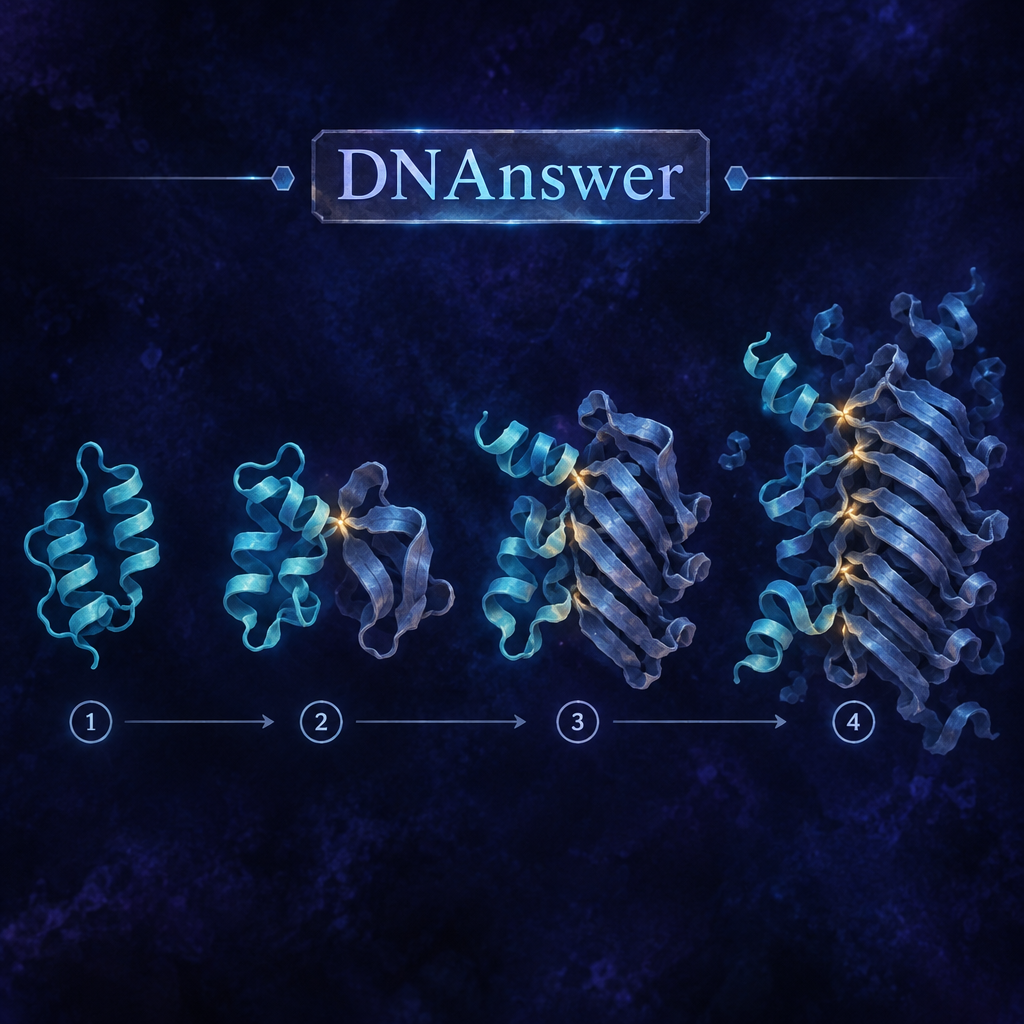
Here is the part that feels like science fiction. You already know proteins fold into shapes that decide their job. A prion is what happens when one shape can recruit others.
PrPC sits on the surface of nerve cells and is harmless. The C stands for "cellular." PrPSc is the harmful form, named for scrapie, a prion disease in sheep. The two forms have the same amino acid sequence, the same "spelling." Only the fold differs.
- A seed appears. One PrPC molecule misfolds by chance, through a mutation, or because misfolded protein from another host arrives.
- The seed binds a healthy copy. PrPSc sticks to a normal PrPC molecule.
- The healthy copy refolds. Binding pushes it into the PrPSc shape. Scientists call this template-directed misfolding, meaning the bad shape acts as a mold.
- Two become four. Each new PrPSc recruits more PrPC, so the process accelerates.
- Clumps form. The molecules stack into long fibers called amyloids, which pile up as aggregates.
- Neurons die. The clumps interfere with normal cell function, and neurons die.
- The brain turns spongy. Dead cells leave tiny holes, which is why these illnesses are called transmissible spongiform encephalopathies (TSEs).
Why the Shape Is So Hard to Destroy
PrPSc resists proteases, the enzymes your body uses to chop up proteins. Normal PrPC gets broken down. PrPSc does not, so it accumulates instead of clearing out.
One open question: what exactly brings the two molecules together? One idea, the "Protein X" hypothesis, proposes an undiscovered helper protein that introduces them. Nobody has confirmed it.
Myth 3: Misfolding Is a Rare Accident, So It Doesn't Matter Much
You might reason that proteins misfold all the time, and cells clean up the mess. That is true. Cells have quality control systems that destroy faulty proteins, and one misfolded molecule normally causes no harm.
So the real issue is not that misfolding happens. It is that this particular misfolded shape propagates. It turns neighbors into copies of itself, and its resistance to cleanup lets the copies pile up.
Why Alzheimer's and Parkinson's Differ
Alzheimer's, Parkinson's and Huntington's disease also involve misfolded proteins that form amyloid fibers. Yet they are not infectious in the way prion disease is. That led some skeptics to argue that misfolding alone cannot transmit disease.
Research into how these diseases spread inside a single brain continues, and the comparison is an active area of study. For you, the practical point is simple: no evidence shows that these conditions pass between people through everyday contact.
What Triggers the First Misfold?
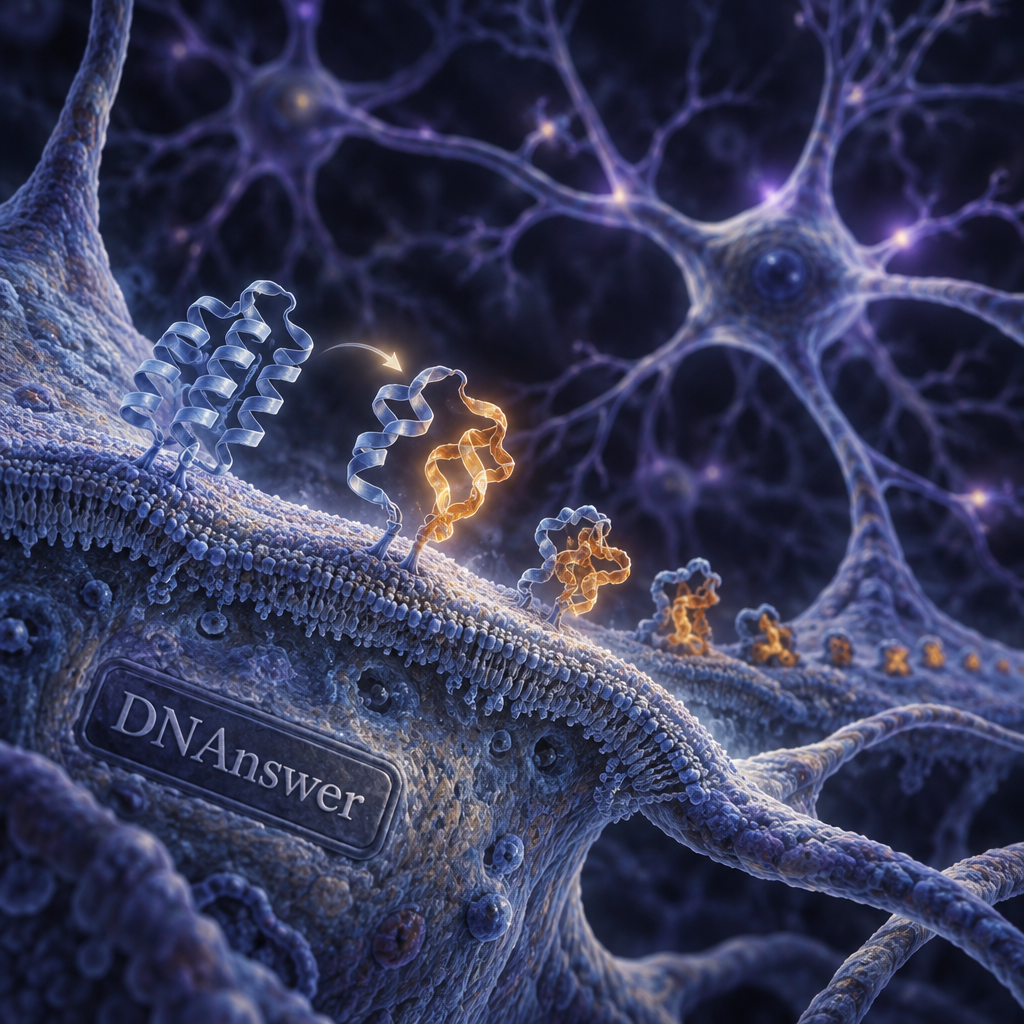
Sometimes nothing outside does. In sporadic cases, a molecule misfolds by chance, and age appears to raise the odds. In genetic cases, a PRNP mutation makes the misfolded shape easier to adopt. Inherited prion diseases usually strike between roughly age 36 and 61, and one of them disrupts the sleep and wake cycle before it leads to coma.
If prion disease runs in your family, genetic counseling can tell you whether you carry the mutation. That information now matters more than it did a decade ago, because trials are enrolling carriers (more on that below).
Myth 4: Prion Disease Spreads Like a Cold
If it is infectious, it must be catching. Reasonable instinct. Most infectious diseases you know, from flu to measles, pass through the air or by touch.
Prion disease does not. It is transmissible, meaning it can pass from one host to another under specific conditions. It is not contagious, meaning it does not pass through ordinary contact, coughing or shared meals.
The known routes are narrow. You can get it by eating infected tissue (the BSE route) or through a contaminated medical device or tissue graft. Caring for a CJD patient at home does not put you at risk through normal contact.
What About Animals and the Environment?
Among animals, ingestion is the main route. Prions are thought to enter the environment through remains of dead animals, urine, saliva and other body fluids. They can linger in soil by binding to clay and other minerals.
That matters for wild deer and elk, where chronic wasting disease, another prion disease, spreads through shared pasture and feed. Hunters in affected states can have deer tested before eating the meat, and wildlife agencies publish guidance on it.
Can You Tell If Meat Has Prions?
No. You cannot see, smell or taste prions, and cooked meat looks the same. Detection requires lab tests on brain tissue, typically after death. Safety comes from rules, not from inspecting your steak: in the United States, regulators ban certain cattle tissues from the food supply and restrict feed that contains ruminant protein.
Myth 5: Cooking and Hospital Sterilization Destroy Prions
Cooking kills salmonella. Autoclaves kill nearly everything in a hospital. So it is natural to assume heat solves the problem.
It does not. Prions survive boiling, alcohol, acid, standard autoclaving and radiation. Infected brain tissue stored in formaldehyde for decades can still transmit disease. A well-done burger will not clear prions.
The reason is structure. Prions are extremely stable, which makes them resist denaturation, the unfolding that heat and chemicals normally cause. Most germs die when their proteins unravel. Prions barely budge.
How Hospitals Respond
Hospitals handle instruments from suspected prion cases with extra steps. A widely cited 2010 infection-control guideline by William Rutala and David Weber discusses options such as steam sterilization at 134°F. more precisely 134°C, which is 273°F, combined with strong chemical treatment like sodium hydroxide (lye) or bleach. Results vary with method, so protocols weigh the patient's risk, which tissues touched the instrument, and how it was used.
Newer low-temperature methods, including hydrogen peroxide gas plasma, show promise for heat-sensitive devices. Even so, that guideline held back a firm recommendation for them.
What This Means for You
You do not need to change how you cook or shop. Standard food safety still matters for other reasons. If you are facing surgery and have a family history of prion disease, tell your surgeon, so the team can plan instrument handling.
Is Prion Disease Always Fatal, and What Is Being Tried?
Prion diseases have no cure. They are fatal, usually within months or a few years after symptoms start. Early symptoms include memory loss, personality changes and trouble moving. Johns Hopkins describes the shared mechanism as abnormal protein clumping in the brain.
Treatment today means comfort care. But research has shifted from asking how to clear clumps to asking how to make less of the raw material.
A Strategy That Lowers the Supply
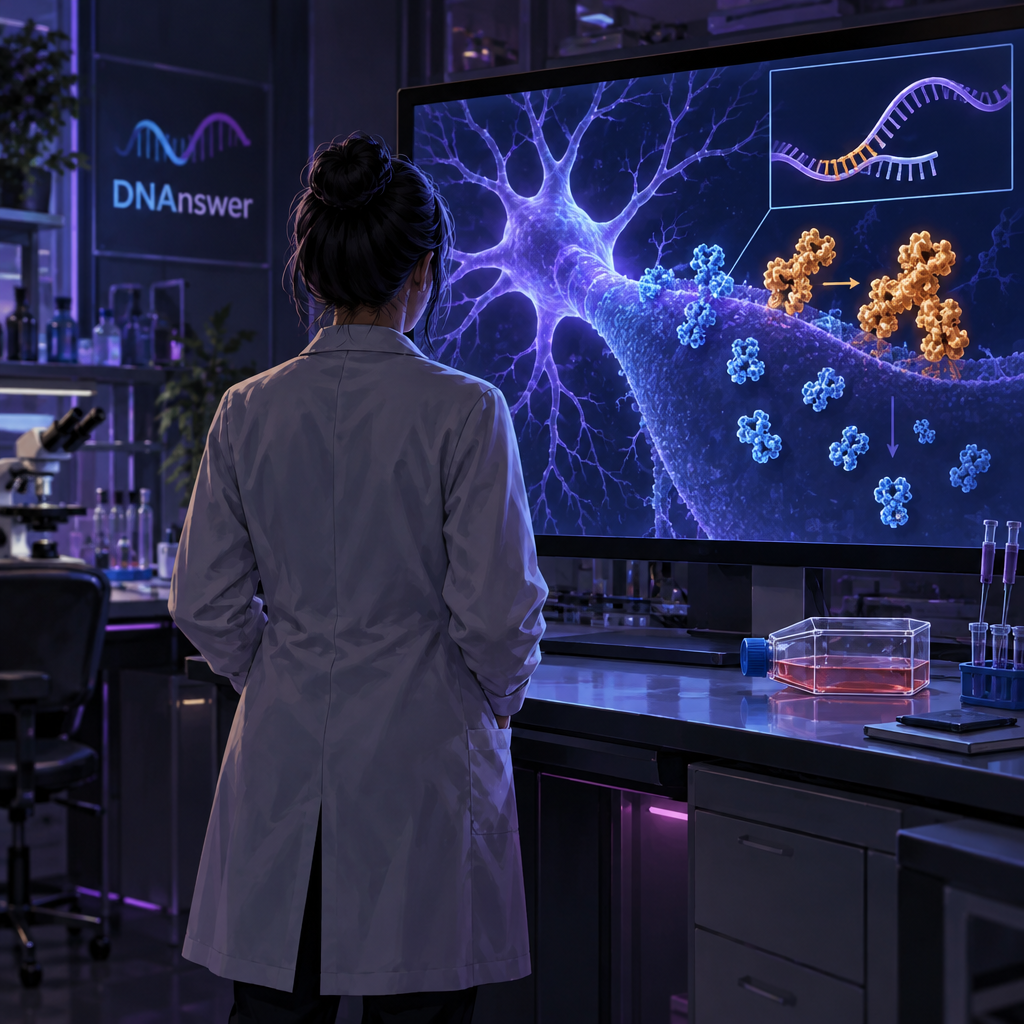
Without PrPC, there is nothing to convert. A team from the Broad Institute and the University of Massachusetts Chan Medical School developed a drug candidate called a divalent siRNA (small interfering RNA, a short molecule that tells cells to cut up the message for a specific protein). It reduces the amount of prion protein the brain makes.
In mice, a single dose after symptoms began lowered prion protein by 49% and extended survival by 64%. The FDA cleared the investigational application in March 2025.
Where the Trial Stands
The phase 1 trial, called PRiSM, tests safety and dosing in 15 patients who already have symptoms. As of October 16, 2026, it has also begun enrolling pre-symptomatic people at high genetic risk. A phase 1 trial asks whether a drug is safe, not whether it works, so results will not prove a cure.
Still, this is the first time carriers of a PRNP mutation have a trial aimed at them. If you want to practice the folding basics behind all this, DNAnswer has free protein folding quizzes you can take at your own pace.
Conclusion
Use the corrected picture to sort real risk from noise. Skip the worry about casual contact and well-cooked burgers. Pay attention to family history: if relatives had CJD or an unexplained early dementia, ask a doctor about genetic counseling and a neurologist's opinion. Tell surgeons about it before procedures. And follow the PRiSM trial, because lowering prion protein may change what a diagnosis means.
Frequently Asked Questions
How does a prion become infectious?
A misfolded prion protein, PrPSc, binds a healthy PrPC molecule and forces it into the same shape. The new copy then does the same to others. Because the shape resists breakdown, copies accumulate and spread between hosts.
Is prion disease contagious?
No, not in the usual sense. It is transmissible through eating infected tissue or contaminated medical instruments, but it does not pass through coughing, touching or normal caregiving.
Is prion disease always fatal?
Yes, as far as current medicine shows. There is no cure, and the disease usually kills within months or a few years of symptoms. Trials of drugs that lower prion protein levels are underway.
How can you avoid prion disease?
Most cases are sporadic or inherited, so avoidance is limited. You can lower acquired risk by following wildlife guidance on testing deer and elk, and by telling surgeons about any family history of prion disease.