Genotype vs Phenotype: Why Your DNA Isn't Your Destiny
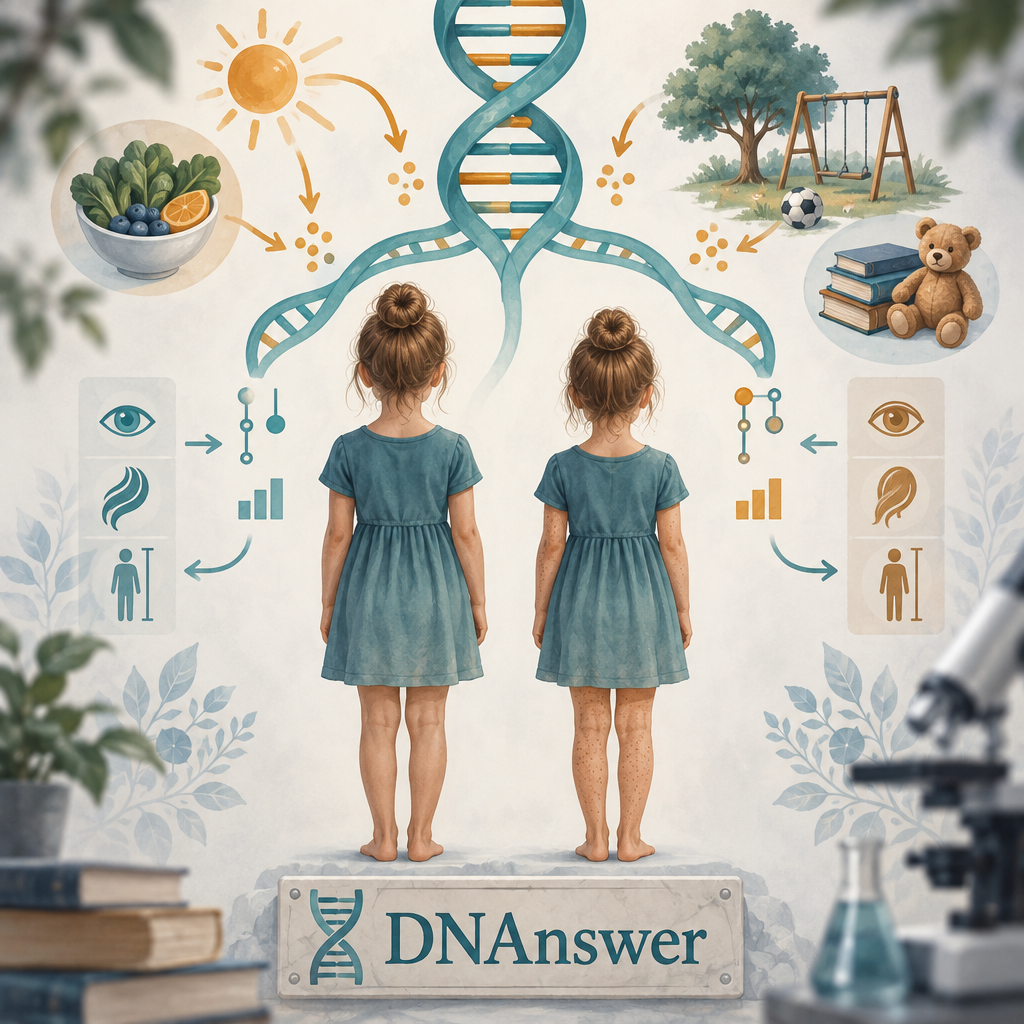
Two identical twins can share 100% of their DNA and still end up with different fingerprints. That single fact wrecks the idea that your genotype (the actual DNA sequence you inherited) locks in your phenotype (your observable traits, from eye color to disease risk). If you've ever typed "genotype vs phenotype biology nature vs nurture genetics gene expression environment" into a search bar hoping for a straight answer, here it is: your genes set a range of possibilities, not a fixed outcome.
That range gets narrowed or widened by everything from what you eat to what infections you catch as a kid. Understanding the difference between genotype and phenotype isn't just semantics — it changes how you think about disease risk, intelligence, and whether "it's in my genes" is actually true.
Key Takeaways
- Genotype is your DNA sequence; phenotype is what actually shows up in your body.
- Identical twins share genotype but not identical phenotypes — environment intervenes constantly.
- Epigenetics changes gene activity without altering the DNA sequence itself.
- Most human traits (height, intelligence, disease risk) are polygenic — dozens or hundreds of genes, not one.
- Penetrance and expressivity explain why the same gene variant affects people differently.
- Nature and nurture aren't opposing forces — they're a constant back-and-forth conversation.
Myth 1: "Your Genotype Determines Your Phenotype, Full Stop"
This is the biggest myth, and it's the most costly one, because people use it to make real decisions — about health screening, career choices, even who they think they'll "turn into." The belief makes intuitive sense: you inherit genes from your parents, and those genes build your body, so surely the code writes the outcome.
The kernel of truth is real. Some traits genuinely are close to deterministic. If you inherit two copies of the mutated HTT gene variant that causes Huntington's disease, you will develop the disease if you live long enough — this is one of the few conditions with near-complete penetrance, meaning almost everyone who carries the genotype shows the phenotype. That example is exactly why the myth spreads: people generalize from rare, single-gene diseases to everything else.
But most traits don't work that way. Height is a useful case. Genetics research estimates height is roughly 80% heritable in populations with stable nutrition, but that 80% figure describes variation across a population, not a guarantee for any individual. A child with "tall" genotype who grows up with poor childhood nutrition can end up shorter than predicted. The genotype sets a ceiling and a floor; environment decides where you land between them.
Biologists have a term for this: the reaction norm. It describes the range of possible phenotypes a single genotype can produce depending on the environment it develops in. Think of your DNA less like a blueprint that gets executed exactly as drawn, and more like a recipe that leaves room for substitutions — swap in less sunlight, add more stress hormones, and the final dish changes even though the recipe (genotype) stayed the same.
Intelligence is where this myth causes the most damage. Twin and family studies suggest a meaningful heritable component to IQ scores, but intelligence is polygenic — influenced by hundreds or thousands of gene variants, each contributing a tiny effect — and it's also shaped heavily by schooling, nutrition, sleep, and stress exposure in childhood. No single genotype "codes for" a specific IQ number.
What to do differently: treat a genetic result — from a consumer DNA test or a doctor's genetic panel — as a probability statement, not a verdict. A gene variant linked to higher diabetes risk means your odds shift; it doesn't mean the outcome is fixed.
Myth 2: "Epigenetic Changes Are Just Small Mutations"
People hear "epigenetics" and assume it means tiny DNA damage — like a mutation, just smaller. That mix-up matters because it makes epigenetic changes sound as permanent and inherited as a mutation, when often they're neither.
The confusion is understandable. Both mutations and epigenetic marks affect how genes behave, and both get discussed in the same breath in science articles. The word "epi" (Greek for "on top of") doesn't make the distinction obvious to anyone who hasn't studied the mechanism directly.
Here's the actual difference. A mutation changes the DNA letters themselves — the sequence of A, T, C, and G. An epigenetic change leaves the sequence untouched but adds chemical tags that control whether a gene gets read or ignored. The best-studied example is DNA methylation, where a methyl group attaches to DNA and typically switches a gene off without deleting a single letter of code.
Why This Distinction Changes What You Believe About Risk
Methylation patterns respond to environment in ways mutations don't. Studies on children of Holocaust survivors and on famine survivors (notably from the Dutch Hunger Winter of 1944–1945) found altered methylation patterns in genes tied to stress and metabolism, patterns that in some cases showed up in the next generation. That doesn't mean trauma rewrites your DNA sequence — it means it can change which genes get turned up or down.
Reversibility Is the Real Headline
Unlike mutations, many epigenetic marks are reversible. Diet, exercise, and smoking cessation have all been linked to measurable shifts in methylation patterns over months to years. This is part of why gene expression — which genes are actively "on" in a given cell at a given time — is so responsive to daily life, while the underlying genotype stays fixed from conception onward.
The practical takeaway: if a headline says a lifestyle change "altered your genes," check whether it means the sequence changed (it almost never does) or gene activity changed (it usually does). Those are very different claims, and conflating them fuels a lot of bad science journalism.
Myth 3: "Identical Twins Are Living Proof Genes Are Everything"

Identical twins get used constantly as evidence that genes explain everything, because they share the same genotype from a single fertilized egg splitting in two. If genes were destiny, identical twins should be interchangeable. They're not, and that gap is the clearest myth-buster available.
The belief has a real foundation: twin studies are one of geneticists' most powerful tools precisely because identical twins share genotype while fraternal twins don't. Comparing how similar identical twins are versus fraternal twins on a trait is how researchers estimate heritability in the first place.
But identical twins routinely differ in fingerprints, freckle patterns, disease onset, and sometimes even eye color intensity. Fingerprints form partly through random pressure and movement in the womb — environmental noise that even a shared genotype can't control. Studies on twins where one develops schizophrenia and the other doesn't (with concordance rates around 40-50%, not 100%) show environment and chance play a large role even in conditions with strong genetic links.
"Genes are not destiny... they're influences, one part of a much larger story." — a summary of decades of twin-study findings on heritability and gene-environment interaction.
Aging studies on twins are especially telling. Researchers have documented that older identical twin pairs show increasingly different methylation patterns compared to when they were young, meaning their gene expression literally diverges over a lifetime, even though their DNA sequence stayed identical.
What changes if you accept this: stop assuming a family history of a condition means an identical outcome awaits you, even in cases with a strong genetic component. Shared genotype narrows the odds; it doesn't fix the result.
Myth 4: "Nature vs. Nurture Is an Either/Or Question"
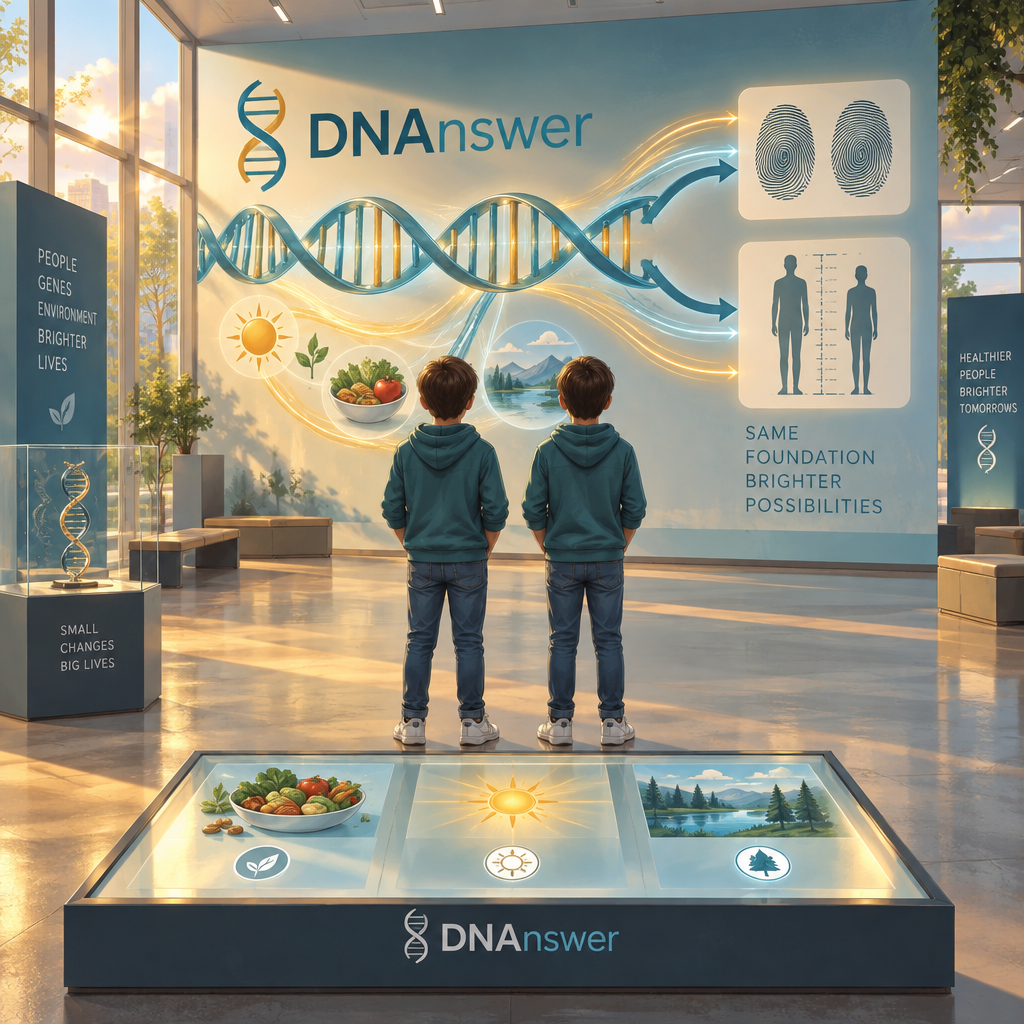
This is less a myth about facts and more a myth about framing, but it shapes how people talk about everything from parenting to addiction. People pick a side — "it's all genetics" or "it's all upbringing" — because a binary is easier to argue than a spectrum.
The origin goes back over a century, to Francis Galton's framing of "nature versus nurture" in the 1870s, a phrase that stuck around long after the science moved past it. Binary framing is intuitive: something either comes from inside you or from outside you, right?
Modern genetics treats it as neither/or — it's an interaction, often written as G×E (gene-by-environment). A gene variant might do nothing in one environment and cause a serious problem in another. The clearest textbook example is phenylketonuria (PKU), a genetic condition where the body can't break down an amino acid called phenylalanine. Left untreated, the genotype causes severe intellectual disability. But a diet low in phenylalanine, started in infancy, allows someone with the PKU genotype to develop typically. Same genotype, radically different phenotype, purely because of an environmental intervention (diet).
Alcohol Metabolism Genes Show the Same Pattern in Reverse
Roughly 30-50% of people of East Asian descent carry a variant in the ALDH2 gene that causes facial flushing and discomfort after drinking alcohol. The gene alone doesn't determine drinking behavior — social context, availability, and personal choice interact with that genetic sensitivity to produce very different outcomes across individuals carrying the identical variant.
Depression Risk Depends on Which Environment You Land In
Research on the serotonin transporter gene (5-HTTLPR) found that a "risk" variant only predicted higher depression rates in people who also experienced significant life stress — childhood maltreatment or major adverse events. People with the same variant who didn't experience that stress showed no elevated risk. The gene wasn't the cause; it changed sensitivity to the environment.
The takeaway: stop asking "is it genetic or environmental?" Ask "under what conditions does this genotype matter?" That question actually has useful answers.
Myth 5: "One Gene, One Trait" — Overestimating Single-Gene Power

Pop science loves a tidy story: "scientists found the gene for X." It sells headlines. It also badly misrepresents how most traits actually work.
The belief traces back to early genetics education, where textbooks used simple examples — pea plant color, blood type — to teach the basics of dominant and recessive alleles (alternate versions of the same gene). A dominant allele shows its effect even with just one copy; a recessive allele only shows up with two copies. These rules are real and useful for a small number of traits, which is exactly why people over-apply them.
Here's what actually happens with most traits: they're polygenic, built from the combined small effects of many genes at once, not from one dominant-recessive pair. Height involves an estimated 12,000+ genetic variants, each contributing a tiny fraction of the overall difference between people. Skin color involves at least six major genes with additive effects. Complex diseases like type 2 diabetes and heart disease involve dozens of risk variants, each nudging risk up or down by a small amount, combined with lifestyle factors like diet and activity level.
Even within single-gene conditions, outcomes vary because of expressivity — how strongly a trait or condition shows up, even in people who all carry the same disease-causing genotype. Neurofibromatosis type 1, a genetic condition affecting nerve tissue, shows dramatic variation: some carriers have just a few skin spots, others have serious tumors, all from the same underlying gene variant. That's expressivity in action, separate from penetrance (whether the trait shows up at all).
Here's a simple way to remember the layers involved when a genotype produces a phenotype:
- The genotype provides the raw genetic instructions inherited from both parents.
- Gene expression determines which of those instructions get "read" in a given cell or tissue.
- Epigenetic marks like methylation adjust the volume on gene expression without touching the DNA sequence.
- Environmental inputs (diet, stress, toxins, sunlight) interact with gene expression at every stage of life.
- Penetrance and expressivity determine whether and how strongly the resulting trait shows up.
- The final phenotype emerges from all four layers working together, not from step one alone.
Testing your understanding of these layers is more useful than memorizing which allele is dominant. The DNAnswer app has a quiz series specifically on gene expression that walks through examples like PKU and ALDH2 step by step, which is a faster way to build intuition than reading definitions in isolation.
Genotype vs. Phenotype: The Direct Comparison
Side by side, the two concepts answer different questions, and confusing them is where most of these myths start. Genotype answers "what genetic instructions did you inherit?" Phenotype answers "what actually happened in this body, in this environment, over this lifetime?"
On stability: genotype is fixed at conception and stays essentially constant across your lifetime (barring rare somatic mutations in specific cells). Phenotype is dynamic — your skin tans and fades, your weight shifts, your risk profile for disease changes as you age and as your environment changes.
On measurability: genotype gets measured once, from a DNA sample, and the result doesn't change if you retest it next year. Phenotype requires ongoing observation — a blood pressure reading, a cholesterol panel, a doctor's visual exam — because it reflects a moving target.
On predictive power: genotype alone predicts outcomes well only for a small set of largely single-gene conditions with high penetrance, like Huntington's disease or cystic fibrosis. For the vast majority of traits — intelligence, most cancers, heart disease, longevity — genotype provides a probability shift, not a forecast.
Choose to weight genotype heavily if you're dealing with a known single-gene condition in your family history, something like cystic fibrosis, sickle cell disease, or a BRCA mutation linked to breast cancer risk — these are the situations where genetic counseling and testing give you real, actionable numbers. Choose to weight environment and lifestyle heavily if you're thinking about polygenic outcomes like heart disease, type 2 diabetes, or cognitive health, where the DNA sets a background risk level but daily choices move the needle more than any single variant does.
Conclusion
Your DNA is the starting hand you were dealt, not the final score. If a family history worries you, get genetic counseling for single-gene conditions with real predictive power — and put your energy into diet, sleep, and stress management for the polygenic risks that make up most disease. The most useful question isn't "what are my genes," but "what conditions turn this genotype into that phenotype?"
Frequently Asked Questions
Is phenotype 100% determined by genotype plus environment, with nothing left over?
Not quite — there's also developmental randomness, sometimes called "noise." Identical twins' differing fingerprints show that even identical genotype and near-identical environment leave room for chance during development.
Can environment actually change your DNA sequence?
No — environment changes gene expression and epigenetic marks like methylation, not the underlying DNA letters. A true sequence change (a mutation) requires a different mechanism, like radiation damage or replication errors.
Do identical twins have the same disease risk for everything?
No. Twin studies on conditions like schizophrenia show concordance rates around 40-50%, meaning the unaffected twin stays healthy despite sharing the same genotype as their affected sibling.
Does a "gene for" a trait, like intelligence or height, actually exist?
Rarely — most complex traits are polygenic, shaped by thousands of gene variants with tiny individual effects plus environmental factors, not one identifiable gene.