Genetic Fun Facts: 7 Surprising Ways Genes Work
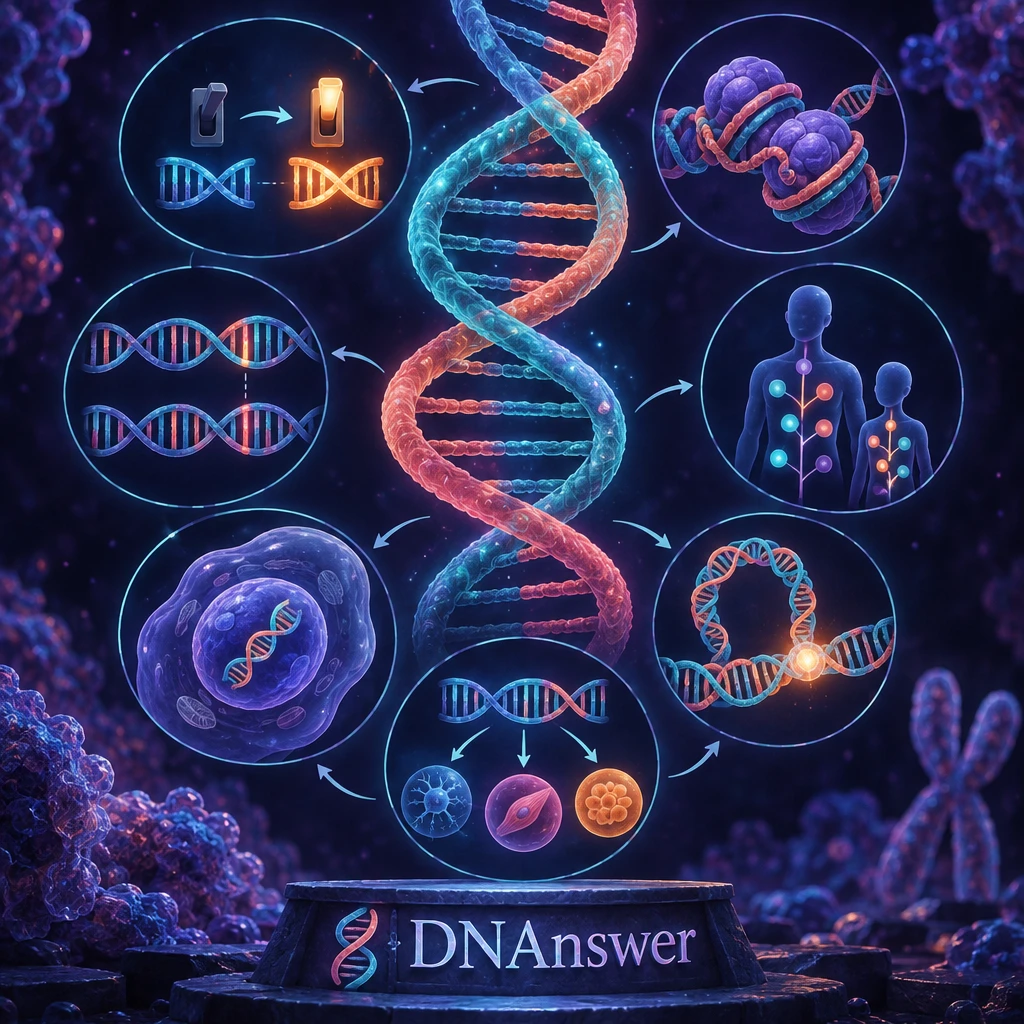
Does one gene really decide one trait, the way school charts made it look? Mostly no. Your eye color, your height and even your odds of red hair come from many genes working together, and their effects depend on when and where your cells switch them on.
These genetic fun facts all follow the same pattern. Each one starts with a belief that sounds reasonable, shows where it came from, and then explains what your cells actually do. The real mechanisms beat the trivia. They explain why siblings differ and why you resemble your mother's mother more than you might expect.
Key Takeaways
- About 20,000 protein-coding genes fill only about 1.5% of your genome.
- One gene can produce several different proteins.
- Most traits, such as eye color, involve many genes.
- Your siblings inherited a different mix of your parents' DNA.
- Mitochondrial DNA usually comes from your mother alone.
- "Rare genes" usually means rare variants in genes everyone has.
Why the Simple Gene Story Breaks Down
Start with a few definitions. DNA is the molecule that stores your genetic information, written in a four-letter chemical code. A gene is a stretch of DNA that your cells read to make a working molecule, usually a protein. Proteins are the molecules that do most of the jobs inside your cells.
The National Human Genome Research Institute puts the human count at about 20,000 protein-coding genes. Mice share about 90% of their genes with you, and chimpanzees share about 98%. If the gene count alone made you human, those numbers would be hard to explain. The rest of this article explains what actually makes the difference.
1. One Gene Can Make Many Proteins: The Biggest Myth in Genetics
The common belief is "one gene, one protein." Your genome breaks that rule all the time, and the trick it uses is the main reason 20,000 genes can run a body as complex as yours.
What people believe
The idea came from real science. In the 1940s, experiments on bread mold linked single genes to single enzymes (proteins that speed up chemical reactions). That neat rule ended up in textbooks, and it held up well for simple organisms.
What's actually true
Your cells first copy a gene into a message molecule called RNA. They then cut that message and paste parts of it back together. This step is called alternative splicing, and it works like editing one film into several different cuts. Most human genes get spliced in more than one way. A muscle cell and a nerve cell can read the same gene and still end up with different protein versions.
What to do with it
Stop judging how complex a species is by its gene count. Ask how the genes are used. A single gene can make proteins with different jobs in different tissues, and that flexibility helps explain how you get so much out of a fairly modest set of genes.
2. Red Hair and Eye Color Aren't Single Genes: Traits Are Team Efforts
There's no single "red hair gene" and no one switch that sets eye color. Most traits are polygenic, which means many genes each nudge the result a little.
What people believe
Eye color is the standard textbook example of simple inheritance: brown wins, blue loses. That Punnett square from school felt clean and final, so people assume it covers every trait.
What's actually true
One gene, MC1R, plays a large role in red hair, but other genes change the shade, and some people with MC1R variants don't have red hair at all. Eye color depends on several genes that control how much of the pigment melanin your iris holds. That's why two blue-eyed parents can occasionally have a brown-eyed child, something the school model says can't happen.
Height pushes this further. Thousands of DNA differences add up to it, and nutrition in childhood matters too.
What to do with it
Treat any claim that "the gene for X" exists with suspicion. When someone predicts a baby's traits from one gene, you can expect real outcomes to vary much more than the prediction suggests.
3. Your Cells Share the Same DNA but Use Different Genes
A skin cell and a brain cell carry essentially the same DNA. They look and act completely differently because each one switches on a different set of genes.
What people believe
The assumption is that different cells must contain different instructions. It sounds logical, since a neuron and a liver cell have almost nothing in common.
What's actually true
Gene activity, also called gene expression, means which genes a cell actually reads, and how often. Proteins called transcription factors attach near genes and turn them up or down. Chemical tags on your DNA also mark some genes to stay quiet. A liver cell keeps its detox genes busy and silences the genes for brain chemicals, even though every one of those genes is still present.
Your environment feeds into this. Sunlight makes skin cells switch on pigment genes, which is why you tan. Diet, stress and exercise all shift which genes your cells use.
What to do with it
Think of your DNA as a cookbook, not as one meal. Your genes set the possibilities, and gene activity, shaped partly by how you live, decides what your cells actually cook.
4. Most of Your DNA Doesn't Code for Proteins, and It Isn't Junk
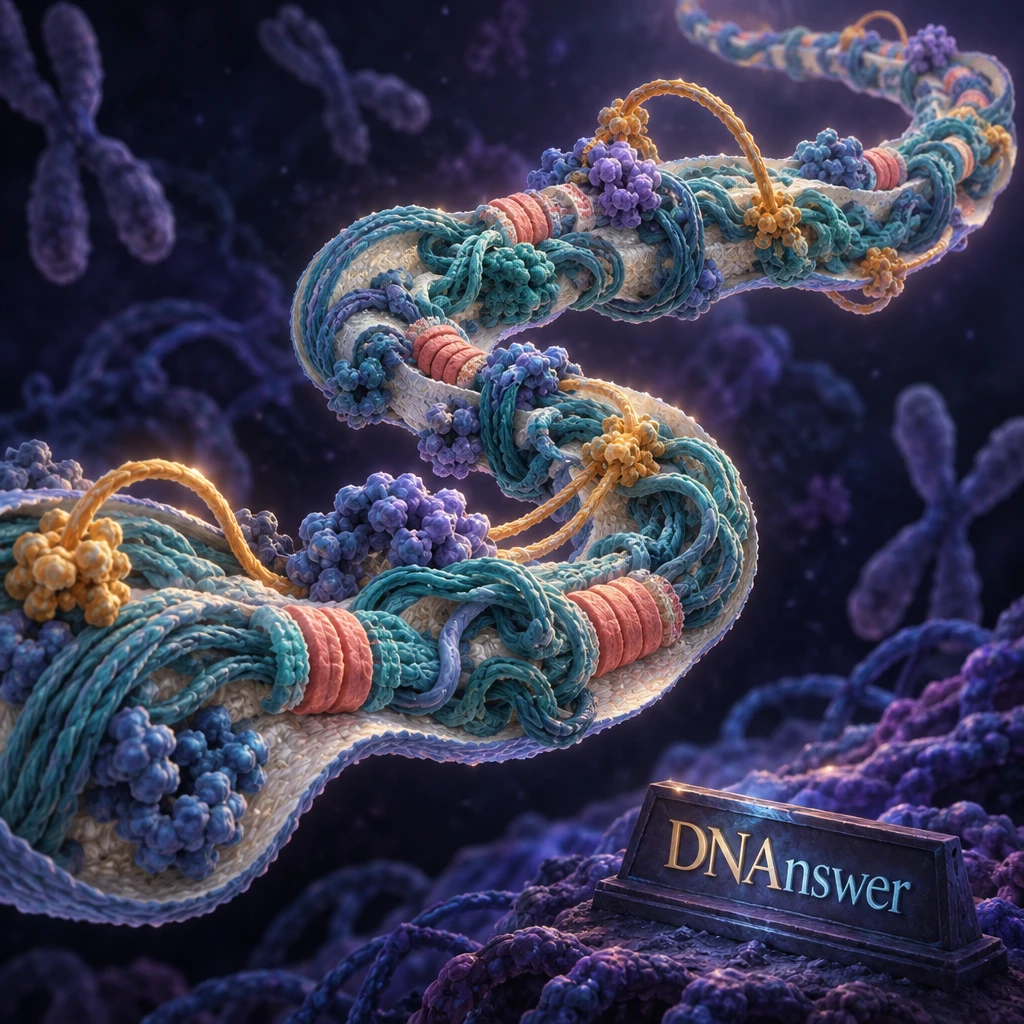
Here's one of the strangest genetic facts. The instructions for all your proteins take up only about 1.5% of your genome.
What people believe
For decades, people called the remaining 98.5% "junk DNA." The label stuck because much of it looked useless. The Wellcome Sanger Institute notes that about half of your genome is thought to be made of mobile genetic elements. These are repeating sequences, some probably left over from ancient viruses, that once copied themselves around the genome.
What's actually true
Noncoding DNA means DNA that doesn't spell out a protein. Some of it is still very important. Stretches called enhancers and promoters control when and where genes switch on, a bit like a dimmer switch placed far from the bulb. Other sections produce RNA molecules that do jobs directly, without ever becoming proteins.
Barbara McClintock won the 1983 Nobel Prize for discovering mobile genetic elements, which are often called "jumping genes."
Not every base pair does a job, and scientists still argue about how much does. "Junk," though, misses the control system hidden in there.
What to do with it
When you read about a DNA variant linked to a disease, check whether it sits inside a gene or in the regions around it. Many variants linked to common conditions sit in noncoding control regions.
5. Siblings Inherit Different DNA From the Same Parents
You and your full siblings each got half your DNA from each parent. You almost certainly didn't get the same halves.
What people believe
Same parents should mean the same inheritance, and so the same ancestry results. Siblings are often surprised when DNA tests show one of them as "more Irish" than the other.
What's actually true
Before your parent's body makes an egg or sperm cell, each pair of matching chromosomes swaps segments with its partner. This shuffling is called recombination. Every egg and every sperm therefore carries a new mix of grandparental DNA. On average, full siblings share about 50% of their DNA, but the real figure ranges from roughly 40% to 60%.
So siblings really can inherit different ancestry percentages. Neither result is wrong.
What to do with it
If you compare ancestry results with a brother or sister, expect them to differ. Recombination also helps explain why your baby's traits can skip around and bring back a grandparent's nose or a great-aunt's curls.
6. Mitochondrial DNA Usually Comes From Your Mother Alone
Not all of your DNA sits in the nucleus. A small circle of it lives inside your mitochondria, and you almost always inherited it from your mother.
What people believe
Most people assume every bit of DNA is a 50/50 blend of both parents. That's true for nuclear DNA, the main genome in the center of each cell, so the assumption makes sense.
What's actually true
Mitochondria are the structures that supply your cells with energy. They make more than 90% of the energy your body uses. Most scientists think they began as free-living bacteria that moved into early cells about 1.5 billion years ago and never left. They kept a small genome of their own, only 37 genes, compared with about 20,000 in the nucleus.
Both sperm and egg carry mitochondria, but after fertilization the sperm's mitochondria are almost always destroyed. Because mitochondrial DNA changes slowly across generations, it can trace maternal lines across huge spans of time. It helped identify the remains of the Romanovs, Russia's last royal family, more than 75 years after they were killed in 1918.
What to do with it
Your mitochondrial DNA links you to your mother, her mother and so on back through time. Errors in it can cause rare mitochondrial diseases, which is one reason maternal family history matters in these cases.
7. "Rare Genes" Are Usually Rare Versions of Common Genes
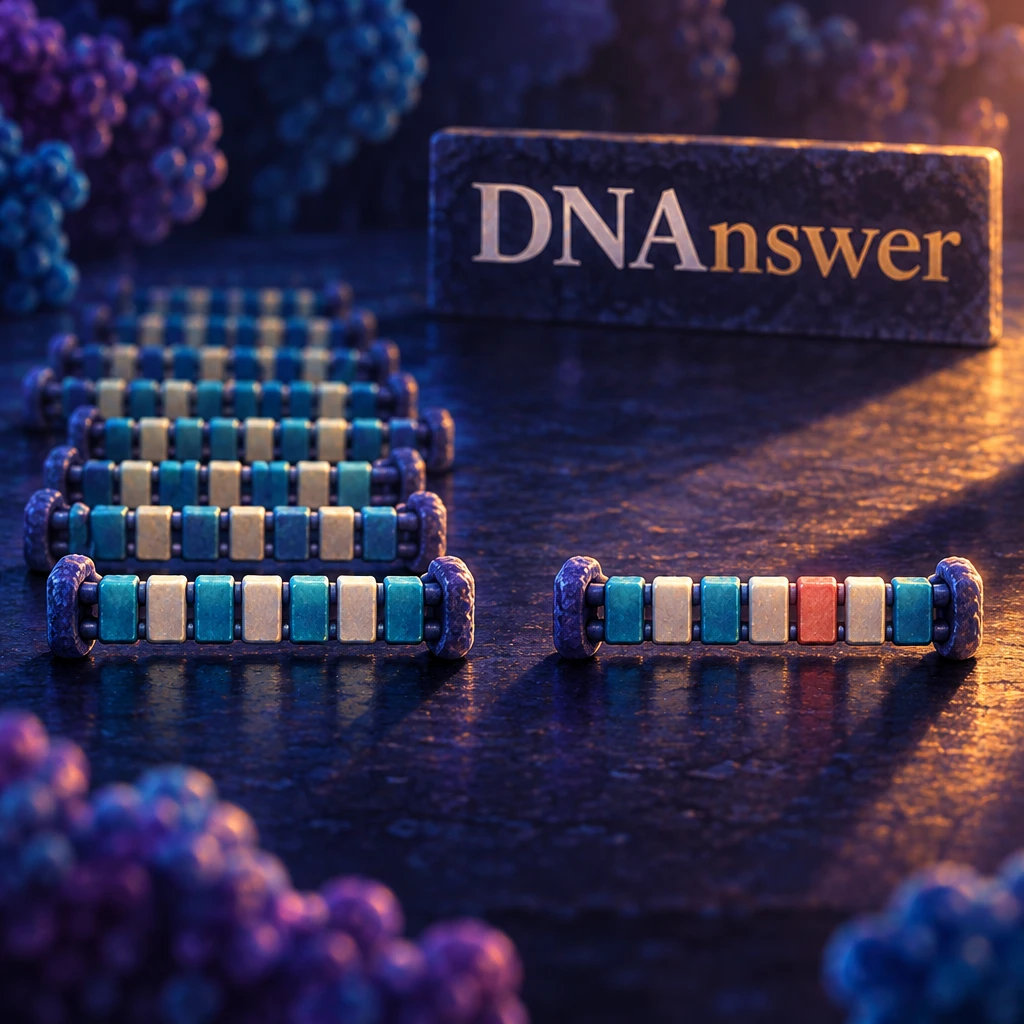
People ask about the rarest genes you can have. The honest answer is that almost everyone has the same genes. What varies are the versions.
What people believe
The phrase "rare gene" suggests that a few people own special genes the rest of us lack, like a hidden extra chapter in their genome.
What's actually true
A variant is a small difference in a DNA sequence, often a single letter changed. Rare variants sit inside genes that all humans carry. A variant in a gene you share with 8 billion people can give rare blood types, unusual traits or rare diseases. Hereditary angioedema, which causes sudden, dangerous swelling attacks, comes from such a variant. In a phase 3 trial reported in 2026, a single dose of an in-body gene editing therapy cut attack rates by 87% compared with placebo.
What to do with it
When a test flags a "rare gene," read it as a rare variant in a common gene. Then ask what that variant actually does, because many rare variants have no known effect at all.
Test What You Just Learned
Pick the fact that surprised you most and explain it to someone in two sentences. If you can't, reread that section. You can also check your recall with a molecular biology quiz on DNAnswer, which is free to use: take a quiz. Once you understand splicing, recombination and gene control, most DNA headlines become much easier to judge.
Frequently Asked Questions
How do your genes work in your body?
Your cells copy a gene into RNA, edit that message, and use it to build a protein or a working RNA molecule. Control regions and environmental signals decide which genes each cell uses, and how strongly.
Why can you and your biological siblings inherit different DNA?
Recombination shuffles your parents' DNA before each egg or sperm forms, so every child gets a unique mix. Full siblings share about 50% of their DNA on average, with a typical range of roughly 40% to 60%.
Do you have a single gene for eye color?
No. Several genes control how much melanin your iris holds, and together they set your eye color. That's why eye color doesn't always follow the simple brown-beats-blue rule you learned in school.
What are the rarest genes you can have?
People almost never have unique genes. They carry rare variants, meaning small spelling differences, within genes everyone shares. Some cause rare diseases, and many have no noticeable effect.