Synthetic Cells: How Scientists Build Life-Like Cells From Scratch
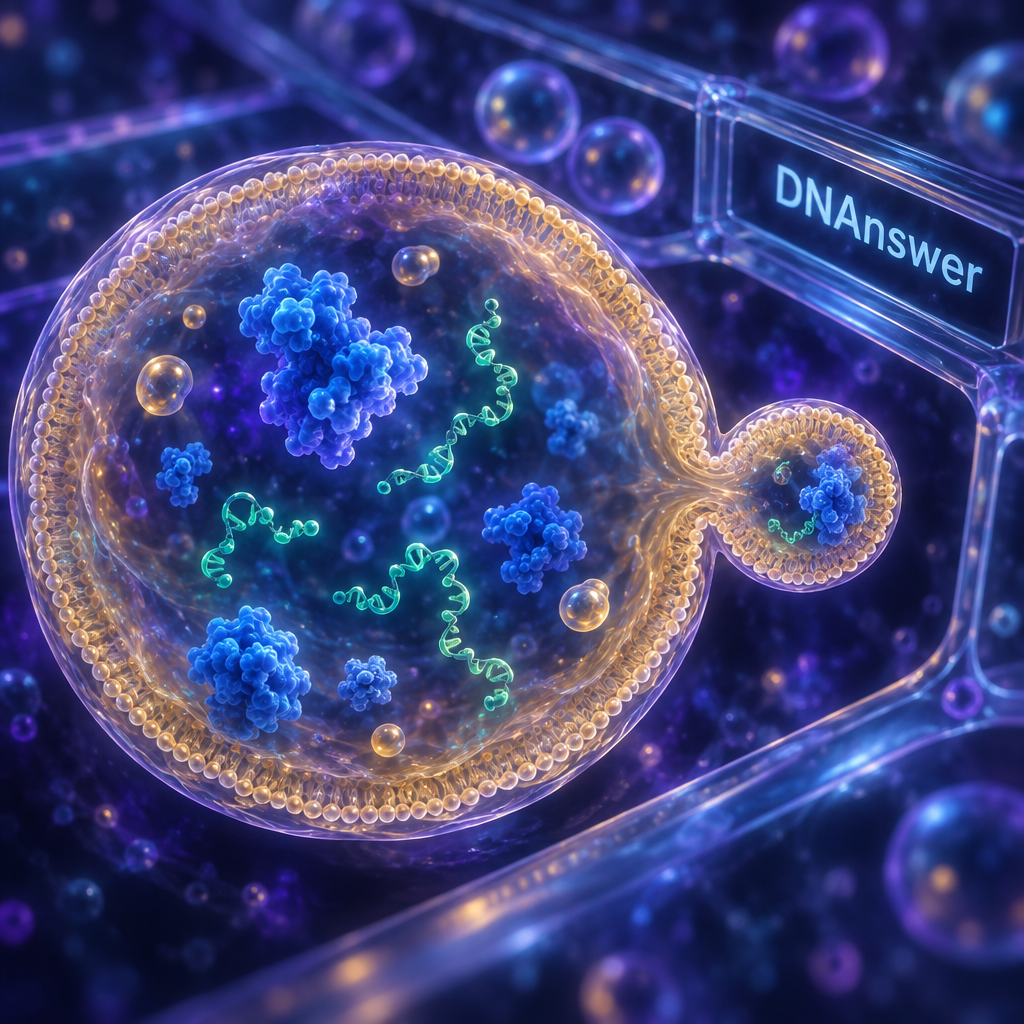
Did scientists just build life from scratch? Not quite, and the phrase "from scratch" is doing a lot of work. Synthetic cells are lab-built, cell-like systems assembled from nonliving molecules such as fats, proteins, and DNA. Some of them grow or divide. No one has built a fully self-sufficient living cell from nothing. The SpudCell, announced in July 2026, is a real milestone, but how big it looks depends on what you count as "from scratch" and what you count as alive.
Key Takeaways
- Scientists assemble existing molecules. They never create life from nothing.
- "From scratch" is a spectrum, from edited cells to fully bottom-up builds.
- A synthetic genome inside a natural cell is top-down, not from scratch.
- SpudCell grows and divides, but it still depends on its liquid medium.
- Synthetic humans are not on any realistic horizon.
- Medical uses are early-stage, not near-term products.
Three Ways to Build a Synthetic Cell
Before you can judge any "first," you need to know the three main routes. They sit on a spectrum, and each one borrows a different amount from nature.
Top-down: strip a living cell down
Top-down means you start with a living cell and remove or rewrite parts. In 2010, a team at the J. Craig Venter Institute (JCVI) built a bacterial genome in the lab and put it into a living cell of a related species. Six years later, the same group trimmed it to JCVI-syn3.0, a minimal cell (one with only the genes it needs to live) that has 473 genes.
The cell body in that work was natural. Only the genome was synthetic.
Bottom-up: assemble from parts
Bottom-up means you start with nonliving molecules and build upward. Typical parts are lipid vesicles (hollow bubbles made of fat molecules, also called liposomes), DNA, proteins, and chemical energy. Researchers such as Kate Adamala at the University of Minnesota work this way. Her team's liposomes can hold working genetic machinery.
Cell-free systems: the engine without the body
A cell-free expression system is a test-tube mix of the molecular machinery that reads DNA and makes proteins. It has no membrane and no cell. Labs often buy these mixes, or extract them from bacteria such as E. coli. They work well, but they come from living things.
This approach is a common ingredient in bottom-up builds. It is also the first place the "from scratch" claim gets slippery.
Myth 1: "Scientists Can Create Life From Nothing"
You might believe this because the headlines say it. "Life created in a lab" sounds like matter appearing from empty space. Fair enough, since few headlines explain the difference.
Here is what happens instead. Researchers take molecules that already exist, such as fats, amino acids, and DNA, and arrange them. The fats come from chemical suppliers. The DNA is often synthesized by machines, using a template of a natural sequence. Nobody conjures atoms.
So what does the claim really mean? It means the finished system behaves like a cell even though no living cell was used as its body. That is a big achievement. It is not creation from nothing.
A 2018 Nature feature described an early example. A few ingredients, two proteins, three buffering agents (chemicals that keep acidity steady), two types of fat molecule, and chemical energy, produced bouncing, pulsating blobs. These structures had some of the machinery to divide. They were not alive.
What to do with this: when you see "created life," ask one question. Which parts did the team make, and which did they buy or borrow? The answer tells you how impressive the claim is.
Myth 2: "A Synthetic Genome Means a Cell Built From Scratch"
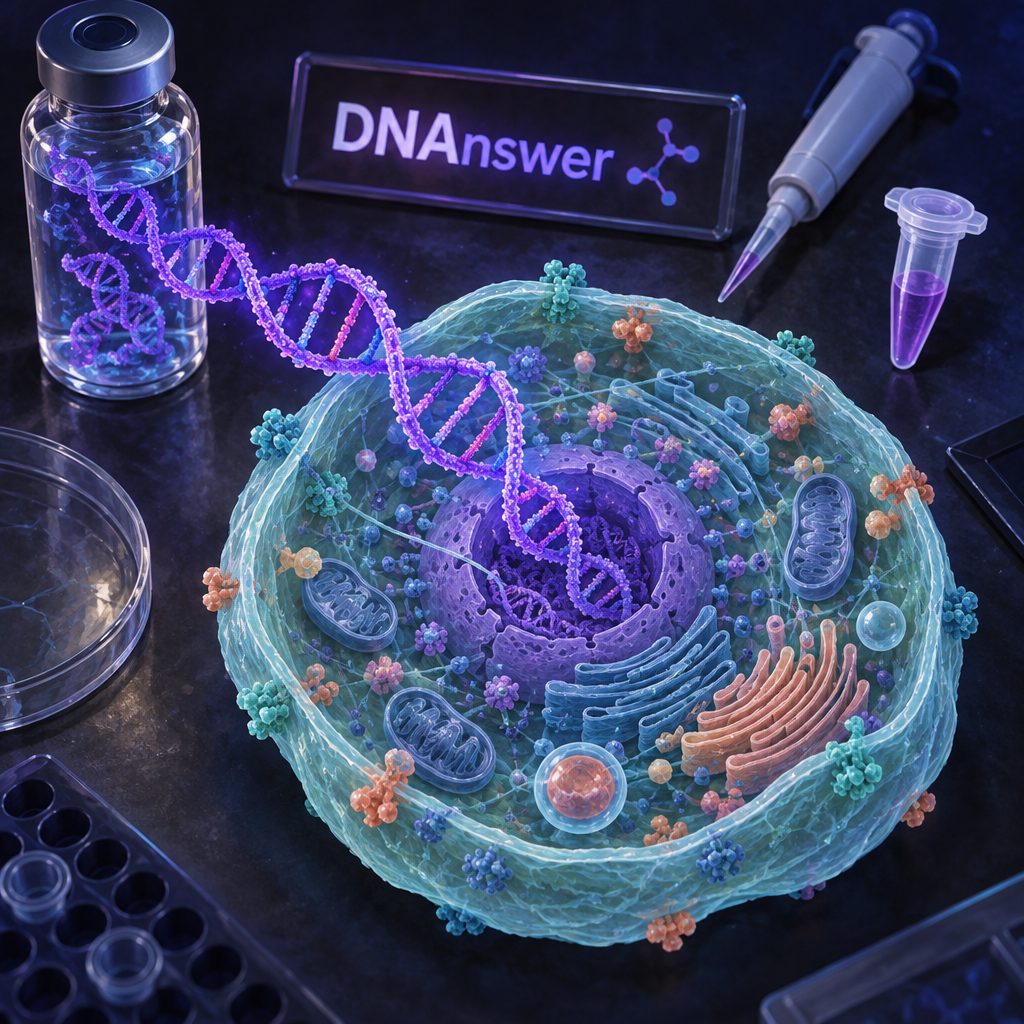
This myth is the costliest, because it makes the 2010 headlines look like something they were not. Here is the steelman. If a scientist writes every letter of a genome, the instruction book is fully human-made. A cell run by that book is, in a real sense, synthetic.
That reasoning has merit. The 2010 JCVI result was a genuine feat of DNA assembly. It proved that a chemically made genome can boot up a cell.
But the host cell was natural. Its membrane, its protein-making machines, and its metabolism came from a living bacterium. The team swapped the instruction book and kept the body. This is why researchers call the approach top-down.
A 2024 review in the scientific literature (published through the U.S. National Library of Medicine's PubMed Central) put it plainly. Despite the technology for modifying living cells, building a functioning cell "from scratch" had not been done. That review came before SpudCell.
How this differs from genetic engineering
A genetically engineered cell is a living cell with a few genes added or changed. Insulin-making bacteria are the classic case. A top-down synthetic cell goes further and swaps in a whole designed genome. A bottom-up synthetic cell has no living host at all.
Think of it as a spectrum:
- Edit a few genes in a living cell (genetic engineering).
- Replace the whole genome of a living cell (top-down, JCVI).
- Build a membrane-bound system with bought-in cell-free machinery (bottom-up, partial).
- Build every part from defined chemicals (the goal of bottom-up work).
What to do with this: when a headline says "synthetic cell," place it on this ladder. Most past claims sit at rung 2.
Myth 3: "The Headline 'First Synthetic Cell' Means a Fully Living Cell Exists"
The headlines around SpudCell were strong. Science-news outlets called it a "stunning" step. The University of Minnesota called it the world's first synthetic cell with a complete life cycle, built entirely from nonliving chemical components. Adamala said the work shows that growth and replication "do not need a mysterious magical spark."
That is a fair reading of what the team showed. SpudCell can undergo selection, genome replication, growth, feeding, and genetically encoded division. Its genome has just 90 kilobase pairs (90,000 DNA letters). Biologists had assumed a living cell needed at least 113.
What SpudCell did
The cell divides without a cytoskeleton, the internal scaffold natural cells use to split. Instead, proteins crowd onto the membrane until the stress makes it split. The team also introduced a genetic change that raised production of a fusion protein. Those cells grew faster. After five generations, the faster variant had outcompeted the original. That is evolution by natural selection, running in a chemical system.
What SpudCell cannot do
Here is the catch. SpudCell lasts only a few generations. It cannot make its own protein-making system, and it cannot regulate its metabolism. It relies on substances in the liquid it floats in. It also lacks a cytoskeleton, so it cannot move materials around or clear waste.
So is it alive? That depends on your definition. A common checklist includes growth, reproduction, metabolism, and response to the environment. SpudCell ticks some boxes partly and fails others. Scientists argue about where the line sits, and no single answer is official.
Also note the plumbing. The team still has to merge SpudCell's seven DNA rings (plasmids) into one stable genome. The researchers say their techniques were hard to scale, since collaborators had to fly in for in-person demonstrations.
What to do with this: read "first" as "first to reach this checklist," not "first living artificial organism." The result is a proof of concept others can build on.
Myth 4: "Synthetic Cells Will Soon Lead to Synthetic Humans"
You might have heard this because the word "cell" sounds like the first step toward a body. The logic seems tidy: cells make tissues, tissues make people.
The gap is enormous. A human has about 37 trillion cells of hundreds of types. They organize through development, signaling, and an immune system. A synthetic cell today lasts a few generations in a carefully fed liquid. SpudCell's genome is about 90,000 DNA letters, while the human genome is about 3 billion.
No lab is working toward a synthetic human, and none could realistically do so with these tools. The nearer questions are about single cell-like units.
Near-term uses are modest
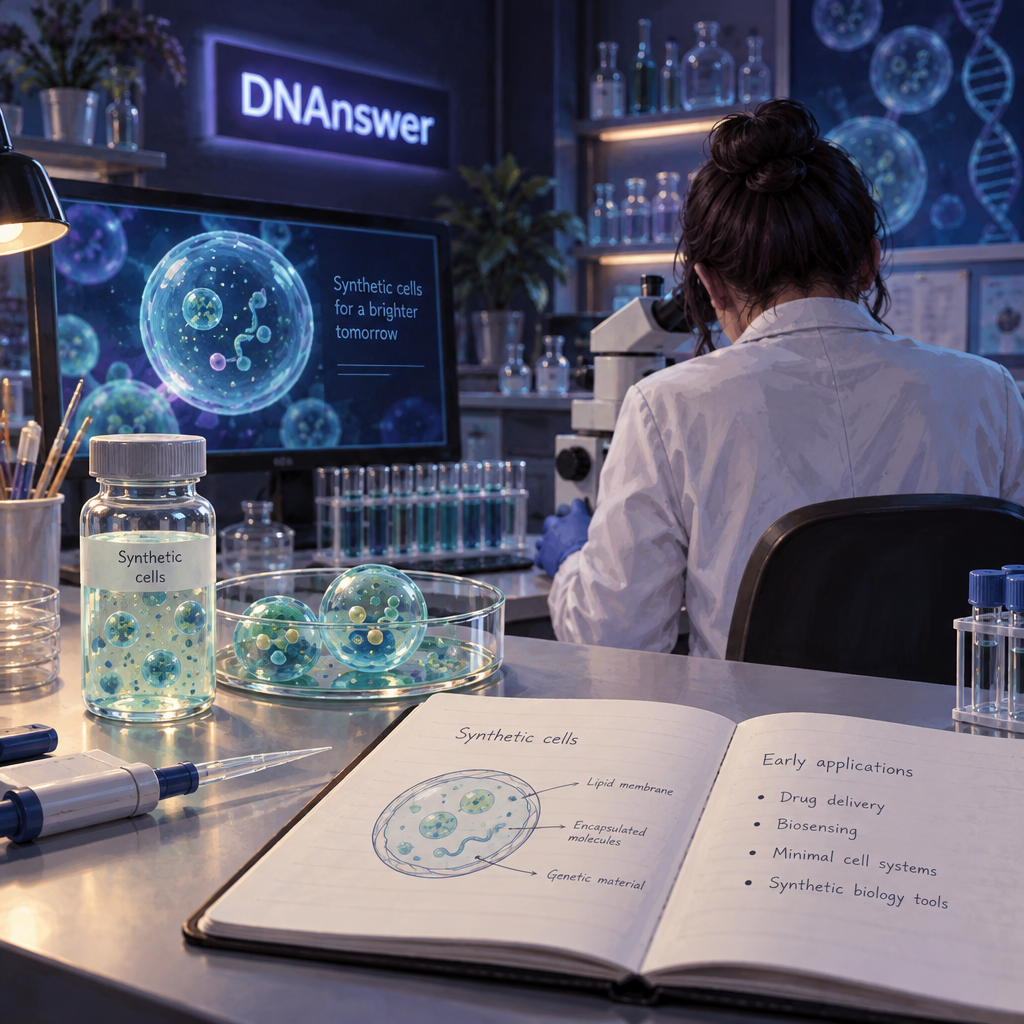
Researchers see synthetic cells acting as tiny factories. They might make drugs, materials, or chemicals, much like the engineered bacteria that already produce insulin. Adamala's group has pointed to drugs that include amino acids evolution never used, and to materials that are grown rather than made in a factory.
Other uses are further along in simpler forms. Cell-free systems already power some biosensors, which are devices that detect a target molecule and produce a signal. Liposomes already deliver certain drugs, including some cancer medicines.
None of this is a near-term clinical product built on SpudCell. Adamala herself says the work is "just the beginning" and needs international effort to become robust and practical. To coordinate that, she and partners launched Biotic, a public-benefit institute meant to build open, shared infrastructure.
What to do with this: treat promises of cures in the next few years with caution. Treat "tool for research and manufacturing" as the realistic first phase.
Why Researchers Bother: Origins and Understanding
If these cells are fragile, why build them? One answer is that building something is the strongest test of whether you understand it. As the iBiology introduction by Adamala puts it, life on Earth evolved once, so every living thing shares one complex framework. Taking it apart in nature is hard. Building a simpler version teaches you which parts matter.
The same work feeds origin of life research, which asks how chemistry became biology about 3.5 billion years ago or earlier. If a mix of known parts can grow, copy its genes, and evolve, that narrows what early life needed.
Adamala is a co-founder of the international Build-a-Cell Initiative, a community that seeks to build synthetic cells and share the knowledge openly.
You can also see why safety matters. Synthetic cells that can evolve are not toys. Today's versions cannot survive outside a lab, which limits the risk. Still, ethicists and biosafety groups argue that rules should come before the technology matures. Open standards, like the ones Biotic proposes, make oversight easier because everyone works on the same design.
If you enjoy testing what you have learned, DNAnswer has free molecular biology quizzes where you can practice terms such as plasmid, genome, and membrane.
Conclusion
Use a quick test on the next "life from scratch" headline. Ask which parts were built, which were bought, and which were borrowed from a living cell. Then ask which life checklist the system actually meets. Real progress usually shows up in those details, and hype hides there. SpudCell passes more of the test than anything before it, yet it still leans on its medium.
Frequently Asked Questions
Did scientists ever build a cell from scratch?
Yes, by one definition. In July 2026, University of Minnesota researchers reported SpudCell, built from nonliving chemical components, which grows and divides. But it relies on its surrounding liquid, so whether it counts as "from scratch" depends on your definition.
Can scientists create life from nothing?
No. Researchers assemble existing molecules such as fats, proteins, and DNA. No lab makes matter appear or has made a fully self-sustaining living organism from basic chemicals alone.
How is a synthetic cell different from a genetically engineered cell?
A genetically engineered cell is a living cell with a few genes changed. A bottom-up synthetic cell is assembled from nonliving parts with no living host. A top-down version sits between them, with a synthetic genome inside a natural cell.
What are artificial cells used for?
Today they serve mainly as research tools and as early platforms for biosensors and drug delivery. Future uses could include tiny factories that make drugs and materials, though those are still years away.