Cytoplasm Function Biology: What It Does
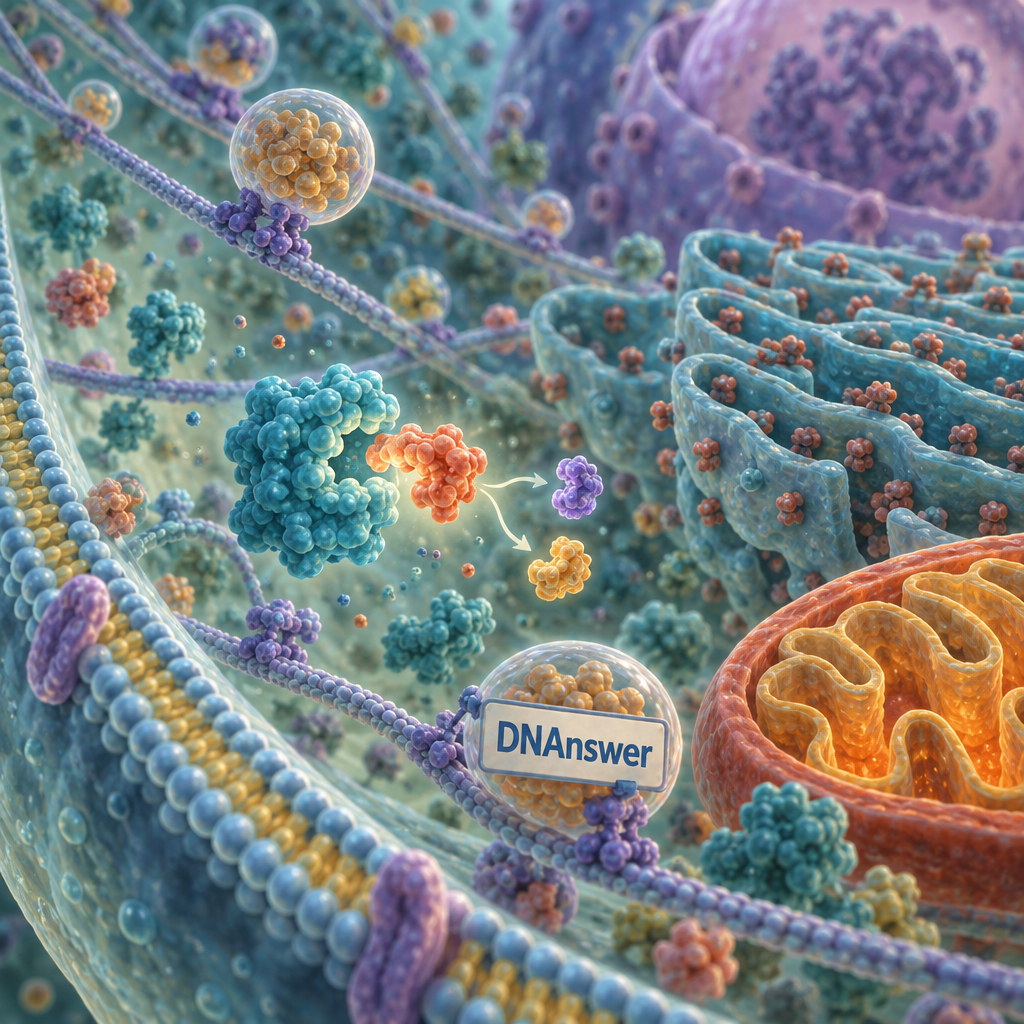
Your high school textbook probably drew the cytoplasm as gray empty space with a few blobs floating in it. That picture is wrong, and it's costing you a real understanding of how cells work. Cytoplasm function biology isn't about fluid sitting still inside a membrane — it's about a packed, moving, chemically active workspace where most of the cell's real business happens.
If you searched this phrase, you probably want the fuller picture: what cytoplasm actually contains, what it does, and why the "cell jelly" explanation leaves out almost everything interesting. That's what this article corrects, myth by myth.
Key Takeaways
- Cytoplasm isn't inert fluid — it's an active, reaction-hosting system
- Cytosol is only the liquid part; cytoplasm includes organelles and the cytoskeleton too
- Cytoplasm has structure and movement (cytoplasmic streaming), not uniform stillness
- Protein synthesis, metabolism, and much of cellular respiration happen outside the nucleus
- Prokaryotic cells run their entire genome and metabolism inside one cytoplasmic space
- Treating cytoplasm as "background" misses where most cell function actually occurs
Myth 1: Cytoplasm Is Just Passive Filler Fluid
This is the biggest misconception, and it's the one that distorts everything else you learn about cells. The belief goes like this: the nucleus is the "brain," organelles are the "organs," and cytoplasm is just the goo holding it all together — filler, like packing foam in a shipping box.
It's an understandable mistake. Diagrams reinforce it constantly. Open any basic biology textbook and the cytoplasm is drawn as flat gray or pale yellow shading, while the mitochondria, ribosomes, and nucleus get bold outlines and bright colors. Visually, the message is clear: this part doesn't matter, look at the labeled stuff instead.
But cytoplasm is where most of a cell's chemistry actually happens. Glycolysis, the first stage of breaking down glucose for energy, runs entirely in the cytosol (the liquid portion of the cytoplasm), not inside any organelle. Protein folding, enzyme activity, signal relay chemicals, waste breakdown — all of it depends on reactions happening in this supposedly empty space.
The cytoplasm contains everything within the cell membrane except the nucleus, including the cytosol, organelles, and cytoskeleton — Molecular Biology of the Cell (Alberts et al.)
That definition alone tells you cytoplasm isn't one substance. It's a whole operating environment, something closer to a city's infrastructure than a bucket of water.
Here's what changes once you drop the "filler" idea: when you picture a cell now, picture a packed, busy interior rather than empty space. A single eukaryotic cell packs thousands of ribosomes, hundreds of mitochondria, and a dense mesh of protein fibers into that "background." Nothing about it is inactive.
Myth 2: Cytoplasm and Cytosol Are the Same Thing
People use these two words interchangeably all the time, and it causes real confusion when you try to understand cell diagrams or quiz questions. Figuring out the difference is one of the fastest ways to upgrade your grasp of cytoplasm function biology.
The confusion makes sense because both words describe "the stuff inside the cell that isn't the nucleus," and textbooks rarely pause to split them apart. Even some simplified science content blurs the line on purpose, assuming beginners don't need the distinction.
Here's the actual relationship, laid out plainly:
Cytosol Is the Liquid Component
Cytosol is the water-based gel that fills the spaces between organelles. It's mostly water (around 70% in a typical cell), mixed with dissolved salts, proteins, sugars, and nucleotides. If you removed every organelle and fiber from a cell and looked at what's left, you'd be looking at cytosol.
Cytoplasm Is the Whole System
Cytoplasm is the broader term: everything inside the cell membrane except the nucleus. That includes the cytosol, plus every organelle floating in it — mitochondria, ribosomes, the endoplasmic reticulum, Golgi apparatus (in eukaryotic cells) — plus the cytoskeleton, the internal scaffolding of protein filaments that gives the cell shape and lets it move things around.
So cytosol is an ingredient; cytoplasm is the whole dish. Saying "cytoplasm" when you mean "cytosol" is like saying "kitchen" when you mean "the water in the sink." Both exist in the same space, but one is a small part of the other.
Why this matters practically: if a question asks where glycolysis happens, the precise answer is the cytosol, not "the cytoplasm" broadly — though cytoplasm isn't technically wrong, since cytosol sits inside it. Knowing the distinction lets you answer with the right level of precision instead of guessing.
Myth 3: Cytoplasm Is Uniform and Static
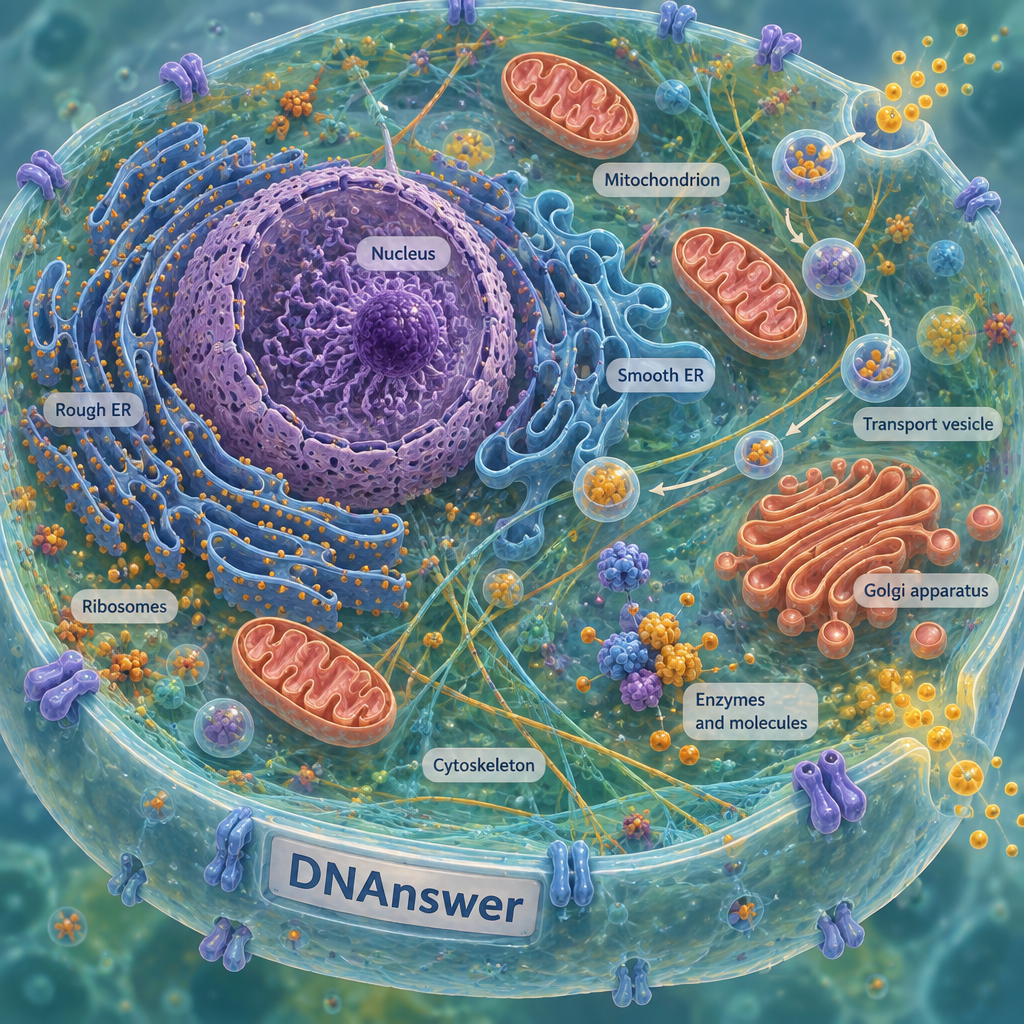
Picture a glass of water sitting on a table — still, uniform, nothing moving. That's roughly how most people imagine cytoplasm behaving inside a cell. It's an easy mental shortcut: fluid equals calm and unchanging.
The kernel of truth here is that cytosol really is fluid, and fluids can look still from the outside. Under a basic light microscope with low magnification, cell interiors can appear fairly uniform, especially in fixed (dead, chemically preserved) cells used in most classroom slides — which never show movement at all.
Live Cells Show Constant Internal Motion
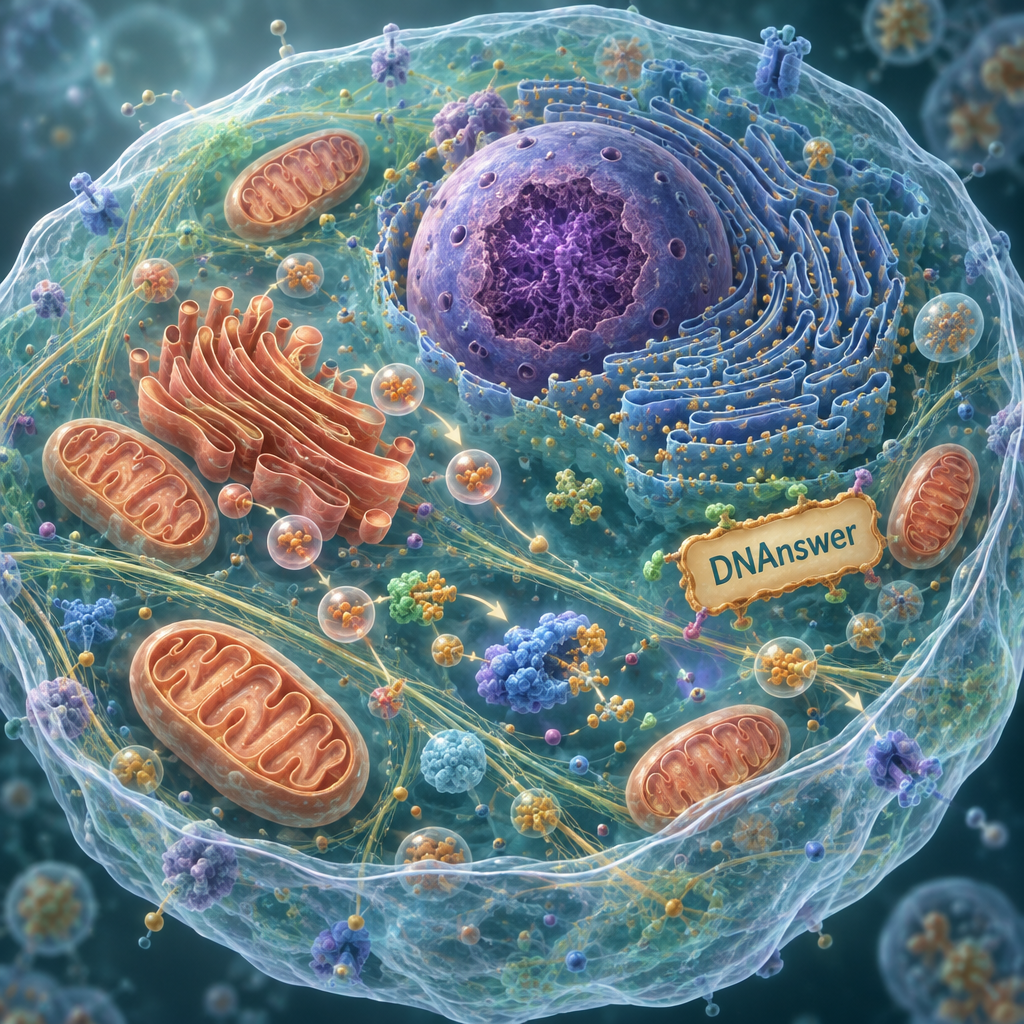
Watch a living plant cell under a microscope and you'll see cytoplasmic streaming — organelles and particles flowing in visible currents around the cell interior, driven by motor proteins dragging cargo along cytoskeletal tracks. In giant algal cells like Chara, this streaming can move material at speeds up to 100 micrometers per second, fast enough to watch in real time.
The Cytoskeleton Creates Structure, Not Emptiness
The cytoskeleton is a network of three main fiber types — microfilaments, intermediate filaments, and microtubules — that crisscross the cytoplasm like scaffolding and rail lines. These fibers aren't static struts; they constantly build, dismantle, and rebuild themselves, letting the cell change shape, divide, and move organelles to exactly where they're needed.
This matters for anyone picturing cell biology correctly: cytoplasm has zones, gradients, and traffic patterns. Proteins made in one region get hauled across the cell to where they're used. Mitochondria cluster near regions with high energy demand. None of that happens in a static soup — it happens because the cytoplasm is organized and constantly in motion.
Myth 4: Only the Nucleus Does "Important" Work
The nucleus gets cast as the cell's control center, and in a narrow sense that's accurate — it holds the DNA and manages gene expression. But plenty of people walk away thinking the nucleus does the important work while everything else just carries out orders, like a factory floor following a manager's memo.
This idea has a kernel of truth: the nucleus does store genetic instructions, and transcription (copying DNA into messenger RNA) happens there. That's a real and essential job. But instructions aren't the same as execution, and execution is where cytoplasm takes over almost entirely.
Protein Synthesis Happens Outside the Nucleus
After a gene gets transcribed into messenger RNA inside the nucleus, that RNA travels out into the cytoplasm, where ribosomes — some free-floating, some attached to the endoplasmic reticulum — read it and build the actual protein. Translation, the process of turning RNA code into a working protein, happens entirely in the cytoplasm. The nucleus writes the memo; the cytoplasm hires the workers and builds the product.
Cellular Respiration Runs Mostly in the Cytoplasm Too
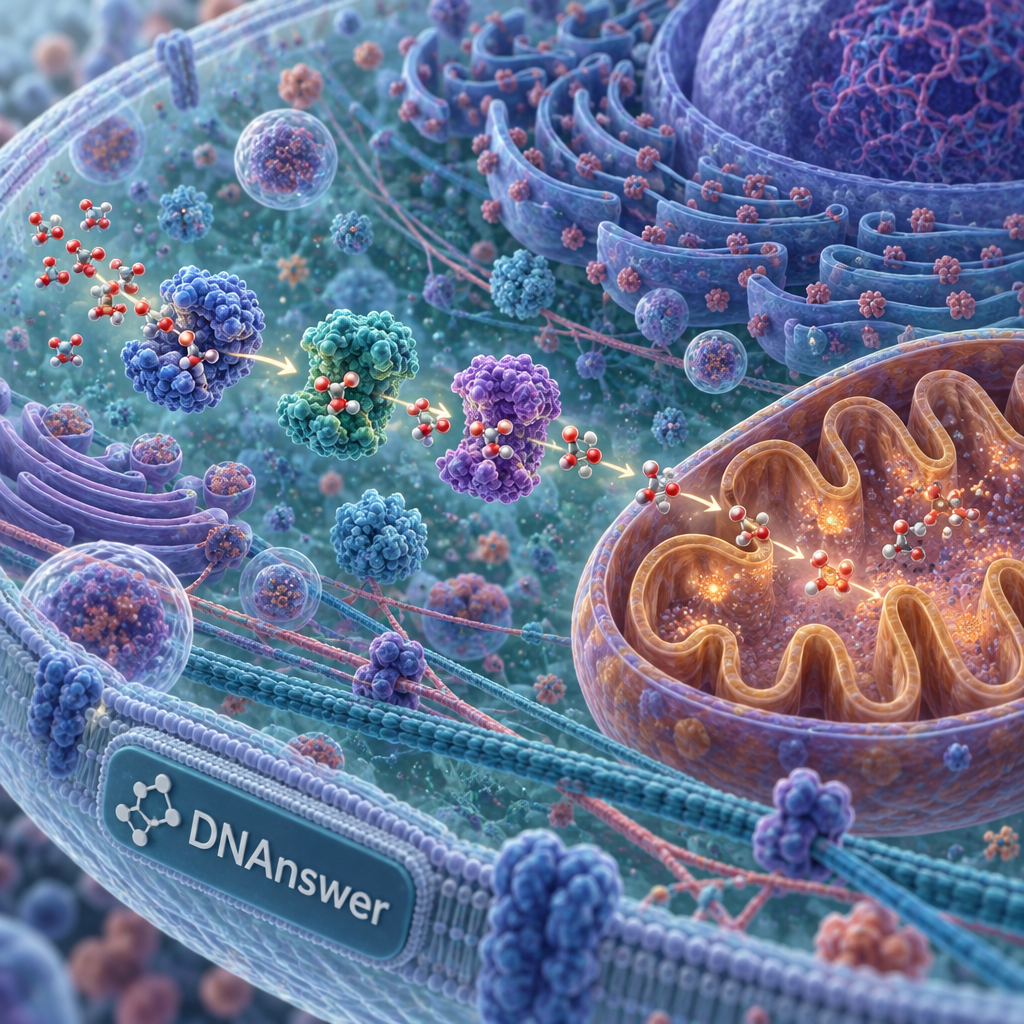
Energy production tells the same story. Glycolysis happens in the cytosol. The next stages — the Krebs cycle and the electron transport chain — happen inside mitochondria, which themselves sit suspended in the cytoplasm, not inside the nucleus. A typical liver cell contains over 1,000 mitochondria, all working within that cytoplasmic space to generate the cell's usable energy currency, ATP.
Here's a simple ranking of where key cell functions physically occur, in order of how much cytoplasmic involvement each one requires:
- Translation (protein building) — happens entirely in the cytoplasm, at ribosomes
- Glycolysis — happens entirely in the cytosol
- Cellular respiration's later stages — happen in mitochondria, located in the cytoplasm
- Intracellular transport — happens via the cytoskeleton, throughout the cytoplasm
- Transcription — happens in the nucleus, with the resulting RNA exported to the cytoplasm
Once you see this breakdown, "the nucleus is where the important stuff happens" stops making sense. The nucleus issues the plan; almost every step of carrying that plan out belongs to the cytoplasm.
Prokaryotic vs. Eukaryotic Cytoplasm: A Different Division of Labor
Bacteria don't have a nucleus at all, and that single fact changes what cytoplasm does for them. In a prokaryotic cell (bacteria and archaea), the cytoplasm isn't just where execution happens — it's where everything happens, instructions included.
A bacterial cell keeps its DNA loose in the cytoplasm, in a region called the nucleoid, rather than sealed inside a nuclear membrane. Transcription and translation can happen almost simultaneously, in the same space, because there's no nuclear wall separating the two steps. That's part of why bacteria can reproduce so fast — E. coli can divide every 20 minutes under ideal lab conditions, partly because it skips the extra step of exporting RNA out of a nucleus.
Eukaryotic cells (animal, plant, fungal cells) split the job: DNA and transcription stay inside the nucleus, while translation, metabolism, and transport happen in the cytoplasm outside it. This separation lets eukaryotic cells regulate gene expression with more layers of control, at the cost of extra steps and extra time.
Neither system is "better" cytoplasm — they're built for different jobs. Bacterial cytoplasm favors speed and simplicity. Eukaryotic cytoplasm favors complexity and specialization, with dedicated organelles handling tasks that bacterial cytoplasm handles with loose enzyme complexes instead.
One comparison worth holding onto: a human cell's cytoplasm is organized into distinct compartments (organelles) with specialized jobs, while a bacterial cell's cytoplasm runs more like one open-plan room where every process happens side by side. Both are busy. Neither is "just fluid."
If you want to test how well this distinction has stuck, running through a short cell structure quiz (DNAnswer's app has one built around exactly this kind of mix-up) is a fast way to check whether you're still picturing cytoplasm as empty space or as the working system it actually is.
What Cytoplasm Actually Does: A Practical Summary
Strip away the myths and here's the functional list you're left with. Cytoplasm:
Supports metabolic reactions including glycolysis, amino acid synthesis, and fatty acid processing, all of which require the right concentration of water, ions, and enzymes that cytosol provides. It suspends and positions every organelle, keeping mitochondria, ribosomes, and the endoplasmic reticulum anchored but accessible rather than drifting randomly. It hosts the cytoskeleton, giving the cell its shape and the physical rails for transport.
It transports material internally, using motor proteins like kinesin and dynein that walk along microtubule tracks, hauling vesicles, proteins, and organelles to precise destinations — essential for anything from nerve cells sending signals down a 3-foot-long axon to a dividing cell separating its chromosomes correctly. It buffers the cell's internal environment, maintaining pH and osmotic balance so proteins don't denature and reactions don't stall.
It provides the physical medium where translation happens, since ribosomes need to sit somewhere, and that somewhere is cytoplasm, either free-floating or docked on the rough endoplasmic reticulum. And in bacteria specifically, it does all of the above plus hosts the genetic material itself.
None of these functions show up if you think of cytoplasm as a passive filler. Every one of them depends on cytoplasm being structured, chemically active, and in constant motion.
Conclusion
Next time you look at a cell diagram, don't skip past the gray shading. That space is running the cell's metabolism, building its proteins, and hauling cargo across distances that, relative to cell size, rival a cross-country delivery route. If you're studying for an exam, memorize this distinction specifically: cytosol is the liquid, cytoplasm is the whole active system around it.
Frequently Asked Questions
Is cytoplasm the same as cytosol?
No. Cytosol is just the liquid portion of the cytoplasm — water, dissolved ions, and proteins. Cytoplasm is the broader term, including cytosol plus every organelle and the cytoskeleton inside the cell membrane.
What is the main function of cytoplasm in a cell?
Cytoplasm hosts metabolic reactions (like glycolysis), supports protein synthesis at ribosomes, suspends organelles in position, and provides the cytoskeletal tracks that transport material across the cell.
Does cytoplasm move inside a cell?
Yes. Living cells show cytoplasmic streaming, visible flow of organelles and particles driven by motor proteins, sometimes reaching speeds up to 100 micrometers per second in large plant cells.
Do bacteria have cytoplasm without a nucleus?
Yes. Bacterial (prokaryotic) cells lack a nucleus, so their DNA sits loose in the cytoplasm's nucleoid region, and transcription and translation can happen in the same space almost simultaneously.