Translation Definition Biology: How Cells Make Proteins
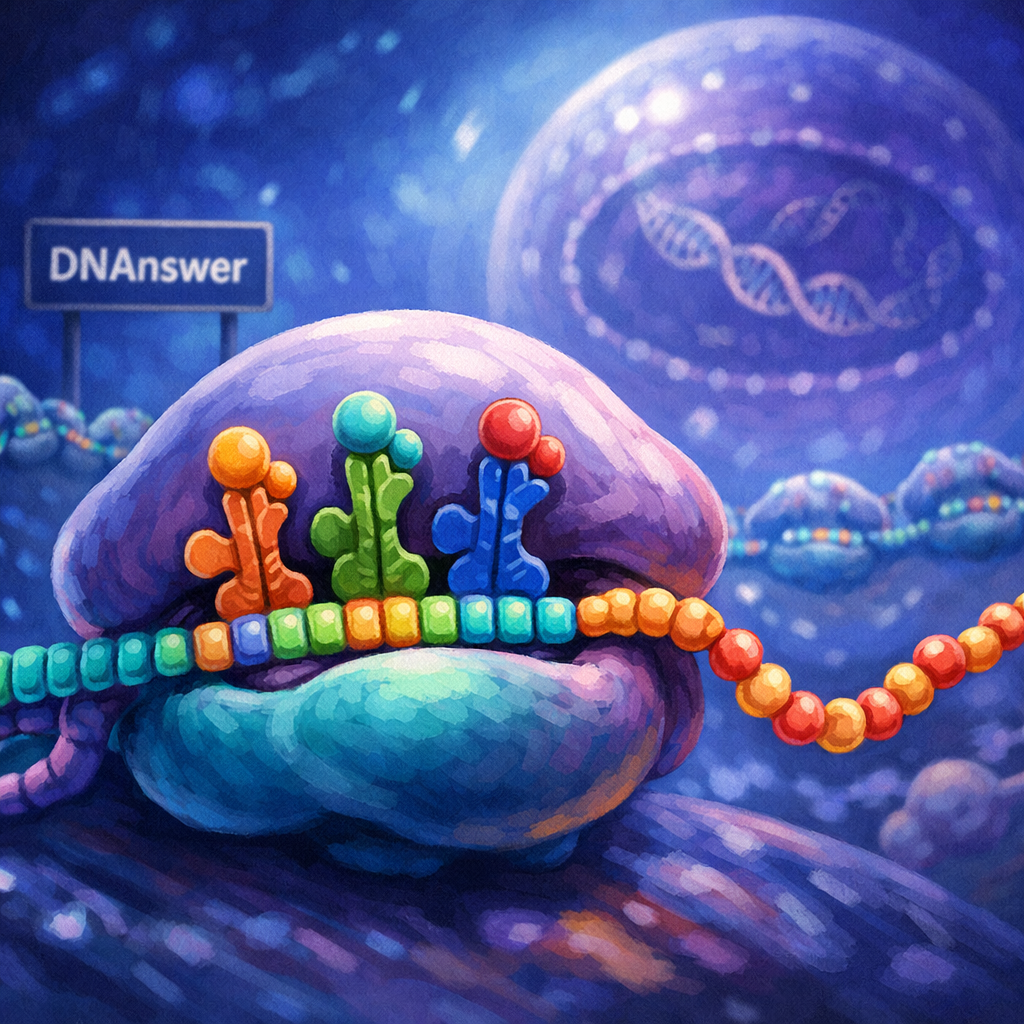
Ask most people what happens after your cells "read" DNA, and you'll get a shrug or a half-remembered diagram from ninth grade. Here's what that diagram almost always leaves out: the translation definition biology teachers use — building a protein from an mRNA (messenger RNA) blueprint — makes it sound like a clean, mistake-free machine. It isn't. Your ribosomes stall, misfire, and sometimes scrap the whole job halfway through, and that "flaw" is actually how your cells stay healthy.
This article checks the popular version of protein synthesis against what actually happens inside a cell, correcting the mix-ups that trip up almost everyone who first meets this topic in a biology class.
Key Takeaways
- Translation builds proteins from mRNA in the cytoplasm, not the nucleus.
- Transcription copies DNA into mRNA; translation reads mRNA into protein — two separate steps.
- Ribosomes, tRNA (transfer RNA), and codons work together, but the process isn't error-free.
- Cells routinely stall, proofread, and abandon faulty translations before they finish.
- One gene can produce multiple different proteins depending on regulation and context.
- Polysomes let several ribosomes translate the same mRNA strand at once, speeding output.
Myth 1: Translation and Transcription Are the Same Thing
They aren't, and mixing them up is the single most common error people make when they first hear these words. Transcription copies DNA into mRNA inside the nucleus. Translation reads that mRNA to build a protein in the cytoplasm. They're sequential steps in the same overall pathway, not two names for one process.
It's an honest mix-up. Both words start with "trans-," both involve genetic information, and most textbook diagrams show them back-to-back in the same arrow chain, which blurs them into a single mental blob. If you've ever nodded along in a lecture while quietly wondering which one uses which molecule, you're in good company.
What Transcription Actually Does
Transcription is the process where an enzyme called RNA polymerase reads a gene on your DNA and builds a matching strand of mRNA. Think of DNA as a master reference document locked in a library (the nucleus) — nobody's allowed to walk out with the original. Transcription is the librarian making a photocopy.
That copy, the mRNA, gets edited (a process called splicing removes unneeded sections) and then exits the nucleus through tiny pores in the nuclear membrane.
What Translation Actually Does
Translation happens after the mRNA leaves the nucleus. It's the process of reading that mRNA's sequence, three letters at a time, and matching each triplet — called a codon — to a specific amino acid, the building block of proteins. String enough amino acids together in the right order, and you get a functional protein.
Here's a simple way to fix the mix-up for good: transcription changes DNA into RNA — same "alphabet," different molecule. Translation changes RNA into protein — a totally different chemical language, hence the name. If you remember that translation literally means converting one language into another, you'll never confuse it with transcription's simpler copy-and-paste job again.
Confusing these two isn't just a vocabulary slip. If you think DNA gets edited every time your cells make a protein, you'll misunderstand mutations, gene expression, and eventually genetic disease. Keep the two processes physically separate in your mind: nucleus versus cytoplasm, copying versus building.
Myth 2: Protein-Making Happens in the Nucleus
This one is almost universal among people encountering the topic for the first time, and it makes intuitive sense — DNA lives in the nucleus, so why wouldn't protein-building happen there too? It doesn't. Translation happens in the cytoplasm, the jelly-like interior of the cell outside the nucleus, on structures called ribosomes.
The nucleus is genetic storage and copying. It is not a factory floor. Once mRNA is transcribed and edited, it has to physically exit through nuclear pores — small channels in the nuclear envelope — before anything gets built.
Where Ribosomes Actually Sit
Ribosomes are the molecular machines that carry out translation, and they exist in two locations that matter for different reasons. Free-floating ribosomes drift in the cytoplasm and typically build proteins the cell uses internally — enzymes for its own metabolism, structural proteins, and so on.
Other ribosomes attach to a membrane network called the rough endoplasmic reticulum (rough ER), named for its bumpy, ribosome-studded appearance under a microscope. Proteins built here usually get exported from the cell, inserted into the cell membrane, or shipped into other organelles. A pancreatic cell making insulin, for example, relies heavily on rough ER-bound ribosomes to build and package that hormone for release into the bloodstream.
Why the Nucleus Myth Persists
Part of the confusion comes from how school diagrams compress the whole pathway into one image: DNA sits inside a drawn circle labeled "nucleus," and an arrow points straight to a finished protein, with no visual break for the trip mRNA takes out of that circle. It looks like one continuous room.
In reality, mRNA has to survive an entire journey — through nuclear pores, past quality-control checkpoints, into the cytoplasm — before a ribosome ever touches it. Bacteria, which have no nucleus at all, translate mRNA almost immediately after transcribing it, which is part of why bacterial gene expression runs faster than yours. Human cells pay a time cost for that extra compartmentalization, but they gain tighter control over which proteins get made and when.
Myth 3: DNA Builds Proteins Directly
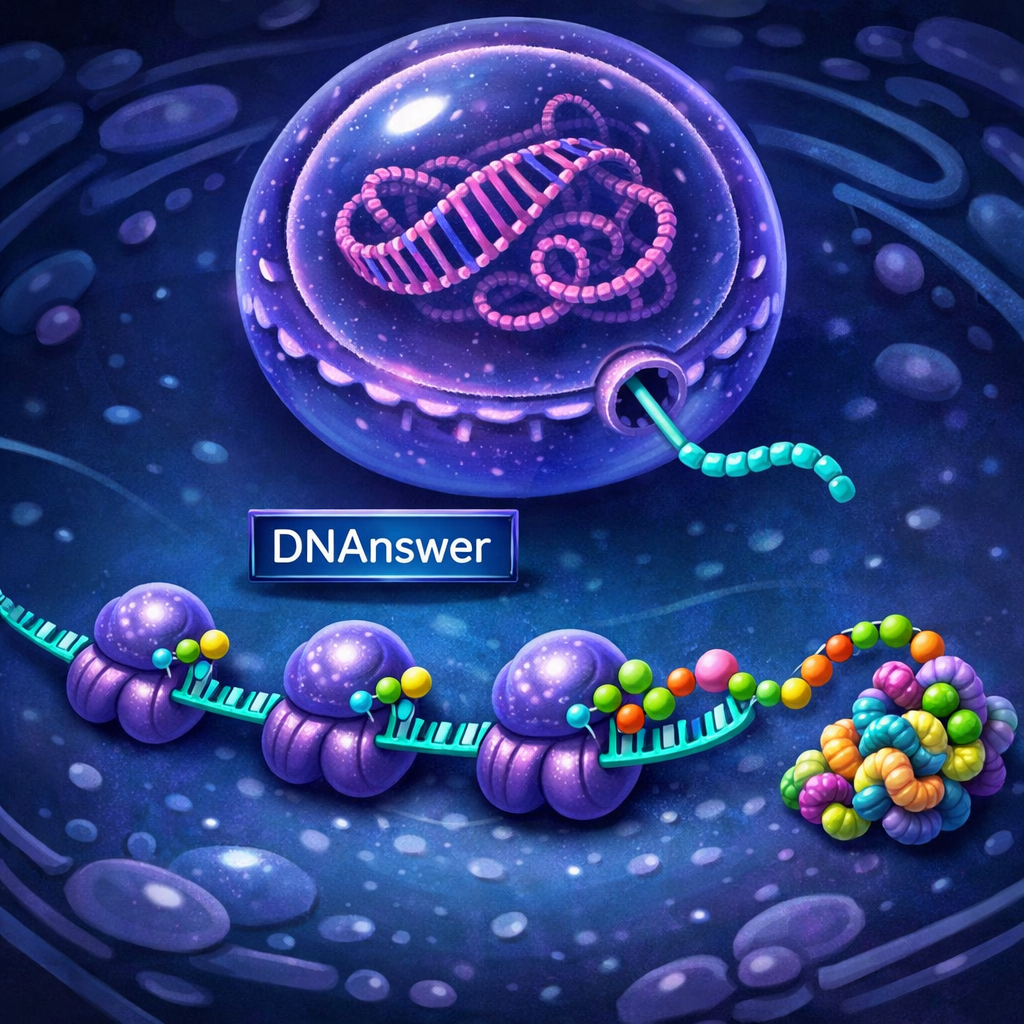
This misconception usually comes from oversimplified summaries like "DNA makes protein," which skip two entire molecular intermediaries. DNA never touches a ribosome. It needs mRNA to carry its instructions out of the nucleus, and it needs tRNA to physically deliver the matching amino acids during translation.
The shorthand isn't wrong, exactly — it's just missing steps, the way saying "flour becomes bread" skips mixing, kneading, and baking. Molecular biologists sometimes call the full sequence the central dogma: DNA to RNA to protein. Skipping the middle step misses the mechanism entirely.
The Codon-Anticodon Handshake
Codons are three-letter sequences on the mRNA strand, and each one specifies a particular amino acid (with a few codons acting as punctuation, covered below). There are 64 possible codons built from four RNA bases, and they code for just 20 amino acids, which means most amino acids have more than one codon assigned to them.
tRNA is the delivery molecule that makes translation physically possible. Each tRNA carries a specific amino acid on one end and has a matching three-letter anticodon on the other end that pairs up with a codon on the mRNA, like a key fitting a lock. When a tRNA's anticodon matches the codon currently sitting in the ribosome, it drops off its amino acid, and the ribosome links it to the growing protein chain.
Genetic Code and Why It Reads in Triplets
The set of rules mapping all 64 codons to their amino acids (or stop signals) is called the genetic code, and it's nearly universal across all known life — from bacteria to blue whales to you.
The genetic code is the set of rules by which information encoded in mRNA sequences is translated into proteins by living cells (National Human Genome Research Institute).
Reading in groups of three isn't arbitrary. Four RNA letters (A, U, G, C) taken one at a time could only specify four amino acids — not enough. Taken two at a time, you get 16 combinations, still short of the 20 needed. Three at a time gives you 64 possible combinations, more than enough to cover every amino acid with room for redundancy and stop signals. That redundancy actually protects you: if a mutation swaps one DNA letter for another, there's a decent chance the resulting codon still calls for the same amino acid, and the protein comes out unchanged.
Myth 4: One Gene Always Makes One Fixed Protein
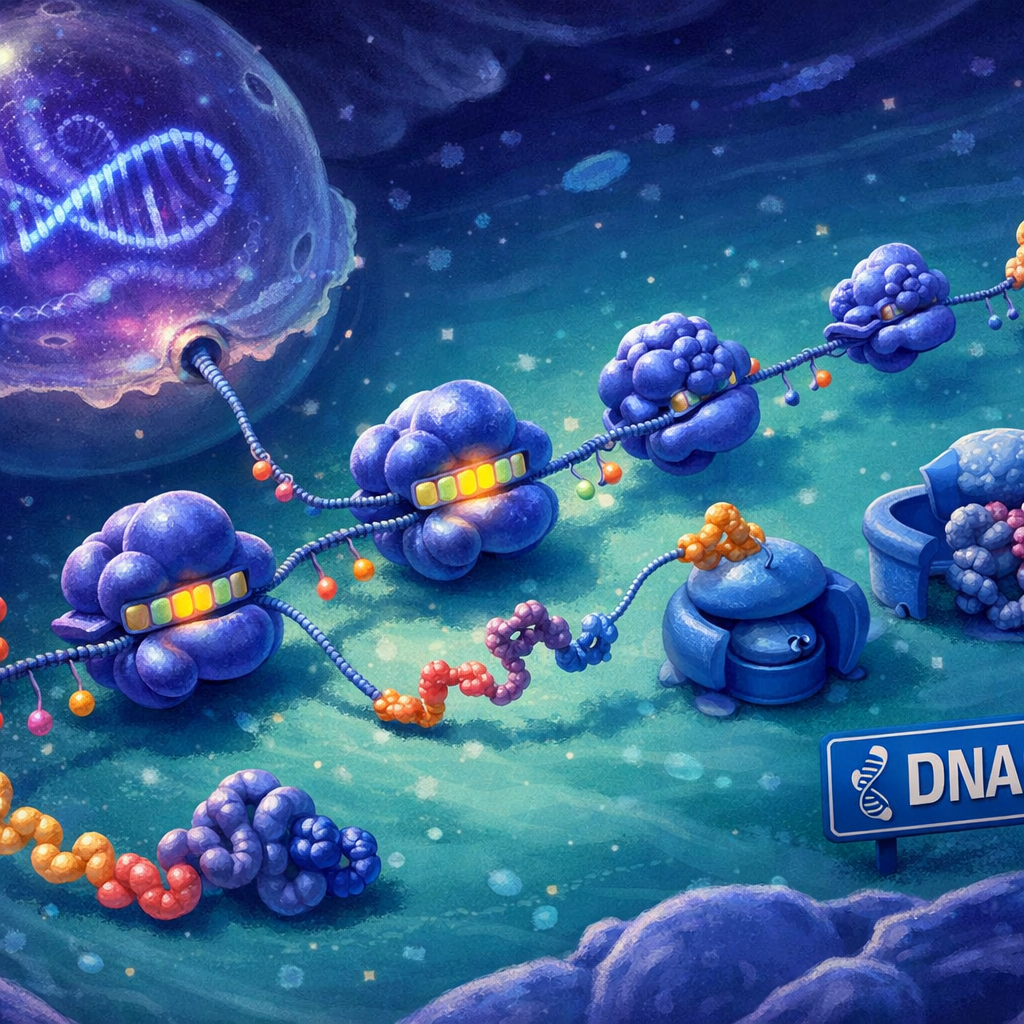
This idea, sometimes taught as "one gene, one protein," made sense decades ago with simpler organisms in mind. It doesn't hold up for human cells. A single human gene can produce multiple different protein versions, depending on how the cell edits, regulates, and processes it.
The kernel of truth here is real: a gene does contain the core instructions for a protein, and that part of the old teaching wasn't wrong. What's incomplete is the assumption that the process stops there, with no room for variation.
Alternative Splicing Changes the Final Product
Before mRNA leaves the nucleus, sections called introns get cut out, and the remaining pieces, called exons, get stitched together. Cells can mix and match which exons make the final cut, a process called alternative splicing. That means one gene can yield several different mRNA versions, and each version can translate into a structurally different protein.
Human genes number somewhere around 20,000, yet the human proteome (the full set of proteins your body can make) is estimated to run into the hundreds of thousands, largely because of alternative splicing and other post-translational modifications. The math only works if genes are flexible templates, not rigid one-to-one blueprints.
Regulation Decides When and How Much
Even with a fixed gene sequence, cells control translation rate through several mechanisms:
- Availability of specific tRNAs carrying the needed amino acids
- Small regulatory molecules that bind mRNA and block or promote ribosome attachment
- Chemical modifications to the mRNA cap that affect how quickly ribosomes latch on
- Competition among multiple mRNAs for a limited pool of ribosomes
- Environmental signals, like stress or nutrient levels, that shift which proteins get priority
A muscle cell and a skin cell in the same body carry identical DNA, yet they make wildly different proteins, in wildly different amounts, because regulation — not the DNA sequence itself — decides what actually gets built and when.
Myth 5: Translation Runs Like a Flawless Assembly Line
This is the myth that even people who've studied biology tend to carry, because it's the version every textbook diagram implies. Ribosomes get drawn gliding smoothly down mRNA like a conveyor belt, dropping off amino acids in perfect sequence with zero hiccups. Real translation stalls constantly, makes matching errors, and includes built-in systems for catching and scrapping bad work.
The clean-diagram version isn't a lie, exactly — it does capture the average outcome. Most translation events do finish correctly. But "most" is doing a lot of work in that sentence, and the exceptions are where the real biology lives.
Initiation, Elongation, and Termination — Where Things Can Go Wrong
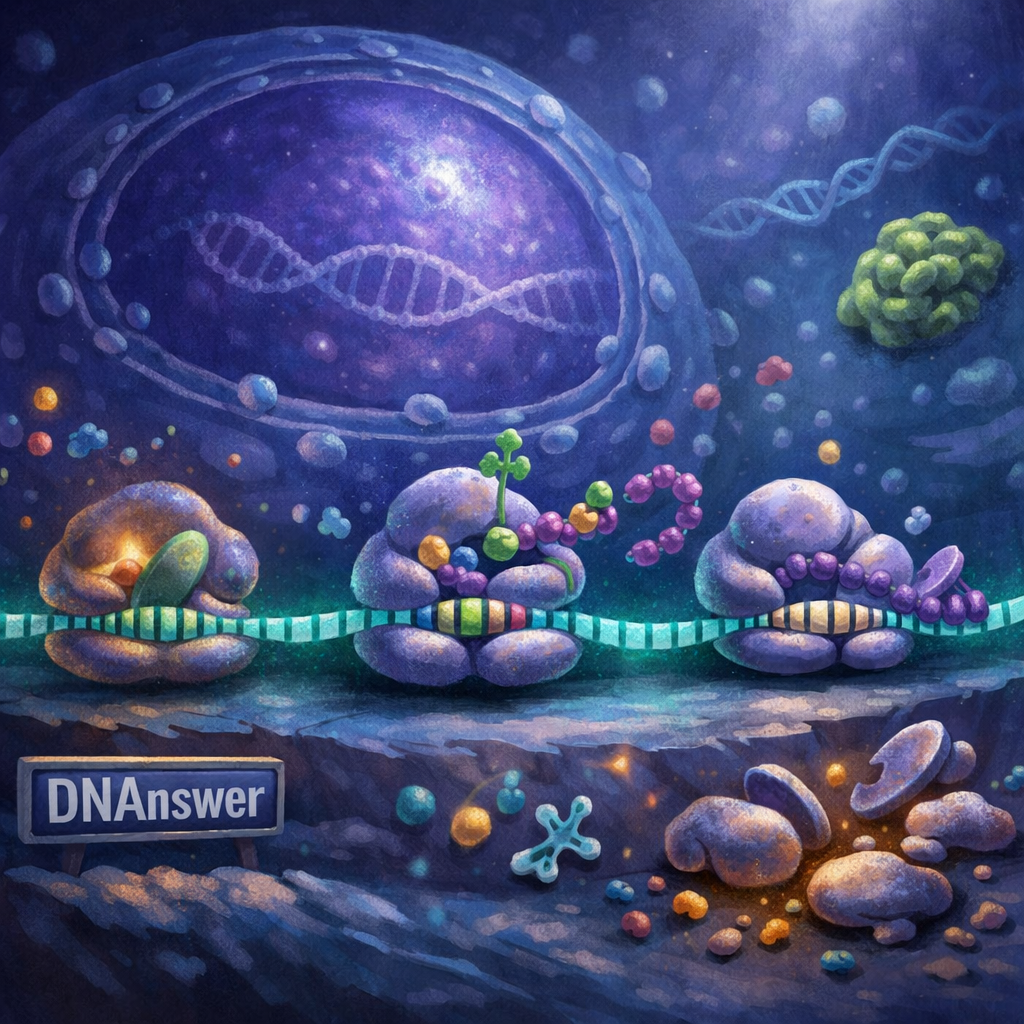
Translation runs in three phases, and each one has a failure mode worth knowing.
Initiation is the ribosome locating the start codon (almost always AUG, which codes for the amino acid methionine) and assembling around it correctly. If the ribosome latches onto the wrong AUG, or scans past the correct one, you get a truncated or misdirected protein before elongation even begins.
Elongation is the repeated cycle of matching codons to tRNA anticodons and linking amino acids with peptide bonds — the chemical bonds joining one amino acid to the next in a growing chain. This phase includes proofreading: if a tRNA with a mismatched anticodon slips into the ribosome, quality-control mechanisms usually reject it before the amino acid gets locked in. Not every mismatch gets caught, which is one reason natural protein error rates aren't zero.
Termination happens when the ribosome hits a stop codon (UAA, UAG, or UGA), which doesn't code for an amino acid at all — it's a signal to release the finished protein chain and disassemble.
When Cells Abandon a Translation Mid-Process
Cells have dedicated systems, broadly grouped under a process called ribosome quality control, that detect stalled or stuck ribosomes and actively pull them off the mRNA, tagging the incomplete protein for destruction rather than letting a broken product circulate. This isn't a rare emergency response — it's routine maintenance, running continuously in the background of every cell in your body.
Stalling can happen for several reasons: a damaged mRNA strand, a shortage of a specific tRNA, or a stretch of codons that's simply harder for the ribosome to process efficiently. Rather than forcing through a bad translation, the cell cuts its losses. It's less like an assembly line and more like a construction crew that stops, checks the blueprint, and sometimes tears out a wall rather than build on a bad foundation.
This is also where polysomes come in — multiple ribosomes translating the same mRNA strand simultaneously, spaced out like beads on a string. Polysomes make protein production dramatically more efficient, but they also mean that when quality control catches a problem, it may need to manage several ribosomes on the same strand, not just one.
Why the "Perfect Machine" Myth Costs You Understanding
Believing translation is flawless doesn't just misdescribe a mechanism — it warps how you understand disease, aging, and even nutrition. Misfolded proteins, the ones your body's error-catching systems fail to remove, are linked to conditions including Alzheimer's disease and Parkinson's disease, both associated with abnormal protein buildup in the brain.
If protein synthesis were error-free, protein-misfolding diseases wouldn't exist at all. They're not a bizarre malfunction bolted onto an otherwise perfect system — they're the visible edge of a system that trades some error rate for speed, and occasionally that trade goes wrong.
There's a practical side to this too. If you're the kind of person who reads nutrition labels and wonders why "adequate protein and amino acid intake" matters so much, translation is the direct answer: your cells need a steady, varied supply of amino acids on hand, because tRNA can't deliver an amino acid your body doesn't have. Chronic amino acid shortages don't just slow translation down — they can stall it outright, triggering the same quality-control shutdown mechanisms described above.
Curiosity about this mechanism is exactly the kind of thing a short quiz can sharpen fast. If you want to test whether the codon-anticodon logic and the three translation phases actually stuck, the protein synthesis quizzes on dnanswer.app run through this material in a format built for quick, repeatable checks rather than a full re-read of a textbook chapter.
Conclusion
Translation isn't a flawless machine — it's a monitored, error-tolerant process, and that distinction actually explains real biology: why some mutations matter and others don't, why misfolded proteins cause disease, and why one gene doesn't guarantee one fixed outcome. Next time you see a "DNA to protein" diagram, ask what it's leaving out. Usually, it's the interesting part.
Frequently Asked Questions
What is the simplest translation definition in biology?
Translation is the process where a ribosome reads mRNA (messenger RNA) in three-letter codons and builds a matching chain of amino acids into a protein. It happens in the cytoplasm, after transcription has already copied the gene from DNA.
Does translation happen before or after transcription?
Translation happens after transcription. Transcription copies DNA into mRNA inside the nucleus first; that mRNA then travels to the cytoplasm, where ribosomes translate it into protein — the two never run simultaneously on the same molecule.
Can translation make mistakes, and does that matter?
Yes. Ribosomes occasionally mismatch a tRNA (transfer RNA) to the wrong codon, and cells actively monitor for stalled or faulty translations, scrapping the incomplete protein rather than releasing it. This quality control is constant, not exceptional.
Why do ribosomes read mRNA in groups of three letters?
Three-letter codons give 64 possible combinations from four RNA bases, enough to code for all 20 amino acids plus start and stop signals. Reading two letters at a time would only allow 16 combinations — not enough.