Biology Molecular and Cellular: Core Concepts
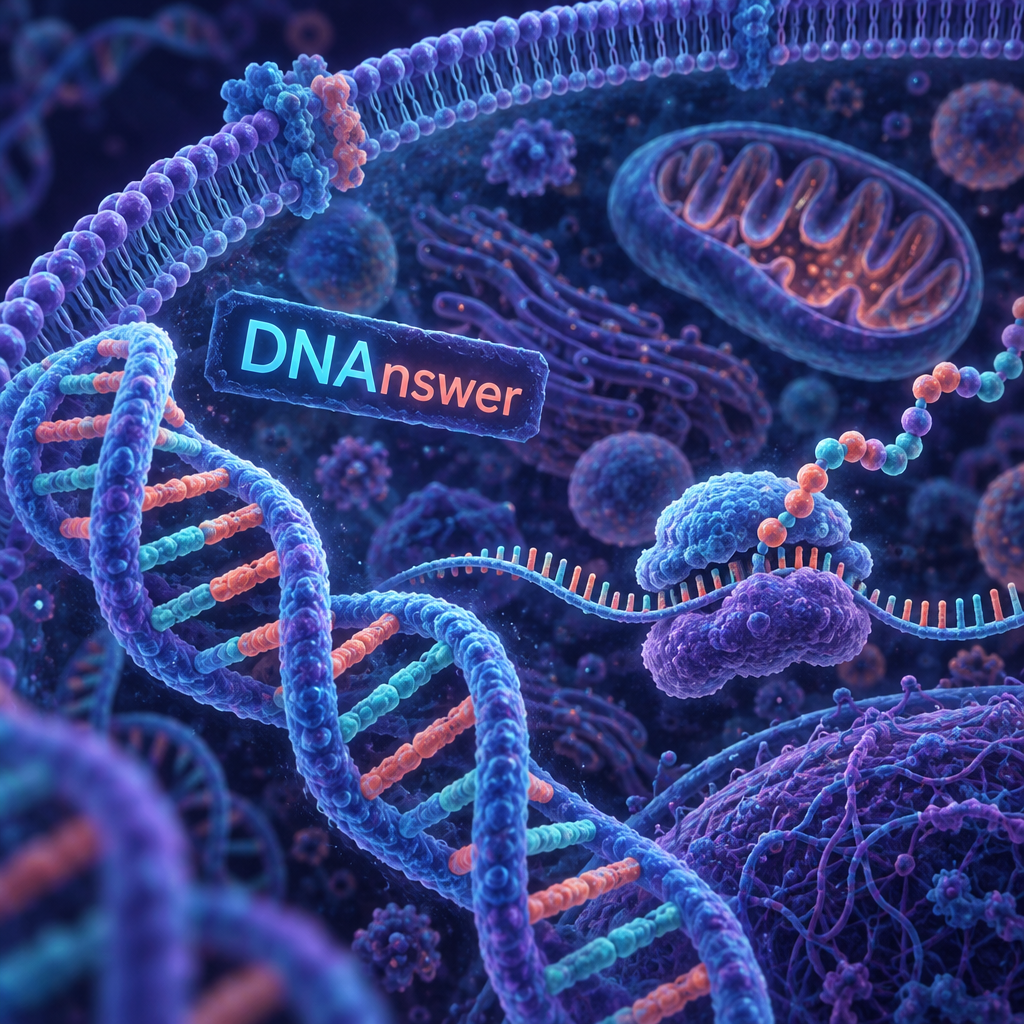
Which part of the cell diagram on your old classroom wall was actually wrong? Almost all of it, in the sense that matters: a real cell has no empty space, no tidy labels, and nothing sitting still. Biology molecular and cellular is the study of how DNA, RNA, proteins, and cell parts work together, and the popular versions of that story hide the interesting bits.
Here are six common beliefs, ranked by how much they distort your thinking, and what the evidence says instead.
Key Takeaways
- DNA is an instruction set read in context, not a fixed blueprint.
- One gene rarely equals one trait; most traits involve many genes.
- Mitochondria make ATP, but they also signal, regulate calcium, and trigger cell death.
- The central dogma has exceptions, including reverse transcription and regulatory RNAs.
- Cells are crowded and moving, nothing like the labeled textbook diagram.
- Mutations happen constantly; repair systems fix most of them.
Myth 1: Your DNA Is a Blueprint That Decides Everything
Your liver cells and your neurons carry the same DNA. Yet one filters blood and the other fires electrical signals. If DNA were a blueprint that dictated every detail, that couldn't happen.
The blueprint idea has a real basis. DNA does store the information for building proteins, and a single-letter change can cause disease. Sickle cell anemia comes from one swapped letter in the gene for hemoglobin (the protein that carries oxygen in red blood cells). When a change that small has a large effect, "DNA is destiny" feels fair.
Why a recipe book fits better
A blueprint is read once and followed exactly. A recipe book gets opened to different pages depending on who's cooking and what's in the kitchen. Your cells do the second thing. Each cell type reads a different set of genes, and it changes that set when conditions change.
The human genome has roughly 3 billion base pairs (the paired letters that make up DNA) and about 20,000 protein-coding genes. Those genes cover only around 1-2% of the DNA. Much of the rest helps control when and where genes switch on.
Epigenetics: the notes in the margins
Epigenetics means chemical tags on DNA and on the proteins it wraps around, which turn genes up or down without changing the letters. One well-known tag is a methyl group (a small cluster of carbon and hydrogen atoms) stuck onto DNA, which usually quiets a gene.
These tags respond to the environment. Identical twins start with nearly identical DNA, but their tag patterns drift apart over their lives. That's one reason twins can differ in health.
Be careful with the hype, though. Epigenetics doesn't mean you can rewrite your genes by thinking positive thoughts. Most tags are reset when eggs and sperm form, and the evidence for inheriting them across generations in humans is thin.
What to do with this: treat genetic test results as probabilities, not verdicts. A gene variant that raises risk shifts the odds. It rarely settles the outcome.
Myth 2: One Gene Equals One Trait
How tall will your child be? If one gene set height, you could look it up. Instead, studies that scan the genomes of hundreds of thousands of people have found thousands of gene variants that each nudge height by a tiny amount.
The one-gene idea comes from Gregor Mendel, the 19th-century monk who crossed pea plants. Peas were a lucky choice. Traits like flower color in his lines were controlled by single genes, so the results looked clean. Schools still teach Mendel first, and the first lesson sticks.
A few human conditions do follow the simple pattern. Cystic fibrosis comes from harmful changes in one gene, CFTR, which builds a channel that moves chloride (a salt component) across cell membranes. Huntington's disease also traces to one gene.
Most traits aren't like that. Eye color, once taught as brown beats blue, involves several genes, with two on chromosome 15 doing much of the work. Skin color, height, and risk of heart disease involve many genes plus diet, activity, and chance.
Genes also work in reverse of the "one gene, one job" idea. A single gene can affect several traits, a pattern called pleiotropy. And one gene can produce multiple protein versions through alternative splicing, where the cell cuts and rejoins the copied message in different ways. That's how 20,000 genes yield a far larger set of proteins.
The practical shift: when a headline says scientists found "the gene for" anything complex, read it as "one of many small contributors." Ads for a "gene for fitness" or "gene for intelligence" deserve doubt for the same reason.
Myth 3: The Central Dogma Only Runs One Way
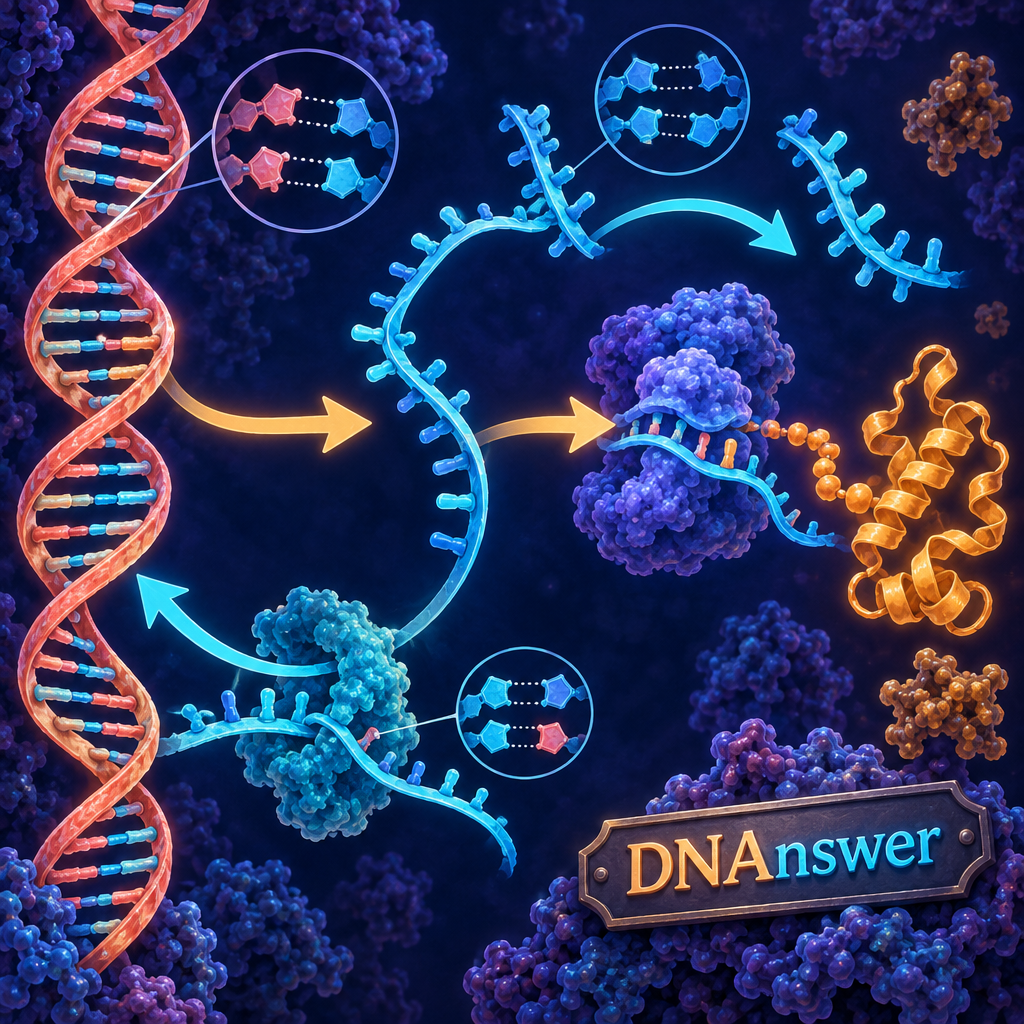
Textbooks show DNA making RNA making protein, with arrows pointing one direction. Is that the whole story? It's the main route, but not the only one.
Francis Crick proposed the central dogma in 1958. He didn't claim information never moves backward. He said information can't flow from protein back to DNA or RNA. That narrower claim still holds. The cartoon version, with DNA as boss and everything else as follower, is what went wrong.
The main route, in three steps
- Transcription: an enzyme called RNA polymerase reads a gene and builds a matching strand of messenger RNA (mRNA), a disposable copy of the instructions.
- Processing: in cells with a nucleus, the cell trims the mRNA, removing non-coding stretches called introns.
- The mRNA leaves the nucleus and reaches a ribosome, a molecular machine made of RNA and protein.
- Translation: the ribosome reads the mRNA three letters at a time. Each triplet, called a codon, calls for one amino acid.
- The ribosome links amino acids into a chain, which folds into a protein.
The exceptions you should know
Retroviruses such as HIV carry RNA and use an enzyme called reverse transcriptase to copy it into DNA. Howard Temin and David Baltimore shared the 1975 Nobel Prize in Physiology or Medicine with Renato Dulbecco for the discovery of this process. Your own genome carries many fossil copies of such viruses.
RNA also does more than carry messages. MicroRNAs are short RNA strands that bind mRNA and block its translation. Cells use thousands of them to fine-tune protein output. Researchers also use this system to switch off genes in the lab.
The takeaway: RNA isn't a middleman. It's an active player, which is why the 2020 Nobel Prize in Chemistry for CRISPR gene editing, and the mRNA vaccines that followed, both built on RNA biology.
Myth 4: Mitochondria Are Just Power Plants
"The mitochondria is the powerhouse of the cell" is probably the most famous sentence in biology class. It's true. It's also incomplete, like calling a smartphone a clock.
Mitochondria do make most of a cell's usable energy. They break down fuel from food and use the energy to build ATP (adenosine triphosphate), a small molecule cells spend like cash. Your body turns over roughly its own weight in ATP each day, recycling each molecule many times. That figure is a commonly cited estimate, not a precise measurement.
Here's what the power-plant picture leaves out.
Mitochondria store and release calcium, which many cells use as a signal. They help decide when a cell should die: when a cell is badly damaged, mitochondria leak a protein called cytochrome c, which starts a controlled self-destruct sequence called apoptosis. They also help make heme (the iron-holding part of hemoglobin) and handle steroid hormone production.
Mitochondria carry their own small circle of DNA, about 16,500 base pairs and 37 genes in humans. That fits the leading explanation that they began as free-living bacteria swallowed by an ancestor cell, an idea popularized by biologist Lynn Margulis. You inherit this DNA almost entirely from your mother.
Mitochondria also move, merge, and split. In many cells they form shifting networks rather than staying as bean shapes. Neurons haul them down long fibers to places that need energy.
What changes for you: claims that you can "boost your mitochondria" with a supplement deserve a hard look. Exercise has the best evidence for increasing mitochondrial number and function in muscle. The downside: it takes weeks of regular effort, with no shortcut in a bottle.
Myth 5: The Textbook Cell Diagram Shows What a Cell Looks Like
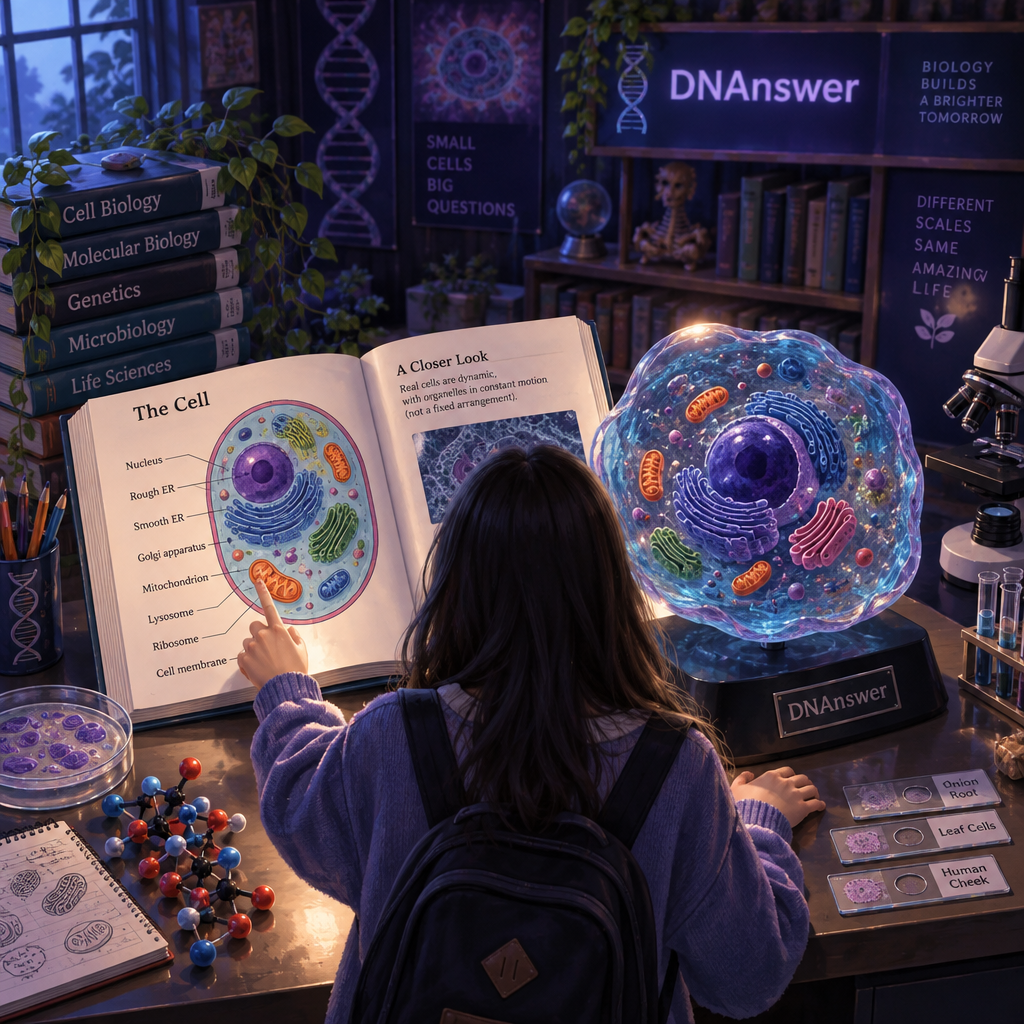
Picture the diagram: a big round nucleus, bean-shaped mitochondria, and plenty of white space. Now picture the real thing. If you shrank down and walked into a cell, you'd struggle to move.
The diagram makes sense as a teaching tool. You need labeled parts to learn what exists, and flat colors make the parts easy to tell apart. The problem comes when the sketch becomes your mental picture.
Inside a cell, the cytoplasm (the jelly-like fill between the membrane and the nucleus) is packed. Proteins and other large molecules take up a substantial share of the volume. Researchers often describe it as closer to a thick gel than to a watery bag. Molecules still move fast: a typical protein can cross a bacterial cell in a fraction of a second, bumping into neighbors the whole way.
Cells also have a skeleton, the cytoskeleton, made of protein filaments that constantly build up and break down. Motor proteins such as kinesin walk along these tracks carrying cargo, step by step. Animations from Harvard's BioVisions project and illustrations by David Goodsell at Scripps Research show this crowding far better than a classroom poster.
The membrane isn't a plain wall either. It's a double layer of fat-based molecules called phospholipids, studded with proteins that act as gates, pumps, and sensors. Molecules like oxygen slip through. Others, like glucose, need a protein channel or carrier. Some cargo gets pumped uphill against its concentration gradient, using ATP.
A cell is a crowded, dynamic place where molecules constantly collide, bind, and let go.
A quick way to test your picture: ask what would happen if you removed the white space. Real cells have almost none.
If you like checking your understanding, the quizzes at dnanswer.app cover these core concepts at a few difficulty levels. Their limit is that a quiz tests recall, so pair it with a few animations of real cells.
Myth 6: Mutations Are Rare and Always Harmful
Do you get mutations only from radiation and bad luck? Not quite. Every time a cell copies its DNA, errors creep in, and ordinary chemistry damages DNA all day long.
The belief comes from how we hear about mutations: cancer, inherited disease, movie mutants. Those stories are real. Some mutations do cause serious harm.
But copying is remarkably accurate. DNA polymerase, the enzyme that copies DNA, makes roughly one error per 100,000 letters. It then proofreads itself, and a separate mismatch repair system catches most of what remains. The final error rate is on the order of one in a billion letters per copying round. That's an estimate from standard textbook figures.
Even so, a copy of the human genome has billions of letters, so a few errors slip through each time. A typical child carries a few dozen new mutations that neither parent had.
Most of those do nothing. Many fall in DNA that doesn't code for proteins, and the genetic code has built-in redundancy: several codons can specify the same amino acid. A few mutations help. A change in the LCT gene lets many adults digest milk sugar, which spread in populations with a long history of dairying.
When repair fails, trouble follows. Inherited mutations in BRCA1 or BRCA2, genes that help repair DNA breaks, raise the risk of breast and ovarian cancer. Sunburn damages skin DNA, and your cells repair much of it.
Use this: sunscreen helps because it reduces damage your repair crew has to handle. Don't assume it makes repair unnecessary, though. A sunburn means damage outran the repair system.
Conclusion
Next time you see a clean diagram or a bold headline about a "gene for" something, ask three questions. Which cells read this gene? What else switches it on or off? How many other genes join in? Those questions turn a slogan into a mechanism. Choose animations of real cells over flat diagrams when you study, and treat genetic risk as odds, not fate.
Frequently Asked Questions
What is the difference between molecular biology and cell biology?
Molecular biology focuses on the molecules, such as DNA, RNA, and proteins, and how they interact. Cell biology looks at whole cells and their parts. The fields overlap so much that universities often combine them into one department.
Do prokaryotic and eukaryotic cells work the same way?
They share the core code and machinery, including ribosomes. Eukaryotic cells (plants, animals, fungi) keep DNA in a nucleus and have organelles. Prokaryotes, like bacteria, lack both, and they can transcribe and translate at the same time because there's no nuclear wall.
Why do cells divide in two different ways?
Mitosis makes two identical cells for growth and repair. Meiosis makes four cells, each with half the chromosomes, for eggs and sperm. Meiosis also shuffles genes through crossing over, which is why siblings differ.
Can your environment change how your genes work?
Yes. Diet, stress, smoking, and exercise can alter epigenetic tags and gene activity. These changes usually affect you, not your children, and most are reversible to some degree.