Your DNA Breaks Thousands of Times a Day. Here's How It Fixes Itself
Your DNA breaks somewhere between 10,000 and 1,000,000 times a day, depending on which cell you're talking about. That sounds like a crisis. It isn't. DNA damage repair is running in your cells right now, correcting typos in your genetic code the same way autocorrect fixes a text before you hit send — constantly, invisibly, and mostly without drama.
Most people picture DNA damage as rare and catastrophic: a sunburn, an X-ray, a cancer diagnosis. In reality, it's a background hum of ordinary chemistry, and your cells have entire specialized crews built just to handle it. The myths people carry about this process — that damage equals mutation, that repair is one tidy system, that sunlight is the main threat — end up shaping how they think about cancer risk, aging, and their own bodies. Getting the mechanism right changes that picture.
Key Takeaways
- DNA breaks 10,000+ times per cell, per day, from normal metabolism alone
- Damage and mutation are not the same — most damage gets fixed pre-replication
- Cells use at least five distinct repair pathways, not one universal fix
- Metabolic byproducts cause more daily damage than UV or radiation combined
- Small, tolerated error rates are built into biology, not signs of failure
- p53 acts as a checkpoint guard, pausing division until repairs finish
Myth: DNA Damage Almost Always Leads to Mutation or Cancer
This is the biggest misconception, and it's an understandable one. Cancer headlines link "DNA damage" and "mutation" so often that they start to sound like synonyms. They're not, and the gap between them is where almost all of your cellular life happens.
Damage is a physical injury to the DNA molecule — a broken strand, a chemically altered base, a piece stuck together wrong. A mutation is a permanent change in the genetic sequence that survives into the next round of cell division. Damage is the wound. Mutation is the scar that never healed. The overwhelming majority of damage is repaired before the cell ever copies its DNA, so it never becomes a mutation at all.
Here's the math that makes this concrete. A typical human cell suffers tens of thousands of DNA lesions a day. If even a small fraction of those turned into permanent mutations, you'd accumulate hundreds of thousands of new mutations every day of your life. You don't. Estimates of the mutation rate in human cells land around one to a few mutations per cell division that actually stick — a number small enough that it took decades of genome sequencing to even measure it reliably.
"DNA repair mechanisms correct the majority of these changes before they become permanent," notes the National Human Genome Research Institute's public genetics glossary, describing damage as routine and repair as the default outcome, not the exception.
Why the Myth Persists
Cancer biology textbooks tend to open with the failure cases — the repair breakdowns, the runaway mutations — because those are the medically interesting stories. Nobody writes a case study about the repair that worked. That selection bias quietly trains people to think damage-to-cancer is the normal pipeline, when it's actually the rare exit ramp off a road that almost always leads somewhere safe.
What Changes When You Get This Right
Once you separate damage from mutation, sun exposure, radiation, and even normal aging stop feeling like a countdown clock. They're inputs into a system built to absorb them. The real risk factors are the ones that overwhelm or disable the repair system itself — chronic UV overexposure, inherited repair-gene mutations, certain chemotherapy drugs — not the existence of damage in the first place.
Myth: DNA Repair Is One Mechanism, Not a Toolkit
People imagine "DNA repair" as a single process, like a cellular Band-Aid that gets slapped on any wound. It's actually a toolkit of at least five major, molecularly distinct pathways, each built for a specific kind of damage. Using the wrong tool wouldn't just be inefficient — it often wouldn't work at all.
The confusion is fair. Popular science shorthand — "cells repair DNA damage" — flattens a genuinely complicated biological reality into one phrase. But a single mangled base and a snapped double helix are different engineering problems, and your cells solve them with entirely different crews.
Base Excision Repair: The Everyday Fixer
Base excision repair (BER) handles small, chemical dings to individual DNA bases — the kind caused by normal metabolism, like oxidation from your own cell's energy production. An enzyme called a glycosylase spots the damaged base, snips it out, and DNA polymerase (the enzyme that builds new DNA strands) fills the gap using the opposite strand as a template. This is the workhorse pathway — it runs constantly, correcting thousands of small metabolic injuries a day without you ever noticing.
Nucleotide Excision Repair: The UV Specialist
Nucleotide excision repair (NER) handles bulkier damage — the kind UV light causes when it fuses two adjacent DNA bases together into a structure called a thymine dimer, warping the double helix's shape. NER cuts out a whole stretch of the strand around the damage, not just one base, and rebuilds it. People with a rare inherited NER deficiency, a condition called xeroderma pigmentosum, develop skin cancer at dramatically elevated rates from ordinary sun exposure — a stark demonstration of what happens when this specific pathway goes offline.
Mismatch Repair and Double-Strand Break Repair
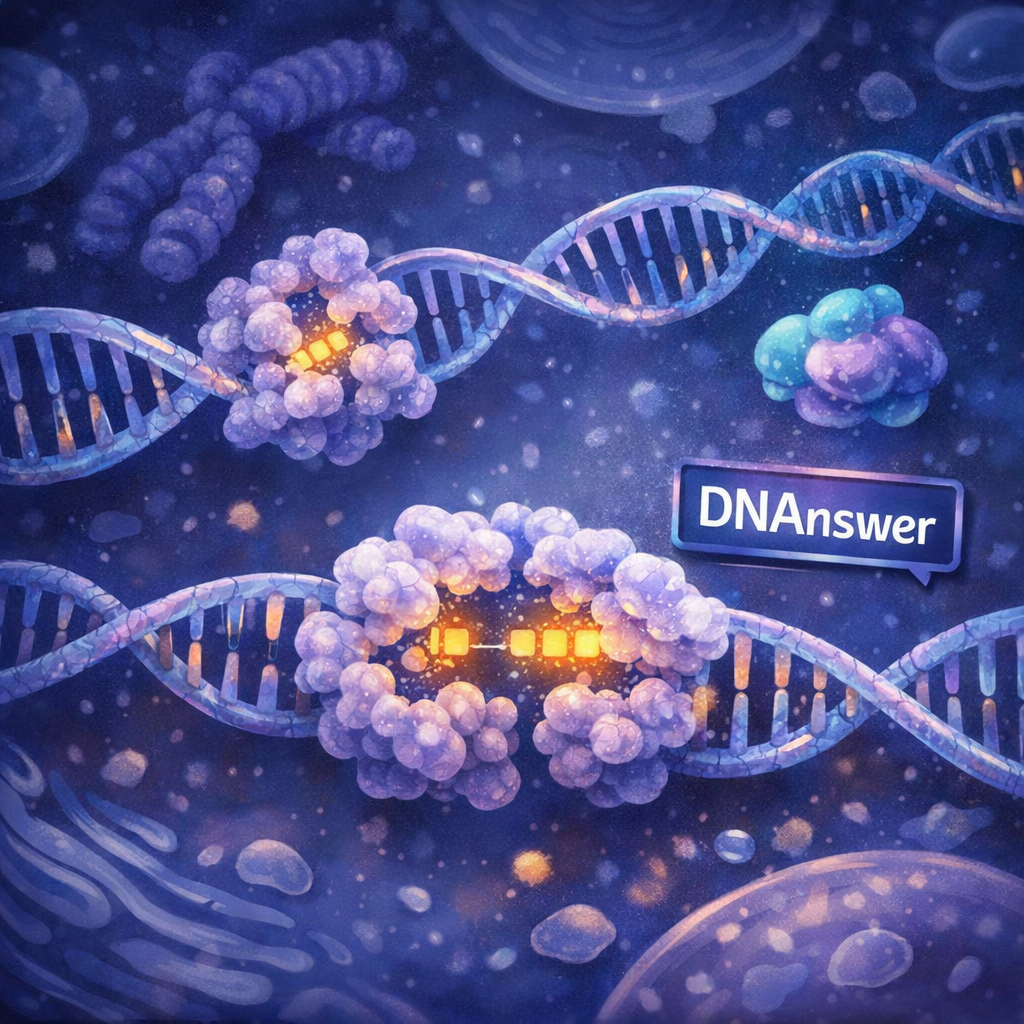
Mismatch repair corrects errors that DNA polymerase itself makes while copying DNA — the wrong letter paired in the wrong spot during replication. It's a proofreading pass after the first draft. Double-strand breaks, where both strands of the helix snap, are the most dangerous damage type and get two separate response pathways: homologous recombination, which uses a matching DNA copy as a template for near-perfect repair, and non-homologous end joining, which just glues the broken ends back together — faster, but sloppier, and more prone to small errors.
Myth: Sun Exposure Is the Main Source of DNA Damage
Sunlight gets top billing in every conversation about DNA damage, and it deserves attention — but it's not even close to the leading cause. Your own metabolism generates more DNA damage per day than the sun does for most people, sunscreen or not.
Every time your mitochondria (the structures inside your cells that generate energy) burn fuel to make ATP, they produce reactive oxygen species as a byproduct — unstable molecules that chemically attack nearby DNA. This is oxidative damage, and it happens continuously, in every cell, all day, regardless of whether you've stepped outside. Add in spontaneous chemical instability — DNA bases naturally fall off their sugar-phosphate backbone at a slow but steady rate, a process called depurination — and you've got a damage source that has nothing to do with the sun at all.
- Metabolic byproducts (oxidative damage): reactive oxygen species from normal cellular energy production, happening in every cell continuously
- Spontaneous chemical decay: bases detaching or changing shape purely from thermal instability, no external trigger needed
- Replication errors: DNA polymerase misreading the template during the billions of copying events needed to make new cells
- UV radiation: sunlight fusing adjacent bases into damaging dimers, concentrated in skin cells
- Ionizing radiation: X-rays, medical imaging, and background radiation causing direct strand breaks
- Environmental chemicals: tobacco smoke, certain industrial compounds, and some foods introducing DNA-reactive molecules
This isn't an argument against sunscreen — UV damage is a real and preventable cancer risk, and skipping sun protection is still a bad bet. It's an argument against treating the sun as the only threat. A person who never leaves the house still generates enormous amounts of DNA damage daily. Repair isn't a defense against a lifestyle choice. It's a defense against being alive and metabolically active.
Myth: Healthy Cells Achieve Perfect, Error-Free Repair
If repair worked perfectly every time, evolution would have stalled out billions of years ago — no variation, no adaptation, no you. A small, tolerated error rate isn't a flaw in the system. It's a built-in feature that keeps species capable of change.
Repair pathways are extremely good, but "extremely good" and "perfect" are different claims. Each pathway has a measurable, if tiny, failure rate. DNA polymerase itself makes an error roughly once every 10,000 to 100,000 bases during replication before proofreading kicks in; mismatch repair catches most of those, dropping the final error rate to somewhere around one in a billion bases. That remaining sliver isn't a bug report. It's the raw material of genetic diversity — the source of new traits, and, over deep evolutionary time, the reason multicellular life diversified into the range of species alive today.
Where the Perfection Myth Comes From
Biology class often introduces DNA repair right after introducing DNA replication's accuracy, and the two ideas blend together into an impression of a flawless copying-and-checking machine. It's an easy assumption to make and a reasonable one on the surface — the numbers involved really are close to perfect.
What Low Error Rates Actually Buy You
A near-zero (not zero) mutation rate means your body can maintain stable tissue function for decades while still allowing the occasional beneficial variant to slip through over generations. Cancer risk rises when this rate creeps up — from inherited repair-gene defects, chronic carcinogen exposure, or aging — not from the mere existence of a nonzero baseline. The number matters more than the concept of "some errors exist."
Myth: If a Cell Detects Damage, It Just Repairs and Moves On
Detection and repair are only two-thirds of the actual system. The piece most people skip is the pause button — a checkpoint protein that stops the cell from dividing at all until repairs are confirmed complete. Without that pause, even a good repair crew wouldn't matter, because a damaged cell could copy itself before the fix finished.
That checkpoint protein has a name most people have heard without knowing what it does: p53. It's often called the "guardian of the genome," and the label earns its keep. When p53 detects unrepaired damage, it halts the cell cycle at specific checkpoints, giving repair pathways time to finish their work. If the damage is too extensive to fix, p53 can trigger apoptosis — programmed cell death — essentially deciding the cell is a lost cause and shutting it down before it can pass damage forward.
Why This Step Gets Ignored
Repair enzymes make for a cleaner story: damage happens, enzyme fixes it, done. The checkpoint system is a management layer sitting on top of that story, and it's less visually intuitive — there's no obvious "gluing DNA back together" image to attach to a protein whose job is timing and judgment calls.
The Real-World Stakes
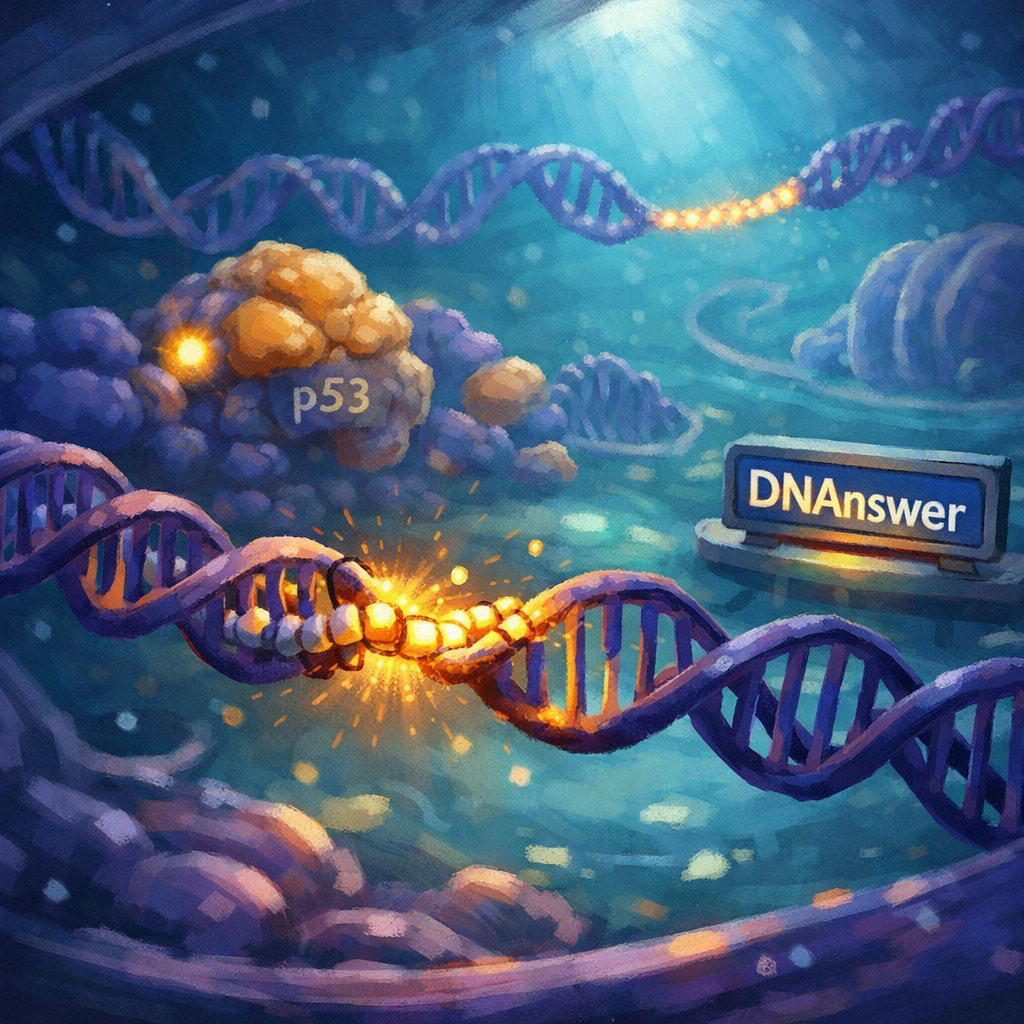
p53 is mutated in roughly half of all human cancers, which tells you almost everything about how much this checkpoint matters. A cell with a broken p53 doesn't lose its ability to repair DNA — it loses its ability to wait for repair, or to self-destruct when repair fails. Damage that would have been caught and fixed, or that would have triggered a safe cell death, instead gets copied forward into daughter cells. This is the actual mechanism behind the myth that "damage causes cancer" — it's closer to "damage plus a broken checkpoint causes cancer," a meaningfully different and more precise claim.
Myth: Repair Capacity Stays the Same Throughout Life
Repair efficiency declines with age, and that decline is one of the more direct molecular explanations for why aging bodies show more cancer, more tissue dysfunction, and slower recovery from cellular stress. This isn't a moral failing of older cells — it's measurable wear on a system that was never designed to run at full capacity indefinitely.
Several things erode repair capacity over time. The enzymes involved in base excision repair and nucleotide excision repair show reduced activity in older tissue samples. Chronic low-level inflammation, more common with age, adds to the daily damage load right as the repair crews handling that load are slowing down. Meanwhile, telomeres — the protective caps on the ends of chromosomes — shorten with each cell division, and short telomeres can themselves be mistaken for double-strand breaks, triggering unnecessary and disruptive checkpoint responses.
This decline connects directly to one of the more clinically useful developments in cancer treatment: PARP inhibitors. PARP is an enzyme that helps detect and initiate repair of single-strand DNA breaks. Some cancers, particularly certain breast and ovarian cancers with mutations in the BRCA1 or BRCA2 genes, already have a broken double-strand break repair pathway. Block PARP in those cells with a drug like olaparib, and you take away their last working repair route entirely — the damage piles up unfixed, and the cancer cell dies. Healthy cells, with BRCA still functional, tolerate PARP inhibition far better because they still have a backup system. It's a precise example of exploiting exactly which repair pathway is missing, rather than treating "damage repair" as one undifferentiated target.
Aging repair capacity isn't a reason for alarm any more than daily DNA damage itself is. It's a reason the risk curve for cancer rises with age, and it's part of why researchers studying longevity treat DNA repair fidelity as one of several measurable markers of biological — as opposed to chronological — age.
Conclusion
The next time you hear "DNA damage," resist the urge to hear "cancer risk" automatically. Damage is routine; mutation is rare; checkpoints and repair crews are the reason the gap between them holds. If you want to test how well this actually sticks, the DNA repair pathway quiz on dnanswer.app is a quick way to see which mechanism you'd bet on for which kind of damage.
Frequently Asked Questions
Does DNA damage repair get exhausted if you have too much damage in one day?
Not typically in a healthy cell — repair pathways run continuously and in parallel across thousands of sites. Extreme acute exposures (high-dose radiation, severe sunburn) can temporarily overwhelm capacity, which is when unrepaired damage risk rises.
Can lifestyle choices actually improve DNA repair, or is it fixed by genetics?
Genetics sets your baseline enzyme efficiency, but factors like chronic inflammation, smoking, and poor sleep add extra damage load and can suppress repair gene activity. Reducing those inputs doesn't upgrade your repair machinery, but it eases the burden on it.
Is every DNA mutation harmful if repair fails?
No — most mutations that slip through are neutral, landing in non-functional regions or causing no change to protein function. Only a small subset disrupt genes tied to cell growth control, which is the subset that matters for cancer risk.
How is DNA damage repair different from DNA replication?
Replication copies DNA to make new cells and happens on a schedule; repair fixes existing damage and runs constantly, independent of whether the cell is dividing. Mismatch repair overlaps both, proofreading errors that replication itself introduces.