Central Dogma of Biology: DNA to Protein
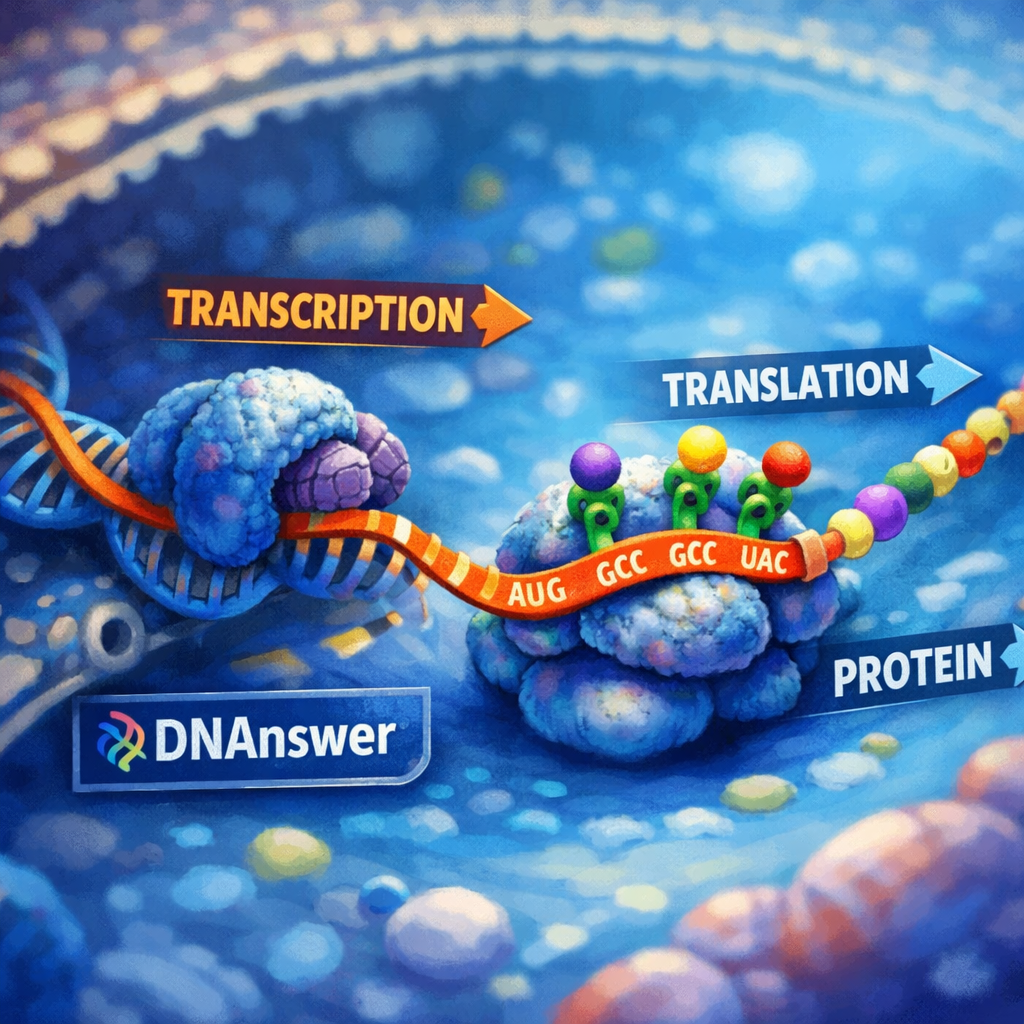
Can DNA build a protein all by itself? No. It can't. That's the first myth worth killing, because the central dogma of biology gets taught as a straight arrow — DNA to RNA to protein — when the real story has detours, exceptions, and at least one virus family that runs the whole thing backward.
If you learned this in a single class period, you probably walked away with a flattened version of the truth. That flattened version causes real confusion later, whether you're reading about mRNA vaccines, CRISPR, or why some viruses don't have DNA at all. Getting the mechanism right changes how you read every biology headline that follows.
Key Takeaways
- DNA never makes protein directly — RNA always does the assembly work
- Francis Crick coined the term in 1958, and it's often misquoted since
- Reverse transcription (HIV, retroviruses) flows RNA to DNA — a real, documented exception
- Prions are misfolded proteins that spread with no genetic code involved at all
- Gene regulation and epigenetics work alongside the dogma, not inside it
- Codons (three-letter RNA units) are the actual translation dictionary, not a metaphor
Myth: DNA Directly Builds Proteins Without Any Middleman
This is the biggest misconception, and it's an easy one to pick up because textbook diagrams often compress the process into an arrow labeled "DNA → Protein" for simplicity. If you only glanced at that arrow, you'd reasonably conclude DNA does the building itself. It doesn't. It can't leave the nucleus, and it doesn't have the chemical tools to link amino acids together.
Here's the honest reason people believe it: DNA gets all the press. It's the molecule in crime shows, ancestry kits, and true-crime documentaries. RNA barely gets mentioned, so it's easy to assume DNA does everything solo. The kernel of truth is that DNA does hold the master instructions — it's just not the molecule that reads them out loud.
What Actually Happens: Two Distinct Steps
The real sequence has two separate jobs, done by two different molecules, in two different locations. Step one is transcription: an enzyme called RNA polymerase attaches to a gene on the DNA strand, unzips it locally, and builds a matching strand of messenger RNA (mRNA) — a temporary, portable copy of that gene's instructions. This happens inside the nucleus.
Step two is translation, and it happens outside the nucleus, on a structure called a ribosome. The mRNA travels out through the nuclear membrane, docks onto a ribosome, and gets read three letters at a time. Those three-letter units are called codons, and each one corresponds to a specific amino acid — the building blocks that get strung together into a protein chain.
Why the Middleman Matters
Splitting the job this way gives the cell a control point. If DNA made protein directly, every gene would fire constantly with no way to turn it up or down. Because mRNA is a separate, disposable copy, the cell can make ten copies of one gene's instructions and zero copies of another, depending on what it needs at that moment. A skin cell and a neuron carry identical DNA but produce wildly different proteins, precisely because transcription is a regulated middle step, not a direct pipeline.
Skipping RNA isn't just biologically wrong — it hides the entire reason gene expression can be selective, tissue-specific, and responsive to your environment. That regulation is where most of modern biotech research actually lives.
Myth: The Central Dogma Has Never Faced a Real Exception
People believe this because "dogma" sounds absolute, like a law that can't bend. In practice, scientists have known about exceptions for over 60 years, and the man who coined the term said as much himself.
Francis Crick first laid out the central dogma of biology in 1958, and he clarified it again in a 1970 paper in Nature. His actual claim was narrower than most textbooks suggest: once genetic information passes from nucleic acid into protein, it can't flow back out of protein into nucleic acid. He never claimed RNA to DNA was impossible — he just hadn't ruled it out yet, and evidence for it showed up soon after.
"The central dogma of molecular biology deals with the detailed residue-by-residue transfer of sequential information. It states that such information cannot be transferred from protein to either protein or nucleic acid." — Francis Crick, Nature, 1970
Reverse Transcription Broke the One-Way Assumption
In 1970, two independent research teams — one led by Howard Temin, the other by David Baltimore — discovered an enzyme called reverse transcriptase. It does exactly what the name says: it copies RNA back into DNA, running the usual direction in reverse. Retroviruses, including HIV, carry their genetic code as RNA and use reverse transcriptase to write that code into the host cell's DNA once they've broken in.
That discovery earned Temin and Baltimore a share of the 1975 Nobel Prize in Physiology or Medicine. It didn't break Crick's actual rule — information still moved between nucleic acids, not from protein back to gene — but it demolished the simplified classroom version that says "DNA only ever goes forward."
Why This Exception Is Everywhere in Modern Medicine
Reverse transcription isn't some obscure lab curiosity. It's the reason HIV treatment includes a class of drugs called reverse transcriptase inhibitors, which block the virus from writing itself into your genome in the first place. It's also the working principle behind PCR-based COVID-19 tests, which use a reverse transcriptase step to convert viral RNA into DNA before amplifying it for detection.
So no, the central dogma of biology was never an unbreakable wall. It was a general pattern with a known, well-documented exception baked into virology since the early 1970s. Treating it as untouchable is the myth. Treating it as "usually true, with specific, named exceptions" is the accurate version.
Myth: Proteins Can Send Genetic Information Back to DNA
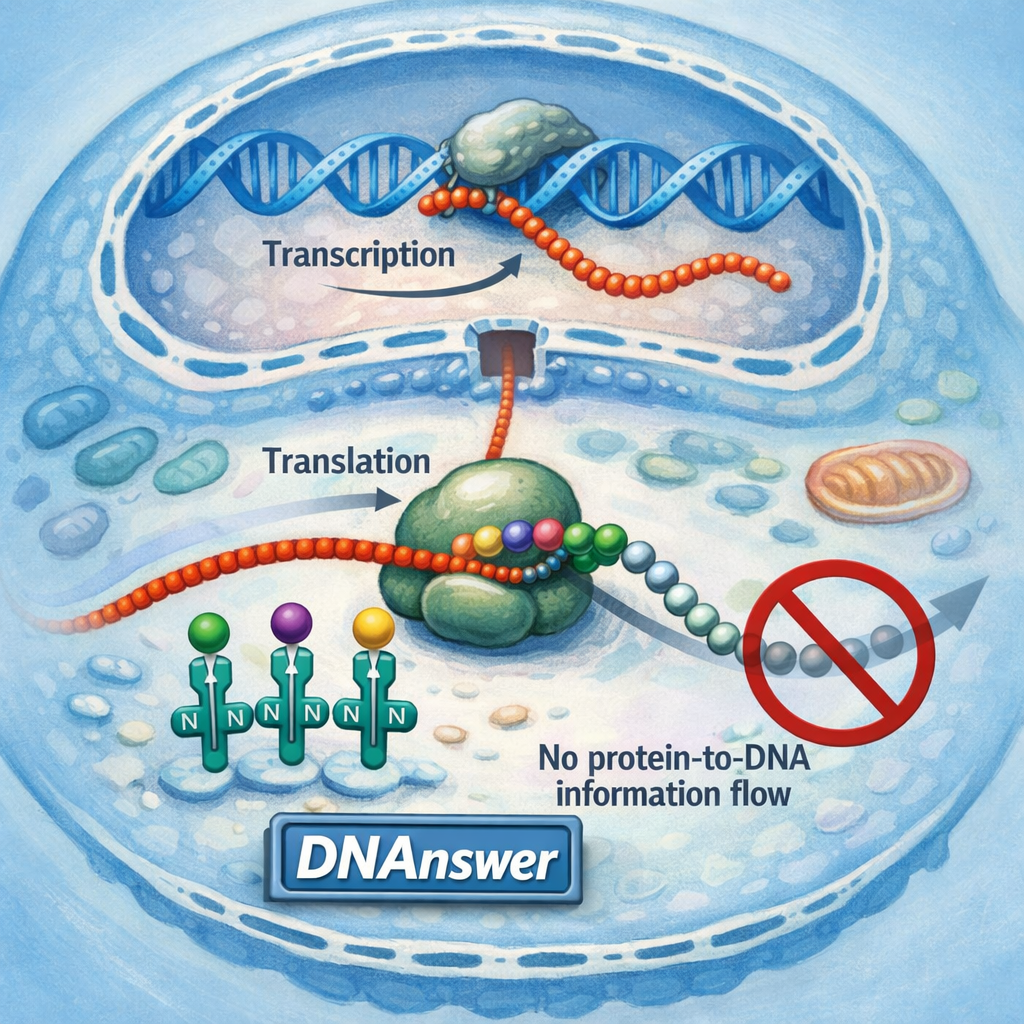
This one deserves care, because it's the myth that actually would have broken Crick's rule — and the honest answer is: it doesn't happen, with one genuinely strange exception that isn't really "genetic" at all.
People land on this myth for a reasonable reason: prions. You may have heard that prions "rewrite" other proteins, and that sounds a lot like heredity. Mad cow disease (bovine spongiform encephalopathy) and the human version, Creutzfeldt-Jakob disease, both involve a misfolded protein called PrP that converts normal PrP proteins into the same misfolded shape. That's a form of biological information transfer. It just isn't genetic information, and it isn't DNA.
Prions Don't Touch the Genome
A prion is a protein, full stop. It carries no DNA, no RNA, no codons, nothing resembling a genetic code. What it does is structural persuasion — its misfolded shape acts like a template, forcing correctly folded proteins nearby to twist into the same faulty shape. That new shape then goes on to convert more proteins, cascading through tissue, usually brain tissue, causing the sponge-like damage seen in diseases like Creutzfeldt-Jakob disease.
This is genuinely bizarre by the standards of most biology, because it means a disease can spread without a single gene being copied, mutated, or transmitted. It's protein-to-protein, and it stops there. No sequence gets written into DNA. No new genetic information enters the cell's blueprint. Crick's actual 1970 statement — that information cannot flow from protein back into nucleic acid — holds up completely here.
Sorting the Real Exception From the Myth
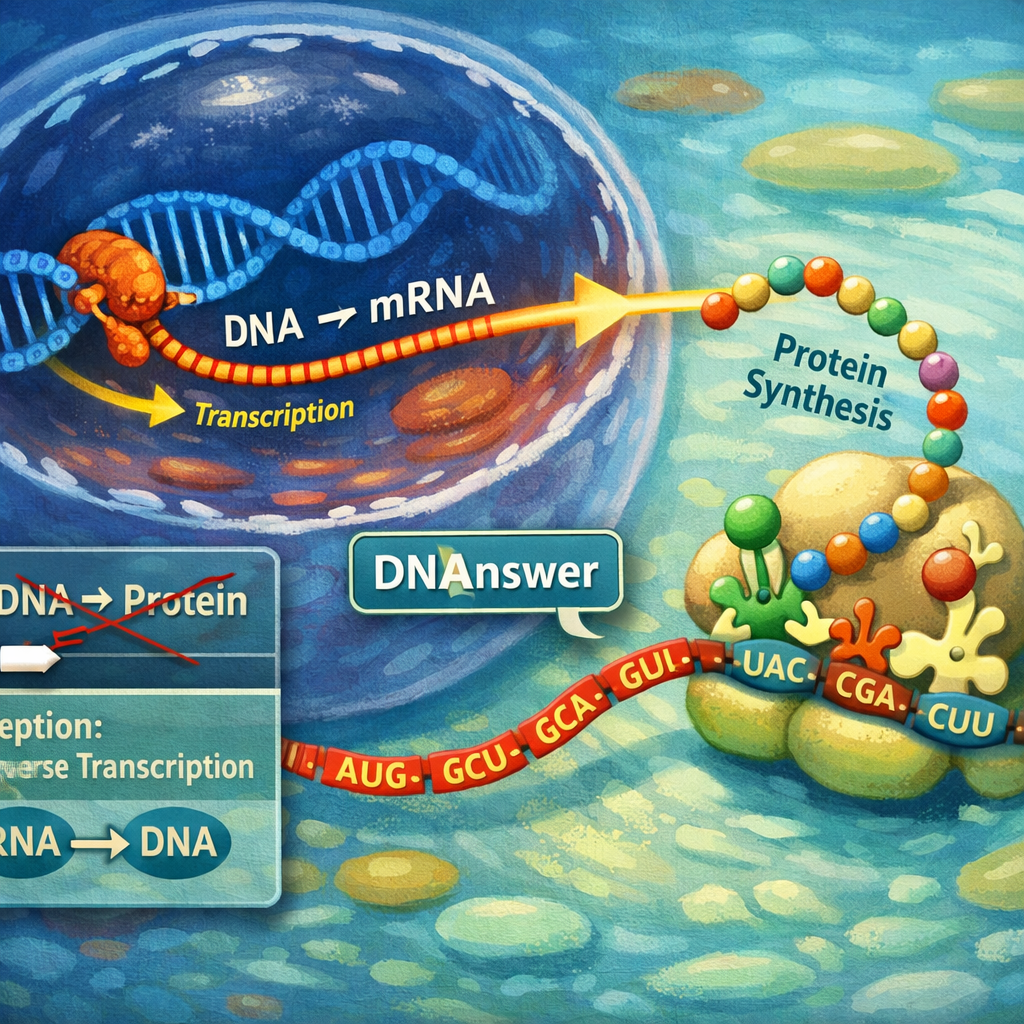
It helps to separate what's confirmed from what people assume:
- RNA to DNA (reverse transcription) — confirmed, documented since 1970, essential to retrovirus biology and modern diagnostics.
- RNA to RNA (viral RNA replication) — confirmed, seen in RNA viruses like influenza and coronaviruses, which copy RNA directly without a DNA step.
- Protein to protein (prion conversion) — confirmed, but it's structural, not genetic information.
- Protein to RNA — no confirmed mechanism exists.
- Protein to DNA — no confirmed mechanism exists, and this is the one Crick specifically ruled out.
Once you see it laid out this way, the myth collapses cleanly. Information really does move in more directions than the simple arrow suggests. But the one specific direction — protein rewriting your DNA — has never been observed, and it isn't just an unlikely exception; it would require chemistry nobody has found any evidence for.
Myth: The Central Dogma Explains All of Gene Regulation and Epigenetics
This myth is subtler, and it trips up people who've actually done some extra reading. The central dogma describes the mechanical path information takes — DNA to RNA to protein. It says almost nothing about when, how much, or whether that path gets used at all. That's a separate layer of biology called gene regulation, and confusing the two makes epigenetics sound like it's breaking rules it never touched.
The honest reason for the mix-up: both topics involve DNA, RNA, and gene activity, so they get lumped together in casual conversation. Someone hears "epigenetics changes which genes are active" and assumes that must mean the central dogma is being violated. It isn't. The dogma is about the direction information flows between molecule types. Epigenetics is about volume control on genes that were never going to violate that direction anyway.
Epigenetic Marks Change Volume, Not Direction
Epigenetic modifications — like DNA methylation, where a small chemical tag attaches to DNA, or histone modification, where proteins that DNA wraps around get chemically tagged — change how tightly DNA is packed and how accessible a gene is to RNA polymerase. A heavily methylated gene is harder for RNA polymerase to reach, so transcription slows down or stops. A gene sitting in loosely packed DNA gets transcribed more easily.
None of that changes the underlying sequence of the DNA itself, and none of it reverses the direction of information flow. It's still DNA to RNA to protein when it happens. Epigenetics just decides whether it happens, and how often. Identical twins, for example, start with identical DNA sequences but can develop different epigenetic marks over decades, which is part of why they can end up with different disease risks despite sharing the same genome.
Where Gene Regulation Actually Sits
Gene regulation includes epigenetics, but it's broader. It covers things like transcription factors — proteins that bind near a gene and either help or block RNA polymerase from starting transcription — and it covers RNA-level controls, like how quickly a given mRNA molecule gets degraded once it's made. All of these mechanisms sit around the central dogma, adjusting its pace and reach.
Think of the central dogma as the road, and gene regulation as the traffic lights, speed limits, and detours along it. The road's direction doesn't change. What changes is how much traffic gets through, and when. If you're the kind of reader who wants to test whether these distinctions actually stuck, a short quiz on gene expression over at dnanswer.app walks through DNA methylation, transcription factors, and codon reading side by side, which is a fast way to see if you're mixing up the layers.
The Genetic Code: Why Codons Aren't Just Trivia
The genetic code is the fixed dictionary that tells a ribosome which amino acid to add for each three-letter RNA codon it reads. There are 64 possible codons, built from four RNA bases (A, U, G, C) arranged in groups of three, and they specify only 20 amino acids — plus stop signals that end the chain.
That mismatch (64 codons, 20 amino acids) means the code is redundant: several different codons can code for the same amino acid. Leucine, for instance, gets coded by six different codons. This redundancy isn't sloppy design. It's a buffer. If a mutation swaps one DNA letter for another, there's a decent chance the resulting codon still calls for the same amino acid, and the protein comes out unchanged. That buffering is part of why not every mutation causes disease.
Reading Frame: Why Position Matters
Ribosomes read codons in one direction, three letters at a time, starting from a fixed point marked by a start codon (AUG, which also codes for the amino acid methionine). Shift that starting point by even one letter, and the entire downstream reading frame scrambles, producing a completely different, usually broken, protein. This is why a single inserted or deleted DNA letter — called a frameshift mutation — tends to cause more damage than swapping one letter for another.
Three stop codons (UAA, UAG, UGA) don't code for any amino acid at all. They're punctuation. When the ribosome hits one, it releases the finished protein chain and detaches from the mRNA. Without that stop signal, the ribosome would keep adding amino acids into gibberish until it ran out of message.
The Code Is Nearly Universal — With Real Exceptions
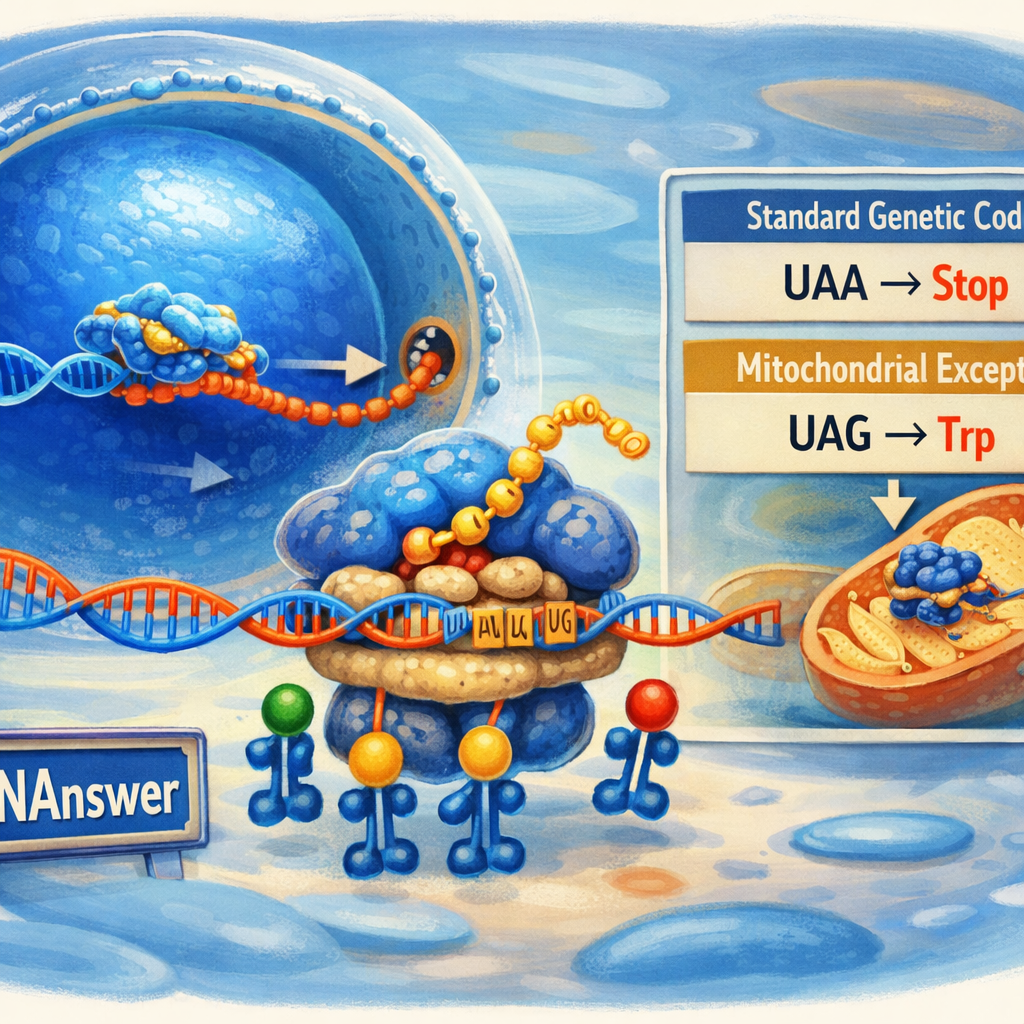
Here's a detail most intro courses skip entirely: the genetic code is nearly, but not perfectly, universal across life. Mitochondria — the energy-producing structures inside your cells, which carry their own small loop of DNA — use a slightly different code in a handful of codons compared to the rest of the human genome. Some single-celled organisms have their own quirks too.
This matters practically, because it means the genetic code isn't some inflexible law of physics. It's a shared convention, one that nearly every organism on Earth inherited from a common ancestor and mostly kept intact, with small regional dialects here and there.
Where the Central Dogma Gets Genuinely Weird
Retroviruses and prions aren't edge cases nobody ever encounters. HIV alone makes reverse transcription medically relevant to millions of people. Prion diseases are rare, but they've reshaped food safety regulations worldwide since the 1990s mad cow disease outbreak in the United Kingdom.
RNA viruses add another wrinkle worth naming directly. Viruses like influenza and SARS-CoV-2 carry their genetic material as RNA and replicate it directly, RNA to RNA, without ever touching DNA at any stage of their life cycle inside a host cell. That's a third documented departure from the simplified diagram, alongside reverse transcription and prion conversion.
None of these exceptions overturn Crick's actual claim about protein-to-nucleic-acid transfer. They do overturn the popular myth that biology is a fixed one-way street. It's closer to a set of well-marked lanes, most traffic flowing one direction, with a few documented on-ramps running the other way, discovered decades ago and studied in detail ever since.
Conclusion
Once you separate what Crick actually claimed from what got simplified for a classroom poster, the central dogma of biology stops being a rule to memorize and starts being a map of where biology's real flexibility lives. Next time you read about mRNA vaccines, HIV drugs, or prion disease, ask which step — transcription, translation, or an exception like reverse transcription — is actually being targeted.
Frequently Asked Questions
Did Francis Crick ever say the central dogma has no exceptions?
No. Crick's 1970 Nature paper specifically ruled out only protein-to-nucleic-acid transfer. He didn't rule out RNA-to-DNA transfer, which reverse transcriptase confirmed the same year.
Is mRNA the same thing as DNA, just in a different form?
No. mRNA is a single-stranded, temporary copy of one gene, made of different chemical building blocks than DNA, and it degrades within hours to days instead of persisting for life.
Do all viruses use DNA as their genetic material?
No. Many viruses, including influenza and SARS-CoV-2, use RNA as their only genetic material and never produce a DNA version during infection unless they're specifically a retrovirus like HIV.
Can epigenetic changes get passed to your children?
Some epigenetic marks can persist across cell divisions and, in limited documented cases, across generations, but this doesn't involve any change to the underlying DNA sequence itself.