ATP in Biology: The Cell’s Main Energy Carrier
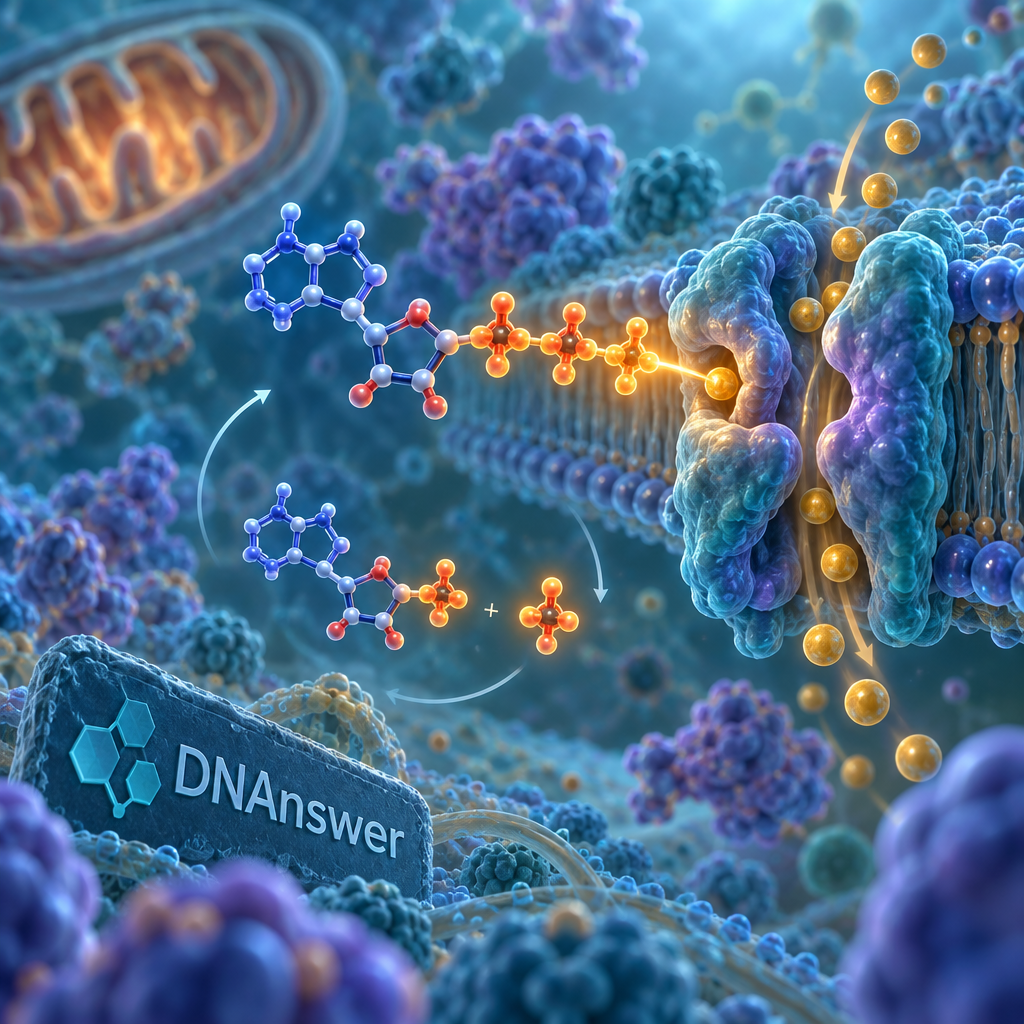
Your body holds about 1 second's worth of ATP at full sprint effort — not the deep energy reserve most people picture. That number alone breaks the biggest misconception about ATP in biology: that it works like a fuel tank you fill up and draw from all day. It doesn't. ATP is a delivery system, not a warehouse, and mixing up those two ideas costs students test points and costs curious adults a real understanding of how their bodies actually run.
This article walks through the five most common myths about ATP — what people believe, why the belief feels reasonable, and what the biochemistry actually shows.
Key Takeaways
- Your cells hold roughly one second of ATP at any moment — regeneration, not storage, keeps you moving.
- The phosphate bond isn't "high energy" by itself — energy releases from the reaction, not the bond.
- Mitochondria aren't ATP's only source — glycolysis makes it in the cytoplasm, no oxygen needed.
- ATP transfers energy; it isn't a nutrient your body burns for fuel like glucose or fat.
- ATP supplements can't raise cellular ATP — your gut breaks ATP down before it reaches a single cell.
Myth 1: Your Body Stores ATP the Way It Stores Fat
Almost everyone who's taken a biology class in the United States remembers the phrase "ATP is the energy currency of the cell." It's a good line, and it sticks. So it's a reasonable jump to assume your body banks that currency somewhere, the same way it banks fat in adipose tissue or glycogen in your liver and muscles.
It doesn't. And the gap between what people assume and what's actually true is enormous.
Where the Assumption Comes From
Fat and glycogen genuinely are storage molecules. A 154-pound man carries roughly 100,000-plus kilocalories of stored fat and about 400-500 grams of glycogen split between muscle and liver — real, standing reserves your body can call on for hours or days. Since ATP gets grouped with "energy" in the same sentence, it's natural to picture it working the same way.
What's Actually True
Here's the number that changes the picture: your cells hold roughly 1 second's worth of ATP during hard exercise before it's used up. A resting cell might stretch that to a few seconds. Either way, the total ATP in your body at any given instant is tiny — often cited around 50 grams for an average adult, compared to the fat and glycogen reserves above.
But you don't collapse after one second, because your cells don't sit on that ATP — they regenerate it, immediately, from ADP (adenosine diphosphate, ATP's spent form after it releases energy). Estimates suggest the average adult recycles the equivalent of their entire body weight in ATP over a 24-hour period. Not by making that much new material, but by cycling the same phosphate groups on and off, over and over, tens of thousands of times a day.
ATP functions less like money in a savings account and more like cash changing hands at a busy register — made, spent, and remade within seconds.
What This Means for You
Stop picturing ATP as fuel in a tank. Picture it as a constantly-running production line. When you sprint for the bus, your muscles aren't drawing from an ATP reserve — they're demanding your cells regenerate ATP fast enough to keep up, which is exactly why sprinting burns you out in seconds while walking doesn't.
Myth 2: The Phosphate Bond Itself Is "High Energy"
Biology textbooks love the phrase "high-energy phosphate bond," and it's misleading in a specific, fixable way.
The Reasonable Misread
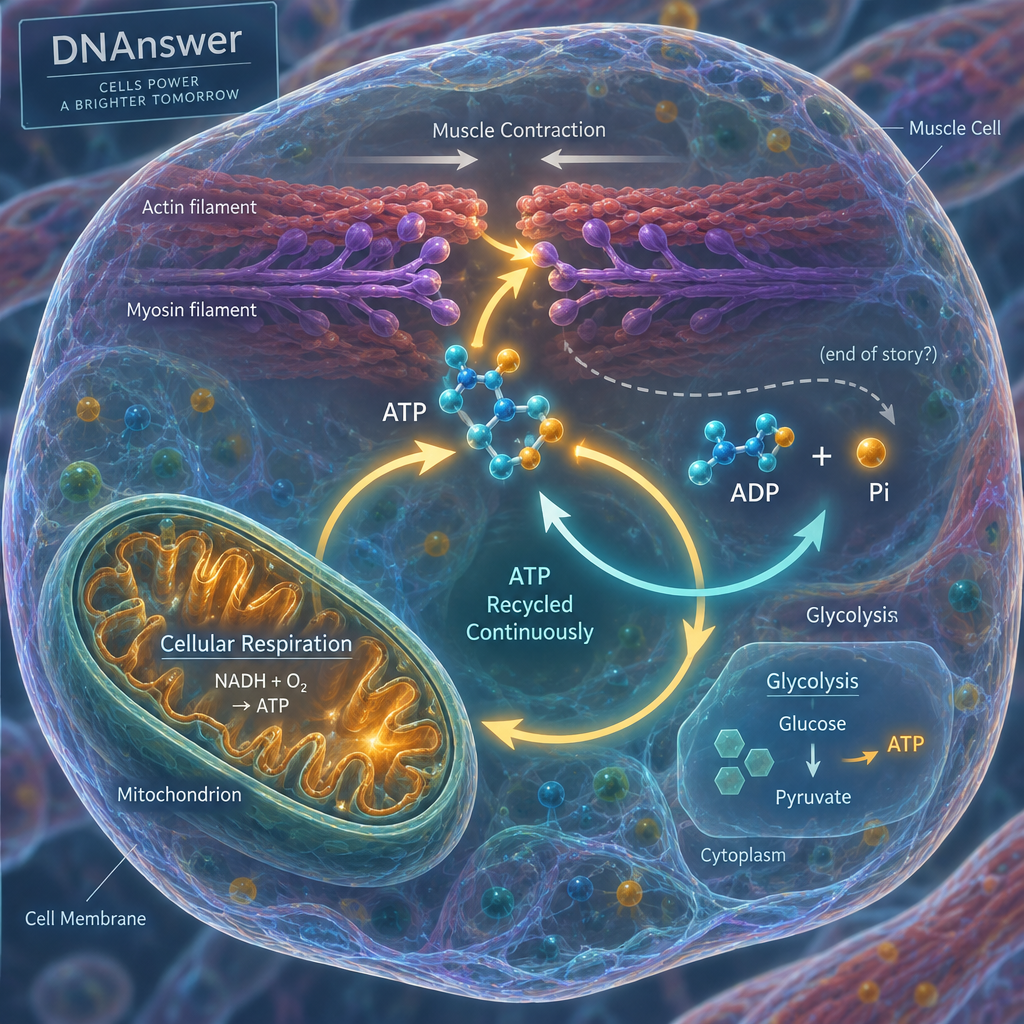
ATP's structure is adenosine (a molecule made of adenine plus a sugar called ribose) attached to three phosphate groups in a chain. Break off that third phosphate, and energy releases. Say that enough times, and it sounds like the bond between the second and third phosphate is packed with energy the way a stick of dynamite is packed with explosive — like the energy lives inside the bond itself, waiting.
Why That's Wrong
Bonds don't store energy in a way that gets "released" just by breaking them. Breaking bonds actually requires energy input. What releases energy is the whole reaction: ATP's three negatively charged phosphate groups sit crammed close together, repelling each other like magnets forced the wrong way around. When the reaction removes one phosphate, that repulsion drops, and the resulting molecules (ADP plus a free phosphate) settle into a more stable, lower-energy arrangement than ATP had.
The energy released comes from the difference between ATP's unstable, high-repulsion state and the calmer state of ADP plus phosphate — not from something coiled up inside one bond. Biochemists sometimes call this a "strained" or "high-potential" system for that reason, and even the phrase "high-energy bond" is really shorthand chemists use for the whole reaction's energy change, not the bond in isolation.
The Practical Difference
Why does this matter to you? Because it explains why your cells couple ATP breakdown to useful work instead of just letting it happen randomly. Enzymes evolved to grab that released energy and immediately spend it on something specific — moving a muscle fiber, pumping a sodium ion across a membrane, assembling a protein. If the energy just sat "in the bond" waiting to pop, cells would have no way to aim it at a job. Because it's a reaction, cells can control exactly when and where it fires.
Myth 3: ATP Only Comes From the Mitochondria
Call this the "powerhouse of the cell" myth, and it's the one that's probably cost you points on a quiz.
Why the Mitochondria Get All the Credit
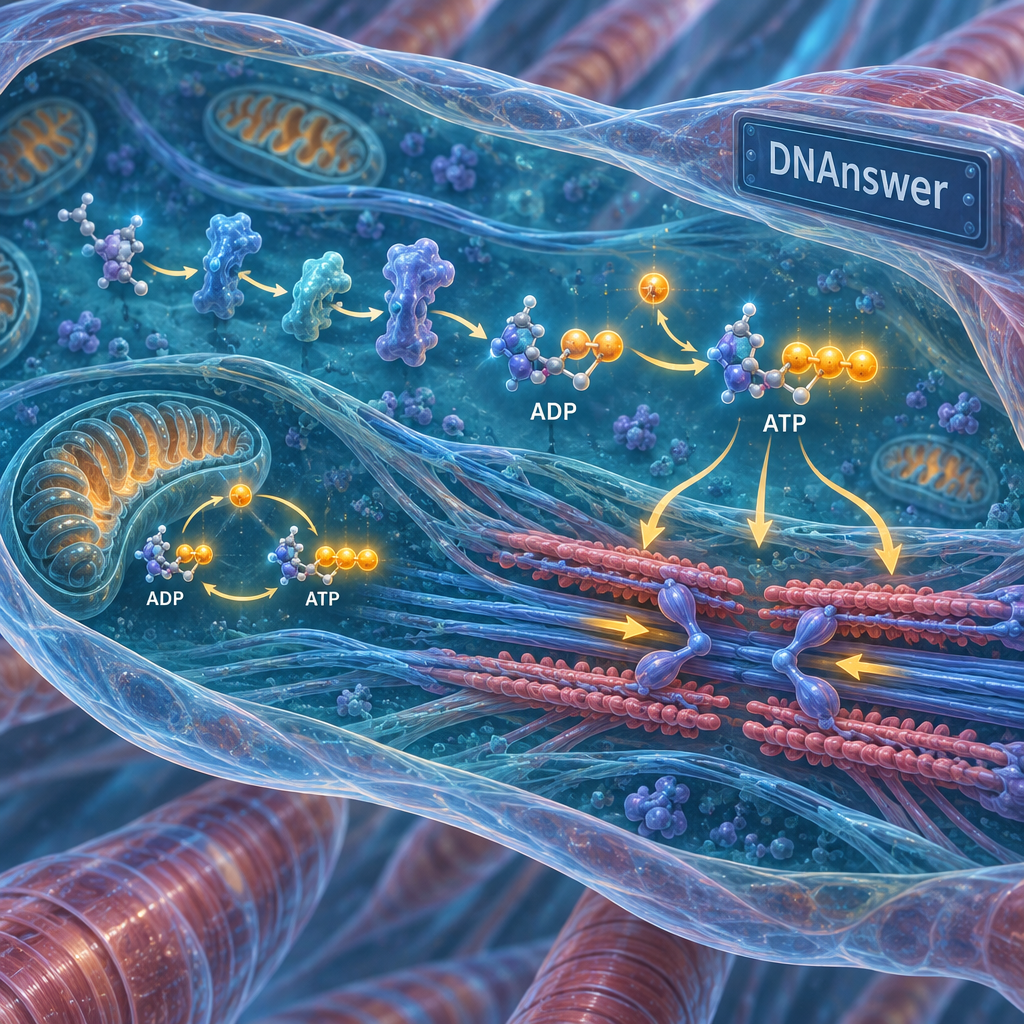
Mitochondria really do make most of your ATP — through a process called oxidative phosphorylation, which uses oxygen to run an enzyme called ATP synthase like a tiny turbine, spinning as protons flow through it and bolting phosphate groups onto ADP. One molecule of glucose fully broken down this way can net around 30-32 ATP molecules. That's the dominant number, and it's why mitochondria get the "powerhouse" nickname in every textbook.
Where That Story Falls Short
But mitochondria aren't the only ATP factory in your cells, and treating them like the sole source misses half the process. Glycolysis — the ten-step breakdown of one glucose molecule into two molecules of pyruvate — happens in the cytoplasm, outside the mitochondria entirely, and needs zero oxygen. It nets just 2 ATP per glucose molecule directly, through a mechanism called substrate-level phosphorylation, where an enzyme transfers a phosphate group straight from one molecule to ADP, no turbine involved.
That 2-ATP yield sounds small next to 30, but speed matters. Glycolysis runs fast and doesn't wait on oxygen delivery, which is exactly why your muscles can still generate ATP during a hard sprint before your lungs and heart catch up. Red blood cells, which have no mitochondria at all, rely on glycolysis for essentially all their ATP, permanently.
The Two-Track System
So cellular respiration really runs on two tracks: a quick, oxygen-free track in the cytoplasm, and a slower, oxygen-dependent track in the mitochondria that pays off big. Knowing both exist explains things a single-source story can't — like why you can still move for a few seconds after holding your breath, or why muscle cramping during intense exercise involves lactic acid buildup, a byproduct of glycolysis running without enough oxygen to keep pace.
Myth 4: ATP Is a Nutrient, Like a Vitamin or a Sugar
People sometimes talk about "getting ATP" from food the way they'd talk about getting vitamin C from an orange, and it's an understandable mix-up rooted in a half-truth.
The half-truth: food genuinely is where the raw material for ATP production comes from. Glucose, fatty acids, and amino acids all get broken down through cellular respiration, and the energy released along the way gets captured and used to attach phosphate groups to ADP, building ATP. So food and ATP are connected — just not the way people assume.
Here's the actual relationship: ATP is a transfer molecule, not a fuel source. You don't eat ATP and burn it for energy the way you'd burn glucose or fat. Your digestive system breaks dietary ATP down into its component parts (adenosine and phosphate) before absorption, the same as it does with most complex molecules in food. ATP made inside your cells, from the energy in the food you ate, is what actually gets used — and it gets used almost immediately, in the same cell that made it, because ATP doesn't travel well between cells or through the bloodstream in meaningful amounts.
Think of it this way: glucose and fat are like crude oil, the raw energy source. ATP is like the electricity your house runs on after that oil gets converted at a power plant. You wouldn't try to power your refrigerator by pouring crude oil directly into the wall socket, and your cells can't run on glucose directly either — everything routes through the ATP conversion step first. Mitochondria and the glycolysis pathway are the power plants; ATP is the electricity, made on demand and used on-site.
This distinction matters for anyone reading a nutrition label or a supplement claim, and it leads directly into the next myth.
Myth 5: Taking ATP Supplements Boosts Your Cellular Energy
This is where the storage myth and the nutrient myth combine into a marketing pitch, and it's worth taking seriously because it costs people actual money.
The Pitch
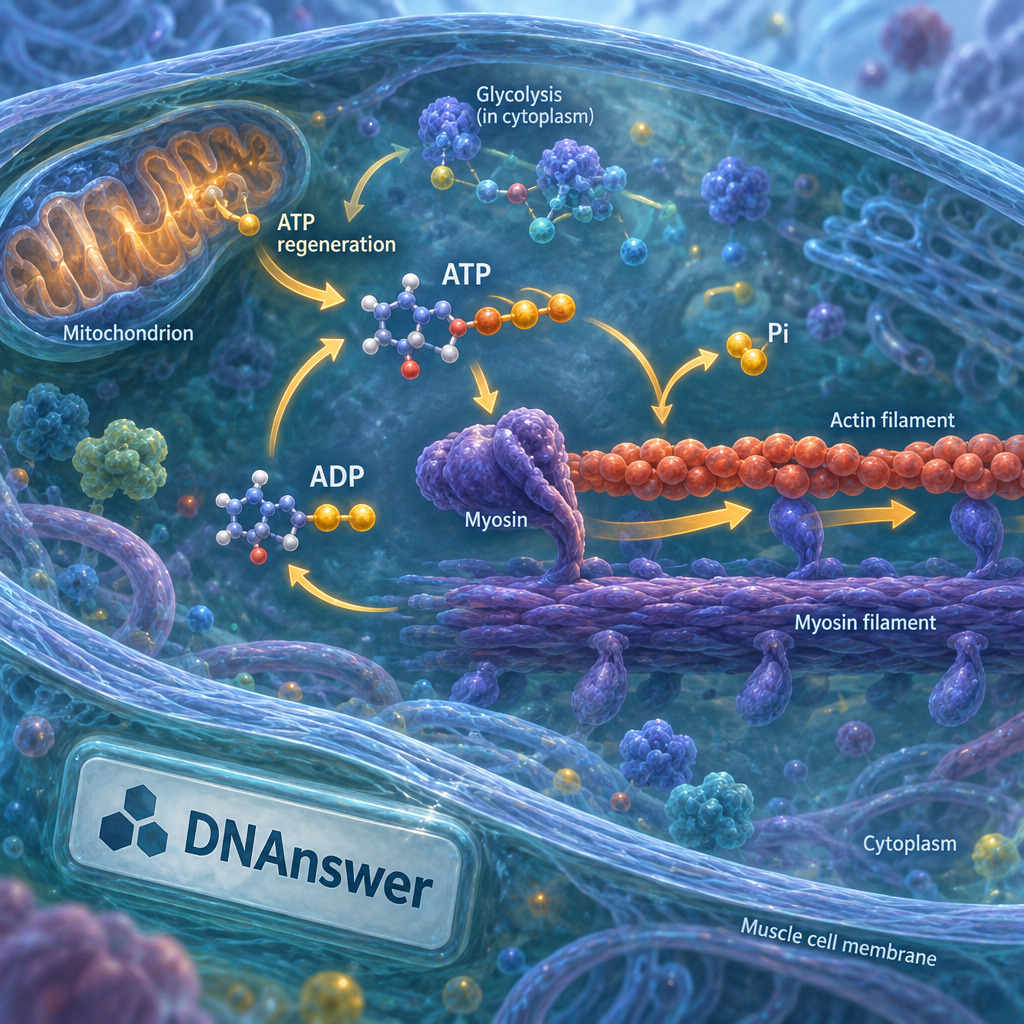
ATP supplements — usually sold as capsules or powders marketed to gym-goers — promise more "cellular energy" and better performance, riding on the fact that ATP really is essential for every muscle contraction in your body. If your muscles need ATP to work, more ATP in, more power out, right?
Why It Doesn't Hold Up
The problem starts before the supplement even reaches your bloodstream. Oral ATP gets broken down by digestive enzymes in your gut into adenosine and phosphate, same as any other nucleotide in food, long before it could act as intact ATP anywhere in your body. Even in the rare case some intact ATP survives digestion, your body doesn't have a mechanism to shuttle outside ATP into muscle cells and drop it into the internal energy pool — cells make their own ATP on demand and don't import bulk supplies from the blood.
A handful of small human trials on oral ATP supplementation have reported modest changes in blood flow or perceived fatigue during resistance training, but none have shown a plausible mechanism for intact ATP reaching muscle cells intact, and the effect sizes are small and inconsistent across studies. That's a long way from "more cellular energy."
What Actually Improves ATP Production
If you want more usable energy during exercise, the honest answer is duller than a supplement bottle: better aerobic conditioning increases mitochondrial density, which increases oxidative phosphorylation capacity, which increases how fast your cells regenerate ATP under load. Training, sleep, and enough dietary carbohydrate and fat to fuel cellular respiration do more for your ATP turnover rate than any pill sold at a vitamin shop.
- Cardiovascular training increases mitochondrial density over weeks to months.
- Adequate carbohydrate intake keeps glycolysis supplied for fast-access ATP.
- Sleep and recovery let cells rebuild ATP-ADP balance without added stress.
- Iron and B-vitamin sufficiency support the electron transport chain mitochondria depend on.
- Consistent training — not supplementation — raises how fast you can regenerate ATP under load.
Conclusion
Once you stop picturing ATP as stored fuel and start picturing it as cash your cells print and spend within seconds, a lot of biology clicks into place — why sprinting exhausts you fast, why red blood cells don't need mitochondria, why supplement claims about "boosting cellular energy" don't survive basic digestion chemistry. If you want to test how well this actually stuck, working through a quick cellular respiration quiz on dnanswer.app is a fast way to find the gaps.
Frequently Asked Questions
How much ATP does the human body actually have at one time?
Roughly 50 grams total in an average adult, enough for about 1 second of intense activity. Your cells regenerate it continuously — recycling roughly your entire body weight in ATP across a full day.
What's the difference between ATP and glucose?
Glucose is a fuel your cells break down; ATP is the energy-transfer molecule your cells make from that breakdown. You can't run cellular processes directly off glucose — everything routes through ATP first.
Does ATP only get made in the mitochondria?
No. Glycolysis makes ATP in the cytoplasm without oxygen, yielding 2 ATP per glucose molecule through substrate-level phosphorylation. Mitochondria add far more (around 30-32 ATP per glucose) through oxidative phosphorylation, but they're not the only source.
Do ATP supplements actually raise energy levels in cells?
The evidence doesn't support meaningful cellular gains. Digestive enzymes break oral ATP down before absorption, and your cells don't import outside ATP — they manufacture it on demand inside each cell.