Endogenous Retroviruses: Why 8% of Your DNA Is Viral
You've probably seen the claim: 8% of your DNA is viral. It sounds like a horror movie premise, but endogenous retroviruses are real, and that number is accurate. What most posts leave out is what that 8% actually does inside you right now.
The honest story is stranger and more useful than the scary version. These viral remnants aren't lying dormant waiting to reactivate. Some of them build the organ that let your mother's body carry you to term. Getting the details right changes how you think about your own genome — and about viruses in general.
Key Takeaways
- 8% of human DNA comes from ancient retrovirus infections, confirmed by genome sequencing.
- Endogenous retroviruses infected reproductive cells (eggs/sperm), so they pass down through generations.
- Exogenous viruses like HIV infect body cells only and don't get inherited — a key difference.
- A gene called syncytin, born from an ERV, builds the layer that lets your placenta function.
- Most ERVs are silenced by your cells, not "junk" — silencing itself is an active process.
- ERVs are studied in cancer and autoimmune disease, but causation is still being worked out.
Myth: Endogenous Retroviruses Are Active Infections Still Spreading Inside You
This is the biggest misread of the 8% statistic, and it's the one that scares people the most. The truth: nearly all endogenous retroviruses in your genome are broken, silenced, or both. They are not currently infecting your cells the way a cold virus or HIV would.
The confusion makes sense once you see where the number comes from. When the Human Genome Project finished mapping human DNA in the early 2000s, researchers found that roughly 8% of the sequence matched retrovirus genes. That's a genuinely striking figure. Hearing "8% viral" and picturing an active infection is a reasonable first guess — it's just wrong.
How Infection Becomes Inheritance
Here's the mechanism that actually matters. A retrovirus, like HIV, carries its genetic instructions as RNA. It infects a cell and uses an enzyme called reverse transcriptase to copy that RNA into DNA, which then inserts itself into the host cell's genome. Normally, this happens in body cells — a liver cell, a skin cell, an immune cell — and when that cell dies, the inserted viral DNA dies with it.
Endogenous retroviruses are different because of where the infection landed. If the virus happened to infect a germline cell — an egg or sperm cell, or one of their precursors — the inserted viral DNA becomes part of the genetic instructions passed to the next generation. Every cell in that offspring's body carries a copy. Do this across millions of years of primate evolution, with thousands of independent infection events, and you end up with a genome carrying the fossilized remains of ancient viruses.
Why "Endogenous" Doesn't Mean "Contagious"
The word endogenous means "from within." These viruses aren't traveling between people anymore. They can't, because most of them are missing critical genes needed to build new viral particles — deletions and mutations have broken the instructions over hundreds of thousands of years.
A small number of human ERVs, particularly in the HERV-K family, are among the youngest and most intact copies. Even these are considered non-infectious in modern humans under normal conditions — researchers study them closely precisely because they're the exception, not because they represent an active threat. Treating your genome's viral content as a ticking time bomb misunderstands what "endogenous" actually means.
Myth: All That Viral DNA Is Useless Junk Taking Up Space
This is where the differentiating fact of the whole topic lives, and it's the myth worth spending the most time correcting. The honest belief comes from real science: for decades, geneticists called non-coding DNA "junk" because it doesn't code for proteins the way genes do. ERVs, mostly non-coding, got lumped into that bin.
But "doesn't code for a protein" and "does nothing" are not the same claim, and ERVs are the clearest proof of that gap.
The Placenta Runs on a Repurposed Viral Gene
Consider syncytin. This gene builds a protein that fuses cell membranes together, and it's essential for forming the syncytiotrophoblast — the single fused layer of cells at the placenta's surface that manages nutrient and gas exchange between mother and fetus. Without a working syncytin gene, that fusion layer doesn't form properly.
Syncytin didn't evolve from scratch. It came from an ERV envelope gene — the same gene an ancient retrovirus once used to fuse itself into cells during infection. Evolution took a tool built for viral invasion and repurposed it for a task at the center of mammalian reproduction. Different mammal lineages even domesticated different ERV envelope genes independently for this same job, a pattern biologists call convergent co-option. Cats, mice, and humans arrived at similar placental solutions using different viral fossils.
A crisp way to hold this: endogenous retroviruses aren't inert leftovers — they're raw material evolution has repeatedly recruited to build new biology, from placentas to immune regulation.
Beyond the Placenta: Other Jobs ERVs Do
Syncytin gets the spotlight, but it's not the only case. Some ERV sequences function as promoters — DNA switches that turn nearby genes on or off — and have been recruited into the regulatory networks controlling immune response and early embryonic development. Others contribute regulatory sequences that influence how genes get turned on during specific developmental windows.
None of this means every piece of the 8% is doing something useful. Plenty of it really is inactive sequence with no measurable function today — that part of the old "junk DNA" label was fair. The mistake is applying that label to the whole category instead of asking, gene by gene, what a given ERV fragment is doing now.
Myth: Endogenous and Exogenous Retroviruses Work the Same Way
People often mix up endogenous retroviruses with viruses like HIV, treating them as different names for the same threat. They're related by mechanism but completely different in behavior, risk, and consequence. Confusing the two is how "8% viral DNA" turns into unnecessary anxiety.
Exogenous retroviruses are the kind you can catch: HIV, for instance, spreads from person to person through bodily fluids, infects immune cells, and can cause active disease. Your immune system, your doctor, and public health systems treat it as an ongoing threat because it is one. It replicates, it spreads, and without treatment, it can be fatal.
The Four Practical Differences
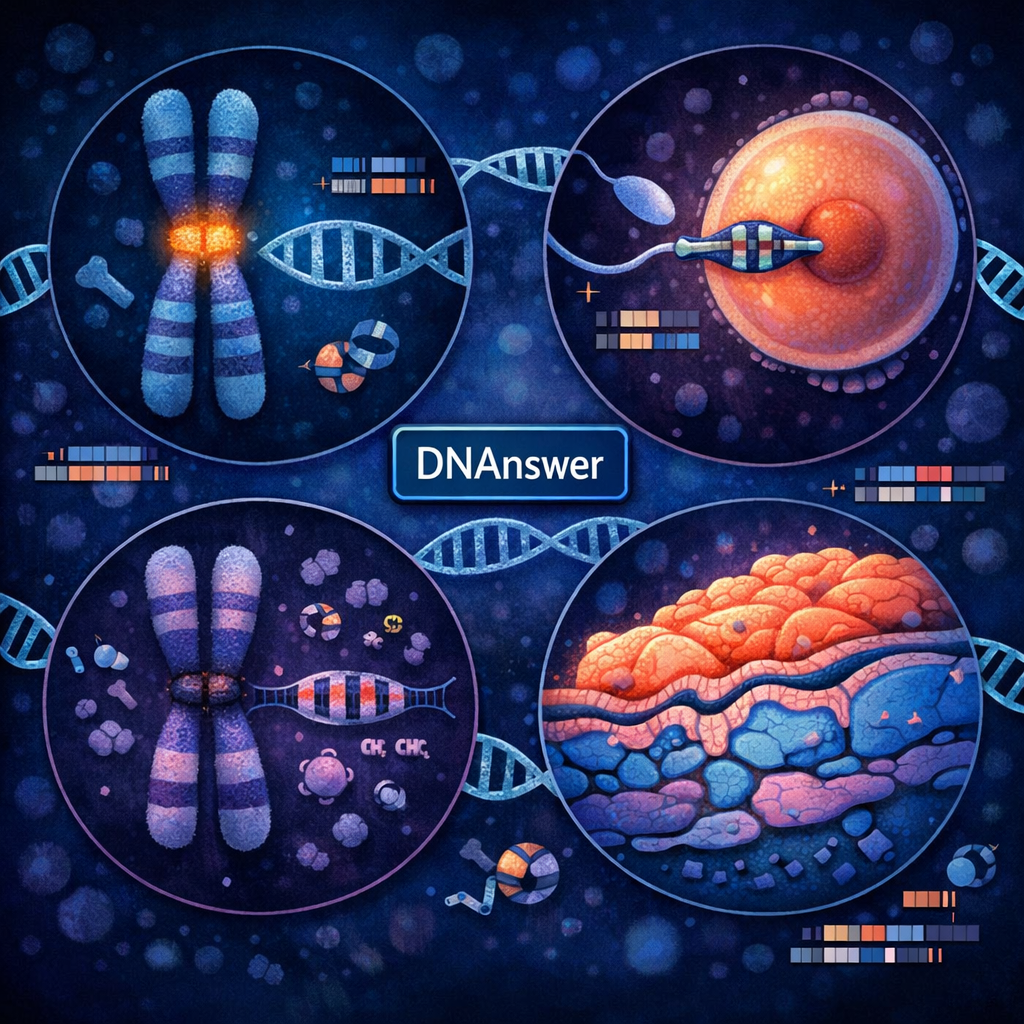
- Transmission: Exogenous retroviruses spread person to person; endogenous retroviruses are inherited only from parent to child through the germline, already baked into your DNA at conception.
- Replication: Exogenous viruses actively make new infectious copies of themselves; the vast majority of endogenous retroviruses can't produce infectious particles at all.
- Location in the body: Exogenous infections can pop up in any cell type they target during your lifetime; endogenous retrovirus DNA is already in every single cell in your body, because you inherited it before you were born.
- Medical response: Exogenous retroviruses get antiviral treatment protocols and public health tracking; endogenous retroviruses get studied for their genome function, not treated as an infection.
Where the Line Gets Blurry
Here's the nuance that makes this myth persistent: HIV and other exogenous retroviruses use the exact same reverse transcriptase mechanism that created every ERV in your genome. It's the same biochemistry, just a different chapter in the timeline. In fact, HIV research and ERV research borrow tools from each other constantly, since both fields study reverse transcription and retroviral integration.
The distinction that matters isn't the mechanism — it's the timing and the target. An infection that lands in your skin cells today stays with you, not your children. An infection that landed in a distant ancestor's germ cells millions of years ago became part of the standard human genome, carried by essentially everyone alive today. That's not a current infection. That's inherited history.
Myth: An 8% Viral Genome Means You're Part Virus
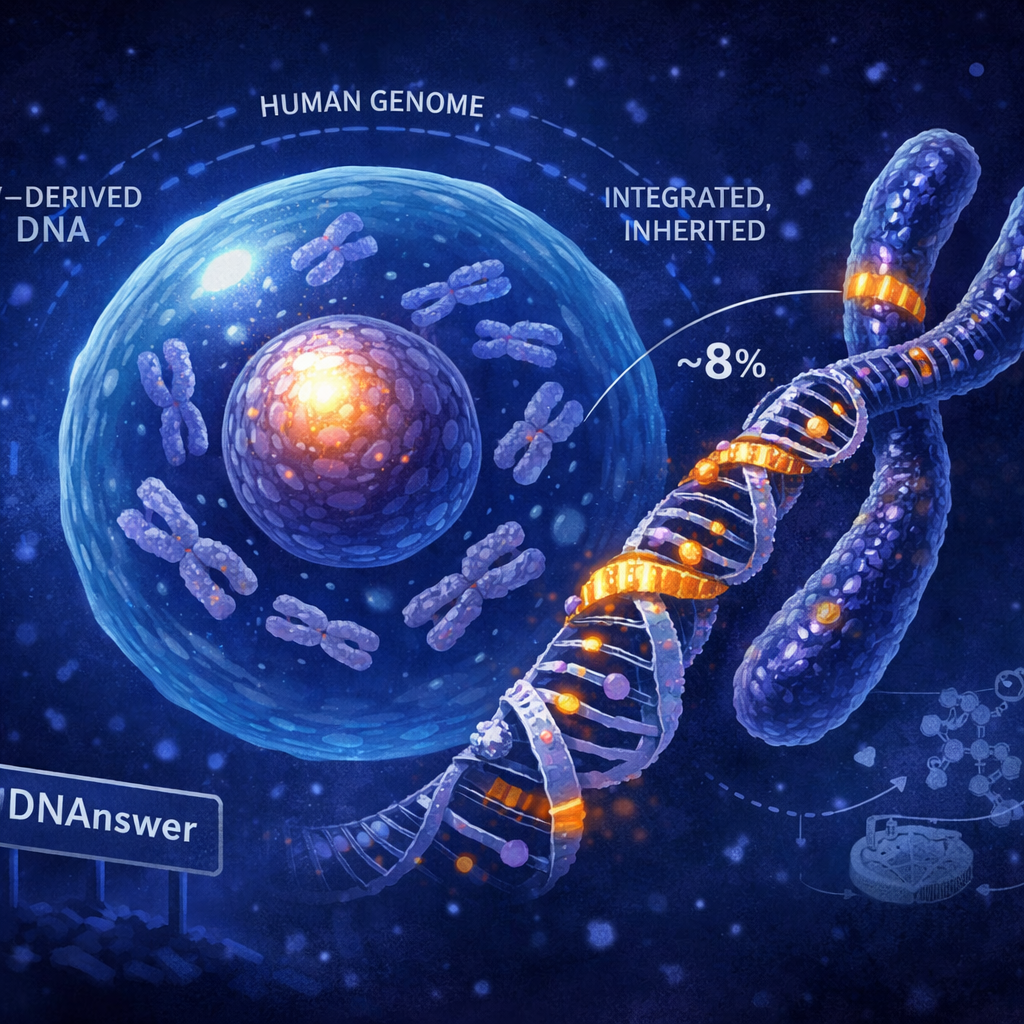
This claim gets repeated constantly because it sounds dramatic, and there's a kernel of truth buried in it. Sequence-wise, yes — about 8% of your genome matches retroviral sequence closely enough to be classified as ERV-derived. But functionally, calling yourself "part virus" overstates what that sequence match means for your biology day to day.
Genome composition and genome function are two different questions, and the 8% statistic only answers the first one. A sequence can look viral in origin and still behave nothing like a virus once it's been sitting silent in your DNA for a few hundred thousand years, accumulating mutations that break its original machinery.
What the Number Actually Measures
The 8% figure comes from comparing human DNA sequence against known retroviral gene structures — things like gag (structural proteins), pol (the reverse transcriptase enzyme), and env (envelope proteins that let a virus enter cells). Wherever the human genome carries recognizable remnants of these three gene types flanked by repeated sequences called long terminal repeats, geneticists classify that stretch as ERV-derived.
That's a measure of ancestry, not activity. Compare it to finding your great-great-grandmother's wedding ring in a family safe. It's real, it's yours by inheritance, and it tells you something true about your family history. It does not mean you're currently married to a 19th-century blacksmith.
The More Useful Framing
A better way to think about it: you carry the sequence signature of ancient infections the way you carry mitochondrial DNA passed down almost entirely from your mother, or the way your genome carries thousands of pseudogenes — broken, non-functional copies of once-working genes. All of these are legitimate parts of your genetic history. None of them mean you're currently doing whatever that DNA originally did.
If you want the version that's both accurate and still genuinely surprising: you don't function like a virus, but the mechanism that makes human pregnancy work was borrowed directly from one. That's a stranger and truer story than "you're 8% virus," and it doesn't need exaggeration to land.
Myth: ERVs Are a Proven, Major Cause of Cancer and Autoimmune Disease
Search "endogenous retroviruses disease" and you'll find headlines implying ERVs directly cause conditions like cancer, multiple sclerosis, or lupus. The honest state of the research: ERVs are strongly associated with several diseases and are an active area of investigation, but a proven, direct causal role in most human disease has not been established.
What the Evidence Actually Shows
Researchers have found that the HERV-K family shows unusual activation patterns in certain cancers, including some melanomas and breast cancers, and in the neurodegenerative condition ALS. The HERV-W family has drawn attention in multiple sclerosis research, since a protein from HERV-W called syncytin-1 (the same gene family that builds the placenta) has been observed at elevated levels in MS brain tissue. These are real, published, replicated observations.
What's missing, in most cases, is proof of direction. Does ERV reactivation trigger the disease, or does an already-diseased cell environment reactivate normally silenced ERVs as a side effect? Cancer cells are notorious for losing normal control over gene silencing across the whole genome, ERVs included. An ERV showing up active in a tumor could be a cause, a bystander, or a consequence — and untangling which one requires far more work than a single correlation study can provide.
Why Silencing Is the Real Headline
The bigger and more settled story is how well your cells normally keep ERVs turned off. Your genome uses epigenetic silencing — chemical tags like DNA methylation that get attached to DNA and physically block the machinery that would otherwise read a gene — specifically targeting ERV sequences. This isn't a passive leftover system. It's active maintenance, running continuously in essentially every cell type.
That silencing usually works. It's a large part of why carrying viral-derived sequence in every cell doesn't translate into constant viral activity. When silencing breaks down — through aging, mutation, or certain disease states — is exactly when researchers see ERV reactivation show up in association studies. The honest takeaway: ERVs are a genuinely promising research frontier, not a settled cause of disease you should worry about today. Treating early-stage association research as proven causation is the mistake, not the research itself.
What the ERV Story Reveals About Evolution Itself
Zoom out, and endogenous retroviruses stop being a curiosity and start looking like a record-keeping system. Every ERV insertion happened at a specific point in evolutionary time, in a specific ancestral lineage. That gives researchers something genuinely rare: a datable, comparable marker embedded directly in the genome.
Reading the Fossil Record Written in DNA
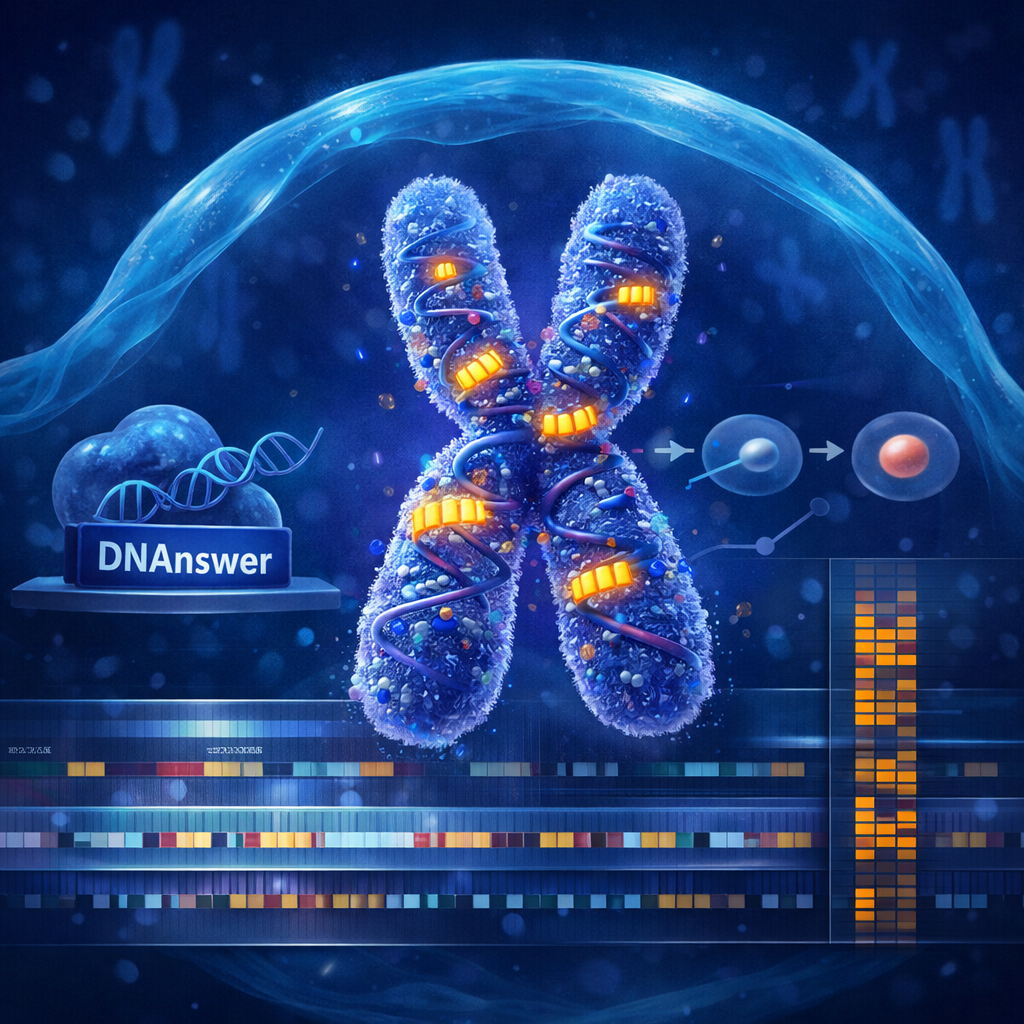
Because a given ERV insertion either exists at a specific genomic location or it doesn't, comparing the same location across species tells you about shared ancestry. If humans and chimpanzees share an ERV insertion at the identical spot in the genome, the simplest explanation is that the infection happened in a common ancestor before the two lineages split, roughly 6 to 7 million years ago. This method has helped confirm and refine primate family trees independently of fossil evidence, since bones don't always survive but DNA insertion sites do.
This is also how researchers distinguish older ERV families from younger ones. HERV-K is one of the youngest and most intact families in the human genome, with some insertions specific to humans and not shared with chimpanzees, meaning those infections happened after the two lineages diverged. Older families are shared much more broadly across primates and mammals, chopped up by hundreds of thousands of years of mutation, and often barely recognizable as viral in origin without careful sequence comparison.
Ongoing Co-Option, Not a One-Time Event
The placenta story with syncytin isn't a freak accident that happened once. It's a pattern: evolution repeatedly grabs viral machinery already sitting in the genome and puts it to new use, because building a brand-new gene from scratch is slow and building on an existing one is fast. Viral envelope genes are especially useful raw material because their whole original job was fusing membranes together — exactly the skill needed to build the placenta's fused cell layer.
If you're the kind of person who finds this stuff genuinely fun rather than just interesting, quizzing yourself on details like these — which HERV family is youngest, what syncytin actually does, how germline versus somatic infection changes inheritance — is the kind of thing the DNAnswer app is built around, turning this kind of genome trivia into something closer to a game than a textbook chapter.
Conclusion
The 8% figure is real, but it's not a warning label. It's a record of ancient infections your ancestors survived, some of which got repurposed into the machinery that builds a placenta. Next time someone says "you're part virus," you now have the more accurate — and frankly better — version of that story ready to go.
Frequently Asked Questions
Is the 8% viral DNA statistic actually true?
Yes. Genome sequencing confirms roughly 8% of human DNA matches known retroviral gene sequences (gag, pol, env) and their flanking repeats, based on comparisons done since the Human Genome Project's completion in the early 2000s.
Can endogenous retroviruses become active and make you sick?
Almost all are silenced or broken and can't produce infectious virus. Some, like HERV-K and HERV-W, show reactivation patterns in certain cancers and MS research, but proven direct causation in humans hasn't been established.
What's the actual difference between an ERV and a virus like HIV?
HIV is exogenous: it spreads between people and actively replicates. ERVs are endogenous: they're inherited through egg and sperm cells, already present in every cell at birth, and don't spread between individuals at all.
Did a virus really help build the human placenta?
Yes. The gene syncytin, which fuses cells together to form the placenta's outer layer, evolved from an ancient retrovirus envelope gene. Different mammal species independently domesticated different viral genes for this same reproductive function.