Why mRNA Is the Unsung Hero of Every Living Cell — And Why Scientists Are Obsessed With It
Every protein in your body — from the hemoglobin carrying oxygen through your bloodstream to the collagen holding your skin together — was built from instructions delivered by mRNA. That single molecular step, the one that turns a gene into a functional protein, belongs entirely to messenger RNA, and it's why mRNA is important in cells at a level that most introductory biology courses underplay.
DNA holds the master blueprint, but it never leaves the nucleus. mRNA is the working copy that crosses into the cytoplasm and gets read. The distinction matters more than it might first appear.
mRNA's Job in the Cell: The Link Between DNA and Every Protein You're Made Of
mRNA exists to solve a structural problem that DNA cannot solve for itself. DNA is too large, too protected, and too permanent to participate directly in protein construction. mRNA is the cell's answer: a temporary, portable copy of a single gene that travels to the ribosome and gets translated into a chain of amino acids.
Why DNA Can't Build Proteins on Its Own
DNA stays in the nucleus — full stop. The double helix is wound tightly around histone proteins, compacted into chromosomes, and guarded by the nuclear envelope. Ribosomes, the molecular machines that actually assemble proteins, sit in the cytoplasm. The distance between those two compartments is not incidental; it's a deliberate architectural separation that protects the genome from the chemical chaos of active translation.
Even if a ribosome could somehow access DNA directly, the double-stranded structure would make reading a single gene sequence impractical. A single-stranded intermediate is needed. That intermediate is mRNA.
From Nucleus to Ribosome: How mRNA Carries the Message
The process starts with transcription, where an enzyme called RNA polymerase II binds to the promoter region of a gene and synthesizes a single-stranded RNA copy called a pre-mRNA. This pre-mRNA gets processed — capped, spliced, and tailed — before it earns the right to exit the nucleus through nuclear pore complexes, which are gated channels roughly 120 nanometers in diameter.
Once in the cytoplasm, the mature mRNA docks with a ribosome. The ribosome reads the message in one direction (5' to 3') and uses it as a template to string together amino acids in the exact order the gene specifies. One mRNA molecule can be read by multiple ribosomes simultaneously, forming a structure called a polysome, which dramatically amplifies protein output from a single transcript.
Reading the Code: Codons, Amino Acids, and the Genetic Dictionary
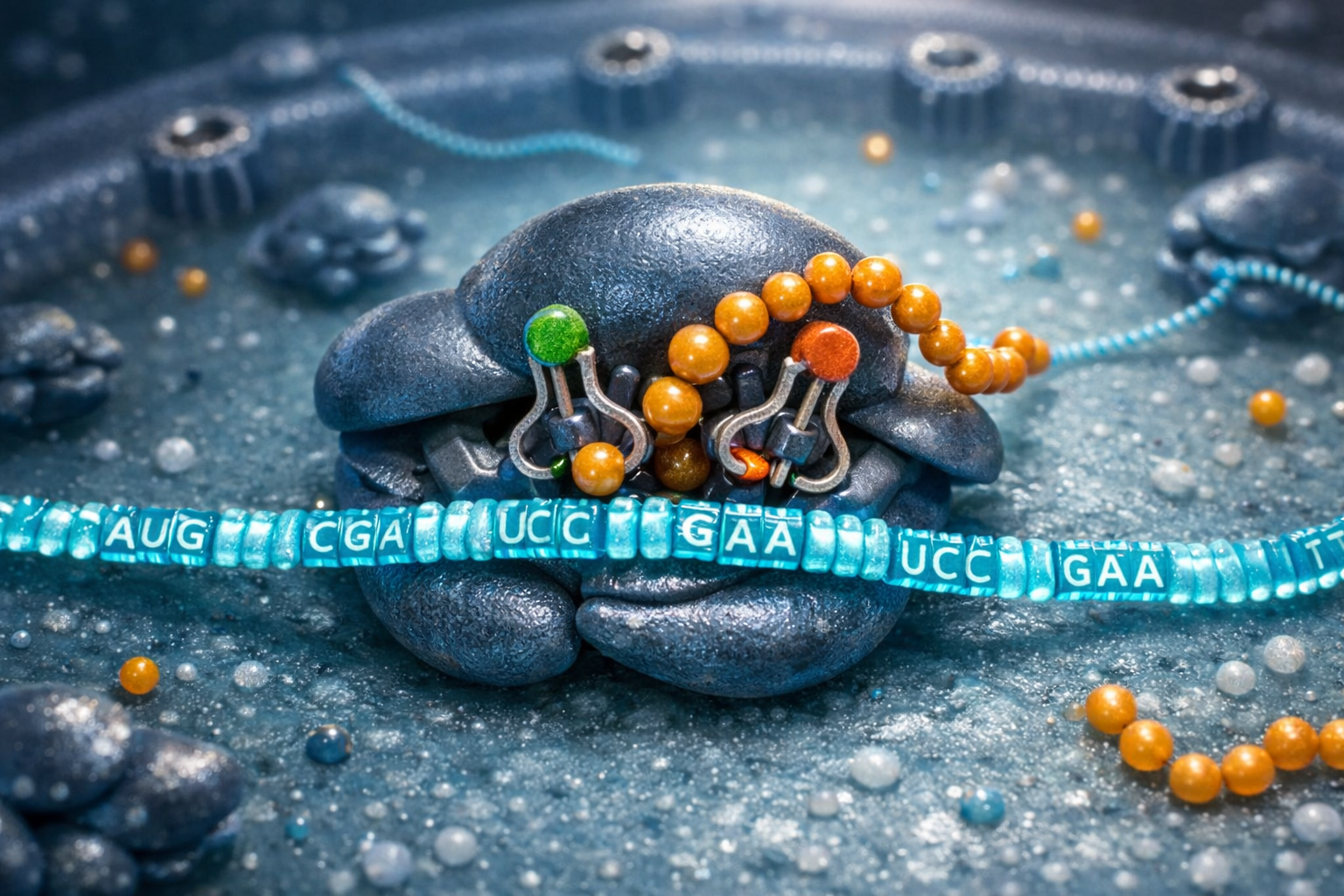
The mRNA sequence is written in three-letter units called codons. Each codon corresponds to one of the 20 standard amino acids — or to a stop signal. The codon AUG, for instance, codes for methionine and doubles as the universal start signal for translation in nearly all organisms. With four possible nucleotides arranged in triplets, the genetic code has 64 possible codons to cover 20 amino acids plus three stop signals, which means most amino acids are encoded by more than one codon. This redundancy is called degeneracy, and it provides a buffer against certain mutations.
The ribosome doesn't read codons in isolation. Transfer RNA molecules bring the matching amino acids, and the ribosome catalyzes the peptide bond that links them. The result is a growing polypeptide chain that will fold into a functional protein.
mRNA Is Not a Passive Courier — It's One of the Cell's Most Regulated Molecules
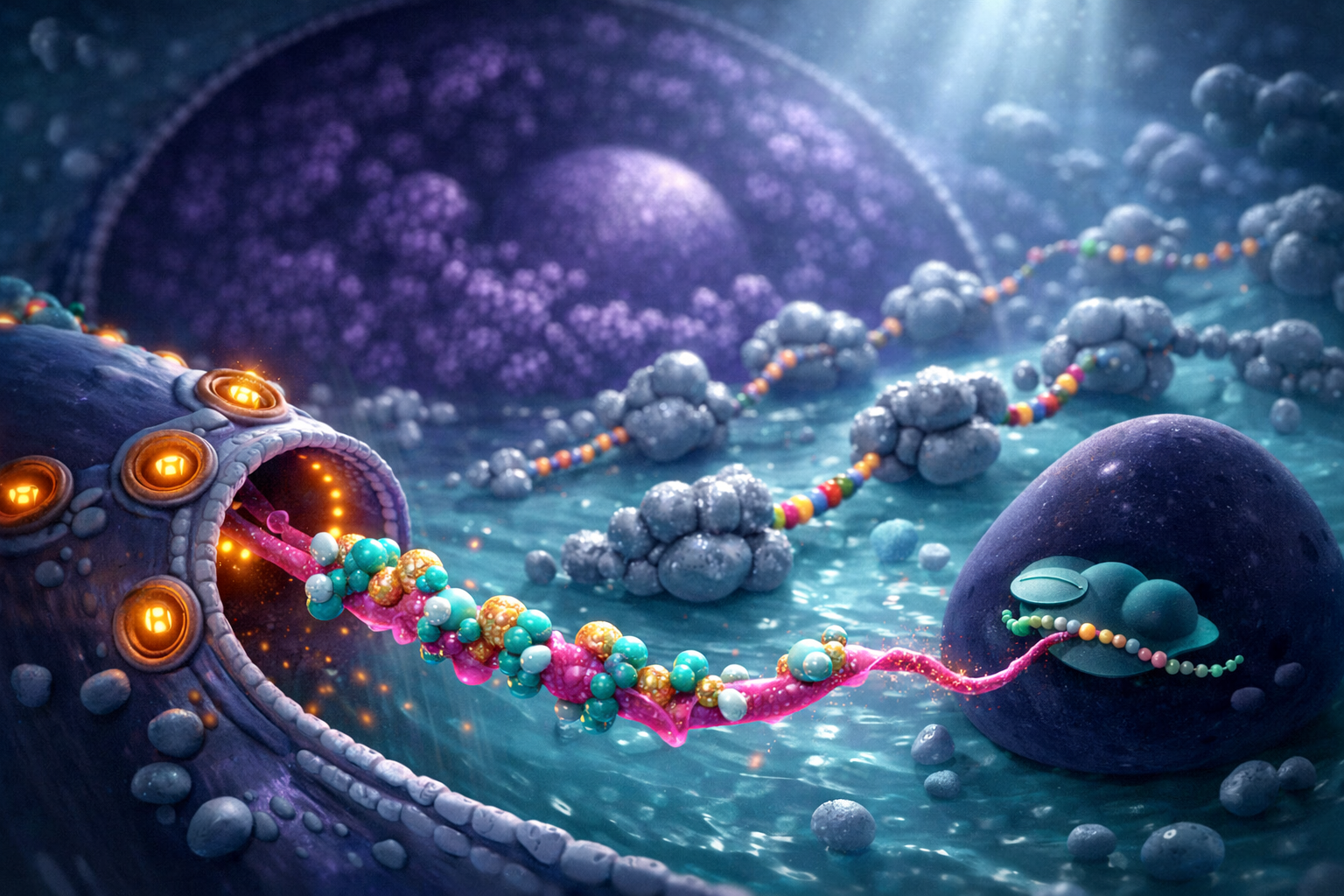
The courier framing is convenient but misleading. Cells invest significant energy controlling every stage of an mRNA's life: how it's modified after transcription, whether it exits the nucleus, how long it survives in the cytoplasm, and whether it actually gets translated. mRNA regulation is where gene expression is fine-tuned in real time.
The 5' Cap and Poly-A Tail: Why mRNA Needs Armor to Survive
The cytoplasm is full of ribonucleases — enzymes that degrade RNA. A naked mRNA transcript would be chewed apart within seconds. Two modifications protect it. First, a 7-methylguanosine cap (the 5' cap) is added to the front end of the transcript while it's still being synthesized. This cap prevents ribonuclease attack from the 5' end and also serves as a recognition signal that helps ribosomes find and bind the mRNA.
Second, a stretch of adenine nucleotides — the poly-A tail — is added to the 3' end after transcription. In human cells, this tail typically runs between 100 and 250 adenine residues. It protects the 3' end from degradation and influences how long the mRNA will persist in the cytoplasm. Synthetic mRNA used in vaccines, including the COVID-19 mRNA vaccines developed by Moderna and Pfizer-BioNTech, uses an engineered poly-A tail specifically to extend stability.
Splicing and the Making of a Mature mRNA
The pre-mRNA produced by transcription contains non-coding stretches called introns interspersed among the protein-coding exons. Before the mRNA can be translated, introns must be removed and exons joined together — a process called splicing, carried out by a large molecular machine called the spliceosome.
Splicing is not a simple cut-and-paste. The spliceosome is composed of five small nuclear RNAs and over 100 proteins, making it one of the most complex molecular assemblies in the cell. Errors in splicing are directly linked to diseases including spinal muscular atrophy and several cancers — getting this step wrong has serious consequences.
How Cells Decide Which mRNAs Get Translated — and When
Even a perfectly processed mRNA is not guaranteed to be translated. Cells use RNA-binding proteins and small non-coding RNAs called microRNAs (miRNAs) to either promote or silence translation. A single miRNA can suppress dozens of different mRNA targets by binding to complementary sequences in the 3' untranslated region, triggering either degradation or translational repression.
This layer of control explains how a liver cell and a neuron can contain identical DNA yet produce completely different protein sets. The genome is the same; the mRNA population being translated is not.
mRNA, tRNA, and rRNA: Three RNAs With Completely Different Jobs
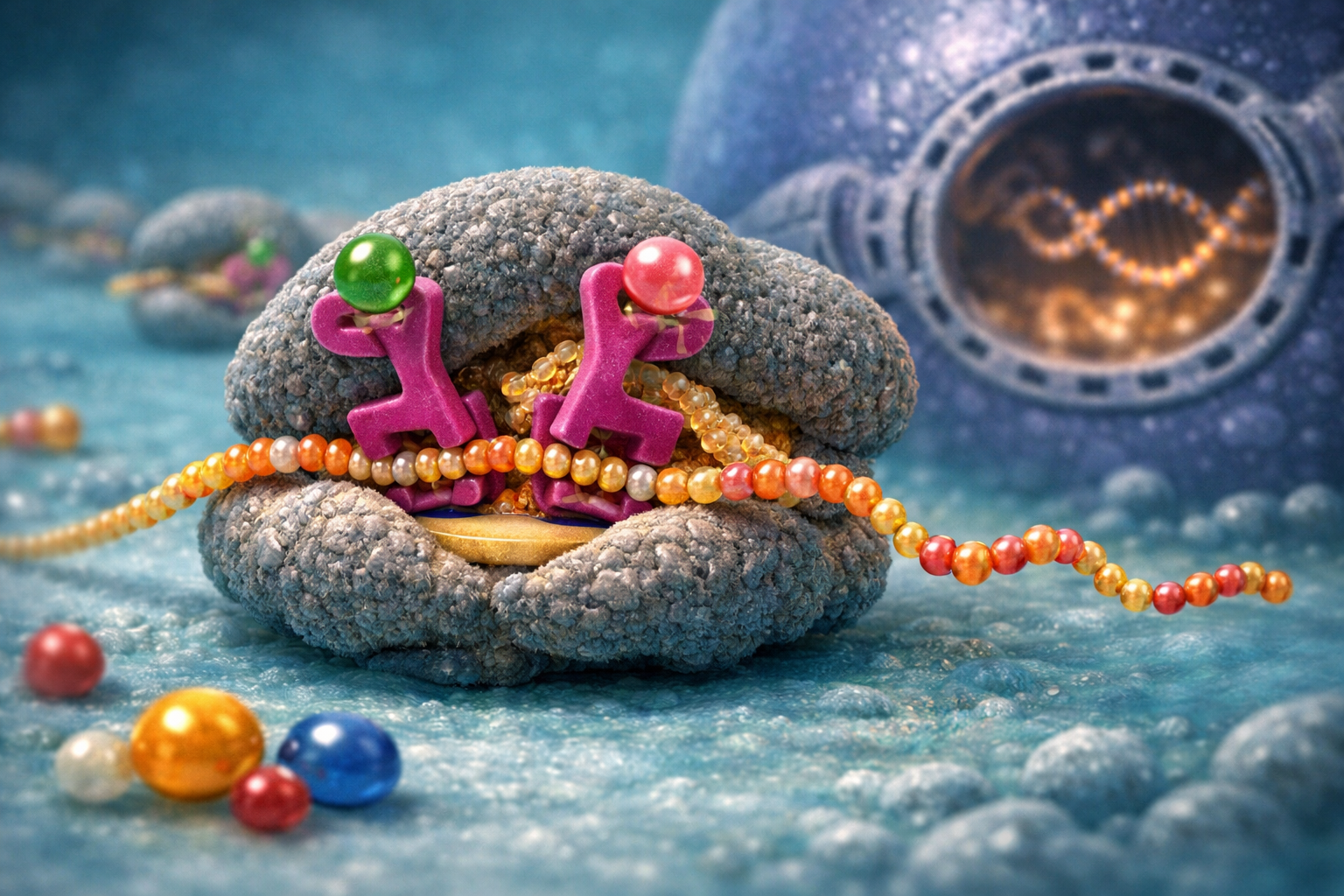
RNA is not one molecule with one function. The cell produces several structurally and functionally distinct RNA classes, and conflating them is one of the most common misconceptions in introductory biology. The three most prominent types — mRNA, transfer RNA (tRNA), and ribosomal RNA (rRNA) — each occupy a non-interchangeable role in protein synthesis.
Understanding the distinction between these three RNA types clarifies why mRNA specifically is the molecule that encodes protein identity, while the other two provide the machinery to read and act on that encoding.
| RNA Type | Full Name | Primary Function | Typical Size (in nucleotides) | Stability |
|---|---|---|---|---|
| mRNA | Messenger RNA | Carries protein-coding sequence from DNA to ribosome | 400 – 12,000+ | Short-lived (minutes to hours) |
| tRNA | Transfer RNA | Delivers amino acids to the ribosome during translation | ~70 – 90 | Highly stable |
| rRNA | Ribosomal RNA | Structural and catalytic core of the ribosome | 120 – 4,700 | Highly stable |
rRNA makes up roughly 60% of a ribosome's mass and performs the actual peptidyl transferase reaction that forms peptide bonds — meaning rRNA is itself catalytic, not just structural. tRNA acts as the physical adapter between a codon on the mRNA and the correct amino acid, with each tRNA carrying an anticodon loop that base-pairs with the mRNA codon. mRNA alone encodes what the protein will be; tRNA and rRNA are the tools used to build it.
What Happens to mRNA After It Delivers Its Message
Once a ribosome reaches the stop codon, the mRNA isn't discarded like a used sticky note. Its fate is actively managed. The cell monitors transcript quality, tracks how many times an mRNA has been translated, and — when the time is right — disassembles it in an orderly way that recycles its nucleotides for new transcripts.
mRNA Stability: Why Some Messages Last Minutes and Others Last Days
Stability determines how much protein a given mRNA ultimately produces, and it varies enormously across transcripts. In bacteria, most mRNAs last only a few minutes. In human cells, the range is wider: some transcripts are degraded within 30 minutes of synthesis, while others, like the mRNA encoding beta-globin (the oxygen-carrying subunit of hemoglobin), persist for more than 10 hours in red blood cell precursors. That longevity is part of why red blood cells can keep making hemoglobin even after losing their nuclei.
What governs this difference? Specific sequence elements in the 3' untranslated region (3' UTR) act as stability determinants. AU-rich elements, or AREs, are short sequences enriched in adenine and uracil that recruit proteins signaling rapid degradation. Cytokine-encoding mRNAs are loaded with AREs, which is why inflammatory signals spike fast and resolve fast rather than lingering for days.
Degradation Pathways and Why Controlled Destruction Matters
The main degradation route begins with deadenylation — progressive shortening of the poly-A tail by enzymes called deadenylases. Once the tail is trimmed below a threshold length, the 5' cap is removed by a decapping enzyme complex, and a 5'-to-3' exonuclease called Xrn1 degrades the exposed transcript rapidly. A parallel pathway works from the 3' end inward using the exosome complex, a multi-subunit RNA-degrading machine.
Controlled destruction isn't waste — it's precision. A cell that couldn't clear old mRNAs would lose the ability to respond to new signals. Rapid mRNA turnover is what allows a cell to shift its protein output within minutes, not hours, when conditions change. There's also a quality-control layer: the nonsense-mediated decay (NMD) pathway specifically targets transcripts carrying premature stop codons, preventing the production of truncated proteins that could interfere with normal cell function.
mRNA in Disease: What Goes Wrong When the Message Is Corrupted
A single nucleotide change in an mRNA-coding sequence can be the difference between a functional protein and a disease-causing one. The mechanisms of corruption range from mutations in the DNA template to errors in splicing, capping, or stability regulation.
The sickle cell mutation is a single A-to-T substitution in the gene encoding beta-globin, which changes one codon from GAG (glutamic acid) to GTG (valine) in the resulting mRNA — one letter in roughly 3 billion, with life-altering consequences.
Aberrant splicing accounts for a substantial portion of disease-causing mutations that don't fall directly in a protein-coding sequence. A mutation in a splice site can cause an intron to be retained in the mature mRNA or an exon to be skipped entirely, shifting the reading frame and producing a nonfunctional or toxic protein. Spinal muscular atrophy, caused by mutations in the SMN1 gene, works partly through this mechanism.
Cancer adds another layer. Tumor cells frequently dysregulate mRNA stability and translation, producing excess growth-factor mRNAs or silencing tumor-suppressor transcripts. Understanding exactly which mRNAs are overexpressed in a given tumor type is now a core part of cancer diagnostics and targeted therapy development.
From Lab Curiosity to Vaccine Platform: Why Scientists Are Obsessed With mRNA Now
The idea of using synthetic mRNA as a therapeutic tool dates back to work in the early 1990s, but for decades it was considered impractical. Unmodified mRNA triggered violent immune responses in cells, and it degraded too quickly to deliver a meaningful dose of protein.
The breakthrough came from recognizing that substituting certain uridine nucleotides with pseudouridine — a naturally occurring modified nucleoside — dramatically reduced the immune activation while preserving translation efficiency. This insight, developed through the work of Katalin Karikó and Drew Weissman at the University of Pennsylvania and published in a 2005 paper in Immunity, is the foundation on which the Moderna and Pfizer-BioNTech COVID-19 vaccines were built.
The speed advantage of mRNA therapeutics is real: once you know the target protein sequence, you can design and synthesize a candidate mRNA in days, not the months required for traditional protein-based biologics. That same platform logic now applies to cancer vaccines, where personalized mRNA constructs encoding a patient's specific tumor antigens are already in clinical trials. The molecule that cells have been using for billions of years to carry genetic instructions is now being reprogrammed to carry instructions of our own choosing.
Frequently Asked Questions
Does mRNA from a vaccine change your DNA?
No. mRNA never enters the nucleus. It works in the cytoplasm, gets translated by ribosomes, and is degraded within days. There is no mechanism by which mRNA integrates into chromosomal DNA.
Why is mRNA important in cells if proteins do most of the actual work?
mRNA is the decision layer between a fixed DNA blueprint and a protein output the cell can adjust in real time. It's what lets the cell selectively express one gene over another, or ramp a protein up or down as conditions change.
How long does a typical human mRNA last?
It depends on the transcript. Half-lives range from under 30 minutes to more than 10 hours, with sequences in the 3' UTR largely governing where any given mRNA falls on that range.
Is mRNA the same in every cell of your body?
The DNA sequence is the same, but which mRNAs are transcribed and at what levels differs dramatically by cell type. A pancreatic beta cell produces abundant insulin mRNA; a neuron does not. That selective expression is why the molecular biology Q&A community at dnanswer.app regularly fields questions about gene regulation that go well beyond introductory textbook coverage.