Hypertonic and Isotonic Solutions: What Osmosis Does to Your Cells
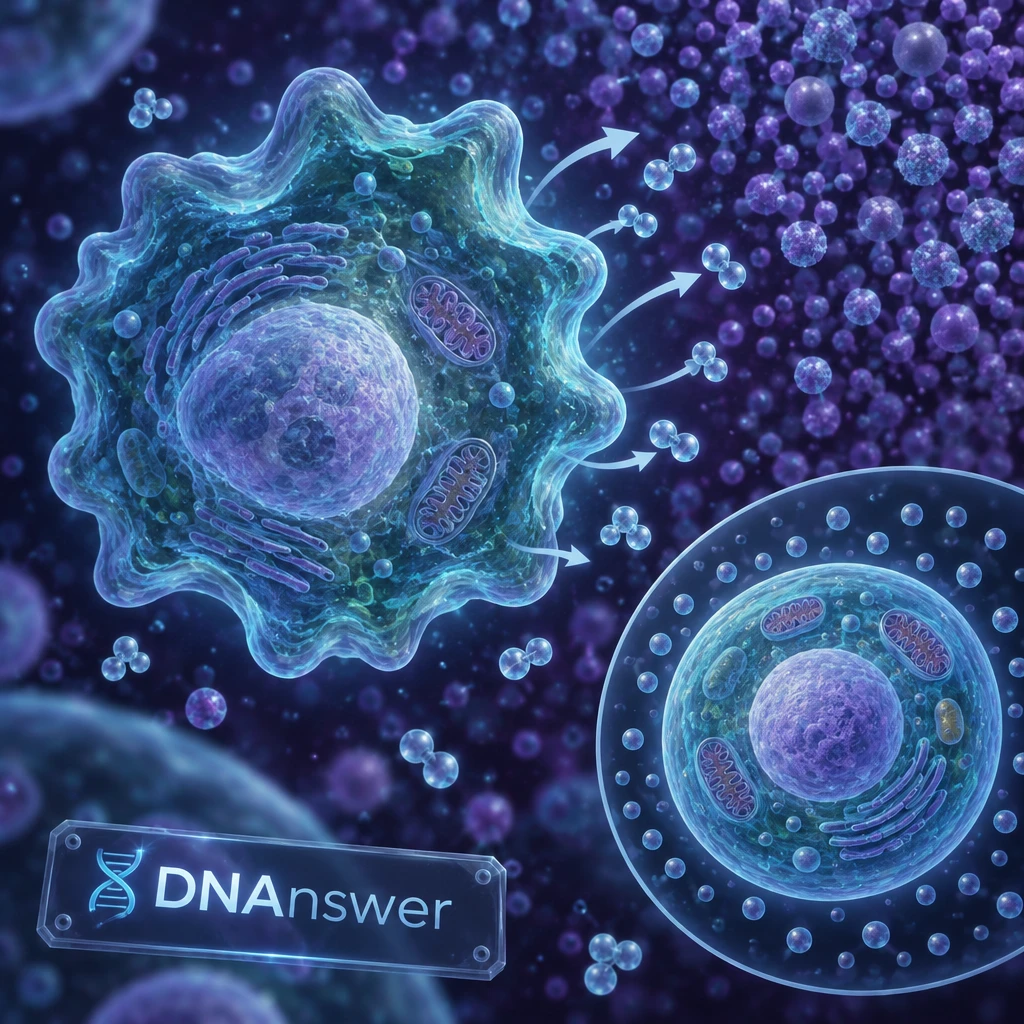
Does a salty solution always pull water out of a cell? No. Tonicity, the way a fluid changes a cell's size, depends on the cell and on which solutes can cross its membrane. An isotonic solution matches the cell's inside, so water moves both ways equally and the cell keeps its size. A hypertonic solution has more solute, so water leaves and the cell shrinks. A hypotonic solution does the opposite.
Key Takeaways
- Isotonic means no net water movement, not no movement at all.
- Hypertonic means more solute outside the cell, so water leaves and the cell shrinks.
- Hypertonic does not mean "more water." It means less free water.
- Tonicity depends on solutes that cannot cross the membrane.
- 0.9% saline is isotonic for red blood cells, not for every cell.
- Plant cells wilt in hypertonic fluid but burst-proof themselves in hypotonic fluid.
Myth 1: "Salty Means Hypertonic"
Here is a twist: seawater is saltier than your blood, yet a fluid with a huge concentration of urea can be less effective at shrinking a red blood cell than a weaker salt solution. Concentration alone does not decide the outcome.
The myth makes sense. Table salt is the example every textbook uses, and a salty fluid does usually pull water out of cells. So "salty" turns into a shortcut for "hypertonic."
Tonicity versus osmolarity
Osmolarity counts every dissolved particle in a liter of fluid, whatever those particles are. Tonicity asks a narrower question: what will this fluid do to a particular cell's volume?
The two can disagree. Urea, a small waste molecule, slips through the red blood cell membrane easily. A urea solution can have the same osmolarity as your blood, but urea flows in until the inside and outside match. Water then follows it in, and the cell swells. Only solutes that cannot cross the membrane, called effective or non-penetrating solutes, hold water in place and set the tonicity.
What to do with this
Stop asking "How concentrated is this?" Ask two questions instead: "Which cell are we talking about?" and "Can the solute get through its membrane?" If the solute crosses freely, it barely matters for tonicity. If it stays outside, it pulls water out.
Myth 2: "Hypertonic Means More Water"
Picture a glass of sugar water. It has more dissolved stuff than plain water, and the dissolved stuff takes up space. So where is the water?
Many people read the prefix "hyper" as "more" and attach it to water. That is a natural slip. "Hyper" does mean more, and the word "concentration" tends to blur what is being counted.
What "hyper" actually counts
Hypertonic means more solute than the cell. A solute is whatever is dissolved, such as salt or sugar. More solute means less free water, because some water molecules cluster around the dissolved particles and cannot move freely.
Water moves from where it is freer to where it is less free. That is why it leaves the cell and heads toward the hypertonic fluid. You can also say water moves toward the higher solute concentration. Both descriptions are the same event.
A quick test
When you read a tonicity word, ask "More of what?" The answer is always solute. Water goes wherever the solute is richer.
Myth 3: "Hypertonic Solutions Push Solutes Into the Cell"
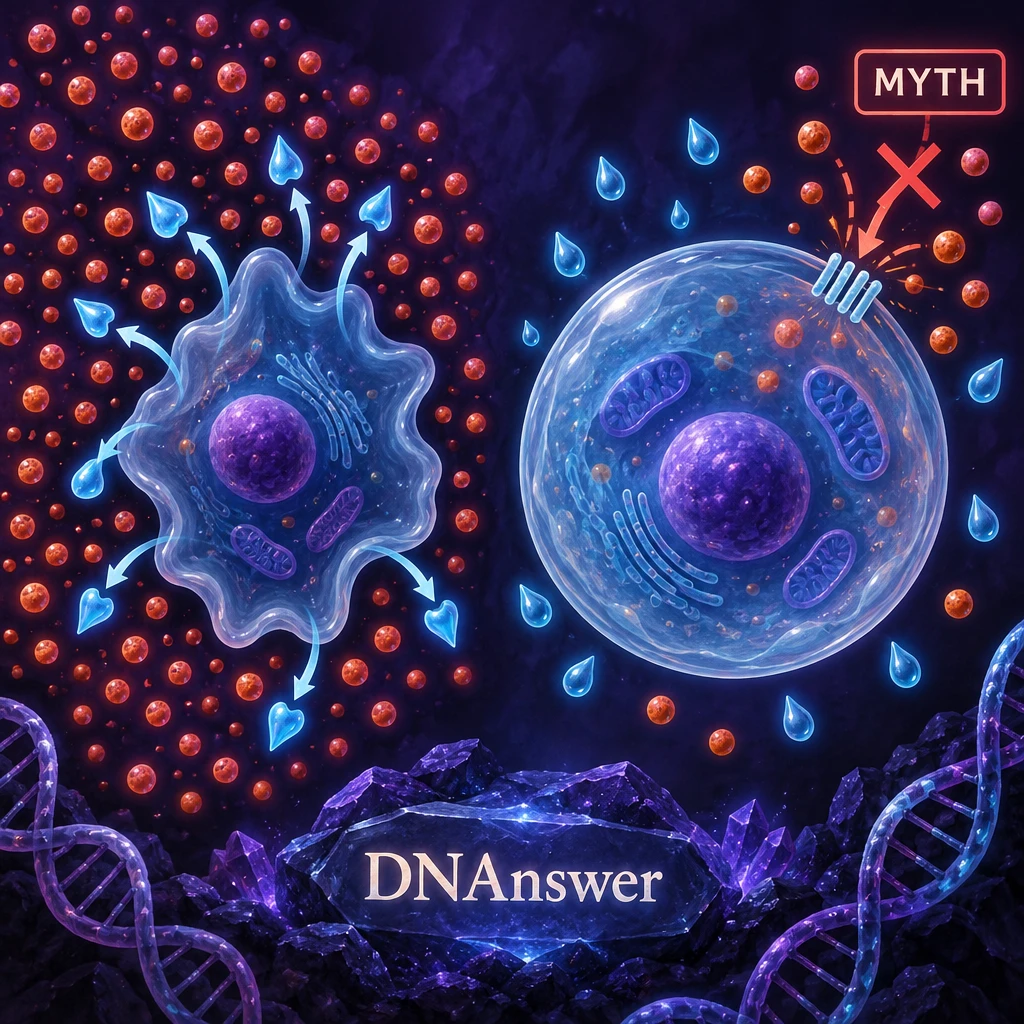
Dump salt on a slug and it shrivels. It seems like the salt attacks the slug. But the salt mostly stays outside. The water leaves.
The belief has a kernel of truth. Some solutes do diffuse across membranes, and a cell in a hypertonic bath is often surrounded by fluid that is changing. Seeing a cell change size makes people assume something entered it.
Water is the traveler
Osmosis is the movement of water across a semipermeable membrane, a barrier that lets some molecules through and blocks others. Cell membranes let water pass, through the lipid layer and through tiny channels called aquaporins, but they block most dissolved salts and sugars.
Because the solute cannot cross, the concentration gap can only close one way. Water moves. In a hypertonic bath, water leaves the cell and the cell shrinks.
Osmosis is the net movement of water across a selectively permeable membrane toward the region with the higher solute concentration.
Why this matters in practice
If you think solutes flood in, you will predict swelling. The real result is the opposite: shriveling. Animal cells in this state shrink and develop a spiky, scalloped edge called crenation. Shrinking can disrupt the cell's chemistry and, in extreme cases, kill it.
Myth 4: "In an Isotonic Solution, Water Stops Moving"
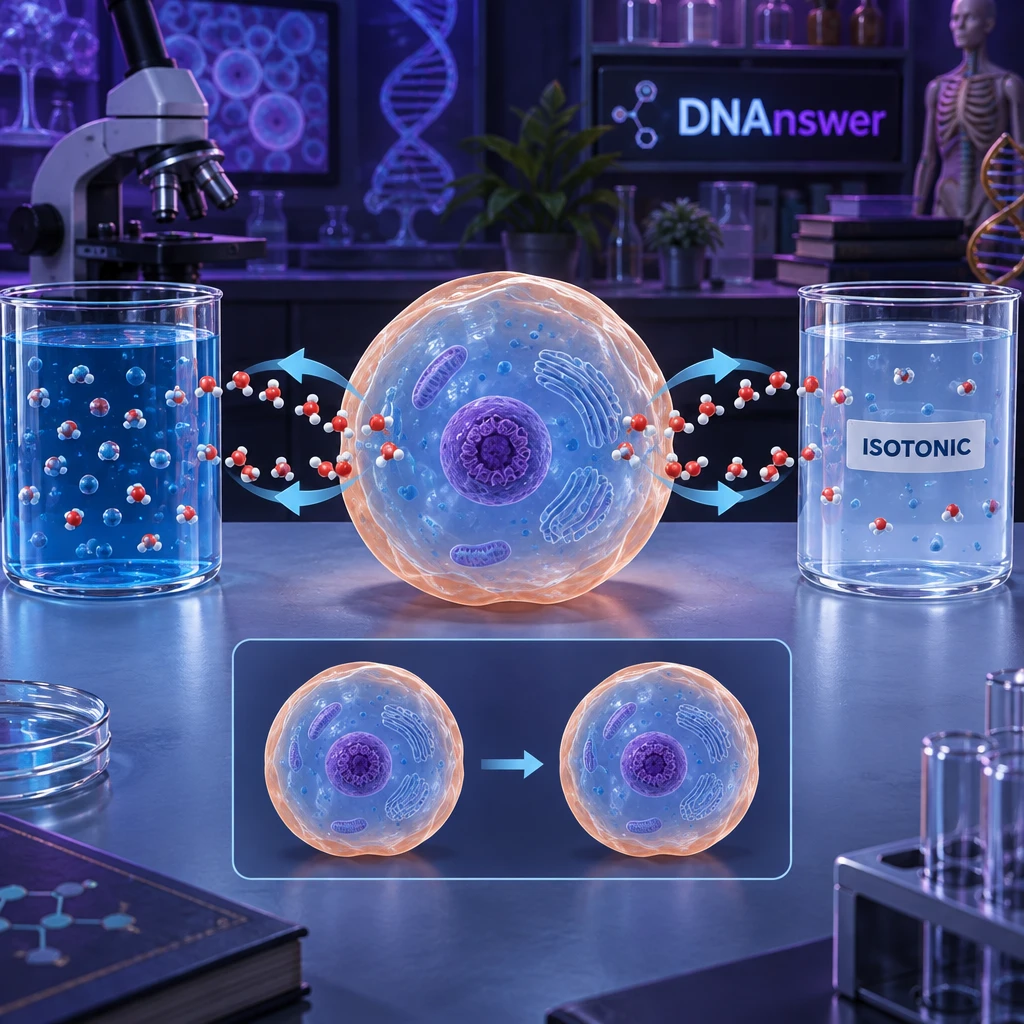
An isotonic solution sounds like a truce, as if the water freezes in place. The idea comes from textbook phrases like "no osmosis occurs," which many instructors say as shorthand.
The truth is livelier. Water molecules keep crossing the membrane in both directions all the time. In an isotonic fluid, the traffic going in matches the traffic going out. The cell sees no net movement, so its volume holds steady.
Think of a crowded subway platform at rush hour. People get on and off every few seconds, yet the number on the platform stays the same. That is isotonic balance.
Researchers confirm this in the lab with red blood cells. In an isotonic sodium chloride solution, the cell volume does not change, even though water molecules are crossing constantly. The same cells shrink in a hypertonic solution because the higher effective osmotic pressure outside draws water out.
The takeaway
Say "no net change," not "no movement." That small edit keeps you from getting stuck when a question asks what happens to individual water molecules.
The Three Solution Types Side by Side
Many people memorize "hyper, hypo, iso" and still mix them up. Seeing the cells' reactions in order helps. The first list below covers animal cells such as red blood cells. Then we cover plants, which behave differently.
Here is what happens to a red blood cell:
- Isotonic: solute levels match, water moves both ways equally, and the cell keeps its normal disc shape.
- Hypertonic: more solute outside, so water leaves and the cell shrinks and crenates.
- Hypotonic: less solute outside, so water rushes in and the cell swells.
- Extreme hypotonic: the cell swells until the membrane tears, a process called lysis. For red blood cells, doctors call this hemolysis.
Nursing students use a memory trick: hypotonic sounds like "hippo," and a hippo is a big, swollen animal. Hypertonic cells go "skinny." It is silly, but it works.
Plant cells play by different rules
Plant cells have a rigid cell wall outside the membrane. In a hypotonic fluid, such as rainwater, water flows in and the cell swells until it presses against the wall. That pressure is turgor, and it keeps a stem upright. The wall stops the cell from bursting.
In a hypertonic fluid, the membrane pulls away from the wall in a process called plasmolysis. That is why salted lettuce wilts. In an isotonic fluid, plant cells go limp-ish: no turgor, no plasmolysis. Plants generally prefer a hypotonic world.
Myth 5: "0.9% Saline Is Isotonic, Full Stop"

Hospitals hang bags of 0.9% sodium chloride, called normal saline, as the standard isotonic IV fluid. It seems like a universal fact: this fluid is isotonic.
Here is the honest origin. Your blood plasma has an osmolality, a measure of dissolved particles per kilogram of water, of roughly 285 to 295 mosmol per kilogram. A 0.9% saline solution has a measured osmolality of about 286, right in that range. Red blood cells in it neither shrink nor swell.
Where the label gets shaky
On paper, 0.9% saline has a calculated osmolarity of 308 mosmol per liter, from 154 millimoles of sodium plus 154 of chloride. The measured value is lower, 286 mosmol per kilogram of water, because sodium and chloride ions attract each other and do not behave as fully separate particles. Both numbers are correct. They just measure different things, and the labels depend on the method.
Then there is the cell question. The word "isotonic" describes a fluid relative to a specific cell. For red blood cells, 0.9% saline is a good match. For a different cell type with a different membrane, or a plant cell with a wall, the same bag behaves differently. A plant cell in saline is surrounded by far more solute than it holds, so it plasmolyzes.
Hypertonic saline has real uses
Not every salty IV bag is a mistake. Saline of 3% or higher is hypertonic on purpose. Doctors inhale it as a fine mist for cystic fibrosis. A Cochrane review of 34 trials covering 5,205 infants with acute bronchiolitis, a lung infection in babies, found that nebulized 3% saline may lower the risk of hospitalization by 13% in children treated as outpatients, though the evidence quality was low. Side effects were mostly mild, such as worsening cough, and cleared on their own.
The principle is the same: draw water out of swollen airway tissue and thin the mucus.
Why Getting This Wrong Costs You
A mix-up here is not just an exam point. Think about what each myth would make you predict.
Believe "salty means hypertonic" and you might expect a urea solution to behave like salt. It will not. Believe "hypertonic means more water" and you will draw the arrows backward on every diagram. Believe "water stops in isotonic" and you will miss why cells still need working membranes at equilibrium.
Real-life examples
Here are three everyday cases where tonicity decides the outcome:
- Salting a slug or a cucumber: water leaves by osmosis, so the slug dries and the cucumber slices sweat.
- Drinking seawater: it is hypertonic to your cells, so it pulls water out of you and worsens dehydration.
- Soaking dried beans: the beans sit in a hypotonic bath, so water enters and they swell.
If you want to test yourself after reading, the osmosis and tonicity quizzes on DNAnswer let you check whether the arrows now point the right way, with XP and ranks to track your progress.
Conclusion
Next time you see a tonicity word, run a three-step check. Name the cell. Identify the solutes that cannot cross its membrane. Then follow the water toward the higher solute count. Choose "isotonic" if the effective solutes match, "hypertonic" if the outside has more, and "hypotonic" if the cell has more. Draw the arrow before you answer.
Frequently Asked Questions
What is the difference between isotonic and hypertonic solutions?
An isotonic solution has the same effective solute concentration as the cell, so the cell keeps its size. A hypertonic solution has more solute than the cell, so water leaves the cell and it shrinks.
Does water move in an isotonic solution?
Yes. Water crosses the membrane in both directions constantly. Because the flow in equals the flow out, there is no net movement, and the cell's volume stays the same.
Why is 0.9% saline isotonic?
Its measured osmolality, about 286 mosmol per kilogram of water, matches that of blood plasma. Red blood cells therefore neither shrink nor swell in it. It is isotonic for those cells specifically, not for every cell type.
Do plant cells react to hypertonic solutions differently from animal cells?
Yes. Animal cells shrink and crenate. Plant cells lose water and their membrane pulls away from the cell wall, called plasmolysis, which makes the plant wilt. In hypotonic fluid, plant cells stay firm thanks to the wall.