What Happens in the Prophase? Chromosomes Condense
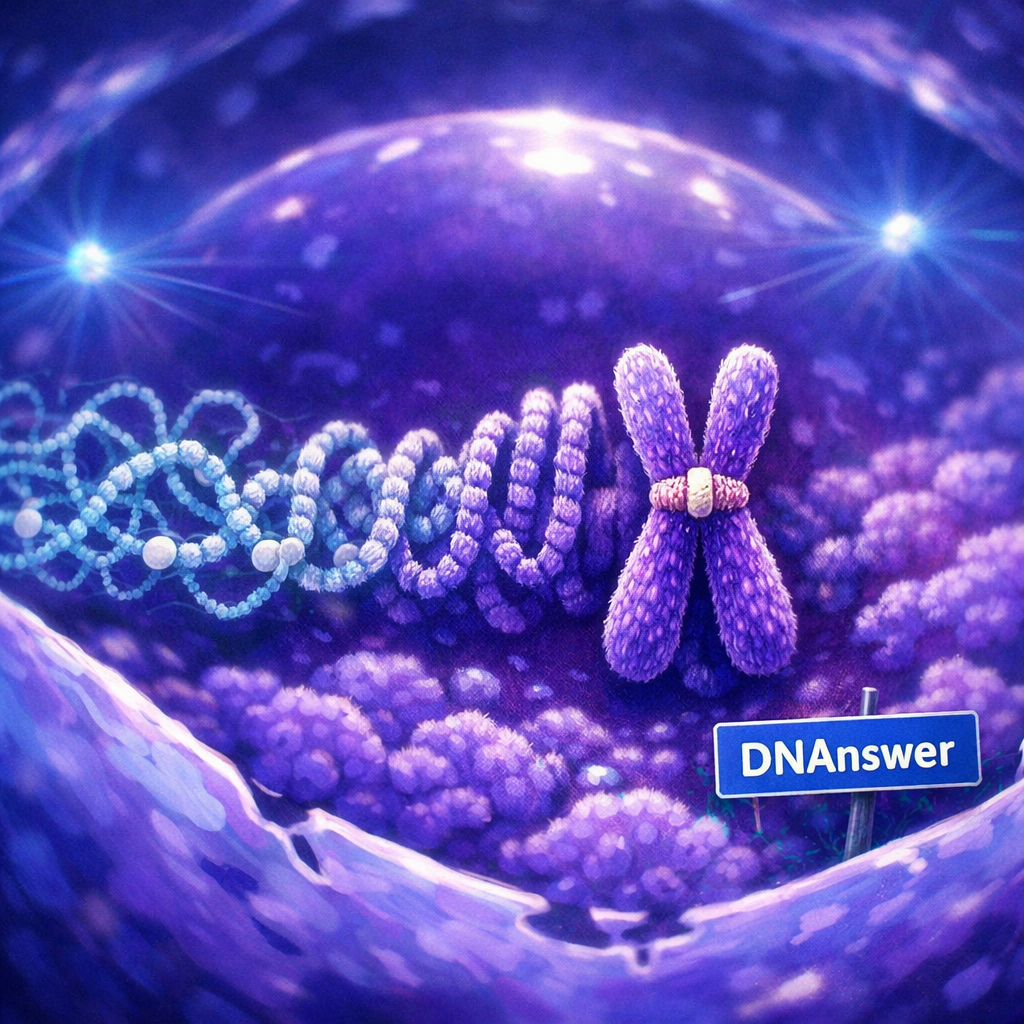
Here's the part almost nobody gets right: your chromosomes aren't summoned into existence at the start of prophase. They're there the whole time, just invisible under a microscope because they're unwound into a loose tangle called chromatin — DNA loosely wrapped around proteins, spread through the nucleus like yarn dumped out of a drawer. What happens in the prophase of mitosis is a repackaging job: two meters of DNA per human cell gets folded down tight enough to move without snapping or knotting.
That single fact reframes everything people think they know about this stage. Prophase isn't chromosomes appearing. It's chromosomes becoming visible because they're finally organized.
Key Takeaways
- Chromosomes exist as chromatin during interphase — prophase makes them visible, not new.
- Condensation solves a real engineering problem: packing 2 meters of DNA into a cell 10-20 micrometers wide.
- The nuclear envelope breaks down gradually across prophase and prometaphase, not instantly.
- Mitotic prophase and meiotic prophase I are not the same process — crossing over only happens in meiosis.
- Spindle fibers don't grab chromosomes until prometaphase, after the kinetochore is built.
- Errors in chromosome condensation are linked to missegregation, a driver of certain cancers.
Myth: Chromosomes Only Exist During Prophase
This is the most common misunderstanding, and it's an honest one, because it's built right into how textbooks draw cells. Diagrams show a blank, empty-looking nucleus during interphase — the resting phase between cell divisions — and then suddenly, in the prophase panel, there are chromosomes. Visually, it looks like chromosomes are born at that moment.
They aren't. Your DNA is present in the nucleus at every point in the cell cycle, from the moment a cell forms until it divides again. During interphase, that DNA is copied (a process called DNA replication, which happens in a sub-stage called S phase) and stays loosely unwound as chromatin. It looks like a formless haze under a light microscope, which is exactly why textbook artists skip drawing it in detail — not because it isn't there, but because it isn't organized enough to draw.
Why the Confusion Persists
Chromatin and chromosomes are the same material at two different levels of packing. Chromatin is DNA plus its supporting histone proteins (small proteins that DNA wraps around like thread around a spool), loose and diffuse. A chromosome is that identical DNA-protein complex, coiled and folded into a compact, rod-shaped structure you can actually see with a microscope once it's stained with dye.
Nothing new gets synthesized between the two states. It's a change in shape, not a change in identity.
What Prophase Actually Does to This Material
During prophase, enzymes and structural proteins — particularly a protein complex called condensin — grab the chromatin and start looping and coiling it into tighter and tighter order. Think of it like the difference between a heap of loose rope on a dock and that same rope, coiled and cinched, ready to load onto a ship. Same rope. Completely different level of usability.
This matters for more than trivia. If you assume chromosomes appear from nothing, you'll misunderstand why condensation errors are dangerous — you'd think a "broken" chromosome is a new defect, when it's actually pre-existing DNA that failed to fold correctly under time pressure. The DNA was already fragile or damaged; condensation just reveals or worsens the problem. That distinction matters for understanding conditions ranging from Down syndrome (extra chromosome copies) to chromosomal instability in tumors.
Myth: The Nuclear Envelope Disappears the Instant Prophase Starts
People often collapse prophase and prometaphase (the stage right after it) into one instant event, picturing the nuclear envelope — the double membrane that separates the nucleus from the rest of the cell — popping like a soap bubble the moment chromosomes condense. That's not how it works. The nuclear envelope stays largely intact through most of prophase and only breaks down near the very end, sliding into full fragmentation during prometaphase.
The kernel of truth here is real: the envelope does eventually disappear completely, and it happens fast once it starts. That speed is probably why it gets remembered as instantaneous. But "fast" and "immediate" aren't the same thing, and the several-minute gap in between is where a lot of essential biology happens.
The Actual Timeline Inside the Nucleus
Early in prophase, the envelope is still doing its job, keeping the nucleus separate from the cytoplasm (the gel-like interior of the cell outside the nucleus). Chromosomes are condensing inside a still-sealed compartment. Meanwhile, structures called centrosomes — the cell's spindle-organizing centers, one of which was inherited and one newly duplicated during interphase — start moving toward opposite ends of the cell, or poles, from just outside the nuclear envelope.
Only later does the envelope start disassembling, a process driven by an enzyme called Cdk1 (cyclin-dependent kinase 1) adding phosphate groups to the structural proteins holding the envelope together. This causes those proteins to fall apart, and the membrane breaks into small vesicles, or fragments. This event, called nuclear envelope breakdown, is actually the marker most cell biologists use to define the transition from prophase into prometaphase, not something that happens on prophase's opening move.
Why the Sequence Matters
Here's a helpful analogy: if the envelope vanished at the same instant chromosomes started condensing, spindle fibers from the centrosomes would already be barreling in from outside before the chromosomes were even packaged. That would be a structural mess — like opening the loading dock doors before the cargo is crated. The delay gives chromosomes time to finish condensing in a protected space before the cell exposes them to the spindle apparatus.
A related structure, the nucleolus — a dense region inside the nucleus where ribosomes are assembled — also disappears during prophase, but for a different reason. It's not membrane-bound to begin with; it's held together by ongoing ribosomal RNA production, and once that production shuts down as the cell prepares to divide, the nucleolus simply disperses. Its disappearance is one of the easiest visual cues under a microscope that a cell has entered prophase.
Myth: Prophase Looks the Same in Mitosis and Meiosis
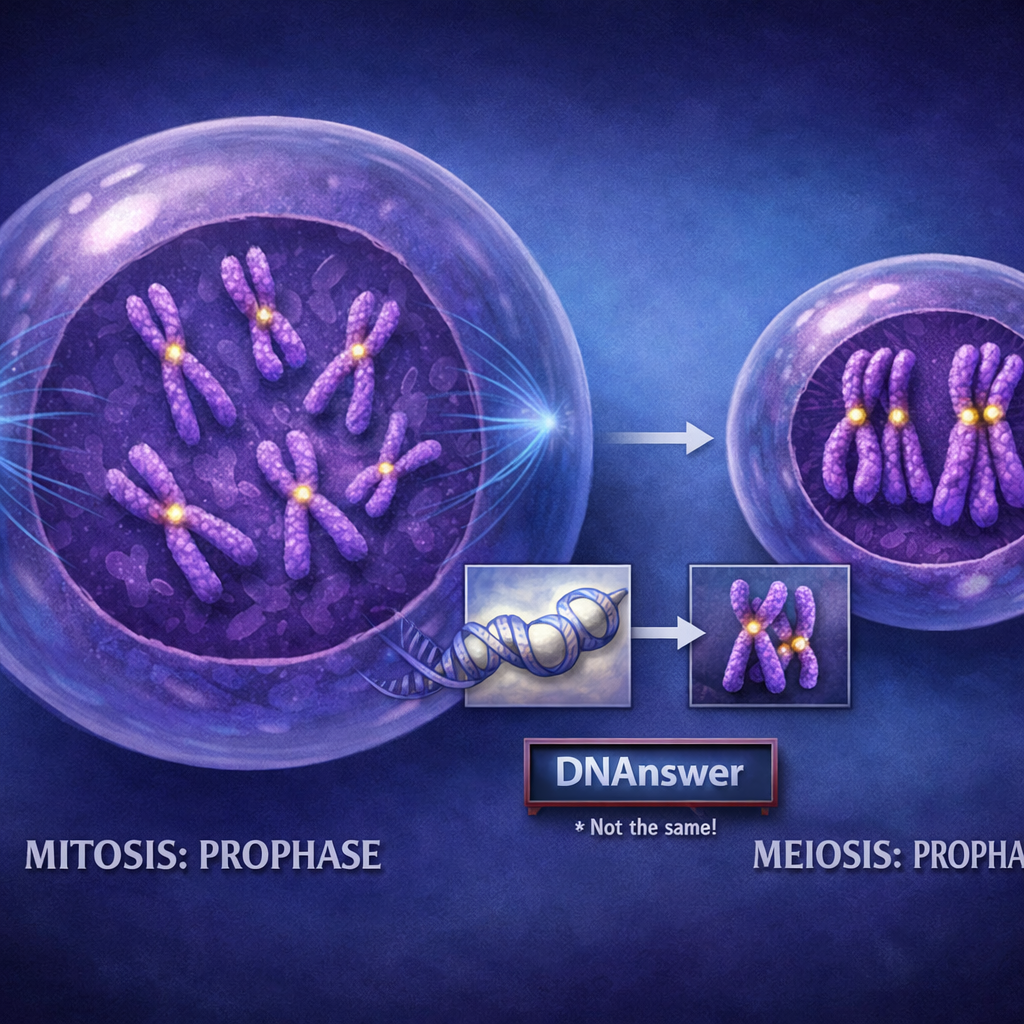
Prophase in mitosis (the division that produces two identical daughter cells, used for growth and repair) and prophase I in meiosis (the division that produces sperm or egg cells with half the chromosome number) share a name and a starting move — chromosome condensation — but they are not the same event. Meiotic prophase I includes two processes that never happen in mitosis at all: synapsis and crossing over.
This myth is understandable because both processes get introduced side by side in biology class, often on the same diagram page, and both start with the phrase "chromosomes condense." If you only remember the first sentence of each description, they sound identical.
What's Unique to Meiotic Prophase I
In meiotic prophase I, homologous chromosomes — the matching pair you got one copy of from each parent — find each other and zip together along their length in a process called synapsis, forming a structure called the synaptonemal complex. Mitotic prophase has no equivalent step; there's no reason for matching chromosomes to seek each other out, because mitosis isn't shuffling genetic combinations, it's making an exact copy.
While zipped together, homologous chromosomes swap segments of DNA in a process called crossing over. This is the physical basis of genetic recombination, the reason siblings don't have identical DNA despite sharing the same parents. Crossing over is also so central and so involved that meiotic prophase I gets broken into five sub-stages — leptotene, zygotene, pachytene, diplotene, and diakinesis — a level of detail mitotic prophase simply doesn't need, because mitotic prophase doesn't do any of this pairing or swapping.
Prophase II Is Closer to Mitotic Prophase
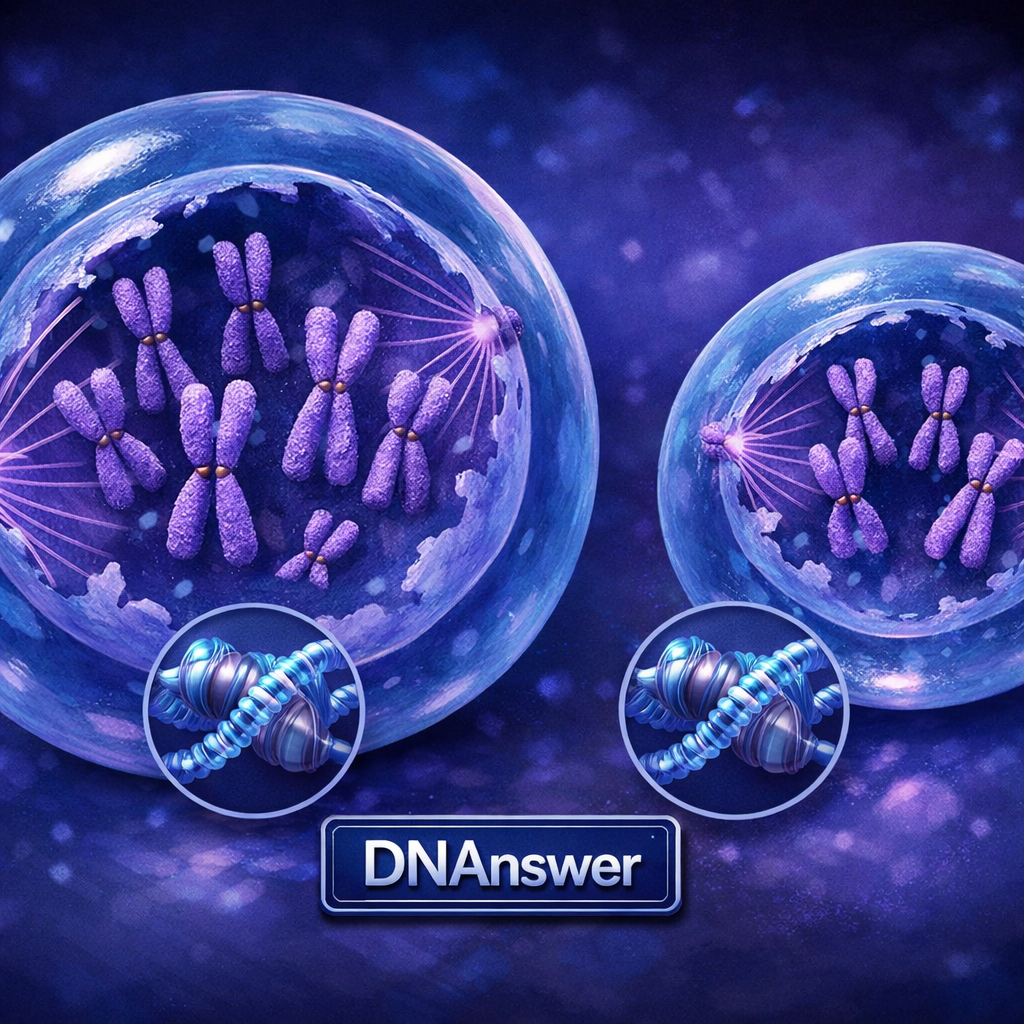
After the first meiotic division splits homologous pairs apart, the cell moves into a second round: prophase II. This stage looks and behaves much more like mitotic prophase, condensing chromosomes and breaking down the nuclear envelope again, without any crossing over or synapsis, because by this point homologous pairs have already separated. If you're studying for an exam, prophase II is the easier of the two to remember, precisely because it doesn't carry the extra machinery.
Meiotic prophase I is not simply "prophase for sex cells." It's a distinct genetic-mixing event, built around synapsis and crossing over, that has no counterpart anywhere in mitosis.
Confusing these two isn't a small error. Crossing over is where new combinations of genes get created, and its failure or mispairing is linked to certain fertility problems and chromosomal disorders passed to offspring. Treating prophase I as a copy-paste of mitotic prophase erases the entire mechanism behind why children resemble but never exactly match either parent.
Myth: Spindle Fibers Grab Chromosomes During Prophase
Spindle fibers — thin protein tubes made of microtubules that will eventually pull chromosomes apart — do not attach to chromosomes during prophase. That attachment happens in prometaphase and metaphase, after a structure called the kinetochore has fully assembled on each chromosome. During prophase, spindle fibers are still under construction and chromosomes aren't ready to receive them anyway.
The confusion is understandable, because both processes look continuous in a time-lapse video, and most textbook diagrams show a chromosome and a spindle fiber together in the very next panel after prophase. It's easy to assume they were already connected.
What's Actually Happening to the Spindle During Prophase
During prophase, the two centrosomes — each containing a pair of barrel-shaped structures called centrioles — separate and begin migrating toward opposite poles of the cell. As they move apart, they nucleate, or start growing, microtubules outward in all directions, forming the early spindle apparatus. At this stage, those microtubules are searching, not gripping. They're growing and shrinking rapidly, probing the space around them.
Meanwhile, each chromosome is building the docking site those microtubules will eventually need: the kinetochore, a protein structure that assembles at the centromere — the pinched, narrow region that holds two identical sister chromatids together after DNA replication. Each sister chromatid is one full copy of a chromosome; two identical copies, joined at the centromere, is what gives condensed chromosomes their familiar X shape under a microscope.
The Real Sequence, Step by Step
- Chromatin condenses into visible, compact chromosomes (prophase).
- Kinetochores finish assembling at each centromere (late prophase into prometaphase).
- The nuclear envelope fully breaks apart, exposing chromosomes to the cytoplasm (prometaphase).
- Spindle microtubules make contact with kinetochores for the first time (prometaphase).
- Chromosomes get pulled and jostled until they line up at the cell's midline (metaphase).
- Sister chromatids separate and get pulled to opposite poles (anaphase).
Notice that spindle attachment is step 4, two steps past chromosome condensation. This gap isn't wasted time. It gives the cell a checkpoint window, a chance to verify that kinetochores are built correctly before letting spindle fibers grab hold. If attachment happened too early, the cell risks pulling on a chromosome that isn't structurally ready, a known contributor to chromosome missegregation — chromosomes ending up in the wrong daughter cell, one mechanism behind conditions like trisomy.
If you're trying to place a single moment as "the start of chromosome movement," pick prometaphase, not prophase. Prophase builds the pieces. Prometaphase is where they connect.
The Real Challenge of Prophase: A Packaging Problem, Not a Checklist
Most explainers list prophase as four or five bullet points to memorize — condense, disappear, disappear, migrate — as if it's a chore list. That framing misses the actual problem prophase solves. A human cell has to take roughly two meters of DNA and compress it into a nucleus about 10 micrometers across, then further compact it into chromosomes that can be dragged across the cell without breaking or getting tangled with each other.
Picture stuffing two miles of thread into a shoebox, then needing to pull specific strands out later without snarling the rest. That's a fair analogy for what condensin and related proteins are doing at a molecular scale.
Why Tangling Is the Actual Danger
Chromatin in interphase is loose specifically because the cell needs open access to it — genes have to be read, or transcribed, and DNA has to be copied during S phase. Loose access is good for using the DNA and terrible for moving it. If the cell tried to yank loosely spread chromatin across itself with spindle fibers, strands from different chromosomes would catch on each other, snap, or fuse in the wrong places.
Condensation solves this by looping DNA into tight, hierarchical coils, first around histones, then further folded by condensin proteins, until each chromosome becomes an independent, manageable unit. Each chromosome ends up as its own compact package instead of a strand in a shared pile. That's the engineering win: separability.
Where This Goes Wrong in Real Disease
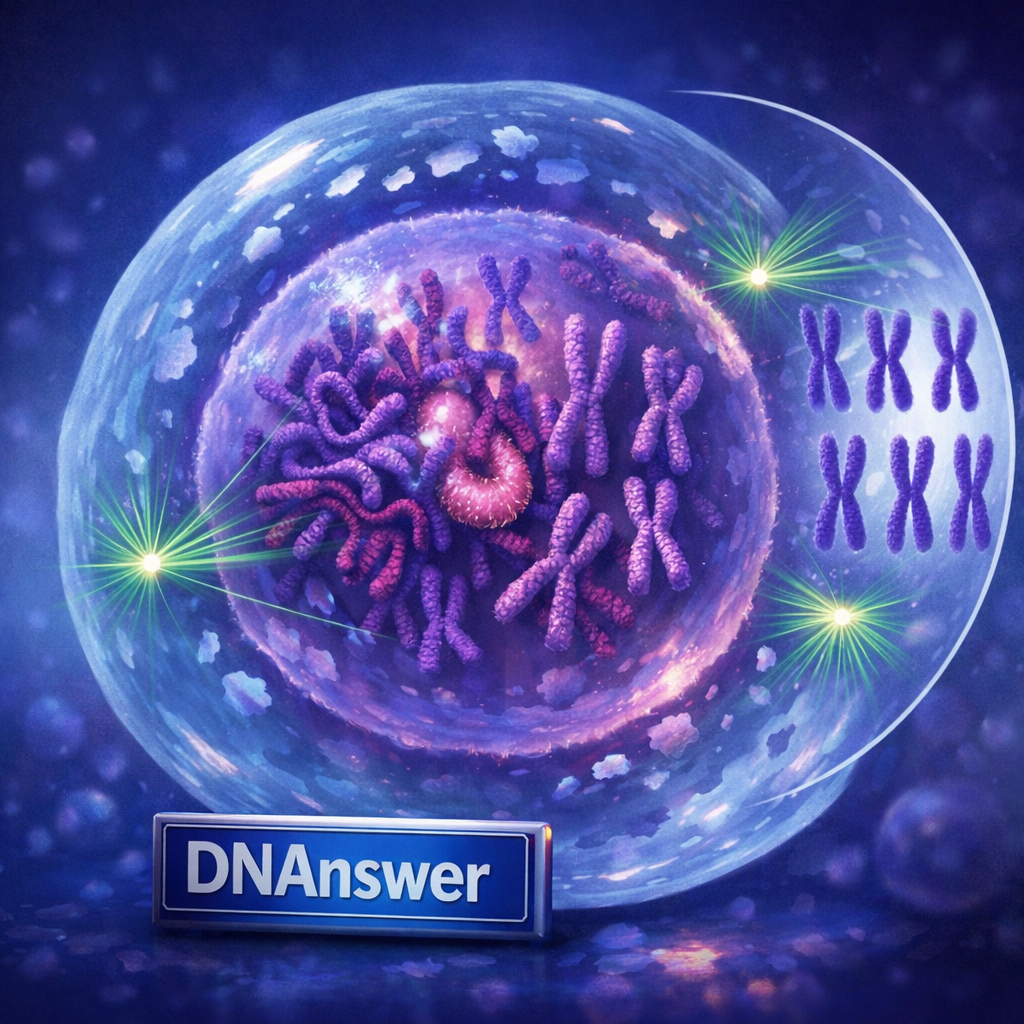
When condensation fails or happens unevenly, the consequences aren't abstract. Chromosomes that don't compact properly are more prone to breaking during the mechanical stress of division, a condition researchers call chromosomal instability. This instability shows up recurrently in cancer research, where cells that mishandle condensation and segregation accumulate genetic damage over successive divisions, feeding tumor progression.
This is why prophase deserves more attention than a five-word checklist gives it. It's not busywork before the "real" action of anaphase. It's the stage where the cell decides whether its genetic material will survive the trip intact. Get curious about how condensin actually loops DNA — video animations of this process, widely available from university biology departments, make the coiling mechanism far more intuitive than any static diagram can.
If you want to test how well these distinctions actually stuck instead of just nodding along, working through a short mitosis-stages quiz, like the ones on dnanswer.app, is a faster gut check than rereading a textbook chapter — it forces you to place prophase, prometaphase, and metaphase in the right order instead of recognizing them out of context.
Conclusion
Next time you see a mitosis diagram, don't read prophase as "chromosomes appear." Read it as "chromosomes get organized for a dangerous move." That reframe changes how you think about genetic disorders too: many trace back not to bad genes, but to bad packing or bad timing during this exact stage. If you're studying for an exam, memorize the sequence, not just the labels.
Frequently Asked Questions
What happens in the prophase of mitosis, in the simplest terms?
Chromatin condenses into visible chromosomes, the nucleolus disappears, and centrosomes start migrating toward opposite poles. The nuclear envelope stays intact until late prophase, when it begins breaking down heading into prometaphase.
Does DNA replication happen during prophase?
No. DNA replication happens earlier, during S phase of interphase, before prophase even starts. By prophase, each chromosome already consists of two identical sister chromatids joined at the centromere.
How long does prophase actually last?
In a typical human cell dividing in tissue culture, prophase runs roughly 10 to 30 minutes, though timing varies by cell type and organism. It's usually the longest single sub-stage of mitosis's four main phases.
Is prophase I of meiosis longer than mitotic prophase?
Yes, often dramatically longer. Prophase I can last hours in mitotically active cells, but in human egg cells it can be arrested for years, sometimes decades, because synapsis and crossing over require far more setup than simple condensation.