One of cancer’s deadliest abilities isn’t growth, it’s invisibility.
Cancer cells originate from normal host tissue, which makes immune recognition intrinsically difficult from the very beginning. Unlike pathogens, tumors do not appear as completely foreign structures. Instead, malignant cells progressively evolve mechanisms that allow them to evade immune surveillance while continuing to proliferate within the host.
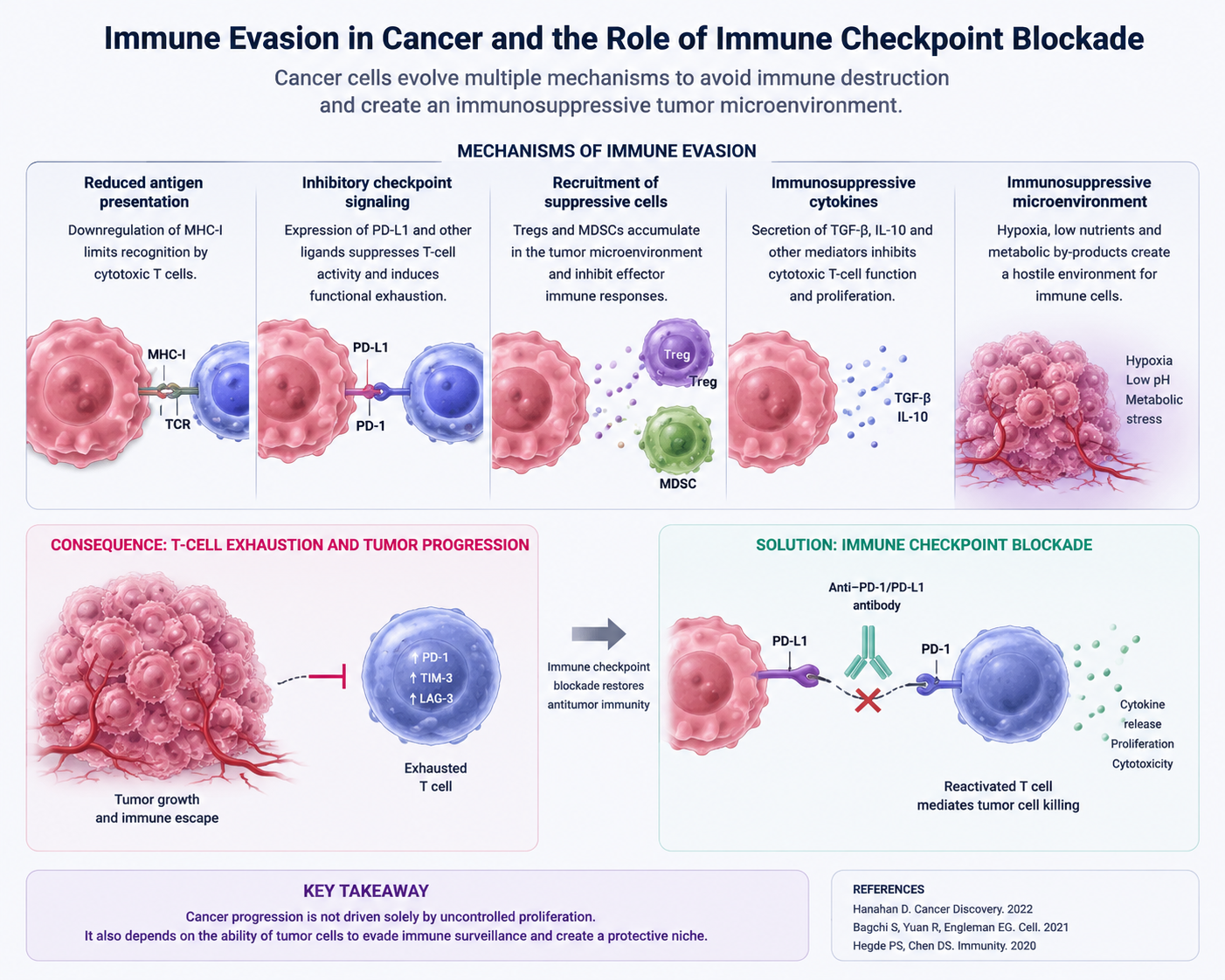
One of the most important adaptations involves disruption of antigen presentation through downregulation of MHC-I molecules, limiting recognition by cytotoxic T lymphocytes. Tumors may also express inhibitory checkpoint ligands such as PD-L1, which interact with PD-1 receptors on activated T cells and induce functional exhaustion of the immune response. In parallel, the tumor microenvironment becomes increasingly immunosuppressive through the recruitment of regulatory T cells, myeloid-derived suppressor cells, and the secretion of inhibitory cytokines including TGF-β and IL-10.
These mechanisms collectively transform the tumor into a biologically protected niche where immune activity is progressively weakened despite the continued presence of tumor-associated antigens. Immune escape is therefore not a secondary characteristic of cancer progression, but one of its defining biological hallmarks.
The development of immune checkpoint inhibitors fundamentally changed modern oncology by targeting this exact process. Rather than directly attacking tumor cells, these therapies partially restore antitumor immunity by reversing inhibitory signaling pathways and reactivating exhausted T lymphocytes.
Cancer progression is not driven solely by uncontrolled proliferation. It also depends on the capacity of malignant cells to survive continuous immune pressure and adapt to it over time.
References
Hanahan D. Hallmarks of Cancer: New Dimensions. Cancer Discovery. 2022.
Bagchi S, Yuan R, Engleman EG. Immune Checkpoint Inhibitors for the Treatment of Cancer. Cell. 2021.
Hegde PS, Chen DS. Top 10 Challenges in Cancer Immunotherapy. Immunity. 2020.