Synthetic Biology: How Cells Are Reprogrammed
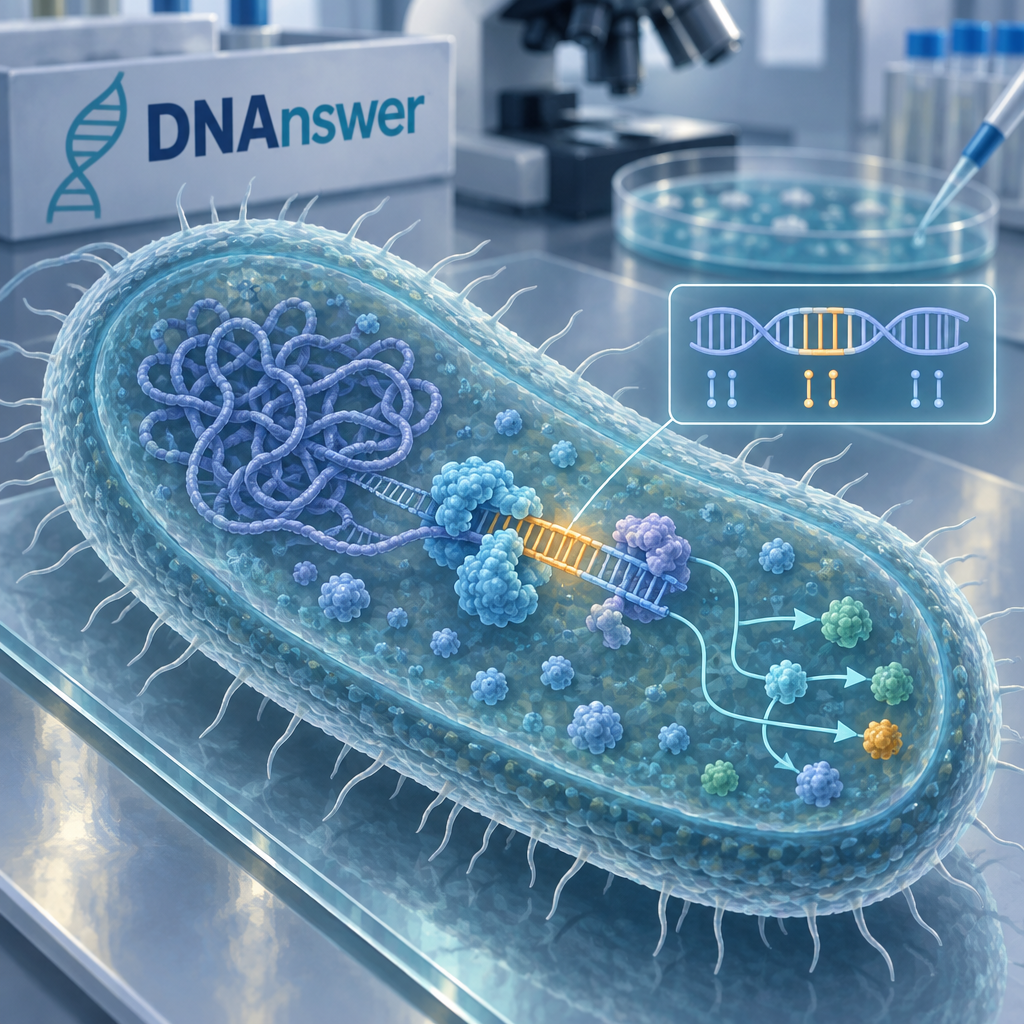
Scientists have never built a living cell from scratch. Not once. Every "synthetic" organism you've heard about — including the famous Synthia cell made at the J. Craig Venter Institute in 2010 — started with an existing cell, gutted and rebuilt. That's the core confusion driving most myths about synthetic biology: the assumption that scientists are writing life from a blank page, like code in an empty file. They're not. They're rewiring hardware that took three billion years of evolution to build, and that hardware is messier than any engineer would choose if given the option.
This matters because the myths shape how people react to real headlines — gene-edited crops, mRNA vaccines, lab-grown insulin. Getting the basics wrong makes you either more scared or more trusting than the evidence warrants. So here's what synthetic biology actually is, and five beliefs about it that don't hold up.
Key Takeaways
- No synthetic organism has ever been built from non-living chemicals alone.
- Cloning copies a genome; synthetic biology edits or redesigns one.
- CRISPR is one editing tool, not the entire field of synthetic biology.
- Most GMOs use single-gene tweaks, not the multi-part circuits synthetic biology builds.
- Cells resist precise control — "programming" them is closer to negotiation than coding.
- The global synthetic biology market was valued near $13.5 billion in 2023 (per Grand View Research).
Myth 1: Synthetic Biology Means Creating Life From Nothing
This is the biggest misconception, and it's an understandable one — the word "synthetic" sounds like "made from scratch," and sci-fi has trained everyone to picture life assembled in a glass tank from raw chemicals. The real story is less dramatic and more interesting.
Every synthetic biology project starts with a living cell that already exists. Scientists at the J. Craig Venter Institute didn't invent a cell in 2010 — they took a bacterial cell, removed its natural genome, and inserted a genome they'd chemically synthesized and assembled from scratch in the lab. The cell itself, with its membrane, its proteins, its entire molecular machinery, came from nature. Only the DNA inside was new.
Why does this distinction matter? Because a cell's membrane, its ribosomes (the molecular machines that build proteins), and thousands of other components can't currently be manufactured independently and combined into something that lives. Nobody knows how to build a working cell from pure chemistry. That's one of biology's open problems, not a solved one.
What "synthesized" actually means here
When a scientist says they "synthesized" a genome, they mean they used a machine to chemically string together DNA letters — A, T, C, G — in a chosen order, based on a digital blueprint. Companies like Twist Bioscience do this commercially, shipping custom DNA sequences to labs for a few cents per base pair. That's gene synthesis: writing new DNA. It is not the same as growing a cell around it.
So the honest version of "synthetic biology creates life" is this: it redesigns life that already exists, using genetic material built outside a cell and then inserted back into one. The takeaway for you is practical — when you read "scientists create synthetic bacteria," assume they modified an existing organism's genome, not that they conjured a cell from raw atoms. That single mental correction clears up most of the confusion around every other myth on this list.
Myth 2: Synthetic Biology Is Just a Fancy Word for Cloning
People mix these up because both involve manipulating DNA in a lab, and both show up in the same breathless news cycles. The confusion is fair — cloning and synthetic biology do overlap at the edges, and both can sound like science fiction brought to life.
But they solve different problems. Cloning makes an exact genetic copy of an existing organism. Dolly the sheep, born in 1996 at the Roslin Institute in Scotland, was a copy of her donor's DNA — no new genetic information, just a duplicate. Synthetic biology does the opposite: it adds, removes, or rewrites genetic information to create something that didn't exist before.
Think of it this way: cloning is like photocopying a book. Synthetic biology is like rewriting three chapters, adding an appendix, and reprinting it. One preserves information exactly; the other changes it on purpose.
Where the lines blur
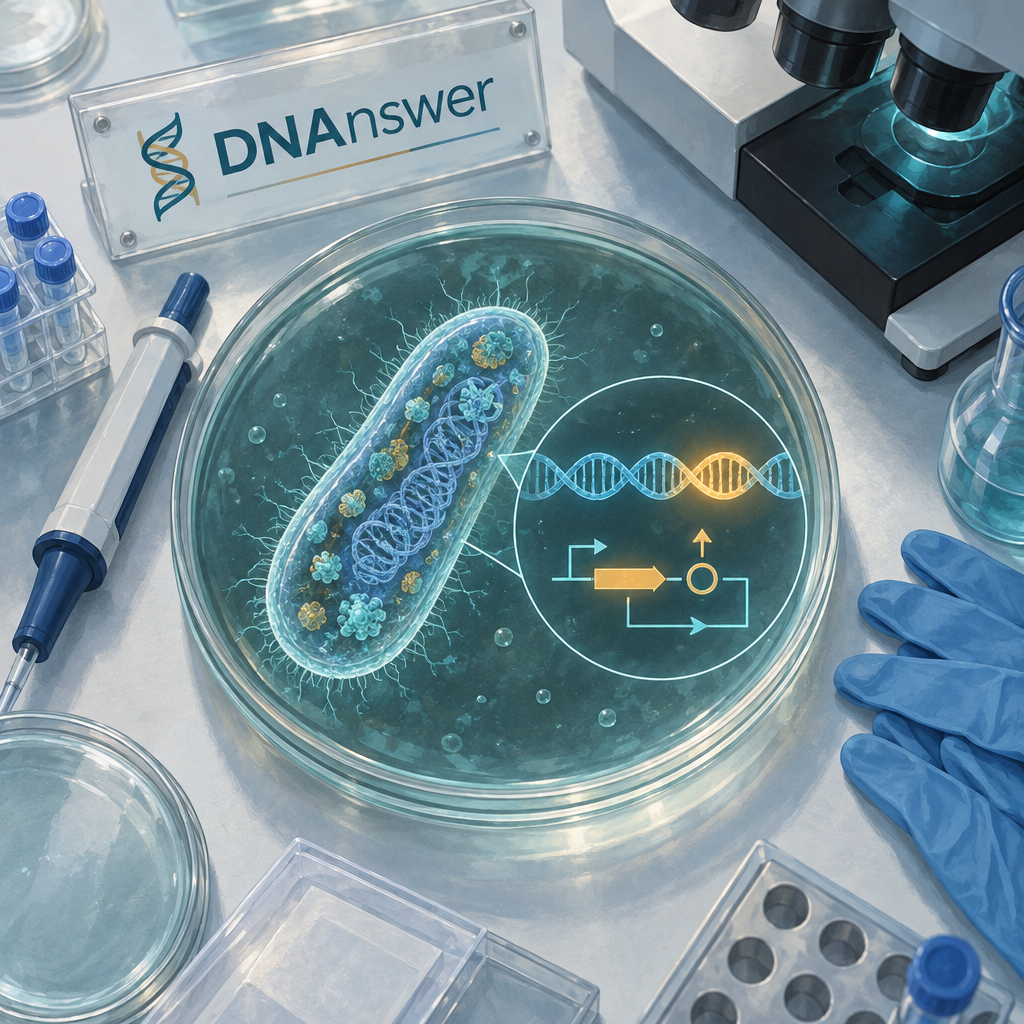
Some advanced projects use cloning techniques as a step within a synthetic biology project — for instance, cloning a synthetic gene into a bacterial plasmid (a small circular piece of DNA that bacteria use to share genes) so the bacteria will copy and express it. That's why the two terms get tangled. The cloning step is just plumbing; the synthetic biology is the new design being installed.
Why the distinction matters practically
If you're trying to understand a news story, ask: did scientists copy something that already existed, or did they build something new and insert it? If it's a copy — identical DNA, same traits — that's cloning. If it's a redesign — new genes, new functions, a rewritten pathway — that's synthetic biology. Confusing the two leads people to either overestimate the risk of "designer humans" (cloning doesn't design anything) or underestimate how different synthetic organisms can be from their natural ancestors.
Myth 3: Every GMO Involves Synthetic Biology Circuits
This myth comes from treating "genetically modified" and "synthetic biology" as interchangeable, since both put foreign DNA into an organism. But most GMOs on grocery store shelves are much simpler than people assume.
Take Bt corn, grown across millions of acres in the Midwest. It contains a single gene borrowed from the soil bacterium Bacillus thuringiensis, which produces a protein toxic to certain insect pests. That's one gene, doing one job, with no feedback loops or logic gates involved. It's genetic engineering — moving a gene from one organism to another — but it's not what synthetic biologists mean by a genetic circuit.
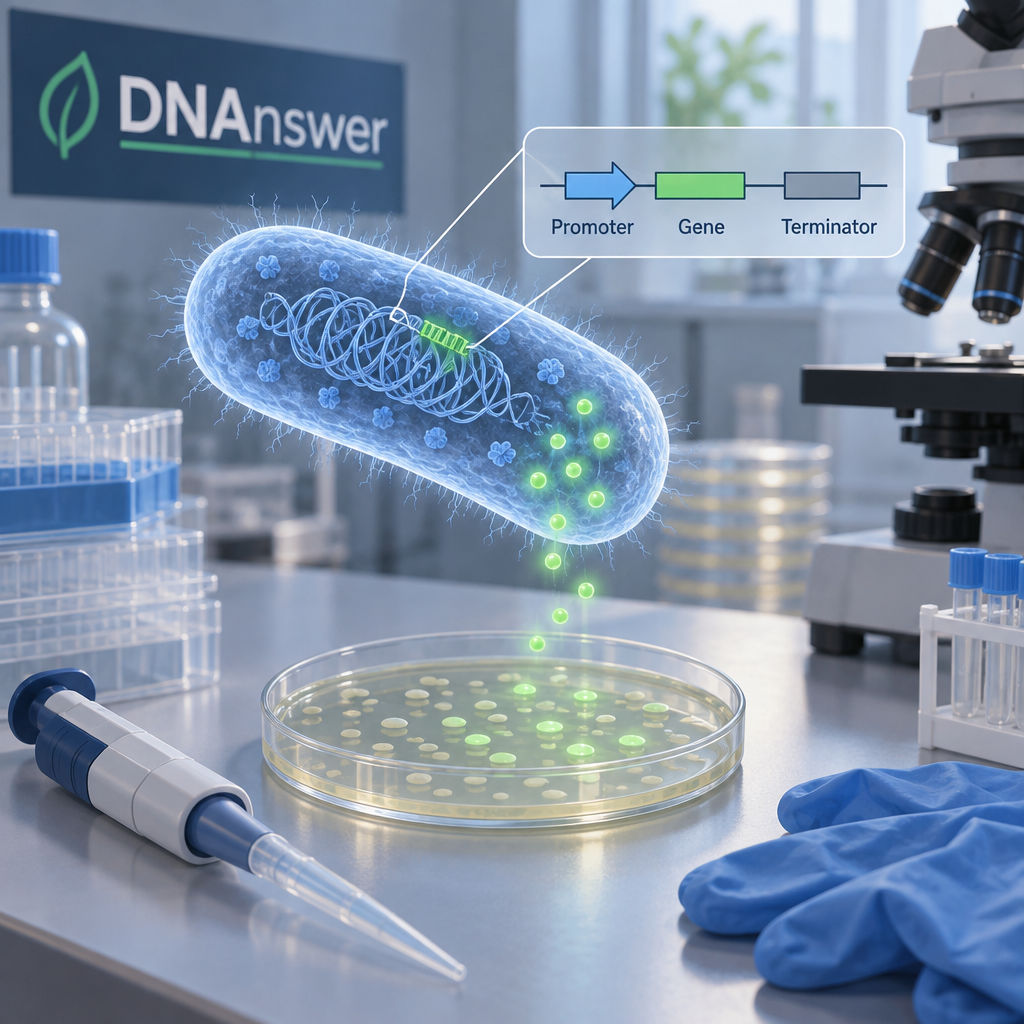
A genetic circuit is a set of genes wired together so they respond to conditions, the way a thermostat responds to temperature. One gene might sense a chemical signal, another might amplify that signal, and a third might trigger an action — like producing a drug, changing color, or shutting down growth — only when the first two conditions are met. Researchers at MIT's Synthetic Biology Center and similar labs design these circuits using standardized genetic parts, sometimes called BioBricks, which work like interchangeable components: a promoter (an on-switch), a gene (the instruction), and a terminator (a stop signal), snapped together in different combinations.
- Single-gene GMOs: one inserted gene, one trait, no internal logic (most crops fall here).
- Multi-gene pathway engineering: several genes working in sequence, like a metabolic assembly line.
- Genetic circuits: genes wired with feedback and sensing, built from standardized parts.
- Whole-genome redesign: an entire genome synthesized and swapped in, as with Synthia.
- Minimal genomes: genomes stripped down to only the genes essential for life, used to study what's truly necessary.
Most commercial GMOs sit at level one. Synthetic biology, properly defined, usually means level two and above — engineering systems, not single traits. That's a meaningful gap, and it's why calling every modified soybean "synthetic biology" overstates how much deliberate design actually went into it.
Myth 4: CRISPR and Synthetic Biology Are the Same Thing
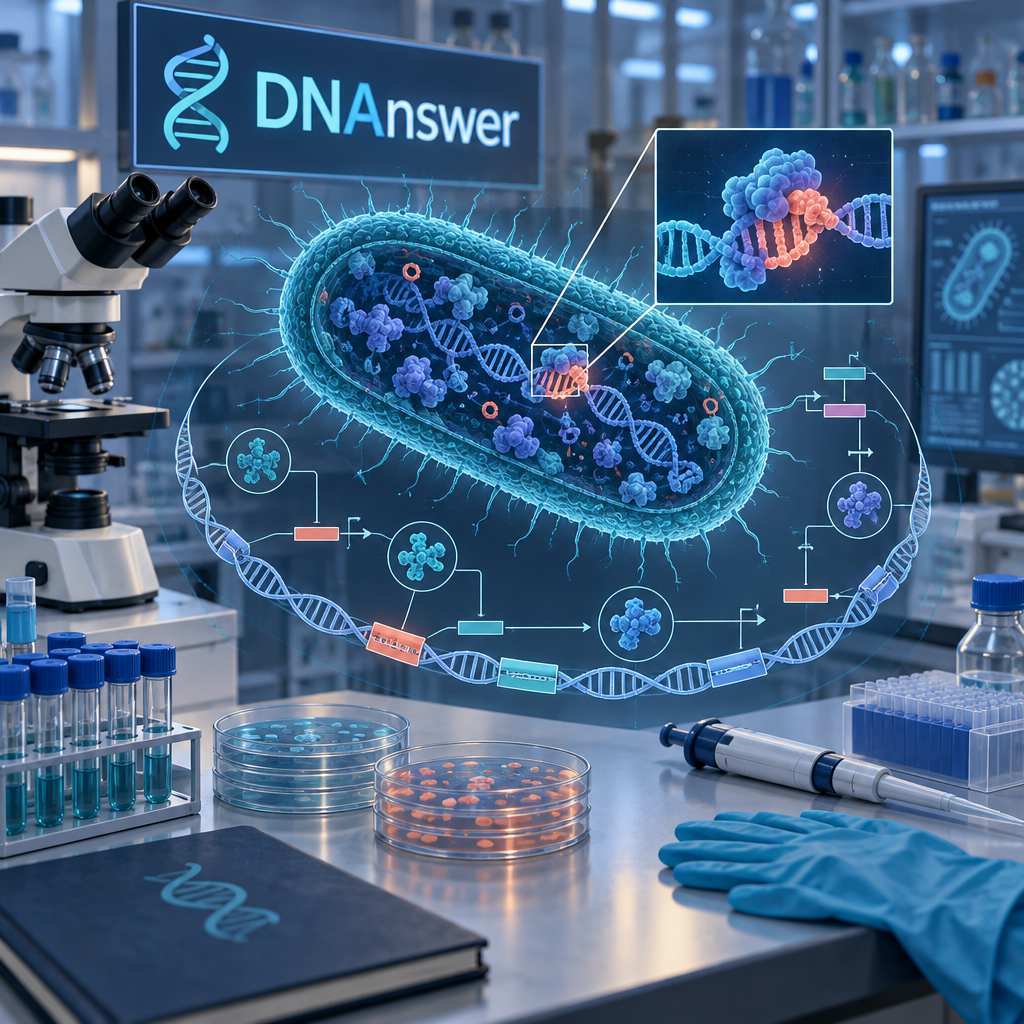
CRISPR gets so much press that it's become shorthand for all genetic science, which makes this myth almost inevitable. The kernel of truth: CRISPR genuinely transformed the field, and synthetic biologists use it constantly.
CRISPR-Cas9, adapted for gene editing by Jennifer Doudna and Emmanuelle Charpentier (who won the 2020 Nobel Prize in Chemistry for the work), is a tool for cutting DNA at a precise location. You can think of it as a pair of molecular scissors guided by a GPS signal — a short RNA sequence that matches the target DNA and tells the scissors exactly where to cut. Once the DNA is cut, the cell's own repair machinery fixes it, and scientists can nudge that repair to delete, disable, or insert a gene.
"CRISPR is a tool, not a discipline," is how many researchers describe it — a precise editor, not a design philosophy. Synthetic biology is the discipline; CRISPR is one instrument in its toolbox.
Synthetic biology existed before CRISPR became practical around 2012. Earlier tools — TALENs, zinc finger nucleases, and basic restriction enzymes cutting at recognized DNA sequences — did similar jobs with less precision and far more effort. Synthetic biology also includes gene synthesis (writing DNA from scratch), metabolic engineering (redesigning a cell's chemical pathways, often to produce useful compounds), and genetic circuit design (building the sensing-and-response systems described earlier). None of these require CRISPR at all.
A concrete example without CRISPR
The anti-malarial drug artemisinin used to come only from the sweet wormwood plant, a slow and expensive process. Researchers led by Jay Keasling at UC Berkeley re-engineered yeast's metabolic pathway — rewiring which genes it expresses and in what order — so the yeast produces artemisinic acid directly, no CRISPR editing required for the core pathway. That's synthetic biology solving a real supply problem, built on metabolic engineering rather than gene editing.
If you want to test how much of this distinction has actually landed, running through a structured gene-editing quiz, like the ones on DNAnswer's app, is a fast way to see which tools you're still mixing up — CRISPR, gene synthesis, and circuit design each do different jobs, and mixing them up is exactly how this myth spreads.
Myth 5: Cells Can Be Programmed With the Precision of Computer Code
This is the myth that costs the most in terms of realistic expectations, because it sets people up to expect instant, flawless results from every headline about engineered cells. The word "programming" invites this comparison directly — synthetic biologists even call their work "genetic circuit design," borrowing electronics vocabulary on purpose.
Here's the honest origin of the myth: genetic circuits really do behave somewhat like simple electronic logic. A promoter that only switches on in the presence of a specific chemical really does act like an AND gate. Scientists really have built cells that count, that oscillate like clocks, and that detect toxins in water. The comparison isn't fabricated — it's just incomplete.
Why cells aren't blank-slate machines
A computer executes code exactly the same way every time, assuming no hardware failure. A cell doesn't. Gene expression is noisy — the same genetic circuit, inserted into genetically identical cells, can behave differently from one cell to the next, because of random fluctuations in molecule counts and timing. Biologists call this noise, and it's not a bug to be patched; it's a built-in feature of how molecules bump around inside a crowded cell.
Cells also evolve while you're using them. Bacteria engineered to produce a costly protein face constant pressure to drop that burden, since cells that stop making the protein grow faster and outcompete the ones still doing the work you want. Left running for enough generations, an engineered bacterial culture can quietly "forget" its synthetic instructions through mutation — the exact opposite of software, which doesn't spontaneously edit itself to escape an instruction it finds inconvenient.
What "good enough" looks like in practice
Because of this, synthetic biology projects aim for reliable enough, not perfect. A yeast strain engineered to produce a drug precursor might need redesigning three or four times before it's stable and productive at industrial scale — the Berkeley artemisinin project took roughly a decade from concept to commercial production with Sanofi. That timeline isn't a failure of the science; it's what working with evolved, self-interested biological hardware actually requires. Expecting cell programming to work like software programming is the fastest way to be disappointed by real results.
How These Misconceptions Shape Public Debate
Myths about synthetic biology aren't just trivia errors — they warp how people vote, invest, and react to regulation. Someone who thinks scientists create life from nothing will have a very different reaction to a lab biosafety story than someone who understands the work starts from existing organisms with well-studied risks.
Confusing synthetic biology with cloning fuels fears about "designer babies" that have little to do with the actual gene-editing work happening in agriculture and medicine. And treating CRISPR as the whole field makes every unrelated biotech story — a new vaccine platform, an engineered probiotic — get filtered through a single, often fear-driven lens.
Biosafety oversight in the U.S. does take these risks seriously, independent of the myths. The National Institutes of Health's Recombinant DNA Advisory process and institutional biosafety committees at universities review engineered organism research before it starts, and certain high-risk experiments require additional federal review. That oversight exists because engineered organisms, even built from existing cells, can behave unpredictably once released — not because anyone is assembling life from scratch in a garage.
Understanding the real boundaries of the field helps you ask sharper questions when a new story breaks: What exactly was modified? Which tool did they use? Does this involve a single gene or a full circuit? Those questions get you past the headline and toward what actually happened.
Conclusion
Next time a headline claims scientists "created life" or "programmed cells like computers," check for the real mechanism underneath — was it gene synthesis, metabolic engineering, or a CRISPR edit? If the article can't say, treat the claim skeptically. Synthetic biology is powerful precisely because it works with messy, evolved cells rather than idealized blank slates — and that messiness is the honest story worth following.
Frequently Asked Questions
Is synthetic biology the same as genetic engineering?
No. Genetic engineering usually means moving or editing one gene; synthetic biology often means designing multi-gene systems, circuits, or entire synthesized genomes that behave in new, coordinated ways.
Has anyone ever built an entirely artificial living cell?
Not from non-living chemicals alone. The closest example, Synthia (2010), used a fully synthesized genome inserted into an existing, hollowed-out bacterial cell — the cell's machinery was natural.
Why do engineered bacteria sometimes stop working after a while?
Because cells under genetic "load" face evolutionary pressure to drop costly instructions. Mutants that skip the engineered task grow faster, so they can take over a culture within dozens of generations.
Is CRISPR dangerous if used in synthetic biology projects?
CRISPR itself is a precise tool, not inherently risky — the risk depends on what's edited and how it's released. U.S. institutional biosafety committees review this before lab work begins.