Telomeres: The Biological Clock Hidden at the End of Every Chromosome

You've probably seen the ad: spit in a tube, mail it off, and get back a "biological age" that's supposedly more accurate than your birth certificate. The pitch relies on telomere aging — the idea that the caps on your chromosomes shrink like a countdown clock. That part is real. What the ad doesn't tell you is how much noise sits inside that number.
Telomere science is genuinely fascinating, and genuinely misunderstood. Somewhere between a real 2009 Nobel Prize and a wellness-industry sales funnel, the nuance got lost. This article sorts out what telomeres actually do, where the popular story breaks down, and what's worth your attention instead of your money.
Key Takeaways
- Telomere length predicts population trends, not individual lifespan.
- The Hayflick limit caps cell division at roughly 40-60 times.
- Telomerase, the enzyme that rebuilds telomeres, also fuels most cancers.
- Short telomeres correlate with disease but rarely cause it directly.
- Consumer telomere tests can't beat the natural variation between your own cells.
- Sleep, exercise, and stress management affect telomere length more than any supplement.
Myth: Your Telomere Length Is a Personal Countdown Clock
This is the biggest myth, and the most expensive one. People believe that a telomere test can tell them, with some precision, how many years they have left. It can't. What it measures is an average across thousands of cells, at one moment, with a margin of error that most marketing pages never mention.
The kernel of truth here is real. Telomeres are repetitive DNA sequences — TTAGGG, repeated thousands of times — sitting at the very ends of your chromosomes. Think of them like the plastic tip on a shoelace, called an aglet, that keeps the lace from fraying. Every time a cell divides, it can't fully copy the very end of its DNA. This is called the end-replication problem, and it means a little bit of telomere gets lost with every division. Shorter telomeres do, statistically, associate with older age. That's not fiction.
Why Averages Mislead Individuals
Here's the catch: telomere length varies wildly between cells in the same body, between chromosomes in the same cell, and between two people who are the same chronological age. A 2003 study led by researchers including Richard Cawthon at the University of Utah found shorter telomeres associated with higher mortality risk in people over 60 — a population-level pattern. It said nothing about which specific person in that group would die first.
Telomere length is best understood as a marker of biological wear at the population level — a statistical signal, not a diagnostic reading for any one individual.
That distinction matters because a test result reported as a single number (say, "your telomeres are equivalent to someone 8 years older") hides enormous internal variability. Blood samples pull from a mix of cell types, immune cells especially, whose telomere length shifts with recent infections, inflammation, or even how well you slept the night before the draw.
What to Do Instead
Don't treat a commercial telomere score as a health verdict. If you want a read on your biological aging, your doctor's standard panels — blood pressure, fasting glucose, cholesterol, kidney function — tell you more, sooner, and with actual clinical thresholds attached. Telomere testing kits are a novelty product dressed up as a diagnostic one. Spend the $150–$250 they typically cost on something with a clearer return, like a sleep study or a fitness assessment if you're genuinely curious about your health trajectory.
Myth: Supplements Can "Reverse" Your Biological Age by Lengthening Telomeres
The claim sounds tidy: take this supplement, activate telomerase, lengthen your telomeres, turn back the clock. It's the cleanest kind of marketing lie, because it borrows real vocabulary and points it in a direction the evidence doesn't support.
People believe this because the underlying enzyme is real and its discovery earned a Nobel Prize. Telomerase is an enzyme that rebuilds the TTAGGG repeats at chromosome ends, and Elizabeth Blackburn, Carol Greider, and Jack Szostak shared the 2009 Nobel Prize in Physiology or Medicine for figuring out how it works. Most adult cells barely produce it. Stem cells, immune cells during an infection, and reproductive cells make more. That's why the idea of "switching it on" sounds so plausible — the mechanism genuinely exists.
But activating telomerase throughout the body isn't a light switch with only good outcomes attached. Lab compounds like TA-65, derived from astragalus root extract, have shown modest telomerase activation in cell cultures and small trials. Modest and uncontrolled are the operative words. No large, independent, peer-reviewed trial has shown that any over-the-counter supplement meaningfully lengthens telomeres in humans in a way that changes health outcomes.
There's also a mismatch in scale. Even if a supplement nudged average telomere length up slightly, that shift is tiny next to the natural variation between your own cells on any given day. You'd need a study large enough, and long enough, to separate a real signal from that noise — and that kind of trial doesn't exist yet for consumer supplements.
Here's the harder problem: telomerase activation isn't automatically a "longevity" switch. It's a growth switch. Cells that divide indefinitely without telomere shortening are exactly the cells that become dangerous when something else goes wrong — which brings up the next myth directly.
If you want to spend money on something with better odds of protecting your telomeres, prioritize sleep and cardiovascular fitness first. The evidence base there, covered later in this article, is far sturdier than anything sold in a bottle labeled "telomere support."
Myth: Short Telomeres Directly Cause Disease
This myth gets the arrow backward. People see study after study linking short telomeres to heart disease, diabetes, and dementia, and conclude that the short telomeres are causing the disease. Mostly, they're a shared symptom of something else going on.
The honest origin of this confusion is that the correlations are real and well documented. Chronic stress, smoking, obesity, and poor sleep all associate with shorter telomeres and with higher rates of chronic disease. It's tempting to draw a straight line: shrinking telomere, therefore illness. Scientists made the same leap early on, before better-designed studies came along.
Correlation Versus Mechanism
What actually happens is closer to this: oxidative stress — damage caused by unstable molecules called free radicals — degrades DNA generally, including telomeric DNA, and it also drives the inflammation and tissue damage behind cardiovascular disease and diabetes. Short telomeres and disease often share a common upstream cause rather than one causing the other. A person under chronic stress accumulates both problems in parallel, not in sequence.
There are exceptions worth naming plainly. A handful of rare genetic disorders — dyskeratosis congenita is the clearest example — involve mutations in the telomerase gene itself, and telomere shortening there is a direct, causal driver of disease. Those conditions are rare, inherited, and diagnosed through genetic testing, not lifestyle telomere kits. They're the exception that proves the general rule doesn't apply to the average person reading a wellness blog.
The Cellular Senescence Piece
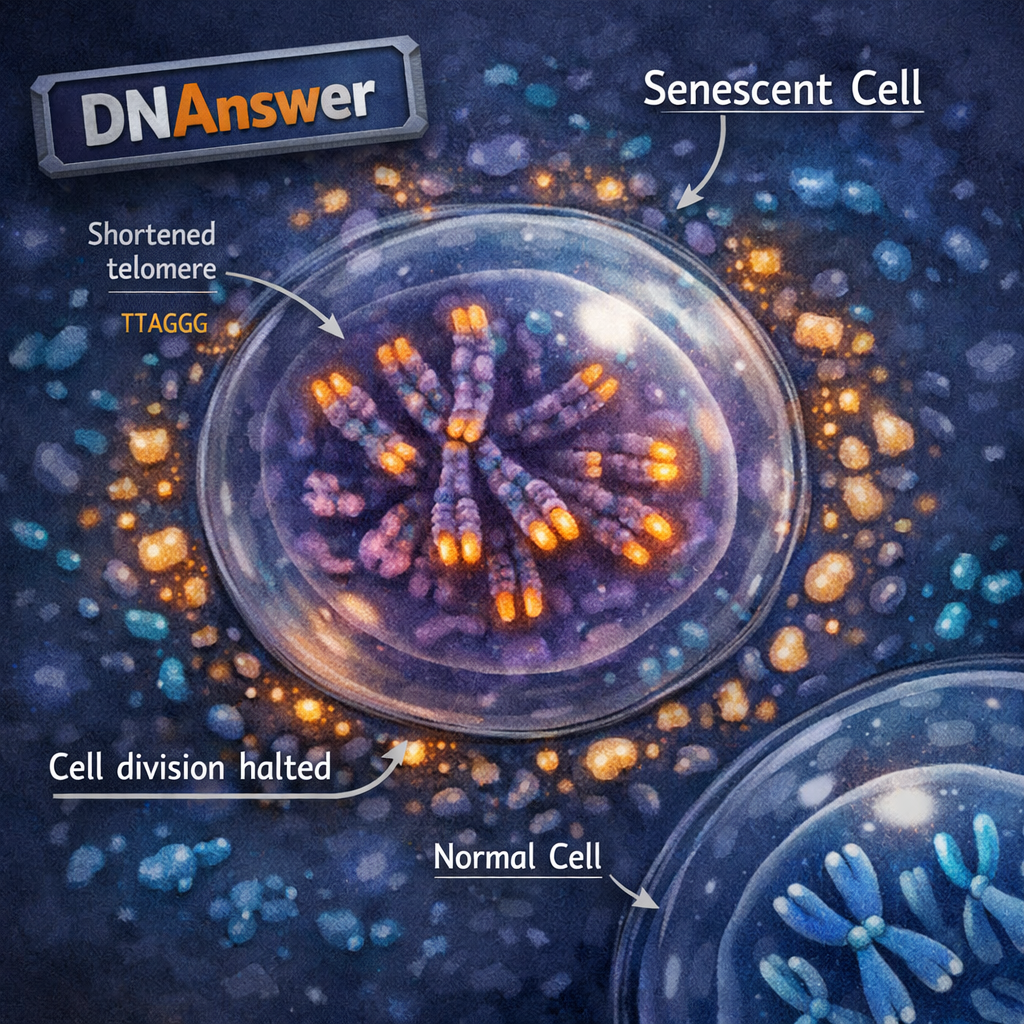
When telomeres get short enough, cells don't usually die. They enter a state called cellular senescence — alive, but no longer dividing, and secreting inflammatory signals that affect nearby tissue. This is the actual mechanism connecting telomere shortening to aging-related decline: not a countdown to death, but a slow accumulation of cells stuck in a semi-dysfunctional state, quietly leaking inflammation into your tissues for years.
That's a meaningfully different story than "short telomeres kill you." It's slower, messier, and harder to market — which is probably why it doesn't show up in the ad copy.
Myth: Telomerase Is the Longevity Enzyme, Full Stop
If telomerase rebuilds telomeres, and short telomeres associate with aging, then more telomerase must equal more longevity. That's the logic. It's also the logic that misses the single biggest safety problem in the entire field.
The kernel of truth: telomerase really does let certain cells divide far more than normal. Stem cells and germ cells use it to stay renewable across a lifetime. Without any telomerase at all, you couldn't grow past a few divisions.
Here's what the anti-aging pitch leaves out: unregulated telomerase activity is one of the most consistent features of cancer cells. Roughly 85-90% of human cancers show reactivated telomerase, according to research summarized by the American Association for Cancer Research — it's one of the mechanisms that lets tumor cells bypass the normal limit on cell division and keep multiplying indefinitely. A cell that can divide forever without its telomeres running out is exactly the kind of cell your body normally shuts down. Cancer cells are the ones that found a way around the shutdown.
The Hayflick Limit, Explained
In 1961, biologist Leonard Hayflick discovered that normal human cells can only divide a limited number of times in culture before they stop — usually somewhere between 40 and 60 divisions. This became known as the Hayflick limit, and telomere shortening is the clock behind it. Each division trims the telomere a little; once it gets critically short, the cell stops dividing or self-destructs. That limit is a safety feature, not a design flaw. It's your body's built-in brake against runaway cell growth.
Why "More Telomerase" Isn't the Same as "Healthier"
This is why legitimate researchers don't talk about telomerase activation as a simple dial to crank up. Any drug or supplement that meaningfully activates telomerase body-wide carries a theoretical cancer-risk trade-off that hasn't been resolved. Some experimental gene therapies in mice have extended telomere length and lifespan under controlled lab conditions, but translating that safely to humans, without raising cancer risk, is the actual scientific challenge — not a solved problem waiting to be sold to you in capsule form.
The honest takeaway: telomerase is necessary for life, dangerous in excess, and nowhere close to a clean lever for extending yours.
Myth: One Telomere Test Captures "Your" Telomere Length
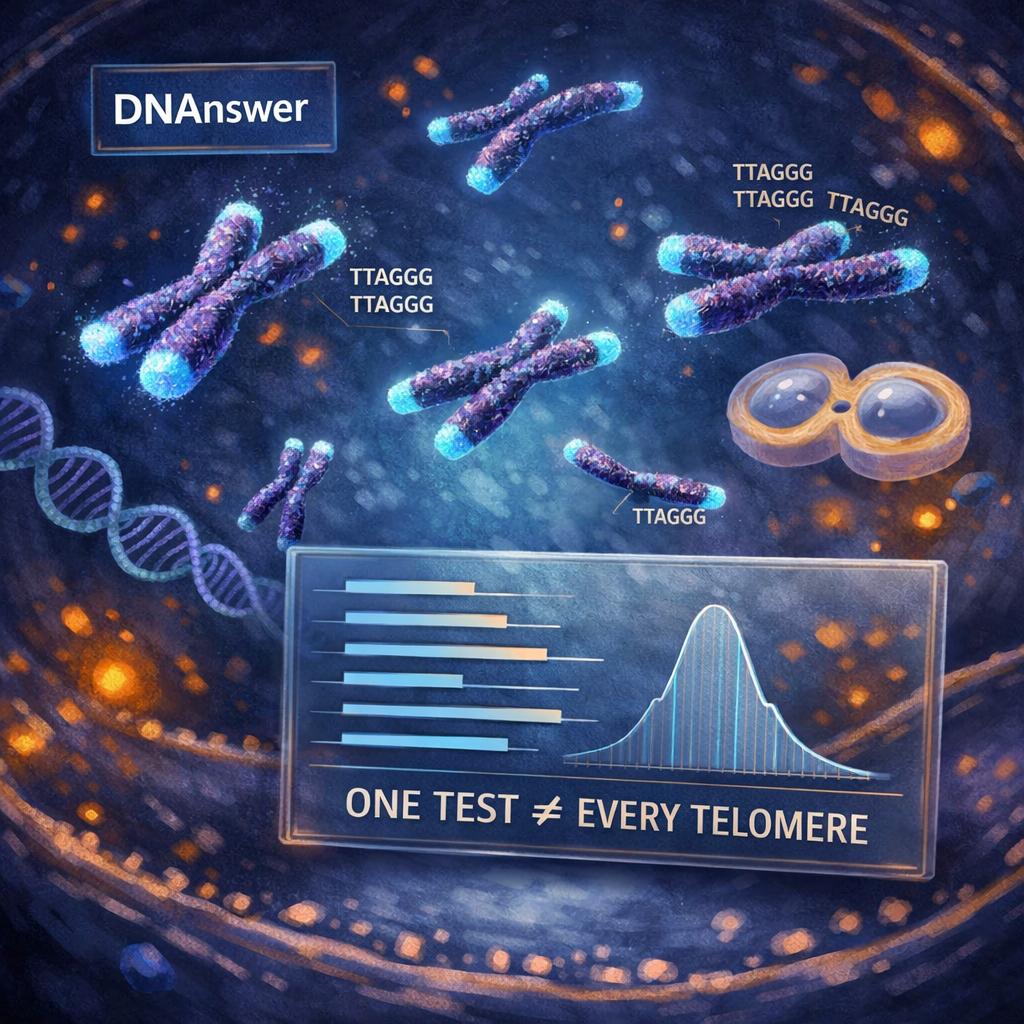
People assume a telomere test works like a cholesterol test: draw blood, get a number, and that number describes you. It doesn't work that way, because telomeres aren't uniform within a single person, let alone across a population.
Variation Within Your Own Body
Telomere length differs by chromosome, by cell type, and even between two skin cells sitting next to each other. Immune cells that have divided many times fighting infections tend to have shorter telomeres than your resting muscle stem cells. A blood draw captures whichever cells happen to be circulating that day — a mix skewed by recent illness, exercise, or even the time of day.
Variation Between Testing Methods
The lab technique matters too. The two most common methods, quantitative PCR and Southern blot analysis (Terminal Restriction Fragment length), can produce different absolute numbers on the same sample. Academic labs know this and interpret results cautiously, comparing a person to their own past samples over time rather than to a single population average. Most consumer kits run one sample once, then hand you a percentile ranking against strangers you have nothing else in common with.
What Reliable Testing Would Actually Require
A test result you could trust would need repeated sampling over years, consistent lab methodology, and comparison against your own baseline rather than a generic population curve. That's a research protocol, not a $200 mail-in kit. Here's roughly what rigorous telomere research looks like, step by step:
- Collect the same cell type (usually white blood cells) at multiple time points, years apart.
- Use one consistent measurement method across every sample.
- Track the trend within the individual, not just a single snapshot value.
- Control for recent illness, exercise, and inflammation at each draw.
- Compare the trend against clinical outcomes over a long follow-up period, often a decade or more.
None of that fits in an envelope you drop in a mailbox. If a company promises a definitive biological age from one saliva sample, that's the tell that you're buying a novelty, not a diagnostic.
What Actually Slows Telomere Shortening: Evidence-Backed Habits
Set the mail-in kits aside. The genuinely useful question is what actually influences telomere shortening over time, and there the evidence is more solid than the supplement aisle would have you believe.
Exercise and Sleep
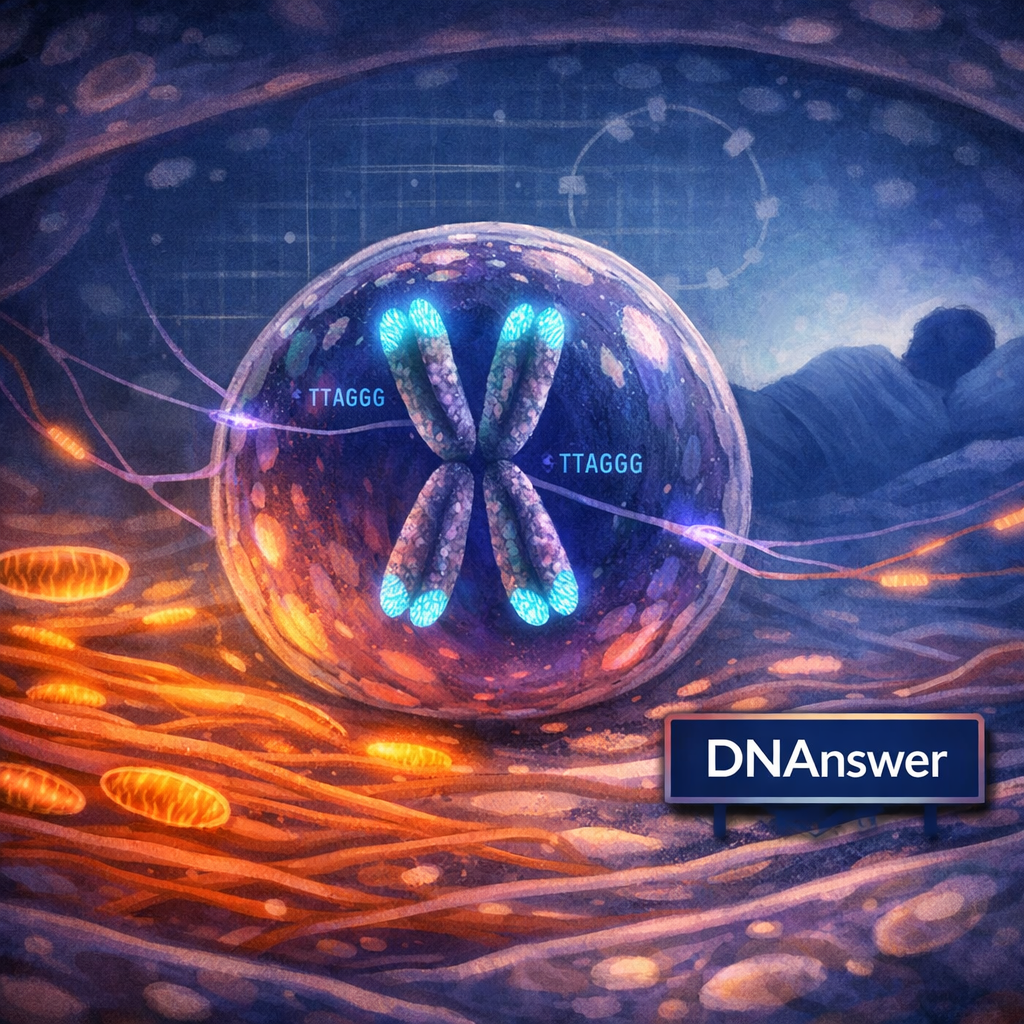
Regular aerobic exercise associates with longer telomeres in multiple observational studies, likely by reducing chronic inflammation and oxidative stress rather than through any direct action on the telomerase enzyme. You don't need marathon training. Consistent moderate activity — the kind that gets your heart rate up several times a week — shows up repeatedly in the research linking activity level to telomere length. Poor sleep does the opposite: chronic short sleep correlates with shorter telomeres, likely through the same inflammatory pathway.
Stress, Diet, and Smoking
Chronic psychological stress is one of the more consistently replicated associations in this field. A well-known 2004 study by Elissa Epel and colleagues at the University of California, San Francisco, found that mothers reporting the highest chronic stress had telomeres that looked, on a cellular level, roughly a decade older than low-stress mothers of similar age. Smoking and heavily processed diets high in sugar drive the same oxidative stress pathway that erodes telomeres over time. None of these habits are exotic advice. They're the same short list doctors have recommended for decades, just viewed through a different cellular lens.
If curiosity about this topic has you wanting to go deeper than an anti-aging ad, a cellular aging quiz on a platform like dnanswer.app is a more honest way to explore the mechanisms — it walks through concepts like the Hayflick limit and oxidative stress without trying to sell you a lengthening protocol at the end.
The pattern across all this research is consistent: nothing here reverses aging. It slows a rate. That's a smaller promise than the supplement industry makes, and a much more truthful one.
Conclusion
Skip the mail-in telomere kit. Put that $150-$250 toward a sleep tracker, a gym membership, or an actual physical with bloodwork your doctor can act on. If you're curious about the biology itself rather than a personal score, that curiosity is well placed — telomeres are one of the more elegant systems in your cells. Just don't mistake elegance for a personal prophecy.
Frequently Asked Questions
Can lengthening my telomeres actually make me live longer?
No solid human evidence supports that. Telomerase can lengthen telomeres, but activating it body-wide raises cancer risk concerns, since about 85-90% of cancers already show reactivated telomerase.
Are telomere length tests worth buying for health tracking?
Generally not for individual decision-making. They capture a noisy average across mixed cell types at one moment, and results vary by lab method — better spent on standard bloodwork.
Do short telomeres mean I'll get a specific disease?
No. Short telomeres correlate with conditions like heart disease and diabetes, but usually share an upstream cause — oxidative stress and inflammation — rather than directly causing the disease.
What's the single most evidence-backed way to protect telomere length?
Regular moderate aerobic exercise and consistent sleep show the most reproducible associations with longer telomeres, likely by lowering chronic inflammation, more than any supplement studied so far.