RNA Does a Lot More Than Carry Messages. Most People Don't Know Half of It
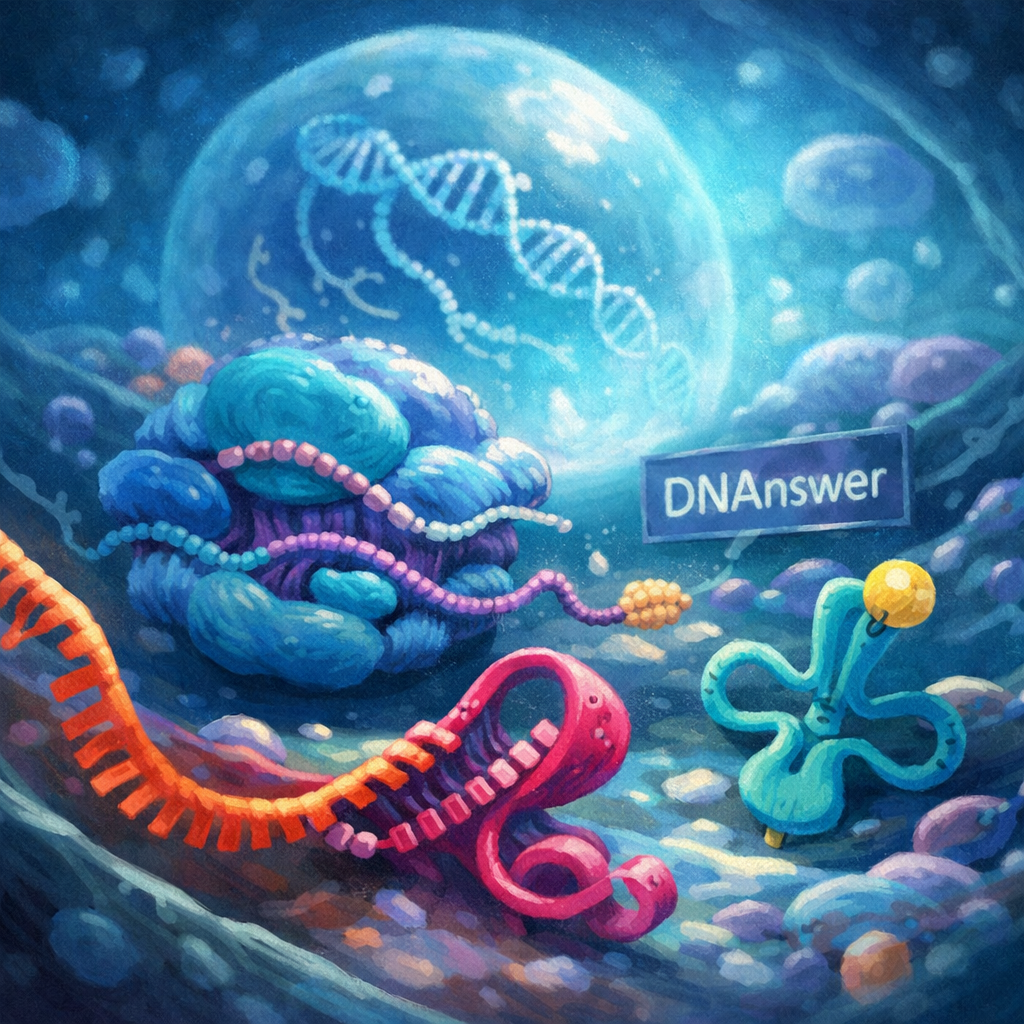
You probably think RNA's whole job is to carry copies of your genes to the cell's protein factories. That belief isn't wrong, exactly — it's just a fraction of the truth. RNA also silences genes, edits its own instructions, builds ribosomes, and may have run entire living cells billions of years before DNA showed up.
That gap between what people assume and what RNA actually does costs you something real: if you think RNA is just DNA's errand runner, you miss why mRNA vaccines work the way they do, why "junk" non-coding RNA turned out to be some of the most active real estate in your genome, and why RNA functions in biology (mRNA, miRNA, tRNA, and the rest) now sit at the center of new cancer drugs and gene therapies. Getting this right changes how you read the next headline about RNA-based medicine.
Key Takeaways
- RNA isn't just DNA's messenger — it regulates, edits, and silences genes directly.
- miRNA and mRNA sound alike but do opposite jobs: one builds proteins, the other blocks them.
- So-called "junk" non-coding RNA includes lncRNA, snRNA, and ribozymes with active regulatory roles.
- The RNA world hypothesis suggests RNA ran early cells before DNA existed.
- RNA interference (RNAi) is now a real drug mechanism, not just a lab tool.
- tRNA and rRNA build every protein you have — DNA never touches a ribosome.
Myth: RNA's Only Job Is Carrying Messages From DNA to Ribosomes
This is the myth almost everyone leaves high school biology with, and it's easy to see why. The "central dogma" — DNA makes RNA, RNA makes protein — gets taught as a clean one-way pipeline. It's a useful sketch. It's also badly incomplete.
The kernel of truth here is real: messenger RNA (mRNA) genuinely does carry the genetic recipe from DNA out to the ribosome, the cellular machine that reads that recipe and builds a protein. Textbooks emphasize this because it's the easiest RNA story to draw as an arrow. DNA sits safely in the nucleus; mRNA is the disposable copy that goes out and does the risky work of getting translated.
But mRNA is one job title in a company with dozens of departments. Ribosomal RNA (rRNA) makes up the physical machinery of the ribosome itself — it's not a message, it's the factory floor. Transfer RNA (tRNA) physically drags the right amino acid to the ribosome and matches it to the genetic code, three letters at a time. Neither of those RNAs "carries a message." They build things and move things.
The Regulators Nobody Mentioned in Class
Then there's the RNA that doesn't code for any protein at all, called non-coding RNA. MicroRNA (miRNA) and small interfering RNA (siRNA) block or destroy specific mRNAs before they ever reach a ribosome. Long non-coding RNA (lncRNA) can grab onto DNA and shut whole stretches of genome off. None of this fits the "messenger" story, because none of it is a message. It's control.
Why the Simplified Version Persists
Part of the reason this myth sticks is timing. The central dogma was worked out in the 1950s and 60s, well before scientists had the tools to find small regulatory RNAs — miRNA wasn't even discovered until 1993, in a roundworm called C. elegans. Biology curricula haven't fully caught up to research from the last three decades.
If you take one thing from this section, take this: treat "RNA" as a category with multiple specialized job titles, not a single molecule with one task. Next time you read that a gene is "regulated by RNA," you'll know that phrase usually means a non-coding RNA is doing the controlling, not a messenger RNA doing the reporting.
Myth: Non-Coding RNA Is Genetic "Junk"
This myth is expensive, because believing it means dismissing most of your genome as evolutionary debris. The truth: only about 1-2% of human DNA codes for protein, and for decades the rest got labeled "junk DNA." A large chunk of that non-coding DNA is transcribed into non-coding RNA that actively regulates genes.
The honest origin of this myth is understandable. Early genome sequencing found long non-coding stretches with no obvious protein-building instructions, and scientists (reasonably, given the tools available at the time) assumed silence meant uselessness. "Junk" was a placeholder term for "we don't know yet," and placeholder terms have a bad habit of calcifying into permanent belief.
What These "Junk" RNAs Actually Do
The Encyclopedia of DNA Elements (ENCODE) project, a large public research effort that began mapping functional regions of the human genome in the early 2000s, found that a striking majority of the genome gets transcribed into RNA at some point, even though only a sliver of it codes for protein. That doesn't prove every transcript matters — some is likely transcriptional noise — but it demolished the idea that non-protein-coding equals non-functional.
Concrete examples carry this better than percentages. Small nuclear RNA (snRNA) forms part of the spliceosome, the molecular machine that edits raw genetic transcripts by cutting out sections called introns and stitching together the useful parts, called exons — a process called splicing. Without snRNA, your cells couldn't produce usable mRNA from most human genes, which average multiple introns each. Long non-coding RNAs like XIST physically coat one entire X chromosome in female mammalian cells and silence it, a process essential for normal development. Ribozymes — RNA molecules that catalyze chemical reactions the way protein enzymes do — sit at the core of the ribosome itself, meaning an RNA molecule, not a protein, actually forms the peptide bonds in every protein your body makes.
The Practical Shift
Once you drop the "junk" framing, a lot of modern medicine makes more sense. Drugs and therapies increasingly target non-coding RNA directly, because silencing a disease-driving lncRNA or restoring a missing miRNA can flip a cellular process on or off with more precision than targeting a protein downstream. Treat any RNA labeled "non-coding" as a candidate for "not yet understood," not "not needed."
Myth: miRNA and mRNA Are Basically the Same Thing, Just Smaller
The names practically beg for this confusion, and it's one of the most common mix-ups people repeat after watching a science video too fast. mRNA carries instructions to build a protein. miRNA's job is to stop that from happening. They're not variations on a theme — they're opposites in a regulatory tug-of-war.
The honest reason for the confusion is right there in the name: both start with "RNA," both get abbreviated with a lowercase prefix, and both show up constantly in the same sentences about gene expression. If you've only half-absorbed the vocabulary, your brain reasonably files them as siblings. They're closer to rivals.
How miRNA Actually Works
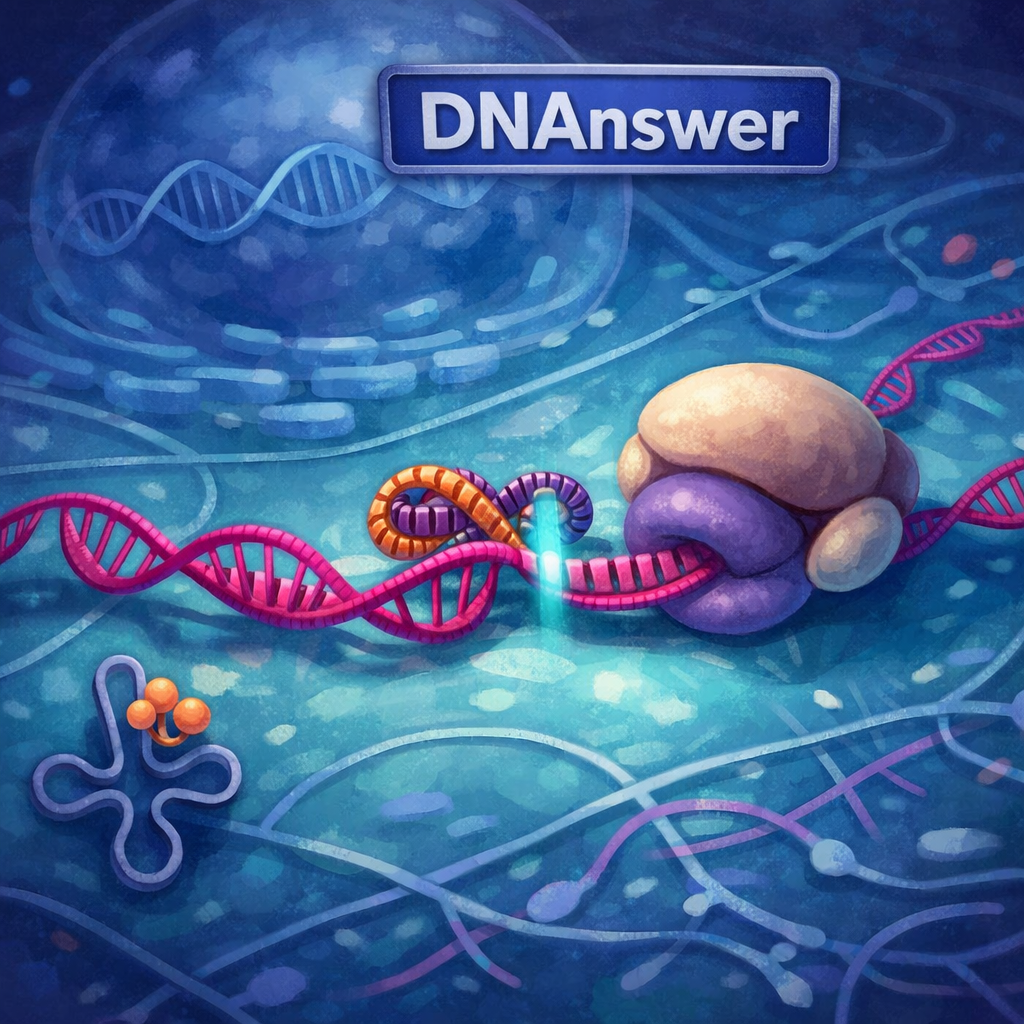
MicroRNA is short — typically around 20 to 24 nucleotides long, compared to mRNA molecules that can run into the thousands. A miRNA binds to a complementary sequence on a target mRNA, and that binding event either blocks the ribosome from translating it or flags the mRNA for destruction entirely. One miRNA can regulate hundreds of different target mRNAs, which is why researchers describe miRNA networks as some of the most powerful volume dials in the cell.
RNA interference is a biological process in which RNA molecules inhibit gene expression by neutralizing targeted mRNA molecules — a mechanism first described by Andrew Fire and Craig Mello, who shared the 2006 Nobel Prize in Physiology or Medicine for the discovery.
That mechanism, RNA interference (RNAi), is exactly what siRNA does too, using a nearly identical pathway to miRNA but usually targeting one specific mRNA with a perfect sequence match rather than dozens of loosely matched targets. Scientists have turned this natural process into a drug platform. The FDA has approved several siRNA-based therapies over the past few years for conditions like hereditary transthyretin amyloidosis, and they work by silencing a single disease-causing gene's mRNA rather than blocking a protein after it's already made.
Telling Them Apart for Good
Here's a simple sequence to keep the two straight in your head:
- DNA gets transcribed into a long mRNA molecule carrying full protein-building instructions.
- The mRNA gets processed (introns spliced out) and shipped to the cytoplasm.
- Ribosomes read the mRNA and translate it into a chain of amino acids — a protein.
- Separately, miRNA molecules patrol the cytoplasm looking for mRNAs with matching sequences.
- When a miRNA finds a match, it blocks translation or marks that mRNA for breakdown.
- Net effect: mRNA builds; miRNA edits how much gets built, or stops it outright.
Once you've walked through that sequence, the naming stops being confusing. mRNA is the blueprint in transit. miRNA is closer to a foreman deciding which blueprints actually get built this shift, and by how much.
Myth: RNA Is Just a Weaker, Temporary Copy of DNA
People often describe RNA as "DNA's less stable cousin," as if evolution built a cheap backup copy and called it a day. That undersells RNA badly. RNA isn't a degraded version of DNA — it's structurally and functionally a different kind of molecule, and it may have come first.
The kernel of truth is chemical, not conceptual: RNA is genuinely less stable than DNA. It uses ribose sugar instead of deoxyribose, and that extra oxygen atom makes RNA more chemically reactive and easier to break down. RNA also typically exists as a single strand rather than DNA's protective double helix, which leaves it more exposed. Cells exploit that instability deliberately — a short-lived mRNA is easy to shut off, which is exactly what you want in a molecule regulating something as fast-changing as gene expression.
Where This Myth Breaks Down
Instability isn't the same as inferiority, and function is where the comparison really falls apart. DNA is a superb long-term archive: stable, double-stranded, built to survive decades in a cell nucleus. RNA is built to act — to fold into complex 3D shapes, catalyze reactions as a ribozyme, bind to proteins, and regulate other molecules in real time. DNA mostly sits there being read. RNA does things.
The RNA World Hypothesis
This is where the framing really flips. The RNA world hypothesis, first proposed in the 1960s by scientists including Carl Woese and later developed further by others, argues that RNA — not DNA, not protein — may have been the original molecule of life on early Earth. RNA can both store genetic information (like DNA) and catalyze chemical reactions (like protein enzymes), which means a single RNA molecule could theoretically have handled replication and metabolism at the same time, without needing either of its more specialized descendants yet.
The strongest supporting evidence sits inside your own cells right now. The ribosome's catalytic core — the part that actually forms the chemical bond linking amino acids into a protein — is made of rRNA, not protein. That's a ribozyme doing the single most important chemical job in the whole cell, and it looks like a fossil of an earlier RNA-dominated era that never got fully replaced. If DNA is the archive, RNA looks a lot more like the retired-but-still-working founder of the company than a lesser copy of it.
Myth: All Non-Coding RNA Does the Same Kind of Job
Once someone accepts that non-coding RNA matters, a smaller but common misconception creeps in: the assumption that it's all one category doing one kind of regulatory thing. It isn't. Non-coding RNA is a toolbox with specialized instruments, not a single multitool.
The origin of this flattening is understandable — most non-experts encounter the term "non-coding RNA" as a single vocabulary word in an article about gene regulation, with no breakdown of the subtypes underneath it. Without that breakdown, everything non-coding blurs into one undifferentiated blob labeled "regulatory stuff."
The Major Job Titles Inside Non-Coding RNA
Break the category apart and distinct roles emerge quickly. Transfer RNA (tRNA) and ribosomal RNA (rRNA) are technically non-coding, but their job is structural and mechanical — they build proteins rather than regulate genes. MicroRNA and siRNA silence specific genes through RNA interference, as covered above. Small nuclear RNA (snRNA) handles splicing inside the spliceosome. Long non-coding RNA (lncRNA) tends to work at a broader scale, sometimes silencing whole chromosomes (like XIST) or organizing 3D genome structure inside the nucleus.
Guide RNA: The Newest Job Title
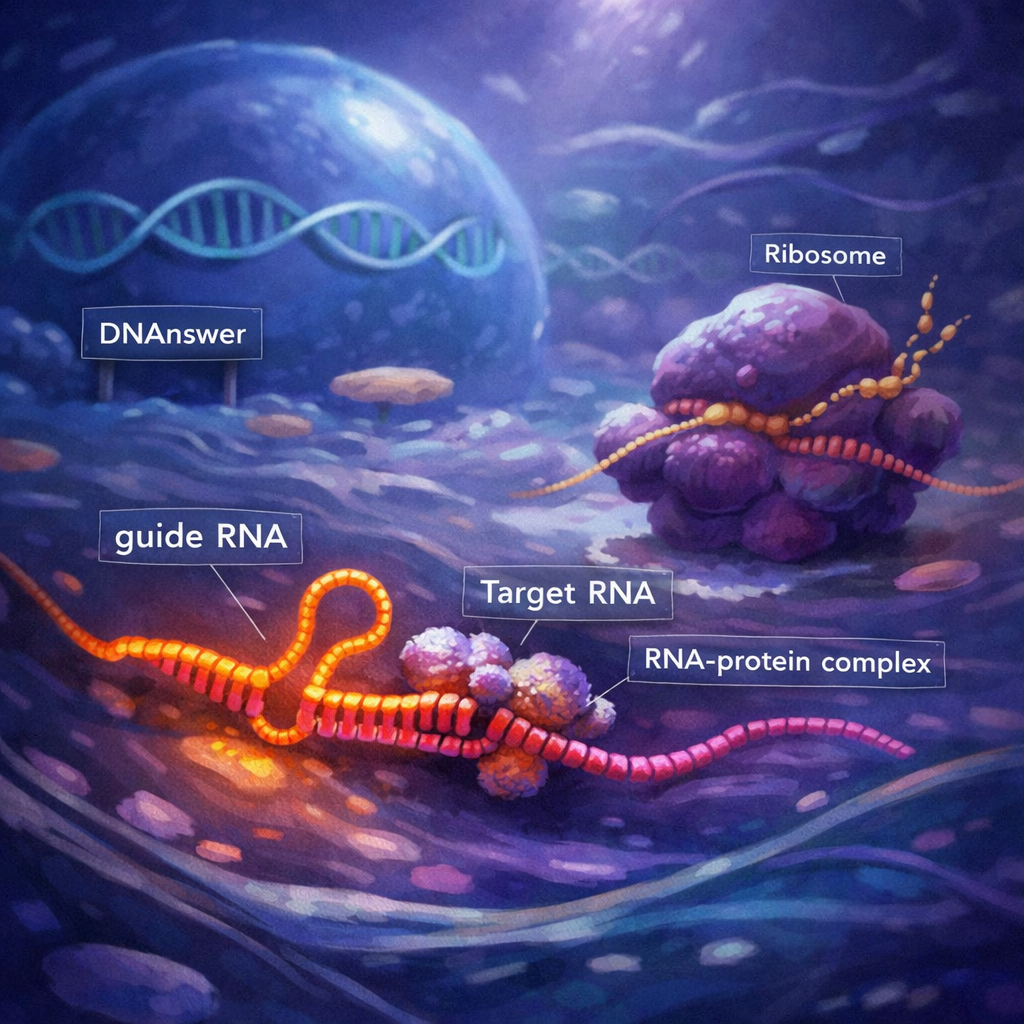
There's a newer entry worth naming specifically, because it's the reason CRISPR gene editing works at all: guide RNA (sometimes written crRNA in bacterial systems). Guide RNA doesn't code for protein and doesn't regulate a gene in the classic sense — it acts as a targeting address, leading the Cas9 protein to one exact sequence in a genome of three billion base pairs so it can cut there and only there. Bacteria evolved this system originally as an immune defense against viruses; CRISPR-Cas9 borrowed it wholesale for gene editing in labs and, increasingly, in clinical treatments.
If you're keeping score, that's at least five functionally distinct non-coding RNA categories doing structural building, gene silencing, splicing, chromosome-scale regulation, and precision targeting. Lump them together as "junk" or "regulatory stuff," and you lose the fact that each one evolved to solve a completely different molecular problem.
Myth: RNA Science Is Too Complicated for a Non-Scientist to Actually Track
This isn't a factual myth so much as a confidence myth, and it's worth naming because it stops curious people from engaging further right when the subject gets interesting. The belief goes: RNA biology involves too many three-letter abbreviations to ever keep straight without a biology degree.
The honest kernel here is that the vocabulary really is dense — mRNA, tRNA, rRNA, miRNA, siRNA, lncRNA, snRNA, and guide RNA is eight distinct terms before you've even reached a mechanism. That's a real barrier, and pretending otherwise doesn't help anyone.
What Actually Makes It Click
What changes people's minds, in practice, isn't memorizing all eight terms at once. It's anchoring each one to a single verb. mRNA carries. tRNA delivers. rRNA builds. miRNA silences. siRNA destroys. lncRNA organizes. snRNA edits. Guide RNA targets. Eight verbs are far easier to hold onto than eight abbreviations floating with no job attached.
Testing that recall is where a lot of people actually lock the concepts in, because being asked "which one silences?" forces you to retrieve the fact rather than just re-read it. That's the whole logic behind DNAnswer's approach: it runs a companion quiz app alongside its Instagram science posts, with an XP and leaderboard system that turns "which RNA does what" into a repeatable, low-stakes recall exercise instead of a study session you have to force yourself through.
The bigger reassurance is this: professional molecular biologists mix these terms up in casual conversation too, and correct themselves mid-sentence constantly. Confusion at first pass isn't a sign you're bad at this — it's the normal cost of a field with this much genuine specialization packed into so few letters.
Conclusion
Once you stop treating RNA as DNA's errand runner, the next mRNA vaccine headline, siRNA drug approval, or CRISPR breakthrough reads differently. Look for which RNA type is doing the work — messenger, regulator, structural, or guide — and you'll understand the mechanism, not just the buzzword. That's the difference between memorizing science news and actually following it.
Frequently Asked Questions
Is mRNA the same thing as miRNA?
No. mRNA (messenger RNA) carries instructions to build a protein; miRNA (microRNA) blocks or destroys specific mRNAs to prevent that protein from being made. They're regulatory opposites, not variations of each other.
What does "non-coding RNA" actually mean?
It means RNA that doesn't get translated into a protein. That doesn't mean inactive — non-coding RNA includes tRNA and rRNA (which build proteins structurally), plus miRNA, siRNA, lncRNA, and snRNA, which regulate, silence, or edit genes.
What is the RNA world hypothesis in simple terms?
It's the idea that RNA, not DNA, ran the earliest living cells, since RNA can both store genetic information and catalyze chemical reactions on its own. Modern ribosomes still use RNA as their core catalytic component, supporting this idea.
How is guide RNA different from mRNA?
Guide RNA doesn't carry protein-building instructions at all. It directs the CRISPR-Cas9 protein to one exact DNA sequence for editing, functioning as a targeting address rather than a message.