How Does CRISPR Work? A Guide to Gene Editing
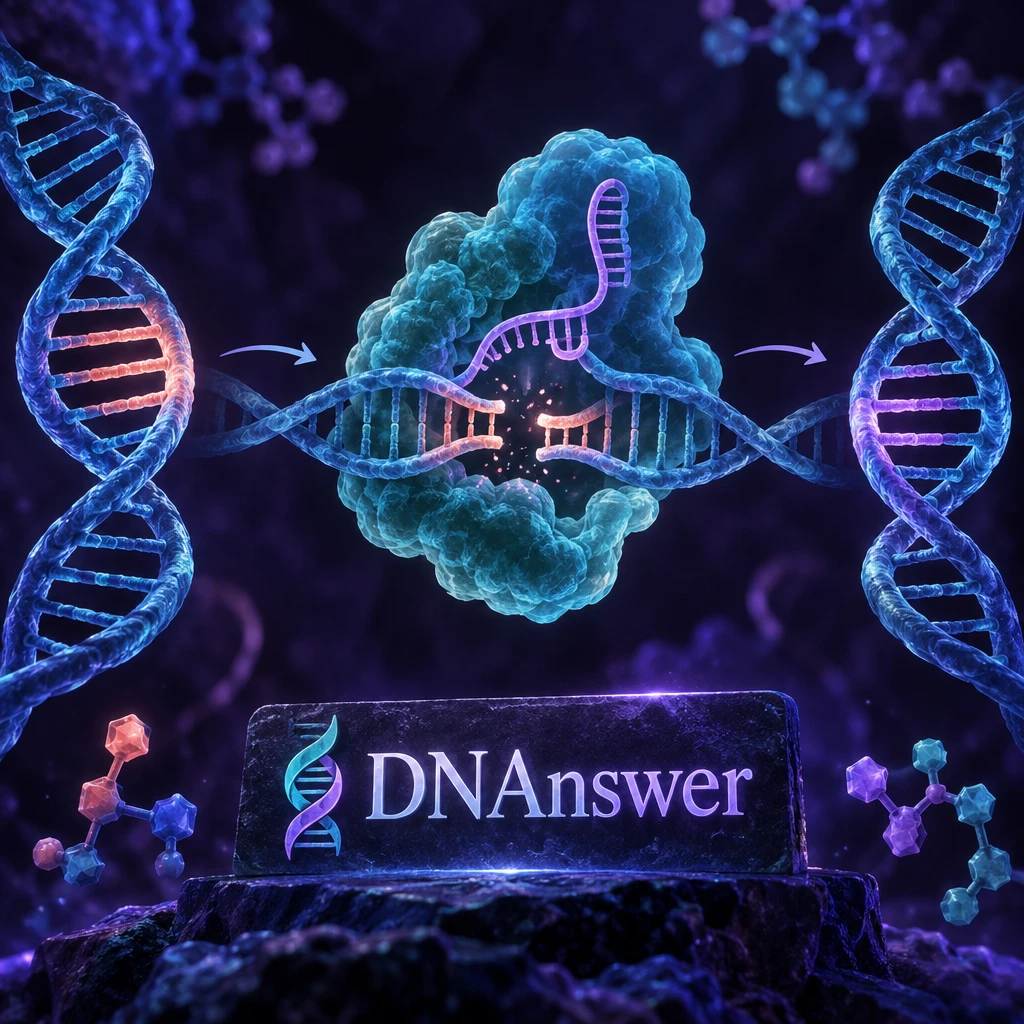
Who invented CRISPR? Not a lab. Bacteria did, billions of years before anyone wrote a grant proposal. They use it to fight viruses, and scientists borrowed the trick.
So how does CRISPR work? A short RNA strand called a guide RNA acts like an address label. It leads a protein called Cas9, which cuts DNA, to a matching spot in the genome. Cas9 slices both DNA strands. The cell then repairs the break, and scientists use that repair to switch off a gene or add new DNA.
Key Takeaways
- Bacteria evolved CRISPR as an immune defense against viruses.
- Cas9 only cuts. Your cell's repair machinery makes the edit.
- Guide RNA finds the target; a short DNA tag called PAM permits the cut.
- CRISPR is not perfectly accurate. Off-target cuts happen and are screened for.
- Some CRISPR tools never cut DNA. They turn genes up or down.
- Casgevy, a CRISPR therapy, has been FDA-approved since December 2023.
Myth 1: CRISPR Is Scissors That Rewrite DNA Like a Word Processor
The picture is everywhere: a pair of scissors snips out a typo and a pen writes the fix. It is a fair shortcut, because "gene scissors" is how most headlines describe Cas9. And the cutting part is real.
But the rewriting part is wrong. Cas9 only cuts. It never types a single new letter. Your cell does the actual editing, using repair machinery that was built to patch broken DNA, not to follow a scientist's plan.
That difference explains both CRISPR's power and its error risk. The tool is precise about where it cuts. It has much less control over what happens after the cut.
The Six Steps From Design to Edit
Here is the full sequence, from the lab bench to the repaired gene.
- Scientists pick a target gene and design a guide RNA that matches a stretch of its DNA.
- They deliver the guide RNA and Cas9 into cells, either as separate parts or as one package.
- The guide RNA binds to Cas9 and the pair scans the DNA, looking for a match.
- At the match, Cas9 checks for a short nearby tag (the PAM, covered below) and cuts both DNA strands.
- The cell notices the broken DNA and starts its repair crews.
- Depending on which repair path wins, the gene gets disabled or corrected.
Steps 1 to 4 are the part scientists control tightly. Steps 5 and 6 belong to the cell.
Why the Cell's Repair Is the Real Editor
A break across both strands of DNA is an emergency. If the cell leaves it, the chromosome can fall apart. So the cell repairs fast, and it has two main methods.
The quick method is non-homologous end joining, or NHEJ. Repair proteins grab the two loose ends and glue them back together. It is fast but sloppy. It often adds or deletes a few letters at the join. Those small errors, called indels (short for insertions and deletions), usually scramble the gene so it stops working. Scientists call that a knockout.
The careful method is homology-directed repair, or HDR. The cell copies a matching DNA template to fill the gap. If scientists supply their own template with a new sequence, the cell may copy that instead. That is a knock-in, and it is how scientists can fix a typo or add a new gene. HDR is slower and works best in cells that are actively dividing, so it succeeds less often than NHEJ.
The takeaway: when you read "CRISPR fixed the gene," picture a cut followed by a cell's choice, not a clean rewrite.
Myth 2: Scientists Invented CRISPR From Scratch
It feels natural to credit the lab. Gene editing sounds like pure engineering, and the 2020 Nobel Prize in Chemistry went to Jennifer Doudna and Emmanuelle Charpentier for turning CRISPR into a tool. That credit is deserved.
But they adapted a system that already existed. Bacteria evolved CRISPR as a way to survive viral attacks. The name itself, clustered regularly interspaced short palindromic repeats, describes an odd pattern researchers first spotted in bacterial DNA: short repeated sequences with unique spacers between them.
How a Bacterium Uses It
Picture a bacterium hit by a virus (a phage is a virus that infects bacteria). If the bacterium survives, it snips a piece of the viral DNA and stores it between those repeats. That stored piece works like a mugshot.
Next time that virus shows up, the bacterium copies the mugshot into RNA. The RNA leads Cas proteins to the invader's DNA, and the Cas enzyme cuts it up. The infection stops.
Philippe Horvath, a French food scientist, helped reveal this. He was looking for better ways to make cheese and yogurt, and he noticed that some bacterial strains defended themselves against viruses. The Franklin Institute honored his work with its 2018 Bower Award and Prize for Achievement in Science. Dairy cultures matter to the industry because a phage outbreak can wipe out a whole batch.
What Scientists Changed
In bacteria, the guide comes from viruses the cell has met. In the lab, researchers write the guide themselves, so it can match nearly any gene sequence they choose.
They also simplified the parts. In nature, the guide system uses two RNA pieces: crRNA, which carries the matching sequence, and tracrRNA, which acts as a scaffold that holds Cas9. Researchers fused the two into a single guide RNA, which made the tool far easier to build.
What to do with this: when someone says CRISPR is "unnatural," point out that it is a borrowed immune system. The engineering is in the redirect, not the invention.
Myth 3: Guide RNA Alone Decides Where CRISPR Cuts
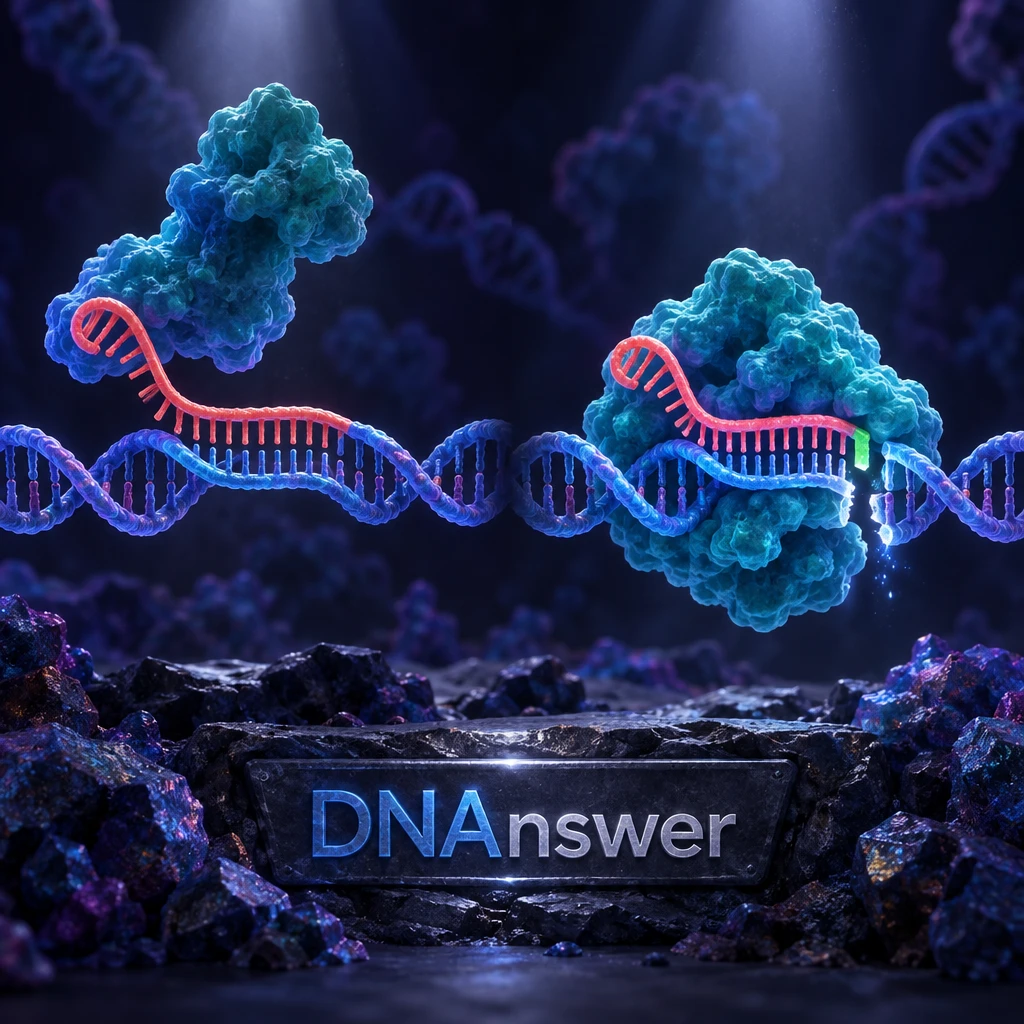
Many people assume the guide RNA is the whole targeting story. That makes sense, since it is the part scientists design, and it does carry the address.
But there is a second checkpoint, and it is easy to miss.
In the commonly used Streptococcus pyogenes Cas9, efficient DNA cutting requires a short sequence called a protospacer adjacent motif (PAM), which reads 5′-NGG-3′, next to the target.
That description comes from research on off-target effects in CRISPR-Cas genome editing. In plain words, a PAM is a three-letter tag, an N (any letter) followed by two Gs, sitting right beside the target. No PAM, no cut, even if the guide matches perfectly.
Why Cas9 Needs a Tag
Bacteria have a reason for this. Their own CRISPR storage area holds copies of viral DNA, and those copies have no PAM next to them. So Cas9 ignores them. Without that rule, the bacterium's immune system would attack itself.
Cas9 first scans along DNA looking for PAM tags. When it finds one, it begins unzipping the DNA next to it and checks whether the guide RNA fits. If the letters match, it cuts. If they do not, it moves on.
What This Means for Designers
Scientists cannot target every DNA position with standard Cas9, only spots near a PAM. In a human genome of about 3 billion letters, NGG tags occur often, so most genes have plenty of options. For harder spots, researchers use Cas variants that recognize different tags.
The practical point: when you read that a guide "matches" a gene, remember it also needs a PAM neighbor before Cas9 acts.
Myth 4: CRISPR Is 100% Accurate
Headlines love "precision." The tool does use a 20-letter guide match plus a PAM check, which is far more targeted than older methods such as zinc finger nucleases and TALENs. Those older tools needed a custom protein built for every target, which was slow and expensive. CRISPR needs only a new guide RNA.
But precise is not perfect. Off-target effects are unintended edits at the wrong spot. They can happen when the genome holds a near-twin of the target, a sequence that differs by just a letter or two. Cas9 can tolerate some mismatches and cut there anyway.
Why Mistakes Happen
Several factors raise or lower the risk:
- The guide sequence itself. A guide with a truly unique match elsewhere in the genome has fewer near-twins to confuse it.
- The delivery method, since longer exposure to Cas9 gives more chances for stray cuts.
- Uneven dosing, where some cells receive far more Cas9 than others.
- The cell type, because different cells repair breaks differently.
Even a correct cut can cause trouble. Researchers have documented large structural changes at cut sites, including big deletions, swapped chromosome pieces and lost chromosome fragments. An unwanted edit in the wrong gene could disrupt how it is controlled, and in the worst case contribute to cancer risk.
Other limits matter too. Getting CRISPR into the right tissue is hard. The immune system can react to Cas9 or to the delivery vehicle. And when cells are edited unevenly, scientists call it mosaicism, a mix of edited and unedited cells.
How Researchers Reduce the Risk
Scientists design guides with few look-alikes, screen the whole genome for stray cuts, and use improved Cas9 versions that tolerate fewer mismatches. For therapies, regulators expect this screening as part of approval.
What to do: treat any claim of "perfect" editing with suspicion. Ask what the researchers measured and how they searched for unintended edits.
Myth 5: All CRISPR Tools Cut DNA
If Cas9 is "scissors," every CRISPR tool must cut, right? That was true of the first versions, so the assumption is reasonable.
It no longer holds. Researchers have built versions that skip the cut entirely, because a cut forces the cell into error-prone repair. Avoiding it can be safer.
Dimmer Switches: CRISPRa and CRISPRi
Scientists can disable Cas9's cutting blade. The result is a "dead" Cas9 that still follows a guide RNA to its address but leaves the DNA intact. They then attach a different protein to it.
With CRISPRi (the "i" is for interference), the dead Cas9 sits on a gene and blocks it, turning its activity down. With CRISPRa (for activation), it carries a partner that boosts the gene, turning activity up. The DNA sequence never changes. Only how loudly the gene speaks does.
Pencil-Style Tools: Base and Prime Editing
Two other designs change letters directly. Base editing uses a modified Cas9 that nicks only one strand, paired with an enzyme that swaps one DNA letter for another, for example turning a C into a T. Prime editing also nicks one strand, then uses a guide that carries a built-in template so the cell writes the new sequence at the spot.
Neither makes a full double-strand break, so both reduce the messy repair that standard Cas9 triggers. They are newer, and their range of possible edits keeps growing.
Practical point: when you see a headline about "CRISPR," check which version it means. Cutting, nicking and switching are three different jobs.
Myth 6: CRISPR Medicine Is Still Science Fiction
Gene editing in people sounds like a decade-away promise, and plenty of early claims were overhyped. The doubt is fair.
But it has already happened. In December 2023, the FDA approved Casgevy (generic name exagamglogene autotemcel), the first CRISPR-based therapy for sickle cell disease. It is also approved for transfusion-dependent beta-thalassemia, another inherited blood disorder. The labeled age is 12 and older, and for sickle cell disease it applies to patients with recurrent vaso-occlusive crises, the episodes of severe pain when misshapen blood cells block vessels.
How Casgevy Works
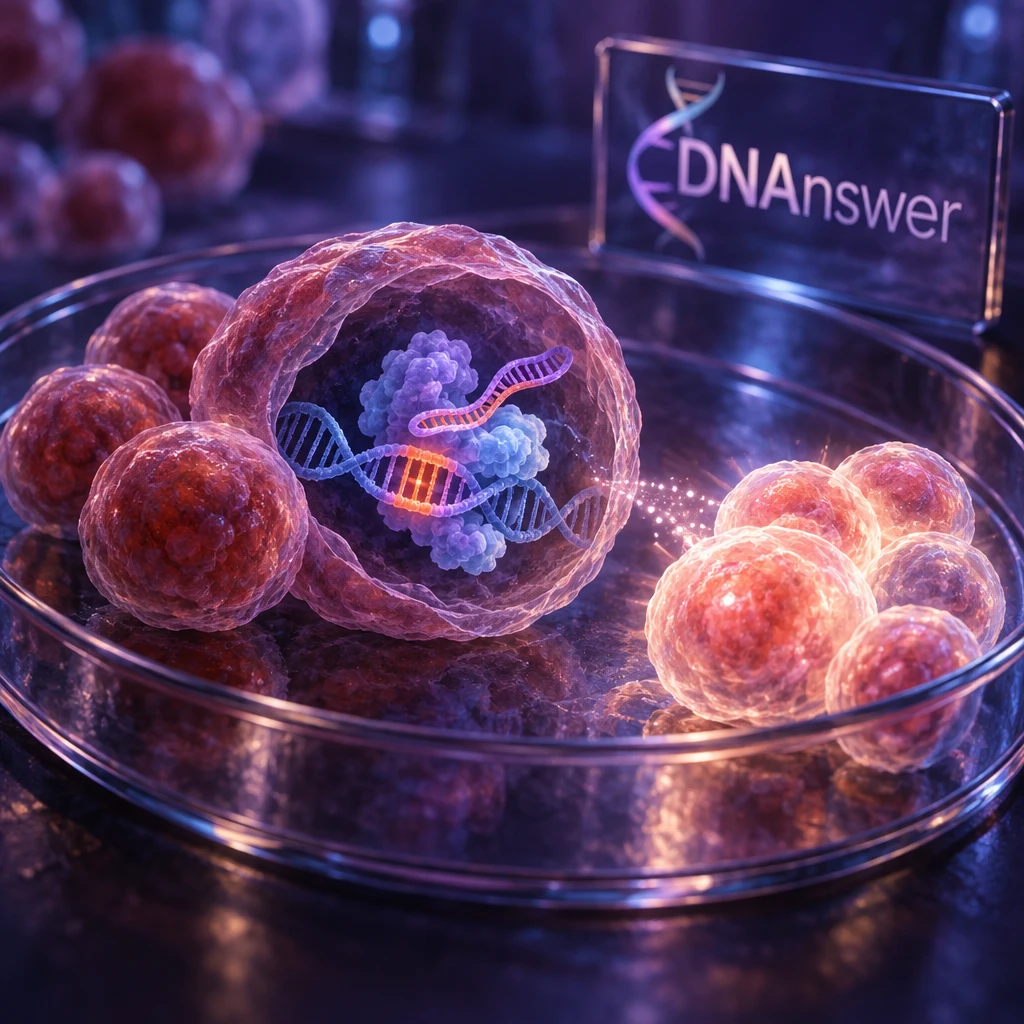
Doctors collect a patient's blood stem cells, the cells in bone marrow that make all blood cells. In the lab, CRISPR edits those cells to restore production of fetal hemoglobin, the oxygen carrier babies use before birth. The edited cells go back to the patient. The treatment edits cells outside the body, which lets the team check them before returning them.
What Else Is in Trials
Researchers are testing editing inside the body for inherited blindness such as Leber congenital amaurosis, with early results showing promising improvements in visual function. CRISPR is also used to reprogram immune cells, from patients or healthy donors, so they target cancer more accurately. The Innovative Genomics Institute tracks the clinical trial field and published an update in March 2026.
Casgevy shows the model: edit a few specific cells, in a disease caused by one known gene. Broader uses, such as embryo editing, raise open ethical debates about changes that future generations could inherit.
If you want to test what you have learned, DNAnswer offers free molecular biology quizzes where you can practice these concepts and track your progress.
Conclusion
Next time you see "CRISPR fixes gene" in the news, ask three questions. Which tool was it: a cutter, a one-letter editor or a dimmer switch? How did the researchers check for stray edits? And was it tested in cells, animals or people? Those answers separate a lab result from a treatment like Casgevy, and they tell you how much weight a headline deserves.
Frequently Asked Questions
What does CRISPR stand for?
It stands for clustered regularly interspaced short palindromic repeats. That is the pattern of repeated DNA sequences that scientists first noticed in bacterial genomes, where bacteria store pieces of viral DNA between the repeats.
Is CRISPR 100% accurate?
No. Off-target cuts, meaning edits at unintended DNA spots, can happen when a sequence closely resembles the target. Researchers lower the risk with careful guide design, improved Cas9 versions and genome-wide screening.
Is CRISPR used in humans today?
Yes. The FDA approved Casgevy in December 2023 for sickle cell disease, and it is also approved for transfusion-dependent beta-thalassemia, both in patients 12 and older. Many other CRISPR therapies remain in clinical trials.
How does a guide RNA work in CRISPR?
A guide RNA contains about 20 letters that match the target DNA. It binds to Cas9 and leads it along the genome. When the letters pair with DNA next to a PAM tag, Cas9 cuts.